Popular Dental Search Terms
About Crowns
What Is a Crown?
As one year comes to an end and we are about to welcome a new year,
the topic prepared by Gangnam Saero Dental Clinic is
a special feature on the most popular search terms over the past year.
The first one is the No. 1 search term for January 2025:
Crowns!
In the case of cavity treatment that has even required root canal treatment,
after being filled with GI, which can be covered by national health insurance,
when the treatment is nearing completion,
you may hear the doctor say that a crown is needed,
and think,
“Isn’t GI enough?”
“Isn’t saying I need a crown overtreatment?”
So let us explain crowns accurately!
Crown Treatment
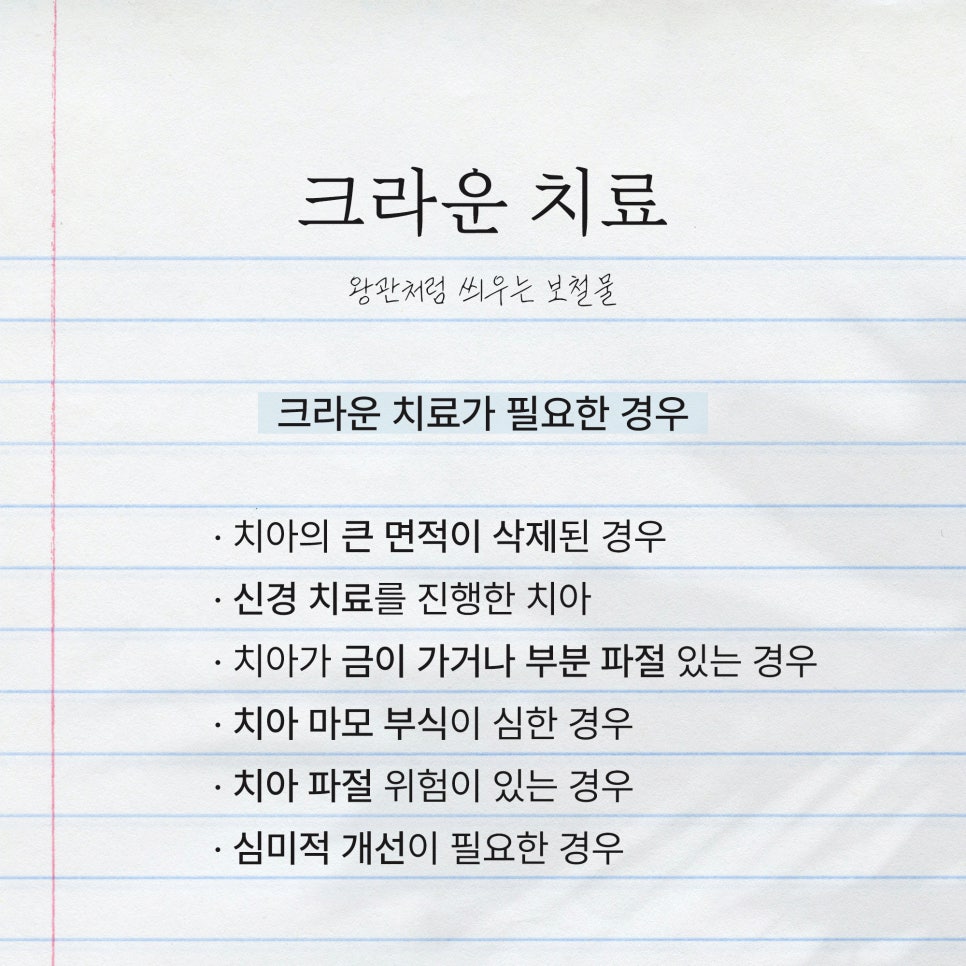
A crown literally means
a prosthetic restoration that is placed over a tooth like a “crown.”
It is a treatment method that protects the damaged part of the tooth by covering it with a hard material,
reinforces it so it will not break further,
and restores its original function.
When is crown treatment needed?
In the following situations, crown treatment
becomes the safest and most reliable choice.
When decay is deep near the nerve and a large area has been removed
Teeth that have undergone root canal treatment
When a tooth has a crack or partial fracture
When tooth wear or erosion has progressed severely
When there is a high risk of fracture due to strong biting force
When aesthetic improvement is needed (such as discoloration of front teeth or shape correction)
The 기준 for deciding whether a cavity can be restored with simple filling (resin, inlay)
is how much of the tooth must be removed
and how strong the remaining tooth structure is.
If this threshold is exceeded, crown treatment becomes necessary.
Crown Treatment Process
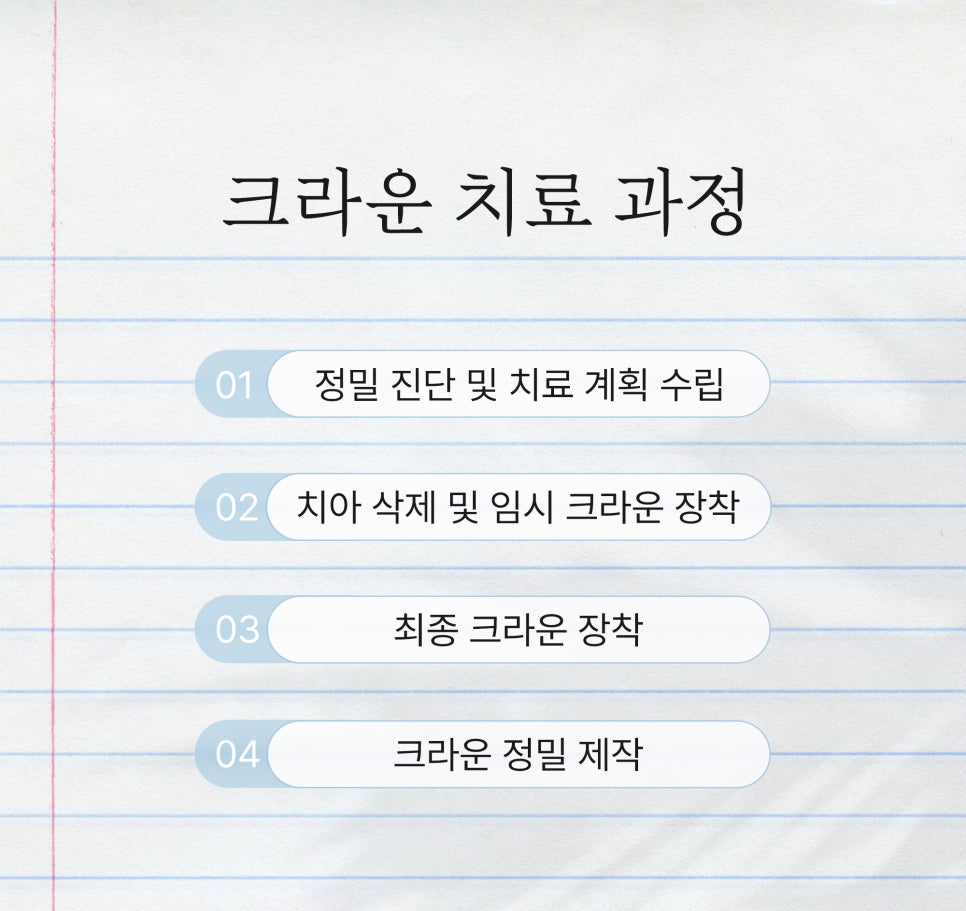
Crown treatment consists of the following steps.
- Precise diagnosis and treatment planning
The tooth’s cracks, degree of damage, gum health, and other factors are analyzed.
- Tooth reduction and placement of a temporary crown
After removing the damaged area and shaping the tooth,
a temporary crown is placed to protect the natural tooth until the custom-made crown is completed.
- Precision fabrication (lab process)
Based on scan data,
a crown is fabricated to reproduce the original bite, function, and color.
- Final crown placement
After function and aesthetics are checked one last time,
the crown is permanently bonded to the tooth.
Types of Crowns
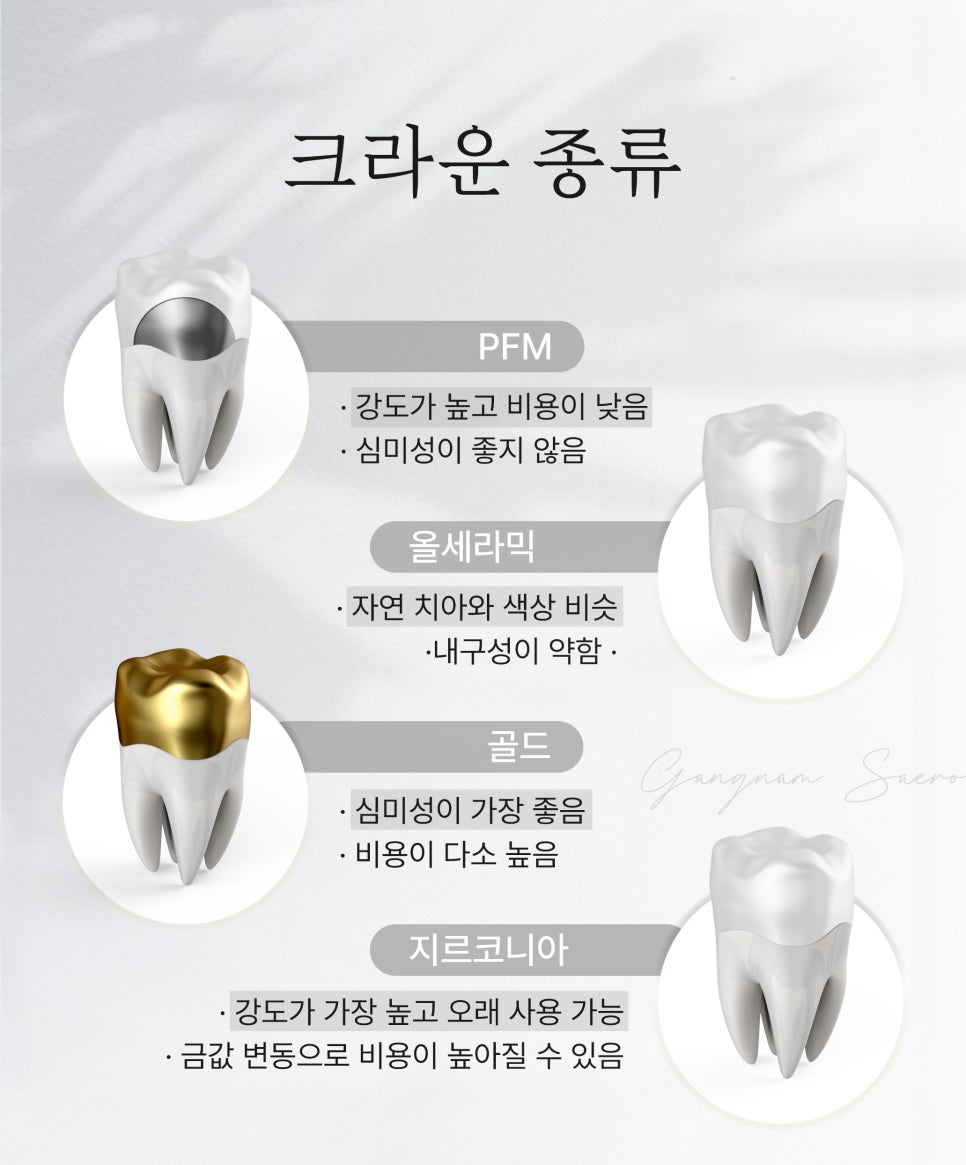
Depending on the material, crowns can differ greatly in
function, aesthetics, and cost.
The choice varies depending on the patient’s dental condition and priorities,
so please refer to the information below!
- PFM (porcelain-fused-to-metal crown)
The most traditional crown, with porcelain layered over metal.
Advantages
Very strong, suitable for molars
Lower cost burden
Disadvantages
Metal may show near the gum line
The gums may appear darker over time
Less natural translucency
- All-ceramic
An all-white, all-ceramic crown.
Advantages
Translucency and color closest to natural teeth
Metal-free all-ceramic with excellent aesthetics
No discoloration at the gum line
Disadvantages
Relatively weaker in strength and durability
Careful selection of suitable placement is needed
- Zirconia
An upgraded version optimized for front teeth where aesthetics matter.
Advantages
The most natural translucency, gloss, and color layering
Top-tier aesthetic restoration for front teeth
Disadvantages
Falls into the higher price range
- Gold crown
Less preferred these days because of aesthetics, but functionally excellent.
Advantages
Best fit
Can be used for a long time due to elasticity similar to teeth
Suitable for molars with strong biting force
Disadvantages
Poor aesthetics
Cost may increase depending on fluctuations in gold prices
Advantages of Crown Treatment
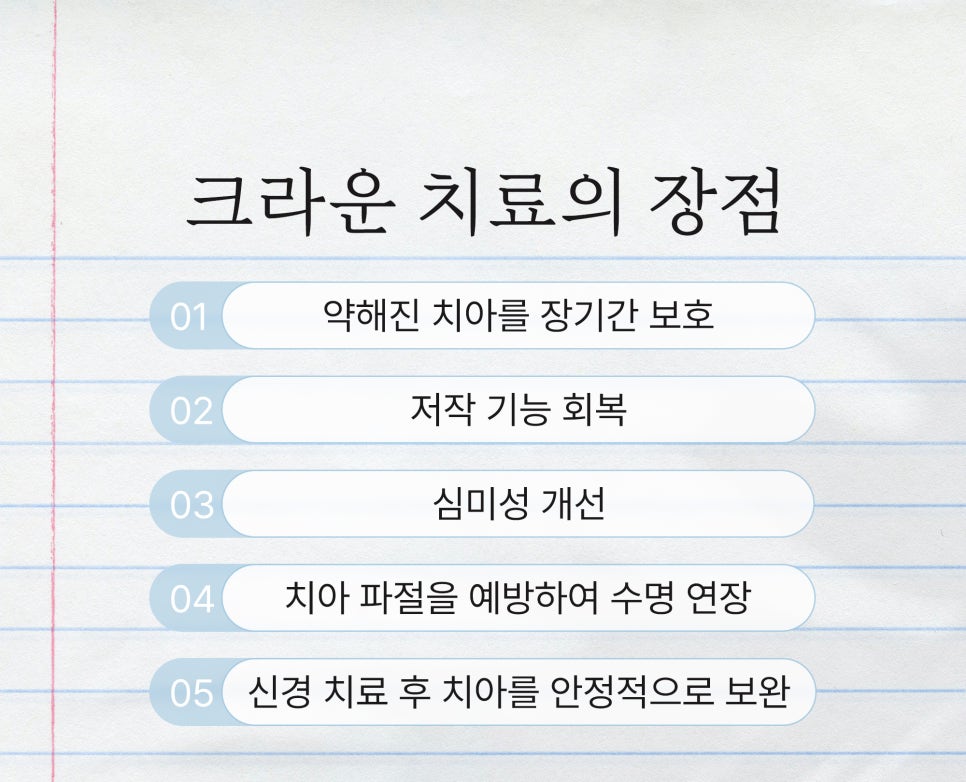
-
Protects weakened teeth for a long period
-
Restores chewing function
-
Improves aesthetics
-
Extends tooth life by preventing fracture
-
Stabilizes teeth after root canal treatment
In particular, teeth that have undergone root canal treatment have an empty internal structure,
so the risk of fracture rises to 60–80%,
making it difficult for GI alone to protect them from risk.
After root canal treatment,
a crown is closer to a “necessity” than a “choice.”
Points to Be Careful About When Choosing Crown Treatment
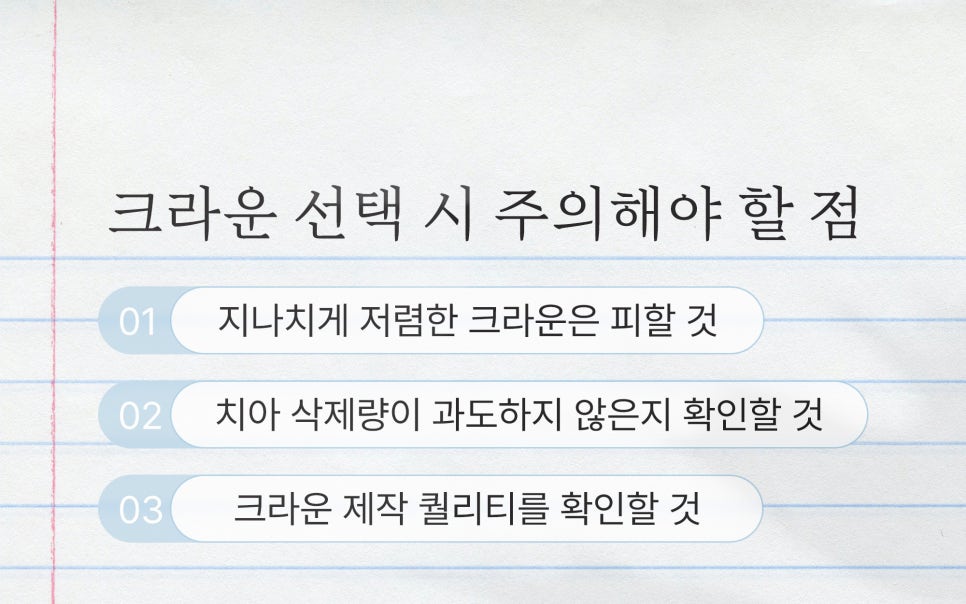
- Crown treatment that is excessively inexpensive
may lead to secondary decay, odor, and gum inflammation later
due to minute fitting errors.
- If too much tooth structure is removed,
it shortens the tooth’s lifespan.
- The quality of the lab technician’s work,
the precision of the equipment,
and the dental team’s prosthetic design ability
completely determine the quality of the crown.
A crown is not simply something that is “put on.”
It is a specialized dental prosthetics field that requires
precision adjustments down to the microscopic level and technical expertise.
Gangnam Saero Dental Clinic Crowns

Gangnam Saero Dental Clinic
has advanced equipment such as 3D-CT and intraoral scanners
specialists in prosthodontics, orthodontics, and implants on site
customized color, shape, and bite design for each patient
a collaborative system with a precision dental lab
a minimum-removal principle applied
and carries out crown treatment with reduced errors.
Rather than simply covering a broken tooth with metal,
the treatment aims for functional and aesthetic restoration
so that patients can comfortably chew food and smile for the next 10 or 20 years.
A new smile, a new beginning.
Join Gangnam Saero Dental Clinic.
- This post is provided by a medical institution as medical information due to a contractual relationship with a third party.