Post-implant care
Implant surgery precautions
Essential care methods for long-term use
Natural teeth can
maintain their function for a long time as long as bacteria are well managed,
but implants are a little different.
Because an implant is not a tooth but a “medical prosthesis,”
from the moment the surgery ends,
the direction of care determines the outcome.
Even at the moment when it feels like there are no problems and everything is working well,
depending on how it is managed,
problems such as inflammation, screw loosening, and prosthesis damage
can quietly progress.
That is why post-implant care
is not a choice but an essential process.
Implant surgery precaution 1) Inflammation management
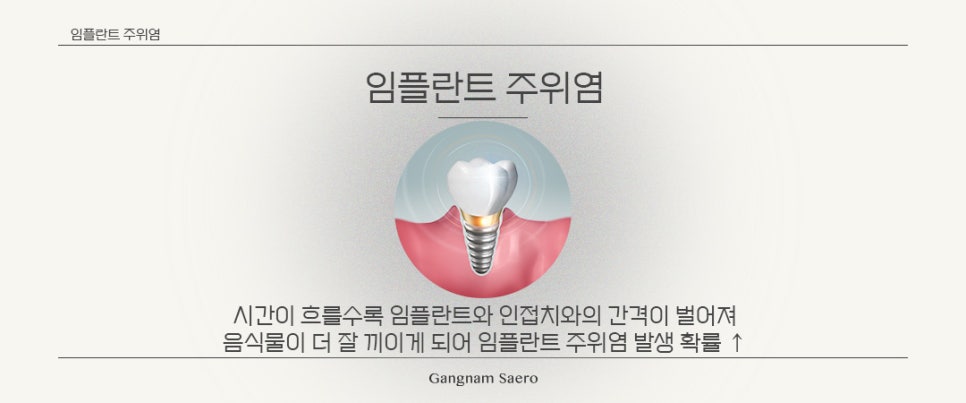
The biggest difference between implants and natural teeth
is the way they are fixed.
Natural teeth are
flexibly anchored to the jawbone
through a cushioning structure called the periodontal ligament.
In contrast, implants are
fixed directly to the jawbone,
so they do not have microscopic movement or adaptability.
As time passes,
if a gap forms between a natural tooth and an implant,
food particles and bacteria accumulate in that space,
and the resulting inflammation
is called peri-implantitis.
Peri-implantitis
has almost no pain, so it can be discovered late,
and if left untreated, it can lead to loss of the jawbone
and implant failure.
Prevention of peri-implantitis
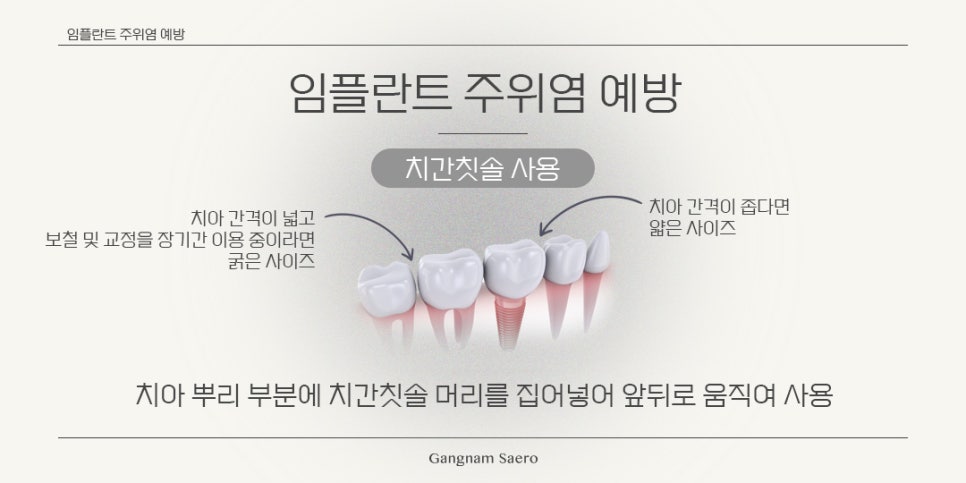
The key to implant care is
interdental care.
- Criteria for choosing an interdental brush
Thin size
: For narrow spaces between teeth or first-time use
Thicker size
: For use with prostheses or orthodontic appliances, or when tooth spacing is wide
- How to use an interdental brush
At the lowest point where the tooth and gum meet,
insert it gently,
then move it lightly back and forth
to remove bacteria and food particles.
Implant surgery precaution 2) Screw loosening
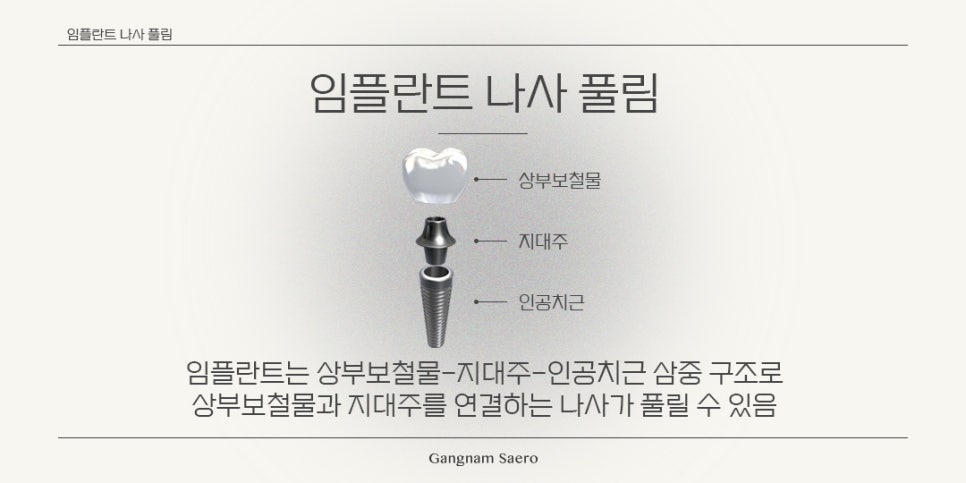
An implant
has a three-part structure consisting of
a superstructure prosthesis, abutment, and artificial root.
Unlike natural teeth,
because there is no nerve,
it is difficult to notice immediately through pain even if a screw becomes loose.
If pressure from chewing is repeated while the screw is loose,
damage to the abutment and burden on the artificial root can occur,
and in severe cases, reoperation may be necessary.
Prevention of screw loosening
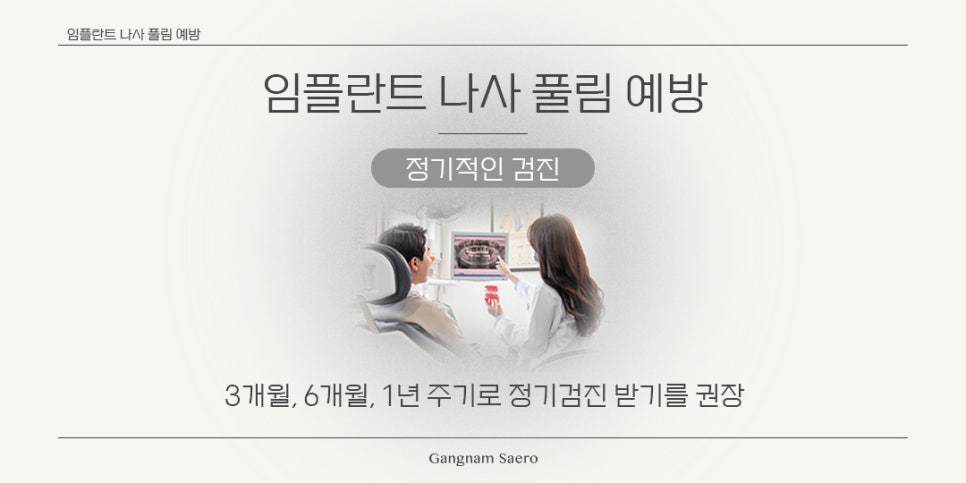
The most reliable method is
regular checkups.
Immediately after surgery, during the initial period: every 3 months
Adjustment period: every 6 months
Stable period: every 1 year
Through regular checkups,
if the screw condition, bite, and gum condition are checked together,
problems can be prevented before they become serious.
Implant surgery precaution 3) Prosthesis breakage
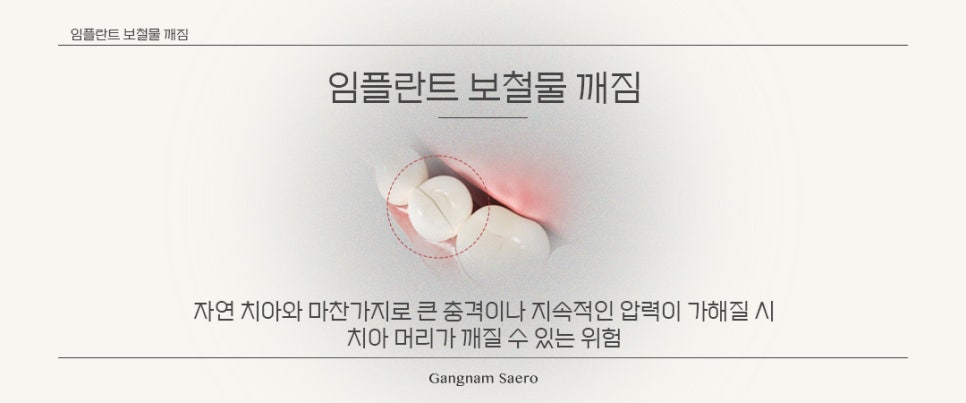
Implant prostheses can also
break just like natural teeth.
The difference is
that natural teeth can be partially restored,
while implants require replacement of the entire superstructure prosthesis.
If you continue using it while it is broken,
consecutive damage can occur to the screw, abutment, and even the jawbone.
Prevention of prosthesis breakage
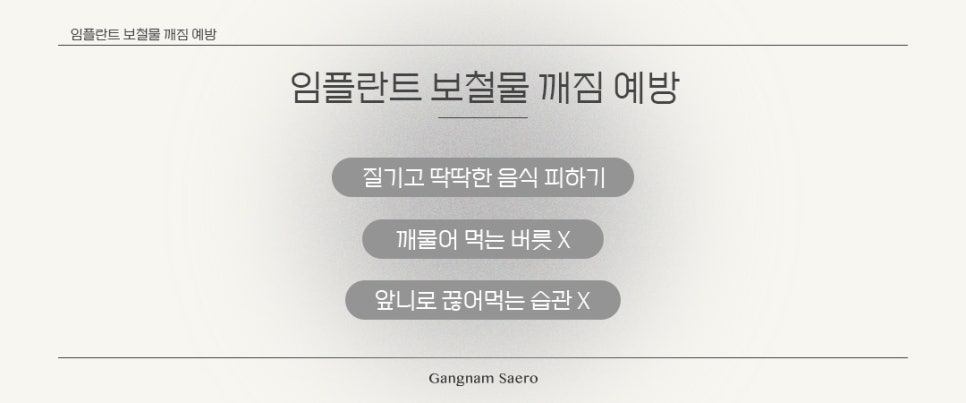
Avoid chewy and hard foods
Reduce the habit of tearing food with the front teeth
Improve the habit of chewing only on one side
These habits are
helpful not only for implants
but also for protecting the remaining natural teeth.
The importance of choosing the right clinic for implant surgery
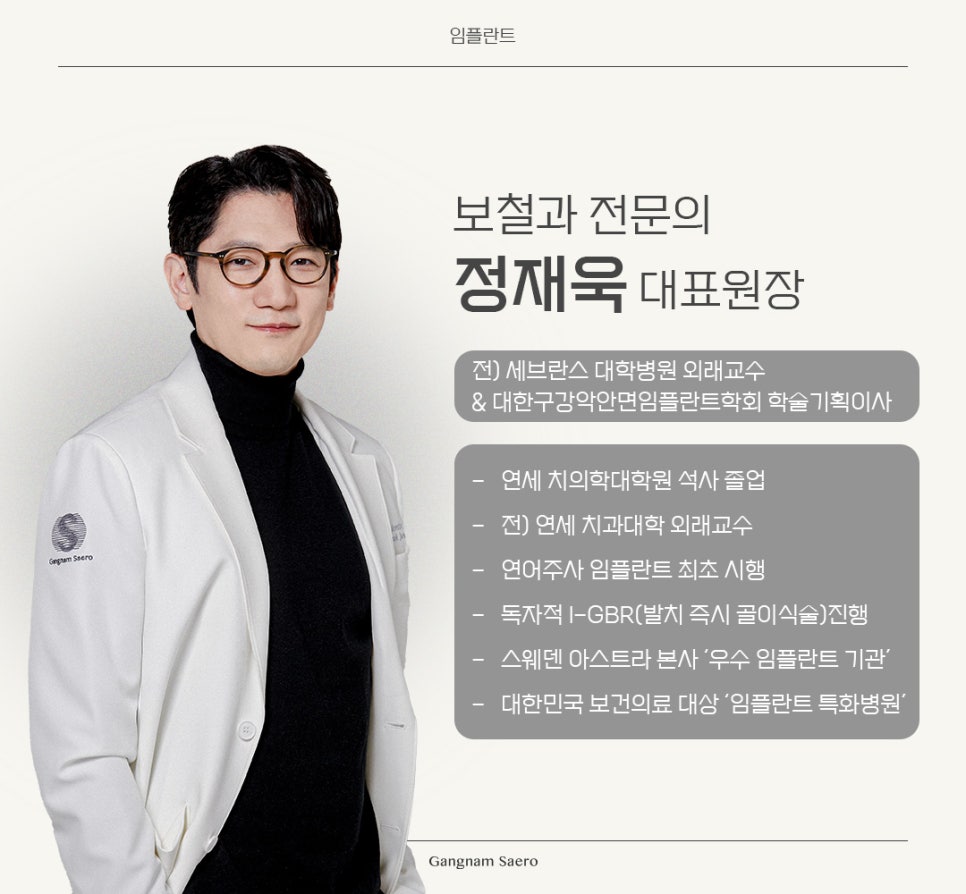
For implant care to be carried out properly,
a treatment system that considers the period after surgery is necessary.
Gangnam Sero Dental Clinic
plans for the time after implant placement as well,
and focuses on lowering the possibility of side effects
through regular checkups and care.
For implants,
what matters more than “placing them well”
is “using them for a long time without problems.”
For worry-free use,
predictable care,
and implants that do not burden daily life,
Gangnam Sero Dental Clinic will be with you.
A new smile, a new beginning
This is Gangnam Sero Dental Clinic.
- This post is provided by a medical institution due to a contractual relationship with a third party, including medical information.