Orthodontic treatment for malocclusion
How to approach it without surgery
Clear aligner malocclusion
Beyond the visible problem of crooked teeth
Malocclusion is an issue that affects overall quality of life.
The balance of the teeth visible when smiling,
chewing function when eating,
pronunciation when speaking, and even jaw fatigue.
Malocclusion is not simply a matter of “unpleasant-looking teeth,”
but also a functional condition that can lead to bad breath, periodontal disease, indigestion, nutritional imbalance,
and even temporomandibular joint problems.
A large proportion of the population experiences malocclusion.
Now, beyond cosmetic purposes,
it is necessary to calmly examine why orthodontic treatment is needed from a therapeutic perspective.
Reasons why malocclusion treatment is necessary
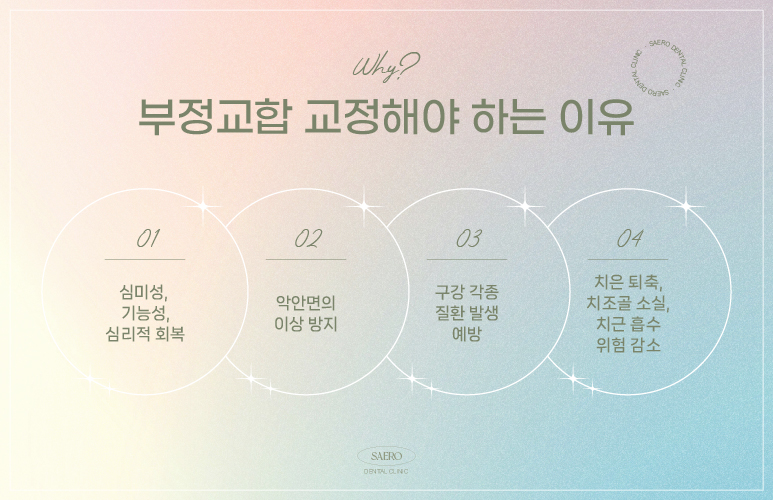
- Restoring aesthetics, function, and confidence
If malocclusion continues,
the balance of the face collapses,
and the bite becomes uncomfortable,
leading to reduced chewing function.
This small discomfort accumulates in daily life
and can even lead to psychological withdrawal.
- Preventing abnormalities in maxillofacial structure
If an incorrect bite persists for a long time,
not only the teeth but also the jaw and facial structure
may undergo gradual changes.
Early orthodontic treatment plays a role in preventing these changes.
- Reducing the incidence of oral disease
Malocclusion increases food trapping
and makes oral hygiene management difficult,
after which it raises the likelihood of cavities and periodontal disease.
It can also cause mouth breathing,
creating an environment in which bacteria multiply.
- Protecting gum and bone health
Chewing predominantly on one side
can lead to gum-related problems such as
gingival recession, alveolar bone loss, and root resorption.
Orthodontic treatment is a process of distributing this burden more evenly.
Types of malocclusion
Normal occlusion
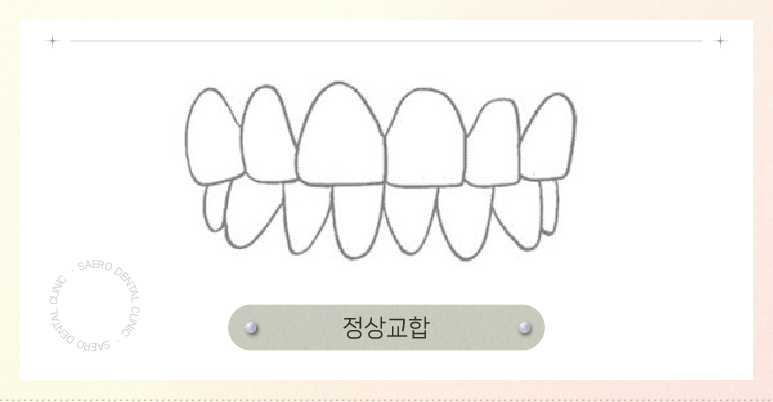
The anteroposterior relationship of the molars is stable,
and the function of the front teeth and the alignment are harmonious.
Class 1 malocclusion
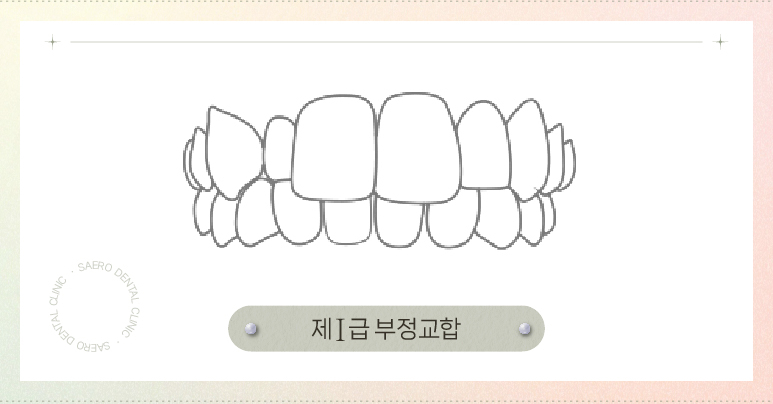
The molar relationship is normal,
but the front teeth are irregularly aligned
or protrusion is present.
Class 2 malocclusion
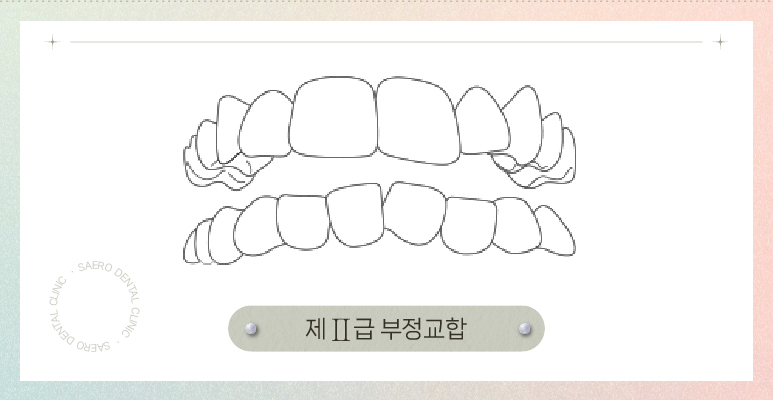
The upper jaw is positioned forward relative to the lower jaw,
appearing as deep bite or a retruded chin.
Class 3 malocclusion
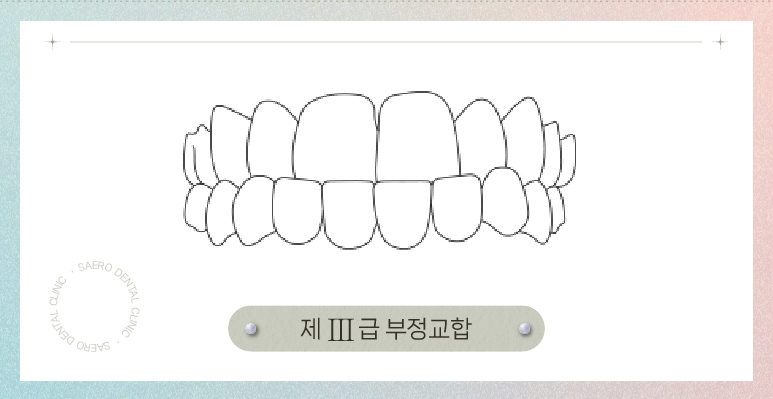
The lower jaw is positioned forward relative to the upper jaw,
appearing as an underbite or a prognathic jaw.
Open bite
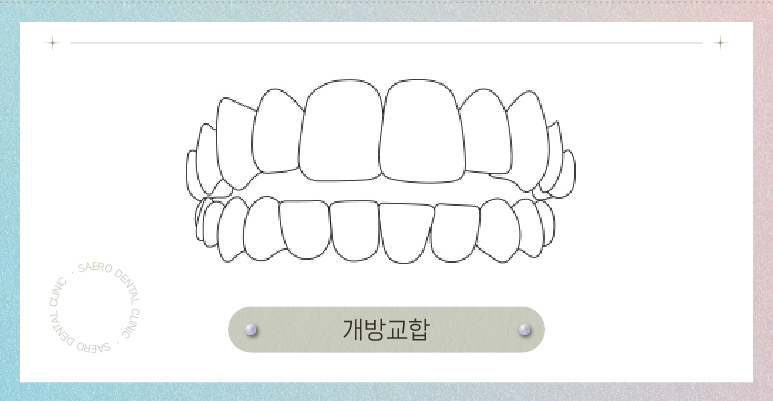
When the mouth is closed, the front teeth do not touch,
and a space remains.
Deep bite
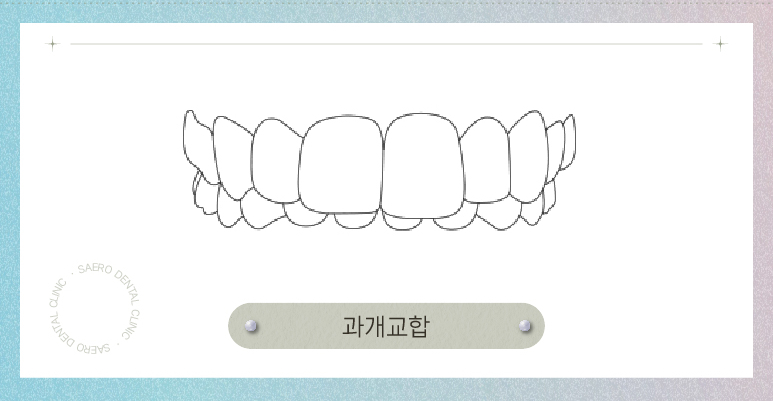
The upper teeth excessively cover
the lower teeth.
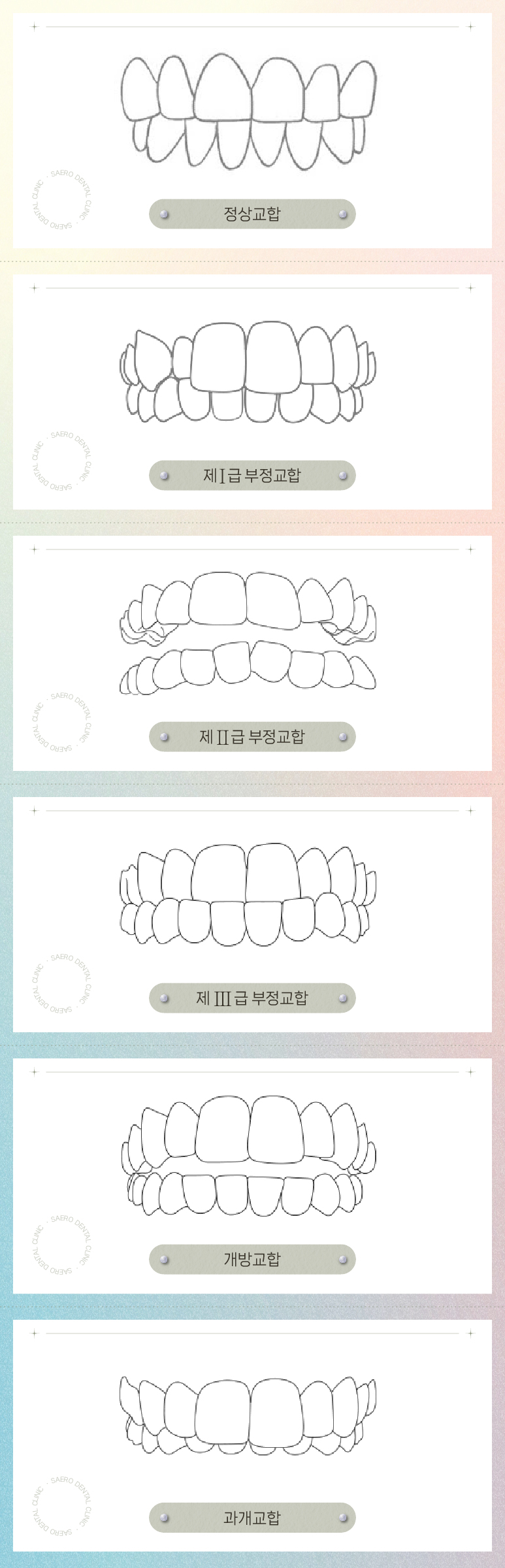
Before learning about clear aligner malocclusion,
types of malocclusion you should know
The key criterion for malocclusion is
the anteroposterior relationship of the front molars.
Criteria for choosing a treatment method for malocclusion
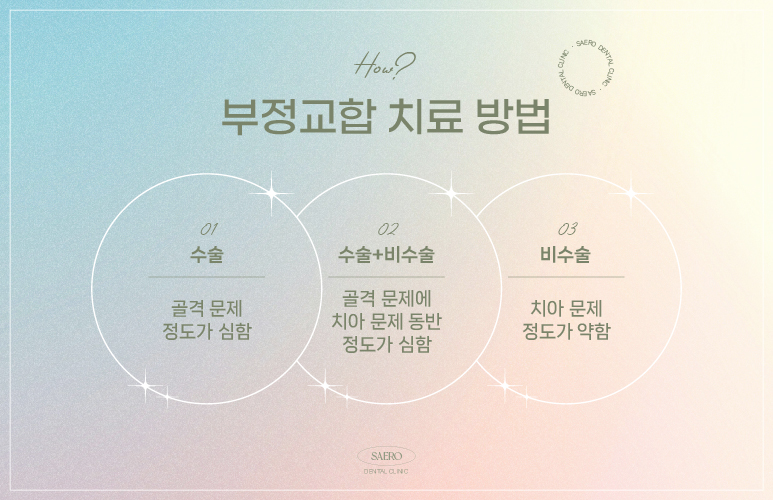
Before learning about clear aligner malocclusion,
malocclusion treatment methods you should know
Treatment for malocclusion
varies depending on the cause and severity.
Skeletal problem + severe malocclusion: bimaxillary surgery
Tooth problem + mild malocclusion: orthodontic treatment
Mixed skeletal and dental problems + severe cases: surgery-first orthodontics or presurgical orthodontics
Among these, the area many people worry about is
orthodontic treatment that is possible without surgery,
that is, clear aligner malocclusion.
Clear aligner malocclusion cases and appliances used
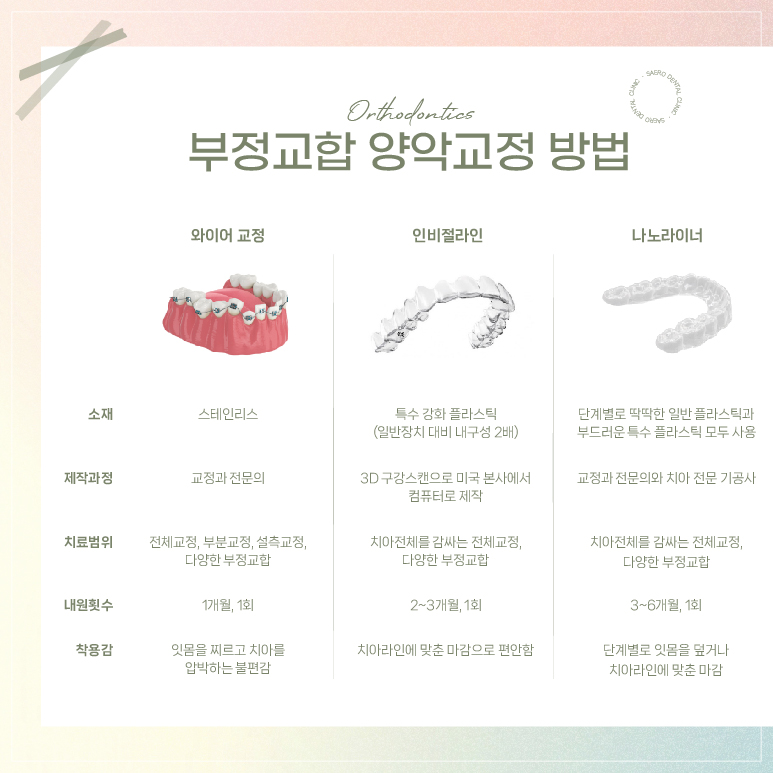
Non-surgical clear aligner treatment is
appropriate when skeletal changes are not significant
and bite improvement is possible through tooth movement alone.
For people who find wire braces burdensome,
for occupations where aesthetics are important,
and for those for whom the number of visits and time management matter,
clear aligner malocclusion can be a practical option.
Invisalign: a global-standard appliance with excellent stability and durability
NanoLiner: a domestic clear aligner treatment with a relatively short treatment period
Magic Align / Serafin / Ddiheim: options with reasonable cost
Because each appliance has clear strengths and weaknesses,
it is important to choose one tailored to the patient’s type of malocclusion and lifestyle.
The key to clear aligner malocclusion is the plan
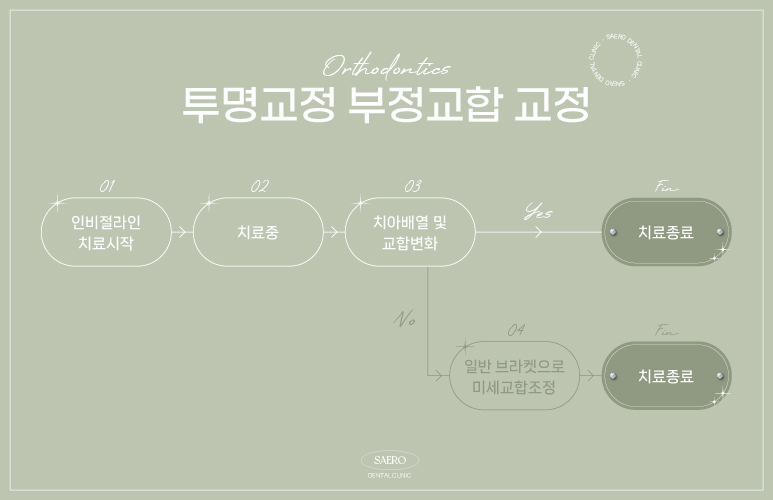
In clear aligner treatment, it is not the appliance
but the precision of the treatment plan that determines the outcome.
Gangnam Saero Dental Clinic
complements the clinical limitations of clear aligner treatment
through fine occlusal adjustments and detailed step-by-step planning,
creating stable results even in non-surgical malocclusion cases.
What matters more than the result in clear aligner malocclusion

In orthodontic treatment, more important than short-term change
is the stability after treatment.
It should not end with straight teeth;
the chewing function, jaw balance, and facial harmony
must remain comfortable for a long time.
Gangnam Saero Dental Clinic
does not view malocclusion simply as a problem of alignment,
but as something to be seen within function and the flow of daily life.
Not excessively,
but without missing what matters.
We consider both the visible changes
and the invisible stability.
A new smile,
a new beginning.
For malocclusion treatment, Gangnam Saero Dental Clinic.
- This post is an article presented by a medical institution due to a contractual relationship with a third party, including medical information.