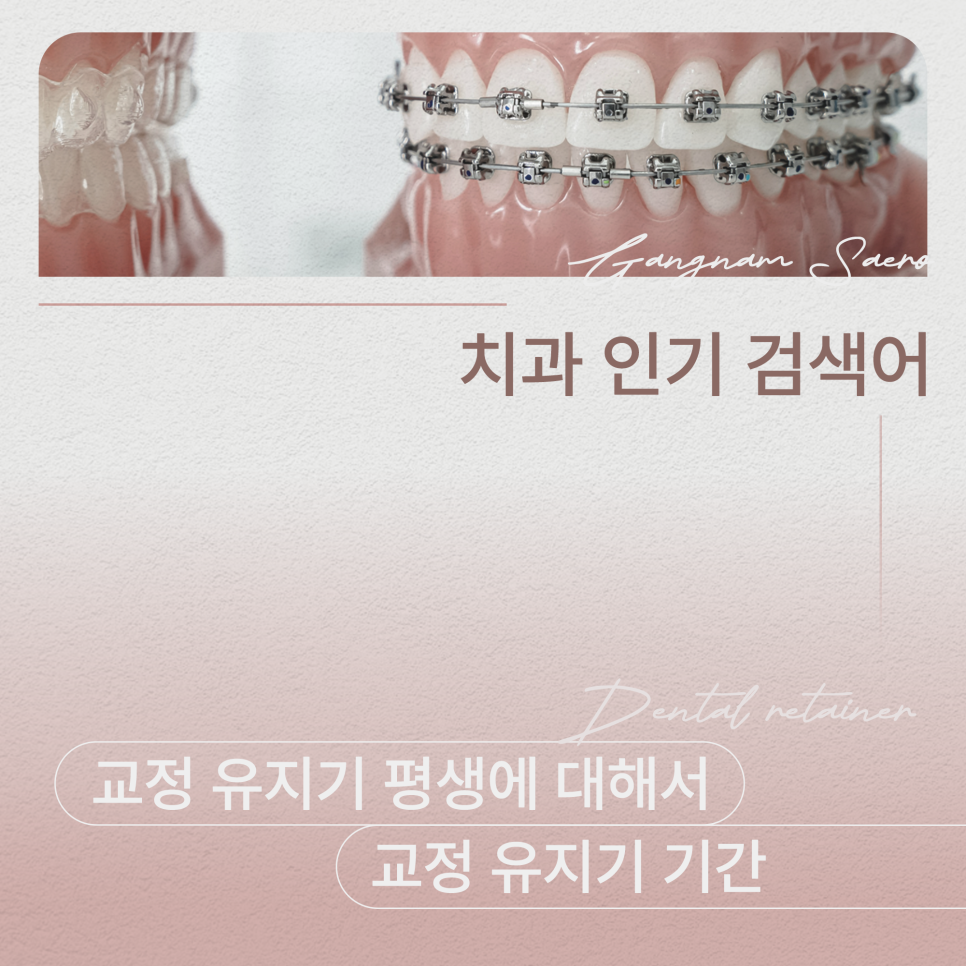
Popular Dental Search Terms
About wearing retainers for life
Retainer wearing period
As one year ends and a new one begins
The topic prepared by Gangnam Saero Dental Clinic
is a special feature on the most popular search terms from the past year,
and the seventh is the No. 1 search term in July 2025:
worn retainers for life!
When orthodontic treatment is over,
many people think this way:
“Now everything is finished.”
But the real completion of orthodontic treatment
does not happen the moment the appliance is removed,
it depends on how you manage the period after that.
Teeth that have been aligned through orthodontic treatment
are not yet in a “stable state.”
That is because the force that tries to return them to their original position,
that is, the tendency for relapse, is strongest
right after orthodontic treatment ends.
So what is absolutely necessary after orthodontic treatment
is the retainer,
and the concept that many people are curious about:
wearing retainers for life.
Why are retainers necessary?
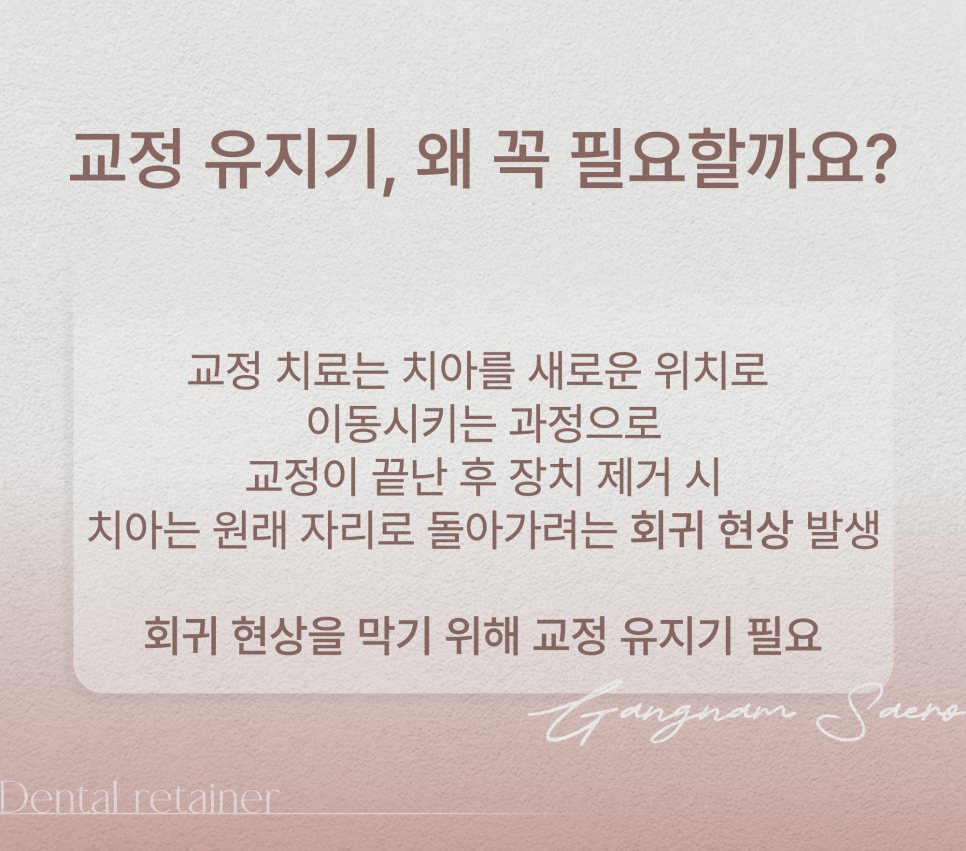
Teeth are not fixed objects embedded in bone.
Around the teeth,
there is an elastic tissue called the periodontal ligament
that responds to external forces and allows movement.
Orthodontic treatment
slowly stretches this periodontal ligament
and moves the teeth to a new position.
However, once the orthodontic appliance is removed,
the stretched ligament tends to shrink back.
Without a retainer at this time,
the teeth will slowly, but surely,
return to their original position.
That is why the phrase wearing retainers for life
is not an exaggeration,
but a concept based on the physiological characteristics of teeth.
Wearing retainers for life — do you really have to wear them for life?
To put it simply,
“all day, for life, just like at first” is not the case.
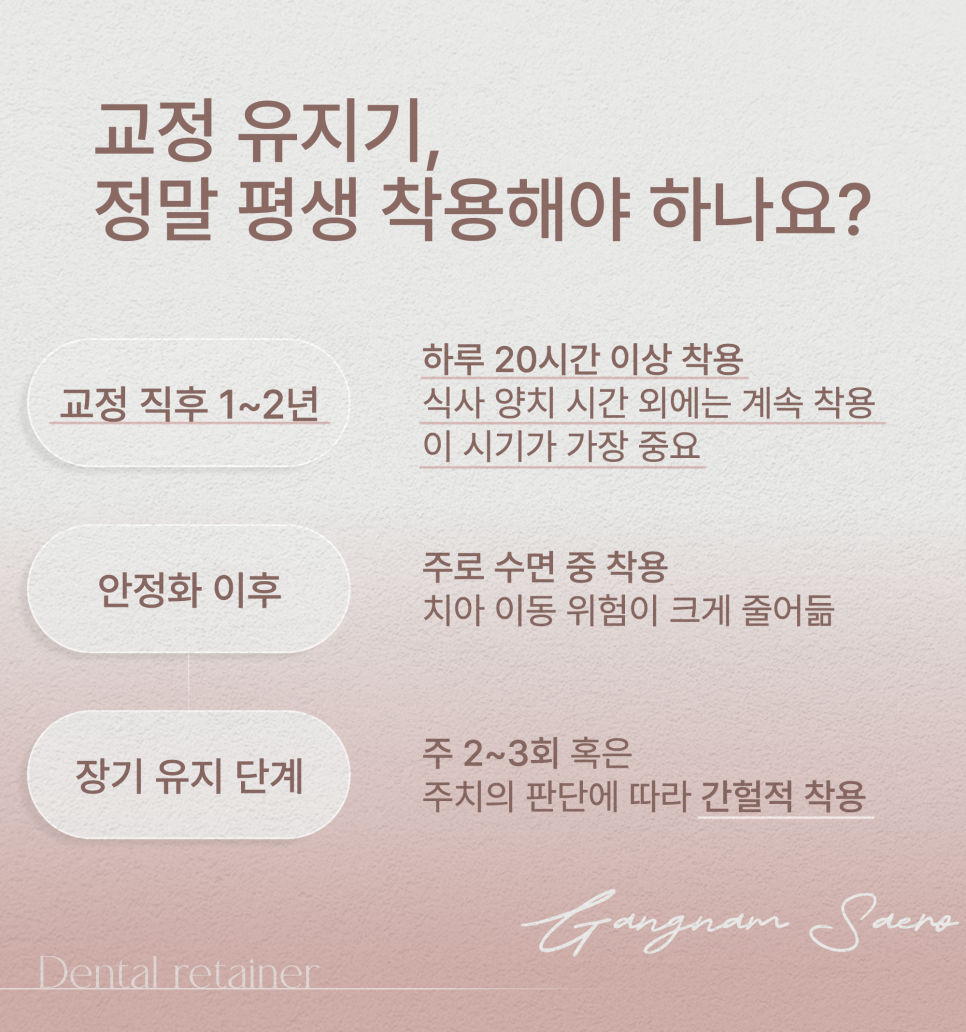
Retention has stages.
- The first 1–2 years after orthodontic treatment
Wear for more than 20 hours a day
Wear continuously except during meals and brushing
This is the most important period
- After stabilization
Mainly worn during sleep
The risk of tooth movement is greatly reduced
- Long-term maintenance stage
2–3 times per week, or
intermittent wear depending on the dentist’s judgment
As time passes like this,
the burden of wearing them decreases,
but stopping completely may increase the risk of relapse.
So the expression “for life”
is closer to meaning that you manage your teeth for life.
Characteristics by retainer type
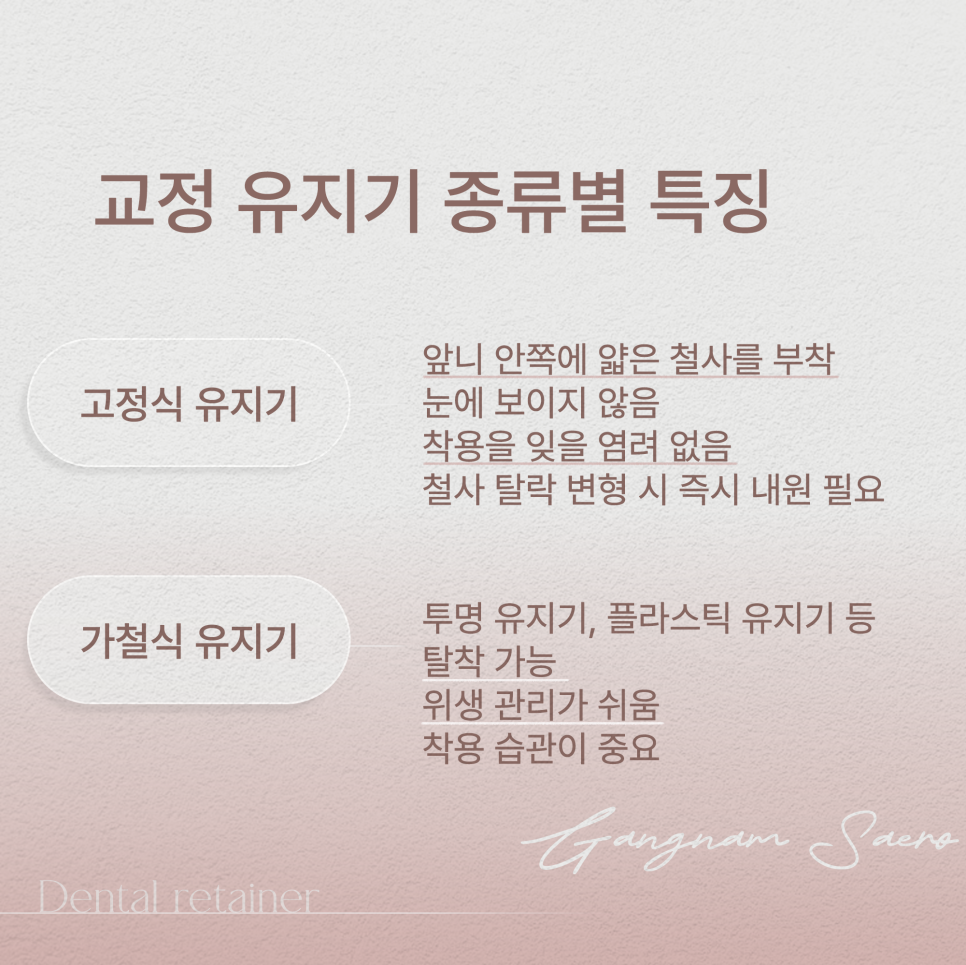
- Fixed retainer
A thin wire attached to the back of the front teeth
Not visible
No need to worry about forgetting to wear it
If the wire comes off or becomes deformed, visit the clinic immediately
- Removable retainer
Clear retainers, plastic retainers, etc.
Can be removed
Easy to keep clean
Wearing habits are important
In most cases,
fixed and removable retainers are used together
to provide retention management for life.
What happens if you do not wear a retainer
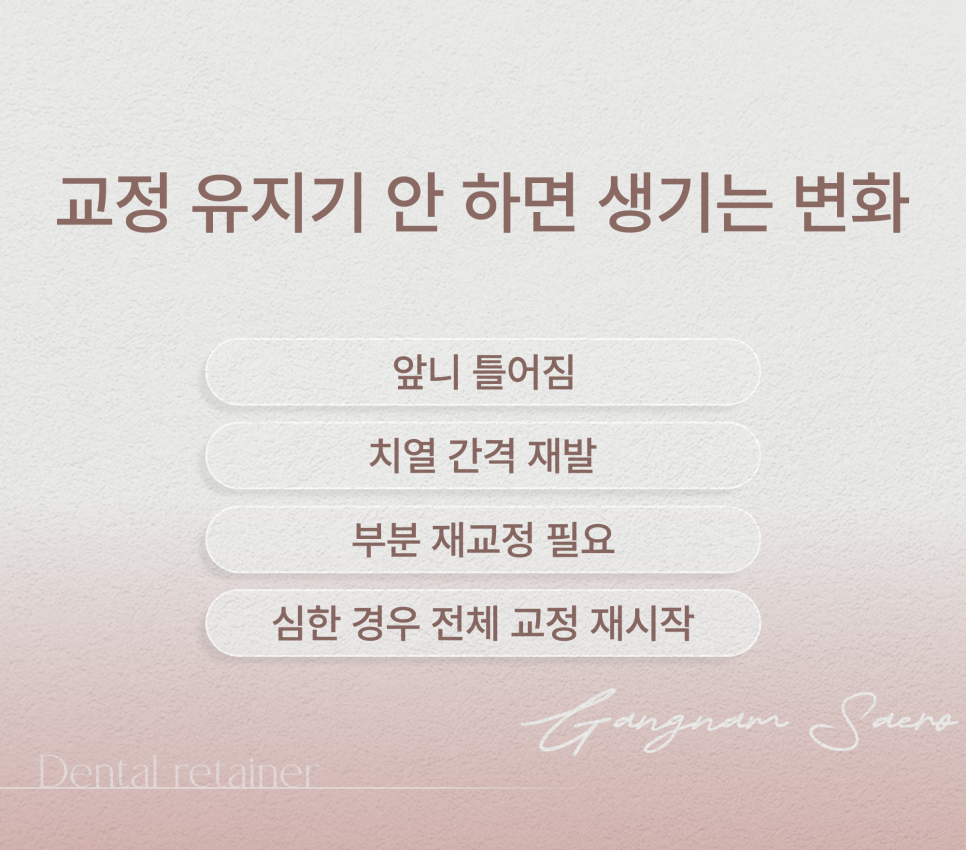
Front teeth becoming crooked
Recurrence of gaps between teeth
Need for partial retreatment
In severe cases, restarting full orthodontic treatment
Especially because the front teeth
are the first and fastest to move,
poor retainer management can
lead to undoing the results of orthodontic treatment yourself.
The key to lifetime retainer management
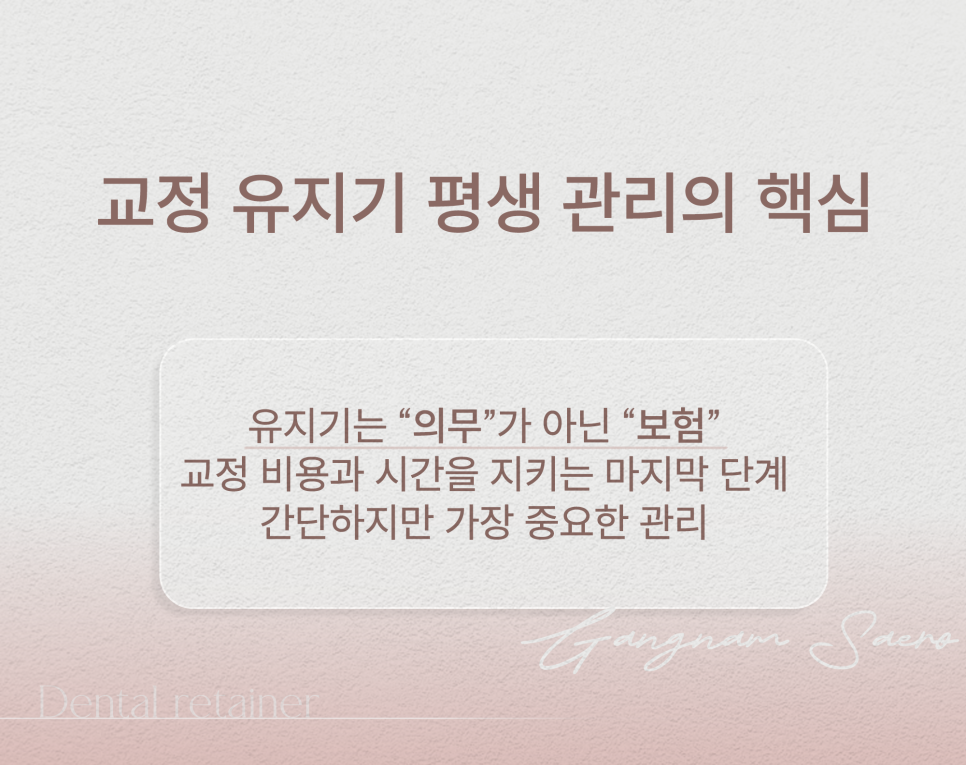
A retainer is not an “obligation,” but an “insurance policy”
The final step to protecting the cost and time spent on orthodontic treatment
Simple, but the most important part of care
Orthodontic treatment may be over,
but teeth can still move.
That is why retainer care is not optional, but essential.
The completion of orthodontic treatment is retention
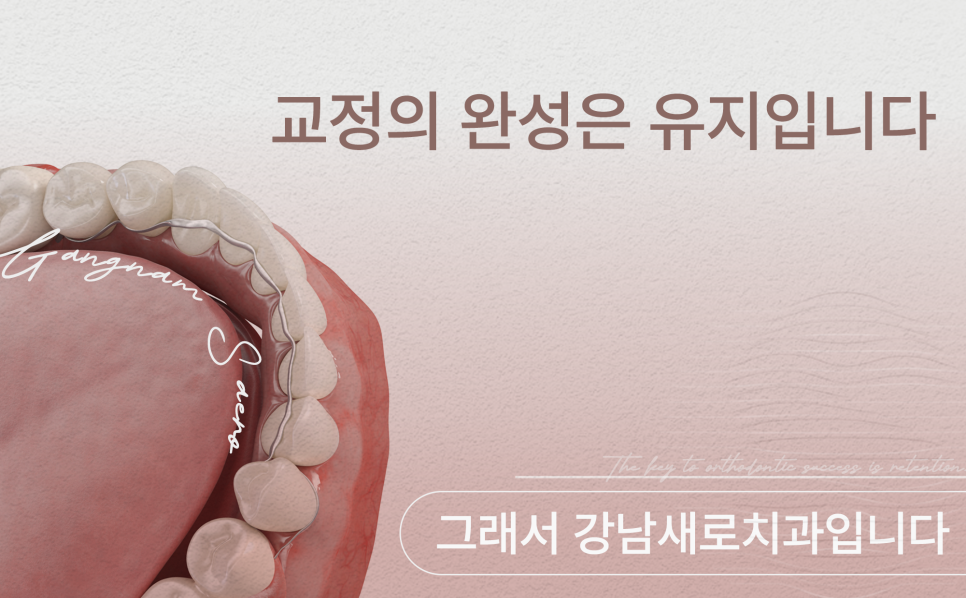
Orthodontic treatment
is not just the process of straightening teeth,
but also includes the process of maintaining that condition for a long time.
The phrase wearing retainers for life
may feel burdensome,
but it also means that you value and protect the results of orthodontic treatment.
A new smile,
and care that considers how to keep that smile for a long time.
This is Gangnam Saero Dental Clinic.
- This post is provided with medical information and other content presented by a medical institution due to a third-party contractual relationship.