Does orthodontic treatment hurt?
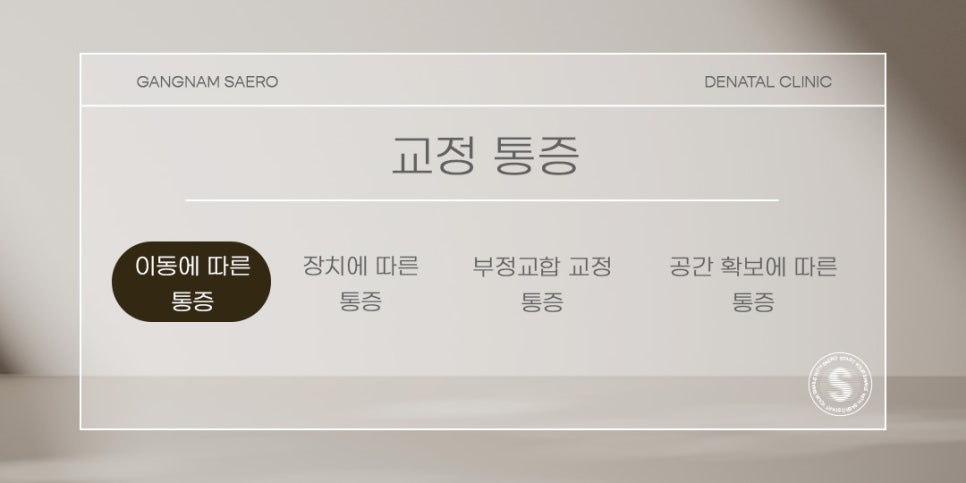
Orthodontic pain
Causes of orthodontic pain Reasons for orthodontic pain
When considering orthodontic treatment,
one of the most frequently searched questions is
“Does orthodontic treatment hurt a lot?”
Orthodontics usually takes 1 to 2 years, and in some cases up to 3 years,
because you have to wear the appliance for a long period of time.
Unlike surgery, which ends with short-term recovery,
it is only natural to worry about pain first.
However, orthodontic pain is
more often a temporary discomfort during the adjustment process
rather than something that remains continuously severe.
If you understand the principle behind why pain occurs,
that vague fear can be greatly reduced.
Reasons for orthodontic pain – How teeth move
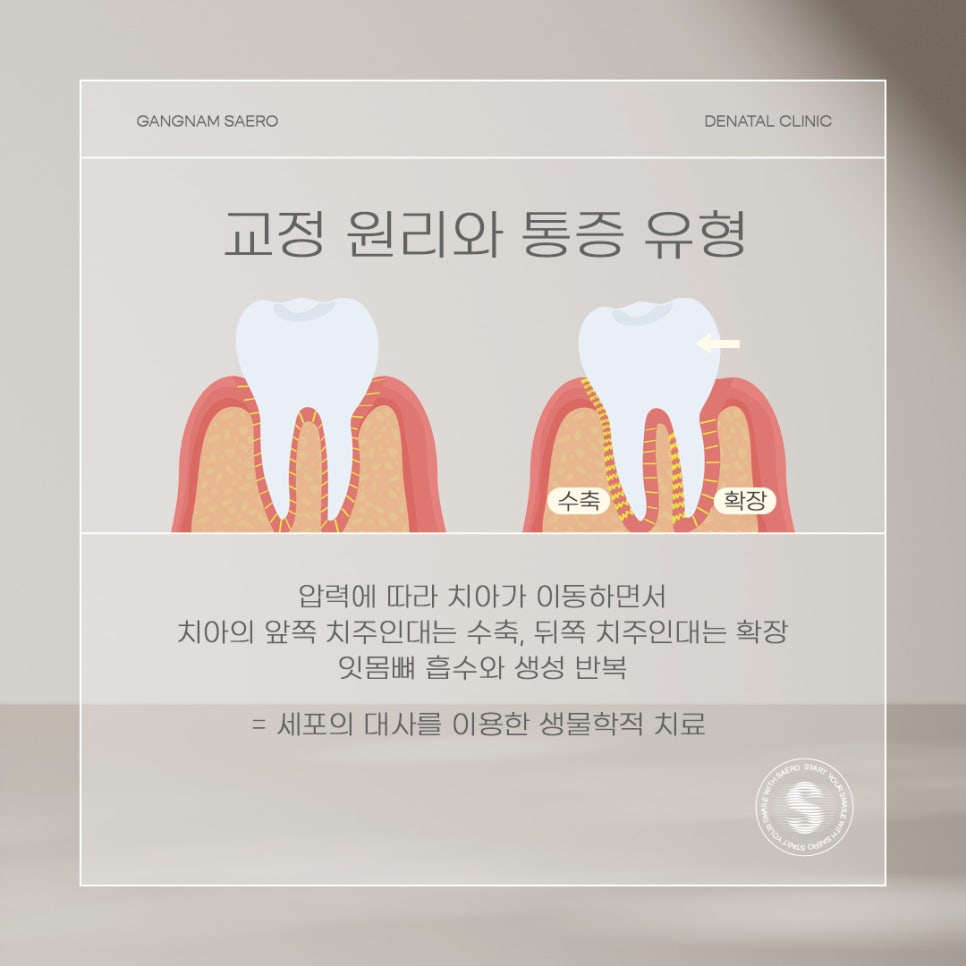
Orthodontic treatment
applies a consistent, continuous force to the teeth
to gradually move them into the desired position.
During this process, the periodontal ligament that supports the teeth
is compressed on the side receiving pressure and stretched on the opposite side,
while the jawbone
is repeatedly
resorbed on one side
and newly formed on the other.
Because of these physiological changes,
a heavy feeling in the gums,
a slight loose feeling in the teeth,
a throbbing sensation when chewing
may appear.
In most cases, these symptoms naturally lessen within 2 to 3 days after an adjustment, and at the latest within a week.
Reasons for orthodontic pain – Irritation from the appliance
The type of orthodontic appliance varies,
but when brackets, wires, or elastics are used,
they can cause discomfort by contacting the oral mucosa.
A rubbing sensation on the inside of the cheeks
Irritation on the inside of the lips
A foreign-body sensation touching the tongue
This kind of pain is
not because the appliance is sharp,
but because the inside of the mouth is not yet used to it.
As time passes and the mucosa adapts, most of this discomfort improves, and if necessary, the clinic can reduce it by adjusting the wire length or using protective wax.
Reasons for orthodontic pain - Space creation process
If there is not enough space for the teeth to move,
tooth extraction orthodontics or a process to create space between teeth may be needed.
At this time,
temporary pain after extraction
A feeling of pressure when wearing separators (small rubber rings placed between teeth)
may appear.
In particular, separators
must widen the space between teeth for a short period,
so they can cause a temporary aching feeling,
but this usually disappears naturally after a few days.
Reasons for orthodontic pain - Correction of malocclusion
Compared with simple alignment correction,
malocclusion correction involves a larger range of movement,
and in some cases auxiliary devices such as mini-screws are used,
so the initial pressure may feel greater.
However, this too is usually
a temporary discomfort right after the appliance is adjusted,
rather than persistent pain,
and it can be sufficiently managed with appropriate pain relief medication and rest.
Ways to reduce orthodontic pain
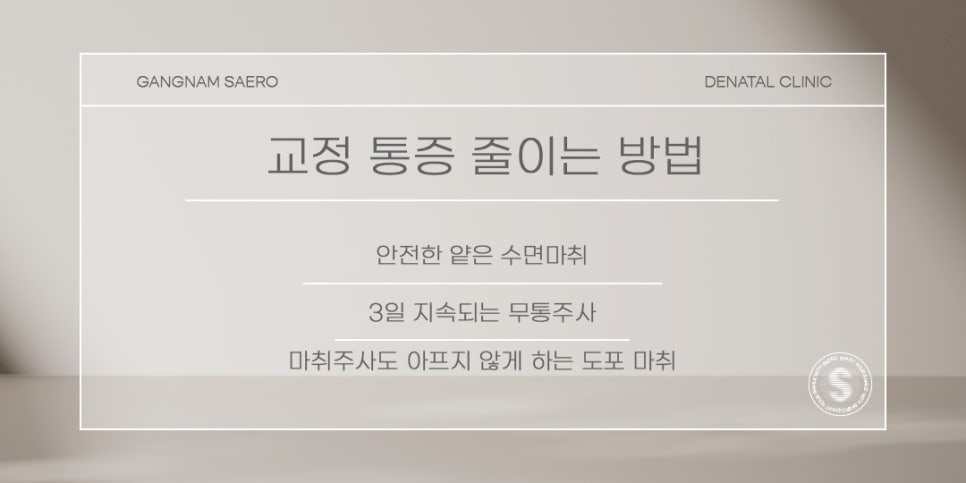
Orthodontic pain cannot be completely eliminated,
but it can be reduced significantly.
Careful force control without overdoing it
An accurate treatment plan
Selecting appliances suited to the patient's condition
Thorough aftercare
When these four elements are in place,
stable orthodontic treatment is possible while minimizing unnecessary pain.
Also, if the pain is severe or lasts for a long time,
don't endure it—visit the clinic
and receive appliance adjustment or consultation.
Orthodontic treatment is not a process of briefly putting up with discomfort,
but preparation for being able to chew and smile comfortably for decades to come.
Rather than being afraid of pain,
if you understand it as a natural signal that the body is adapting to change,
orthodontic treatment can feel much more comfortable.
A new smile,
a new beginning.
- This post is a medical information post provided by a medical institution due to a third-party contractual relationship.