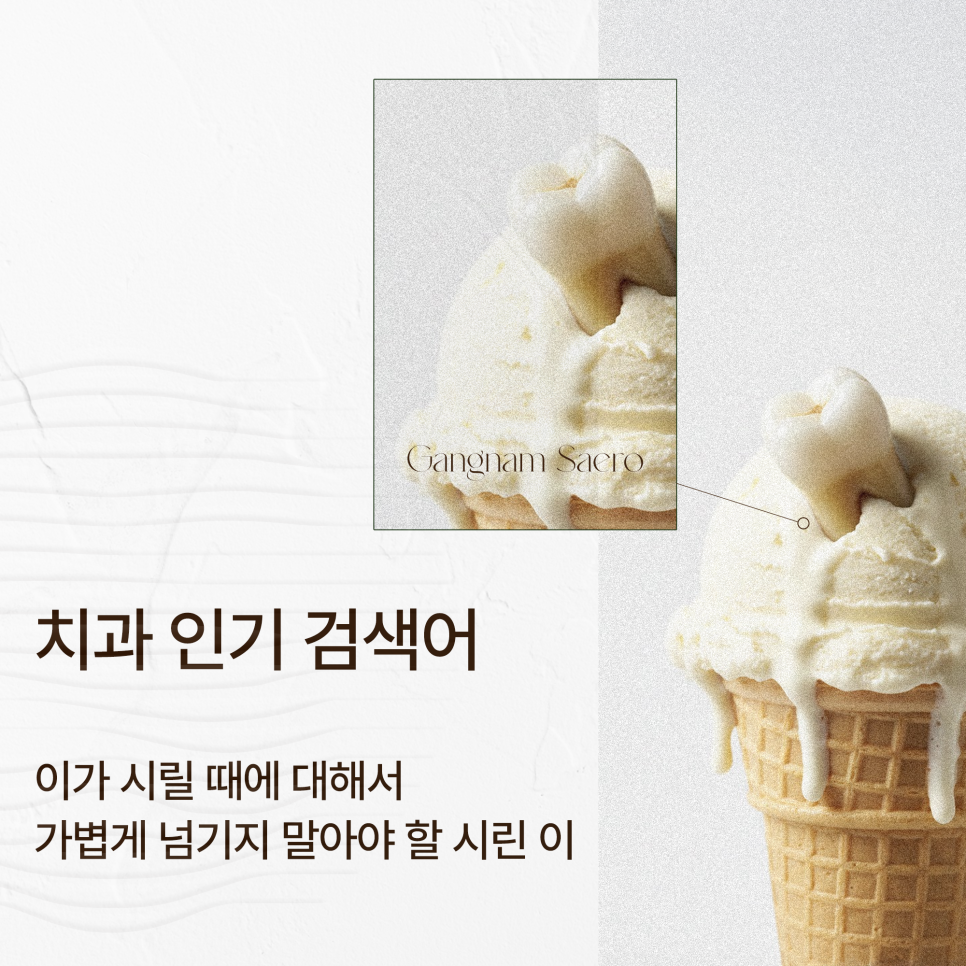
Popular dental search terms
About tooth sensitivity
Sensitive teeth that should not be brushed off lightly
As one year ends and a new year begins
The topic prepared by Gangnam Saero Dental Clinic is
A special feature on the most popular search term over the past year
The eleventh one is the No. 1 search term in November 2025
Tooth sensitivity!
When drinking cold water
A sudden sharp sensation,
Taking one bite of ice cream
An experience where one tooth reacts especially sensitively,
Many of you have probably experienced this.
"It’s probably just temporary."
"Maybe I’m just tired."
It is easy to brush it off like that,
but
Tooth sensitivity symptoms
are often a sign that the tooth is sending a structural warning.
It is not just a simple discomfort,
and it can be the beginning of tooth damage or gum problems,
so it is important to know the cause accurately.
The most common causes of tooth sensitivity
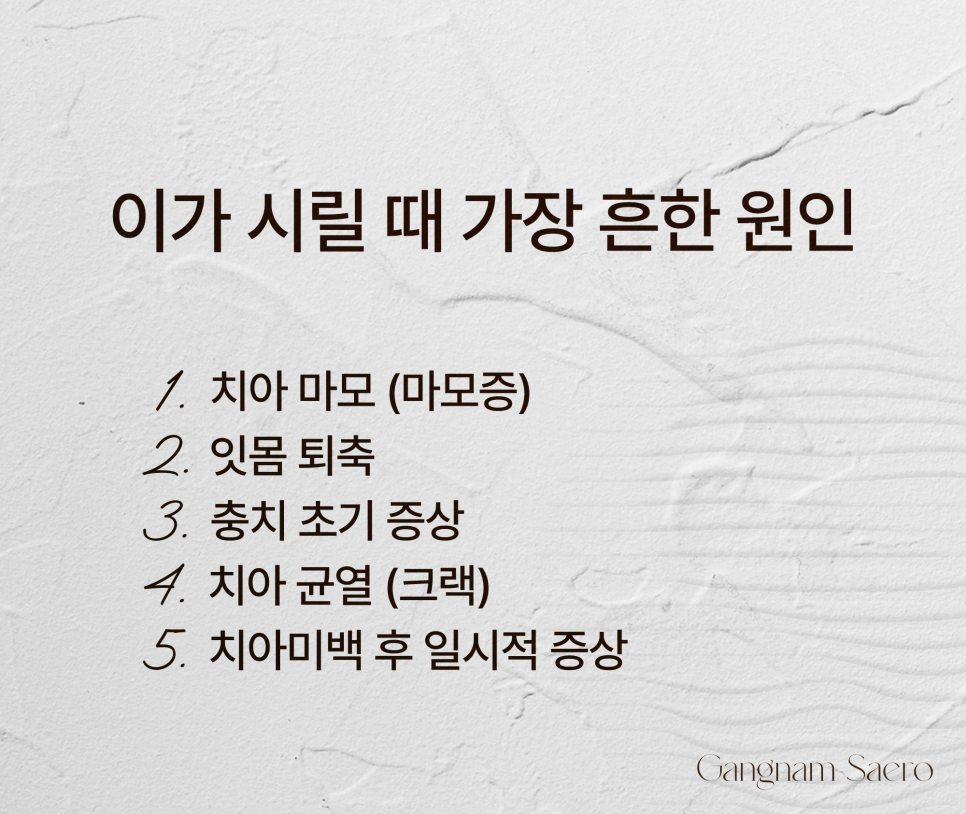
- Tooth wear (abrasion)
Brushing your teeth too hard
or using a rough toothbrush for a long time
causes the enamel, the protective outer layer of the tooth, to gradually wear down.
When the enamel becomes thinner,
the underlying dentin is exposed to external stimuli,
and cold or hot stimuli are transmitted closer to the nerve,
causing sensitivity.
Habitually scrubbing your teeth sideways too hard
Using a hard toothbrush
Using too much toothpaste
All of these can be causes.
- Gum recession
It may occur naturally with age,
but if the gums recede due to gum inflammation or excessive brushing habits,
the roots of the teeth become exposed.
Because the root area of the tooth
is not covered by enamel,
it reacts sensitively even to very small stimuli.
So
among people who say,
"I didn’t have this before, but these days my teeth are especially sensitive,"
gum recession is often the cause.
- Early symptoms of cavities
Cavities are often already advanced by the time they start hurting.
In the early stages, sensitivity often appears before pain.
In particular,
when eating sweets
when drinking cold water
if a specific area repeatedly feels sensitive,
it may be an early sign of a cavity.
- Tooth crack
If you often chew hard foods,
clench your teeth, or grind your teeth,
fine cracks can form in the tooth.
When stimuli enter through these cracks,
the tooth may feel fine at ordinary times,
but suddenly become sensitive when chewing or eating something cold.
If left untreated in this case,
the crack can deepen over time and may even lead to root canal treatment.
- Temporary symptoms after teeth whitening
If you recently had teeth whitening,
the chemicals may cause temporary sensitivity.
It usually eases within a few days,
but if it continues, dental treatment is needed.
Things you should never do when your teeth are sensitive
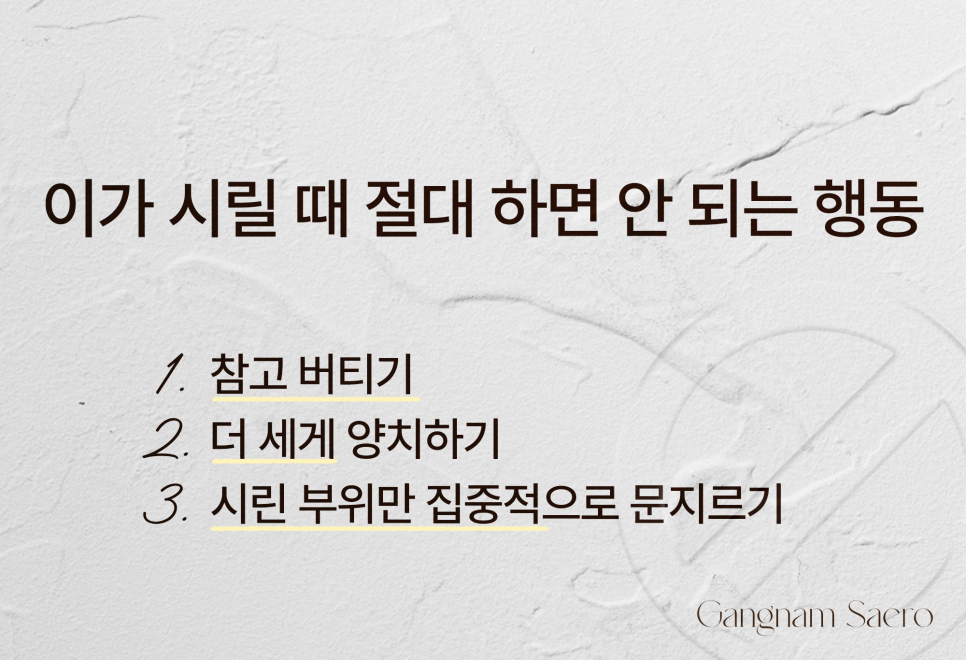
If you experience tooth sensitivity,
enduring it and holding out
Brushing more forcefully
Rubbing only the sensitive area repeatedly
These actions can wear down the enamel even more
and make the symptoms worse.
Home care when your teeth are sensitive
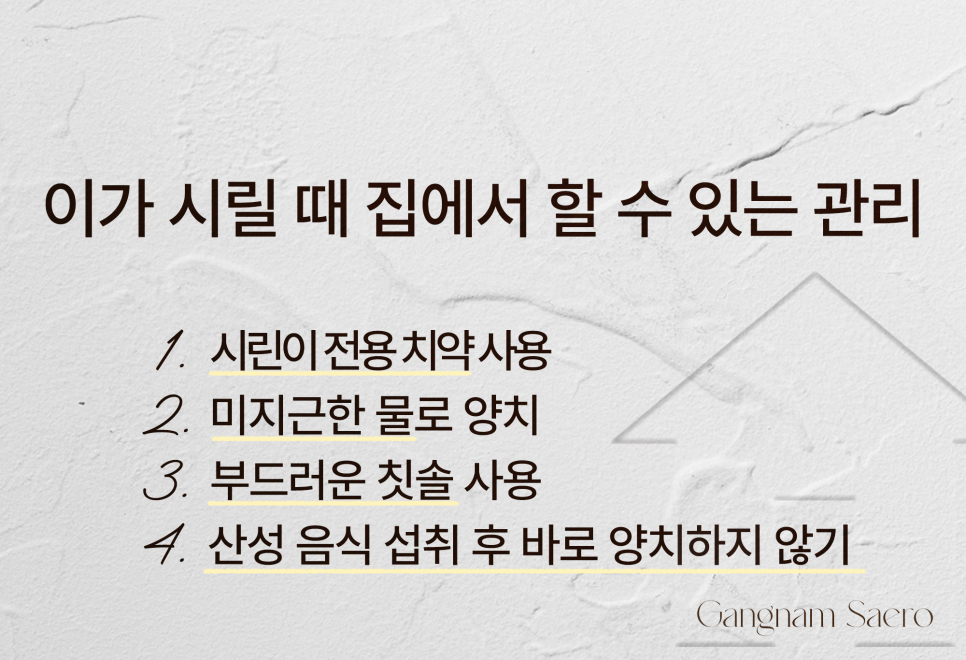
If tooth sensitivity appears
but you cannot go to the dentist right away,
you can temporarily relieve the symptoms by
using toothpaste for sensitive teeth
brushing with lukewarm water
using a soft toothbrush
not brushing immediately after consuming acidic foods
However, these methods only relieve the symptoms,
and they do not solve the underlying cause!
Signs you should go to the dentist when your teeth are sensitive
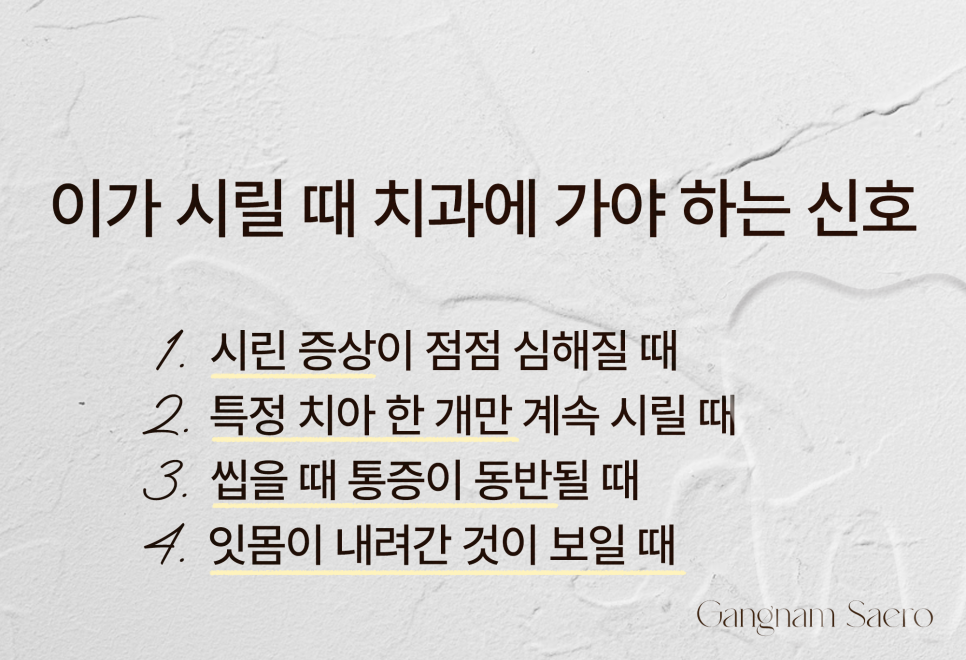
If tooth sensitivity becomes like the following,
it may be a sign that you should visit the dentist.
When the sensitivity gradually gets worse
When only one specific tooth keeps feeling sensitive
When pain occurs while chewing
When gum recession becomes visible
In such cases, it may not be simple sensitivity,
but rather a higher likelihood of cavities, cracks, or gum disease.
Treatment methods for tooth sensitivity
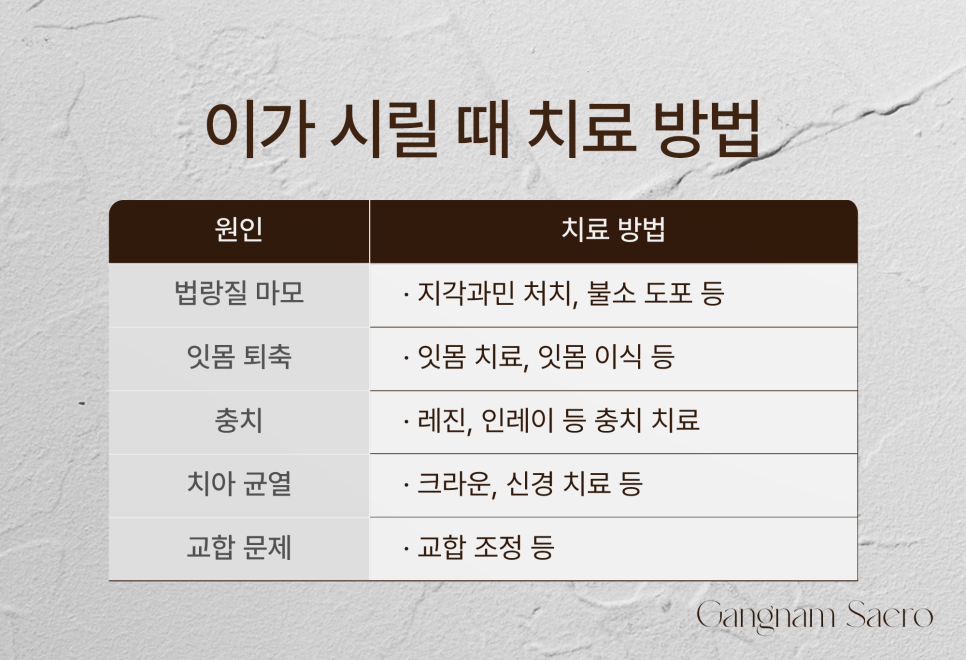
If you experience tooth sensitivity,
the treatment methods available at the dentist vary depending on the cause.
Cause: Enamel wear
Treatment: Treatment for dentin hypersensitivity, fluoride application, etc.
Cause: Gum recession
Treatment: Gum treatment, gum grafting, etc.
Cause: Cavities
Treatment: Cavity treatment such as resin or inlay
Cause: Tooth crack
Treatment: Crown, root canal treatment, etc.
Cause: Bite problems
Treatment: Bite adjustment, etc.
So,
it is difficult to make an accurate judgment based only on the words "it hurts when I drink water,"
and a precise diagnosis is necessary.
Nearby dentist when your teeth are sensitive: Gangnam Saero Dental Clinic
Feeling tooth sensitivity means
not that your teeth are simply sensitive,
but that the teeth have weakened.
If the cause is found early,
it may end with a simple treatment,
but if left untreated,
it can lead to root canal treatment or a crown.
If the sensitive symptoms keep recurring,
rather than enduring them, getting an accurate diagnosis
is the best way to use your teeth for a long time.
- This post is a post presented by a medical institution due to a contractual relationship with a third party regarding medical information, etc.