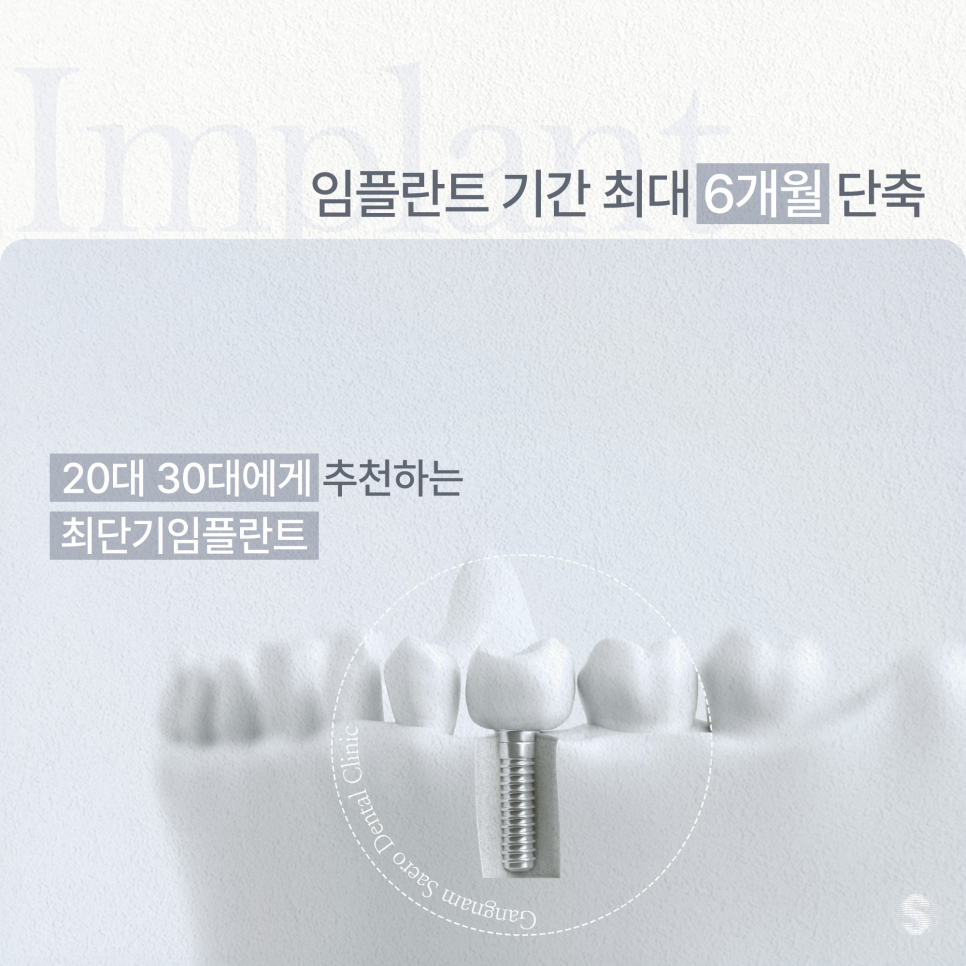
Implant treatment time reduced by up to 6 months
Recommended for people in their 20s and 30s
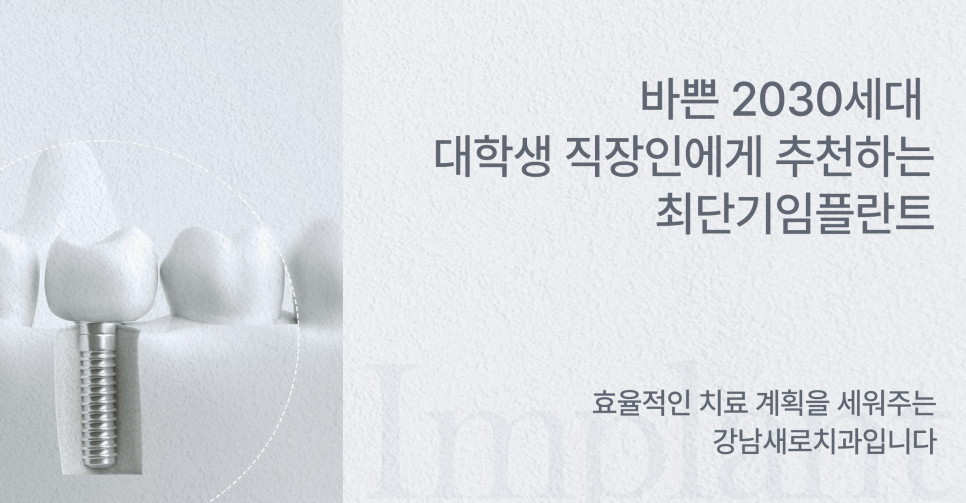
The shortest-duration implant for the MZ generation
People in their 20s and 30s often think
that they will rarely need implants, right?
But in reality, for various reasons,
many people lose teeth even at a young age.
Poor oral care from an early age,
unexpected accidents that damage teeth,
or cases where extraction was done during orthodontic treatment and then treatment was discontinued
can all be causes in many situations...!
However, implant treatment usually takes more than 6 months,
so for the 2030 MZ generation, which does not have much time to spare,
implant surgery can feel burdensome.
Fortunately, most young people with healthy jawbone conditions
are highly likely to be candidates for the shortest-duration implant,
which allows treatment much faster than conventional implants!
Problems that can occur if a tooth is left untreated after extraction
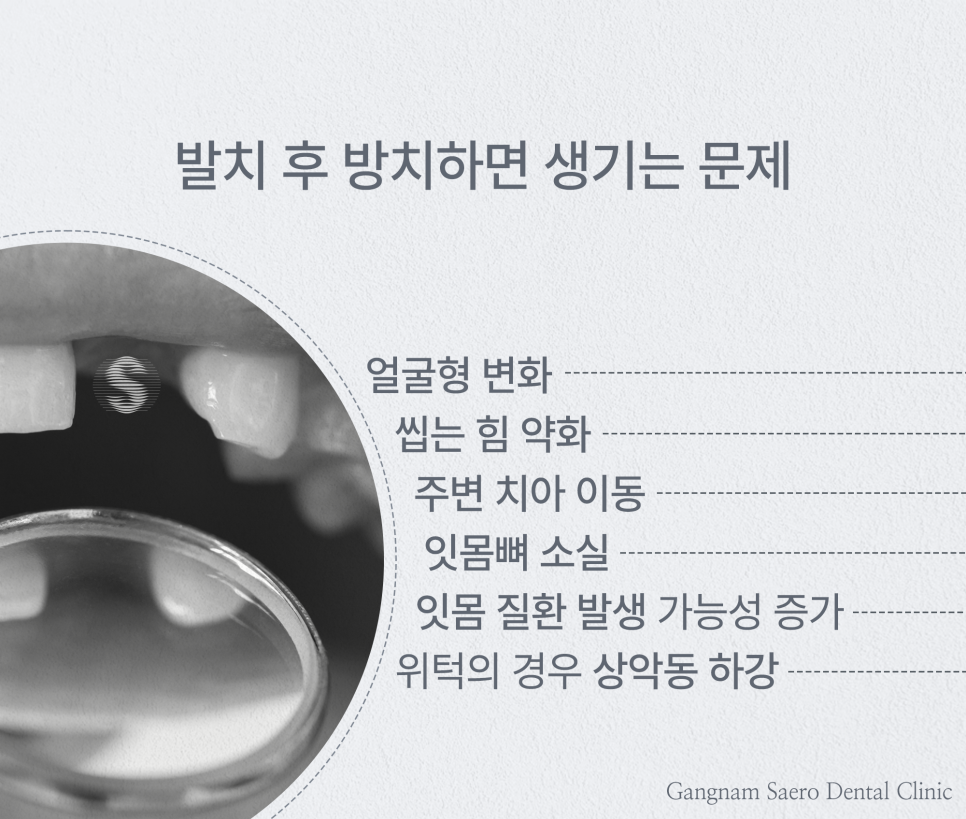
If a natural tooth is extracted and then left untreated,
various problems can arise over time.
Changes in facial shape
Weakened chewing force
Movement of surrounding teeth
Loss of jawbone
Increased likelihood of gum disease
For the upper jaw, the maxillary sinus descends
In particular, between 3 and 6 months after tooth extraction,
this is the period when the jawbone shrinks rapidly,
so once this period passes,
the shortest-duration implant treatment
may become more difficult.
Differences between the shortest-duration implant and conventional implants
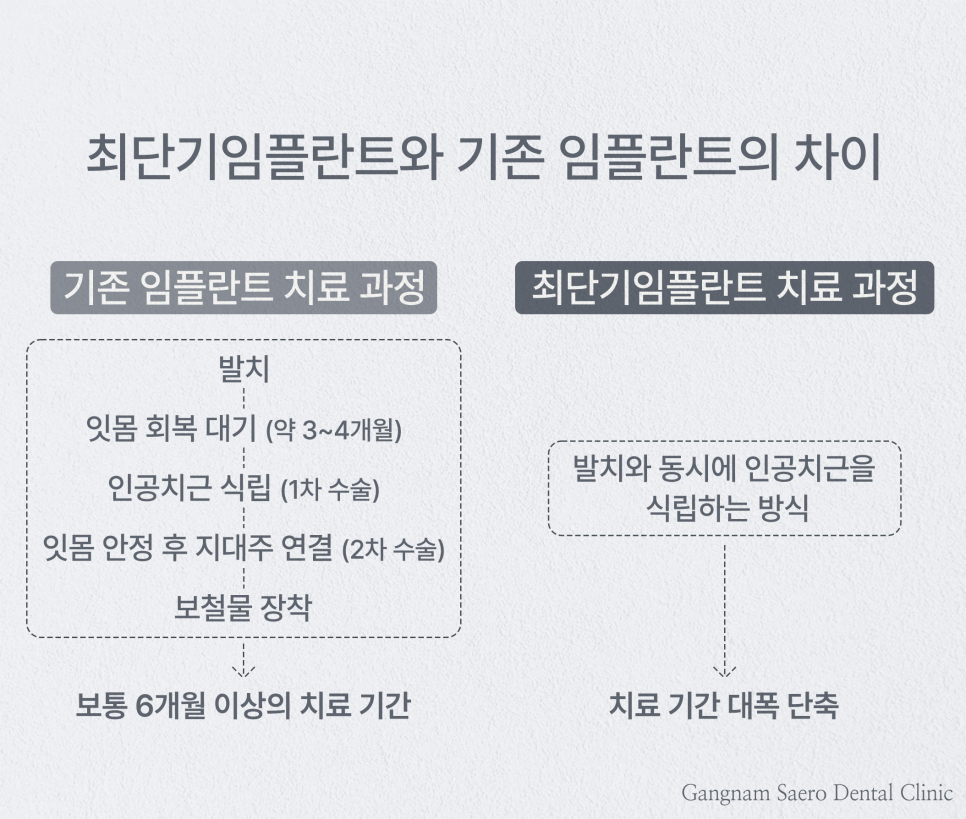
The conventional implant treatment process is as follows.
Extraction
→ Wait for the gums to heal (about 3–4 months)
→ Placement of the artificial root (first surgery)
→ Connection of the abutment after the gums stabilize (second surgery)
→ Placement of the prosthetic tooth
Because of this process, treatment usually takes more than 6 months.
By contrast,
the shortest-duration implant
is a method in which the artificial root is placed at the same time as extraction,
reducing unnecessary waiting time
and significantly shortening the treatment period.
This is especially a treatment option with a high likelihood of being applicable to
implant patients in their 20s and 30s with healthy jawbone conditions,
but to increase the success rate of treatment,
it should be carried out based on sufficient experience and precise diagnosis, right?
Combining orthodontic treatment and implants
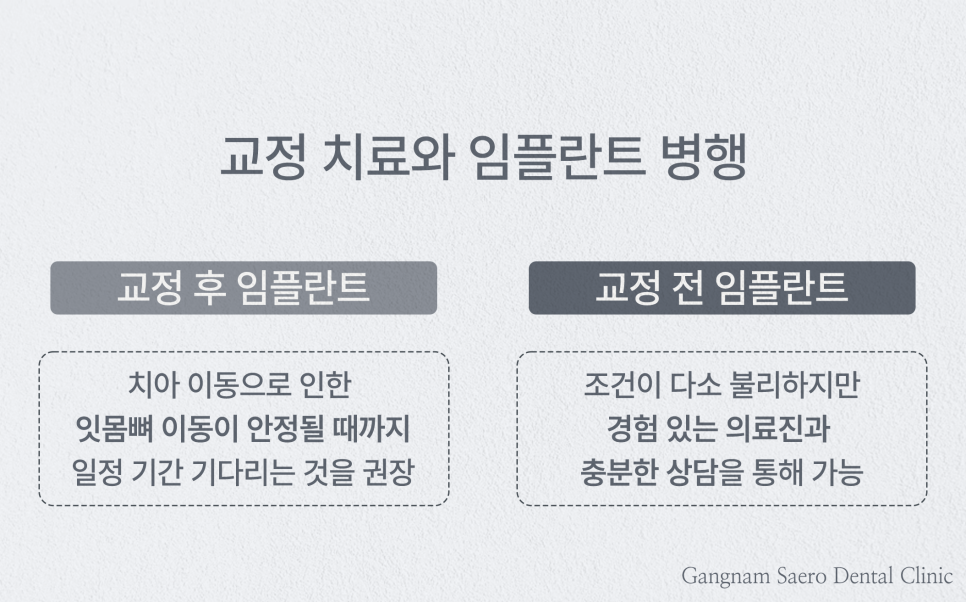
Among young people, there are many cases where people worry about implants because of orthodontic treatment.
This is because orthodontic appliances have become more diverse
and fast orthodontic systems have emerged,
so many people are planning orthodontic treatment.
If orthodontic treatment has already been completed,
it is best to wait for a certain period until the jawbone that changed due to tooth movement stabilizes.
On the other hand, if an implant is needed before orthodontic treatment,
the conditions may be somewhat less favorable,
but treatment itself is not impossible.
Instead, it is important to determine the treatment order
through sufficient consultation with an experienced medical team.
In general,
orthodontic treatment → implant treatment
is known to be the most ideal sequence.
Can implants be used for a lifetime?
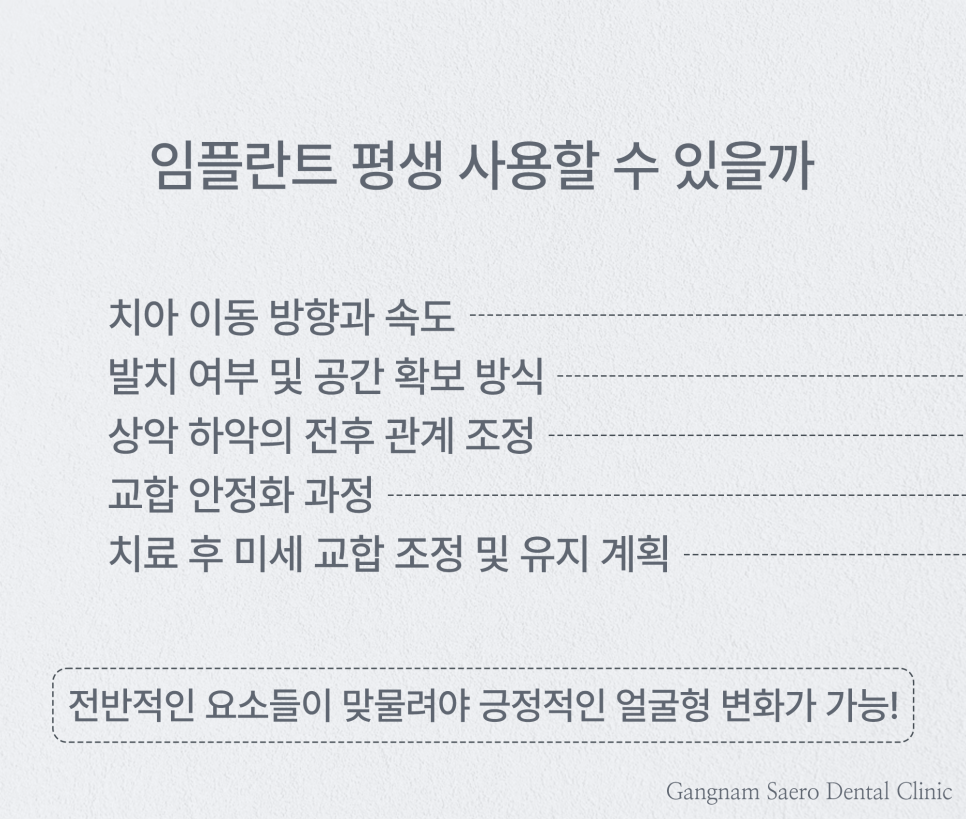
When considering implants at a young age,
many people worry about this:
"If I get one now, won’t I have to get it again later?"
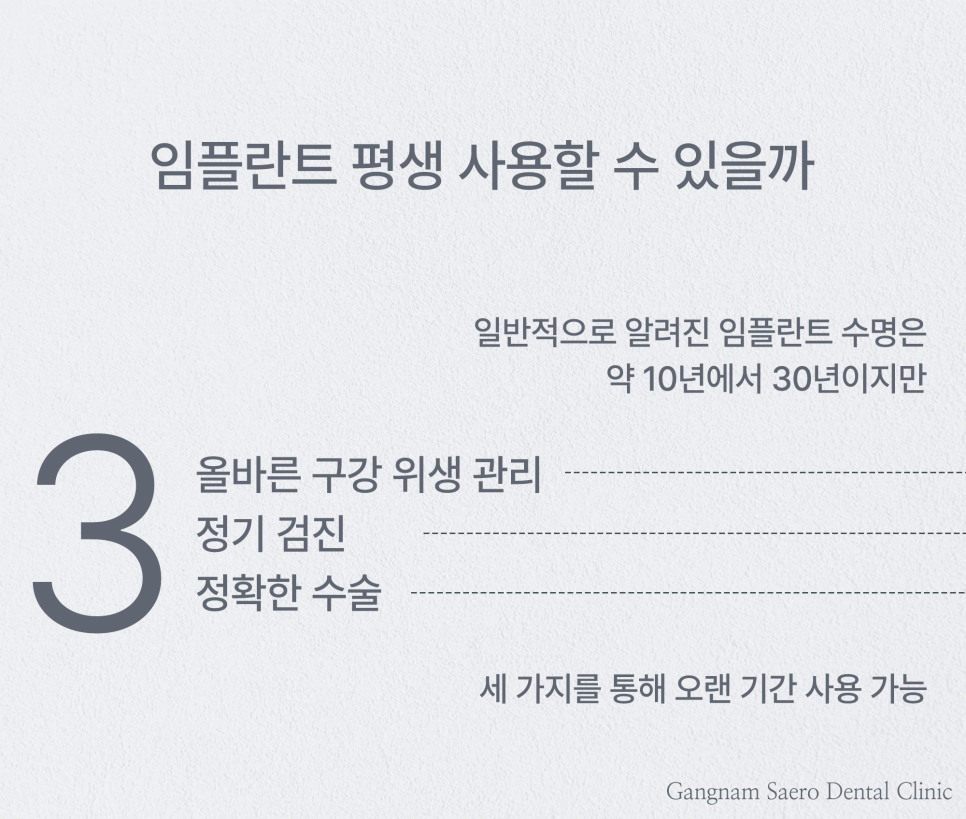
In general, the lifespan of an implant is known to be
about 10 to 30 years,
but cases have also been reported of early implants being used for more than 40 years.
In Korea, implants have only been widely used for about 20 years,
so long-term data has not yet accumulated sufficiently.
Therefore,
if the following three are maintained:
proper oral hygiene management
regular checkups
accurate surgery
then implants can be used stably for a long period of time.
The shortest-duration implant for people in their 20s and 30s
If you know treatment is needed
but keep putting it off because you do not have time,
the choice of treatment method becomes important.
Implant treatment time
The shortest-duration implant is a method that helps reduce treatment time
and supports a faster return to daily life,
so it can be especially helpful for busy people in their 20s and 30s.
That is because even in lives with limited time, such as those of college students and office workers,
an efficient treatment plan can be established.
Through fast recovery and stable treatment,
I hope you can return to a daily life where you can smile comfortably again
and eat naturally!
A new smile
A new beginning
This is Gangnam Saero Dental Clinic.
- This post is an article presented by a medical institution due to a contractual relationship with a third party, including medical information.