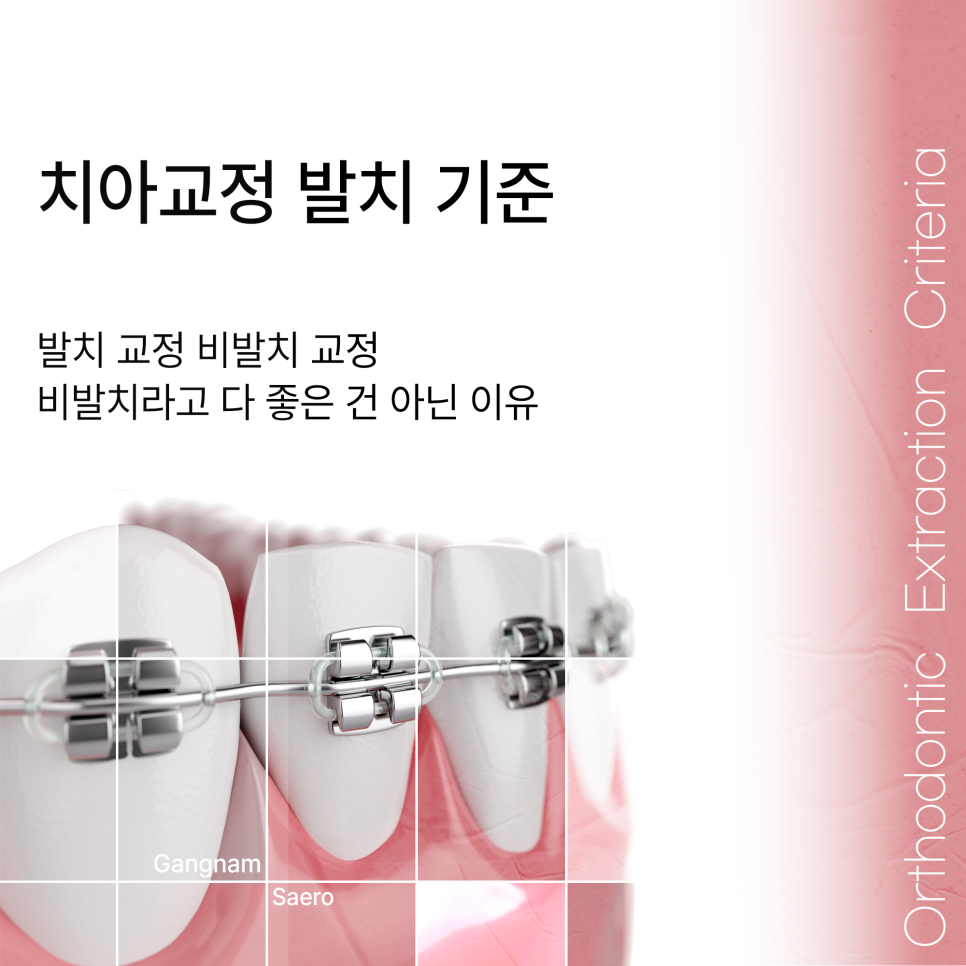
Criteria for tooth extraction in orthodontic treatment
Extraction orthodontics / non-extraction orthodontics
Why non-extraction is not always the best choice
Orthodontic treatment is not simply a procedure that
straightens crooked teeth.
It is a precise treatment that must consider
the space for tooth alignment,
the structure of the jawbone,
changes in lip posture,
and the balance of the entire face.
Among these, the question many people are most curious about is:
“Do I really have to extract teeth?”
In fact, depending on whether extraction is performed,
the direction and results of orthodontic treatment can change significantly.
It is not good to avoid extraction unconditionally,
and it is also not good to perform unnecessary extractions.
What matters is
carefully determining which method can create a more stable
and harmonious result based on the condition of my teeth and jawbone!
In this article,
we will go through extraction orthodontics and non-extraction orthodontics
step by step,
looking at the criteria used to decide each one
and how treatment is carried out.
Extraction orthodontics
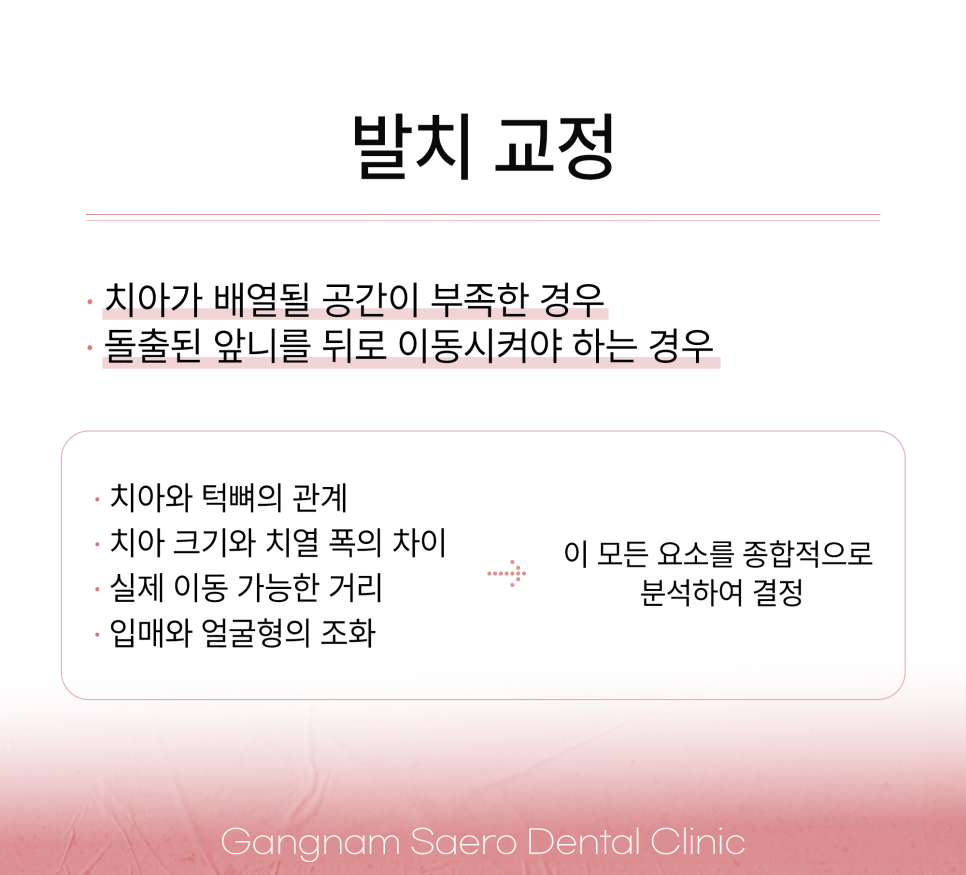
The main reasons extraction is considered in orthodontic treatment
can be broadly divided into two.
First, there is not enough space for the teeth to align.
Second, protruding front teeth need to be moved backward.
When teeth are crowded or severely overlapping,
it usually means there was not enough room for them to grow.
Also, in cases of protruding lips,
the teeth themselves are often positioned too far forward,
or the jawbone width is narrow compared with the size of the teeth.
In such cases, treatment is performed by extracting premolars to secure space,
then using that space to align the teeth neatly
or move the front teeth backward.
However, whether extraction is needed is not decided simply because there are crowded teeth
or protrusion.
The relationship between the teeth and jawbone,
the difference between tooth size and arch width,
the actual distance available for movement,
and the harmony of the lip posture and facial shape
all of these factors must be analyzed comprehensively before making the decision.
If this process is carried out thoroughly,
concerns about extraction orthodontics
and the possibility of side effects can be greatly reduced.
Teeth extracted during orthodontic treatment
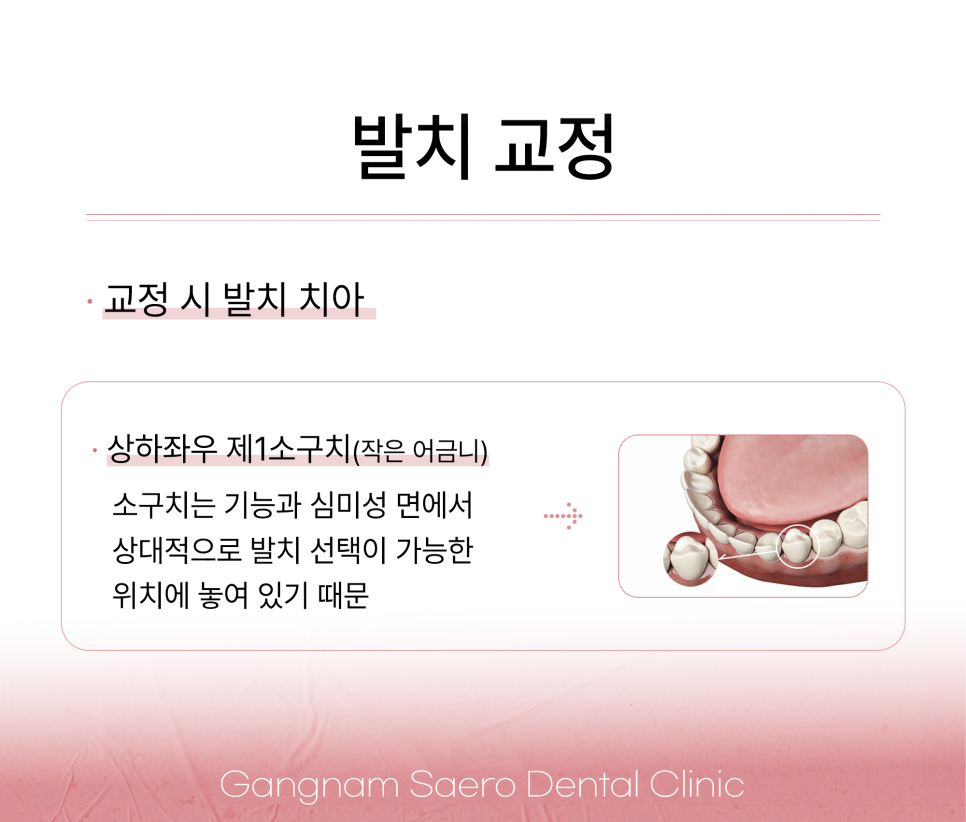
When extraction is necessary in orthodontics,
the most commonly selected teeth are the four first premolars
in the upper and lower jaws, left and right.
The reason is fairly clear.
The front teeth are the most important teeth aesthetically,
the canines play a role in maintaining the center of the bite,
and the molars are essential for chewing function.
In other words, premolars are relatively more suitable for extraction
in terms of function and aesthetics.
However, not every case is the same.
If a tooth is already damaged
or has a poor prognosis,
that tooth may be selected for extraction first.
Also, if removing a wisdom tooth can help create space,
wisdom tooth extraction may be considered first.
Ultimately, the teeth selected for extraction are not determined by a fixed formula,
but should be judged according to each person’s oral condition.
Arch expansion in non-extraction orthodontics
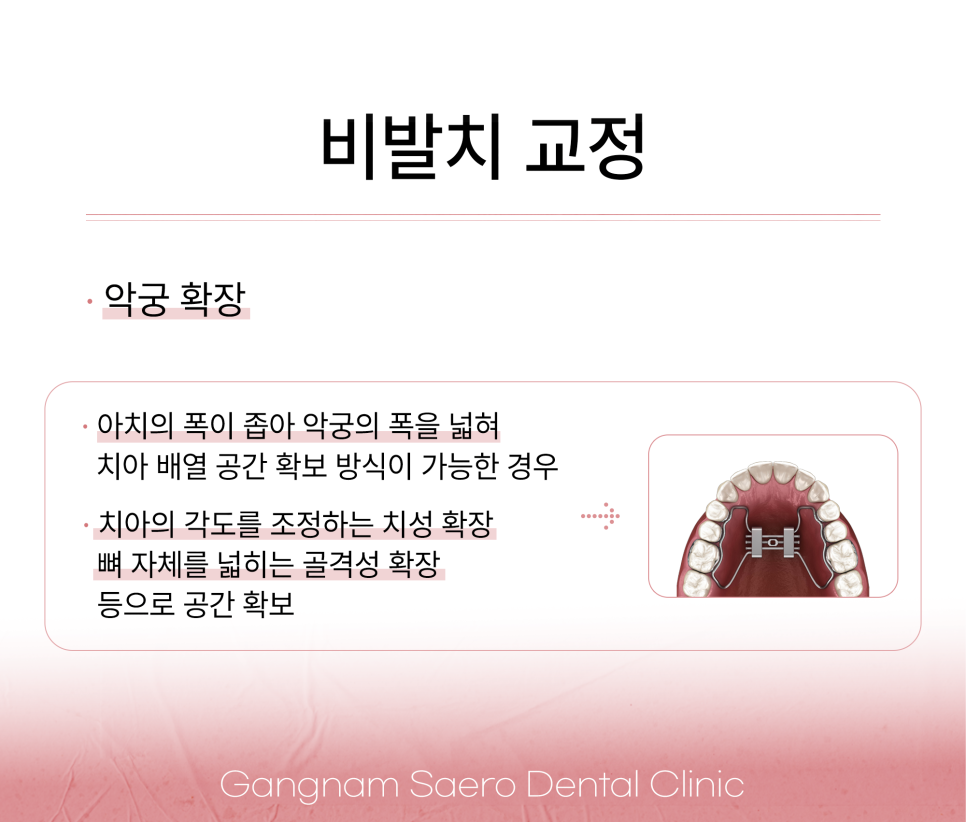
One representative case in which non-extraction orthodontics is possible
is when arch expansion can be performed.
The arch refers to the shape of the alveolar bone arch
where the teeth are positioned.
If this arch is narrow,
there is not enough space for the teeth to align,
and crowding or overlap can easily occur.
In this case, widening the arch
to secure space for tooth alignment
is one method of non-extraction orthodontics.
Arch expansion is broadly divided into two types.
Dental expansion, which adjusts the angulation of the teeth
Skeletal expansion, which widens the bone itself
For patients in the growth period,
this can be done relatively easily using an expansion device,
and in adults,
it may also be approached by using mini-screws
to widen the basal bone.
In other words, if conditions allow space to be secured without extraction,
non-extraction orthodontics may be fully possible.
Interproximal reduction in non-extraction orthodontics
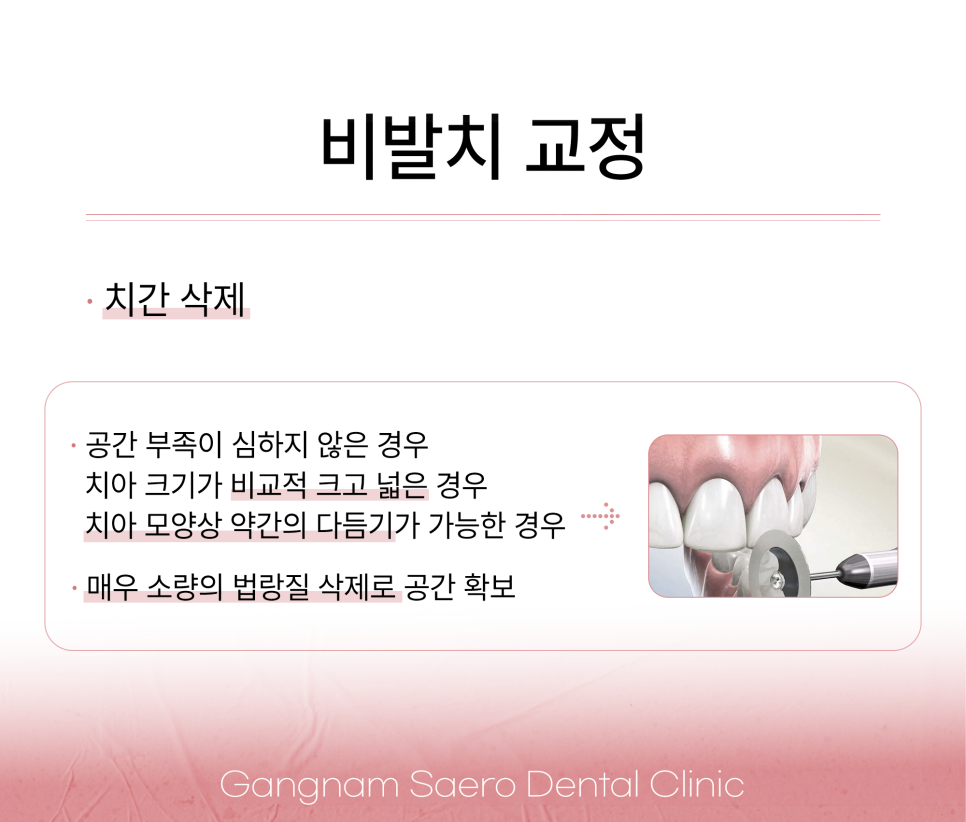
Another method that can make non-extraction orthodontics possible
is using interproximal reduction (IPR).
Interproximal reduction refers to
the very small reshaping of enamel between teeth,
usually around 0.25 mm,
to create the extra space needed for orthodontic treatment.
If space shortage is not severe,
if the teeth are relatively large and wide,
or if their shape allows slight reshaping,
this method can be used for non-extraction orthodontics.
Interproximal reduction
takes place in a very small range,
and when performed under accurate criteria and planning,
it can be an effective aid in aligning the teeth.
In other words, if only a little space is needed,
there is a possibility of aligning the teeth sufficiently
without having to extract teeth.
Posterior retraction in non-extraction orthodontics
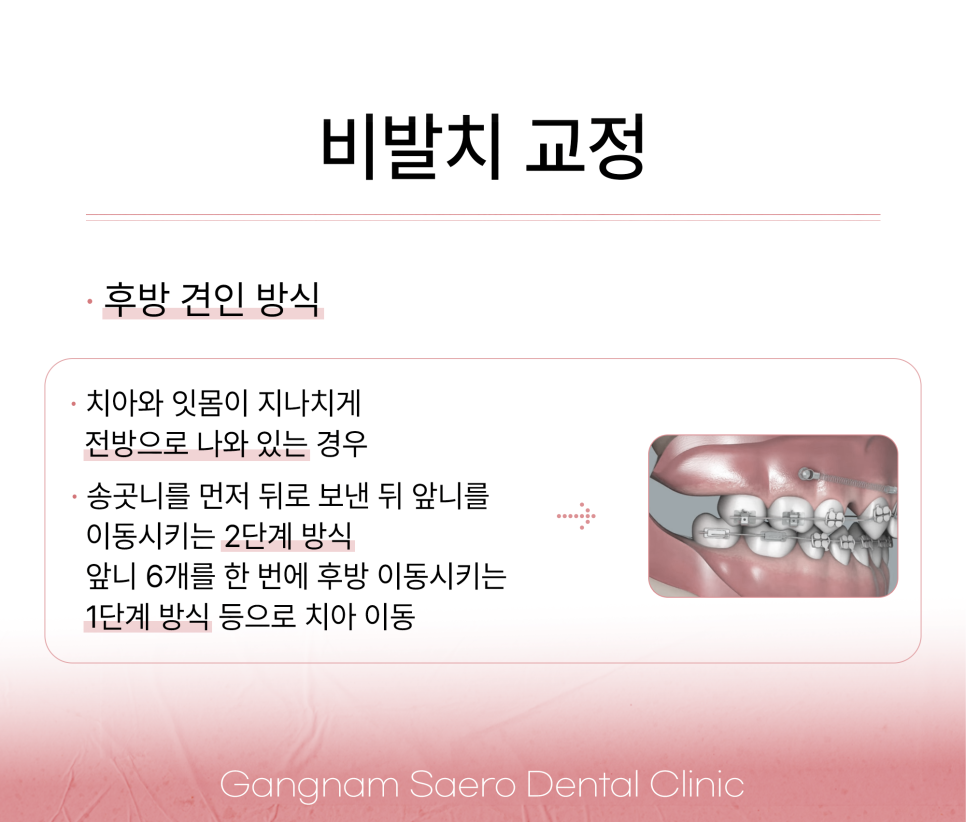
The last major condition in which non-extraction orthodontics may be possible
is when posterior retraction can be performed.
Especially in cases such as protruding lips, where the front teeth are excessively positioned forward,
mini-screws can be used
to move the teeth backward.
Representative approaches include
a two-step method in which the canines are moved backward first and then the front teeth are moved,
a one-step method in which the six front teeth are moved backward at once.
This method has the advantage of improving lip posture and reducing protrusion
without extraction,
but it is not possible in every case.
To achieve a stable result,
the distance available for movement, the limits of the bone, and the position of the tooth roots
must be calculated accurately.
In other words, posterior retraction
can be a powerful alternative to non-extraction orthodontics,
but it is also a method that requires highly precise diagnosis.
During orthodontic treatment, which is better: extraction or non-extraction?
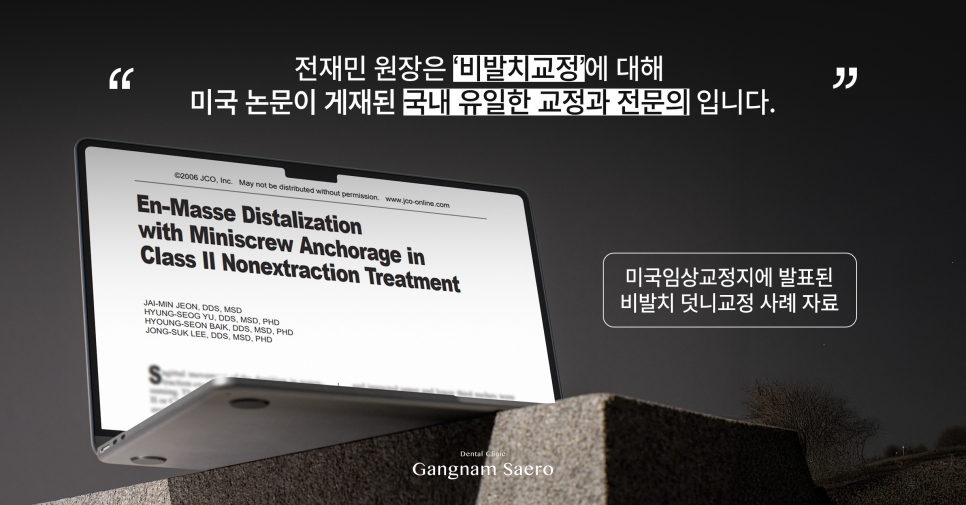
To begin with,
it is impossible to say that either extraction or non-extraction is always the better method in orthodontic treatment.
Excessive extraction can cause
unnecessary loss of space,
changes in lip posture,
and disharmony in facial appearance,
and conversely, excessive non-extraction can leave the teeth insufficiently aligned,
leave protrusion unresolved,
and increase the risk of relapse.
Ultimately, what matters is
after accurately analyzing the tooth-to-bone ratio,
facial shape and lip posture,
and the actual distance and direction in which movement is possible,
to choose the most appropriate method!
In other words, the key is not whether extraction is performed,
but which method is safest and most effective for my structure.
Orthodontic treatment is much more delicate than it appears.
A small difference in space
can change lip posture,
change tooth alignment,
and even change the overall impression of the face.
That is why,
it is even more important to have a treatment plan from medical professionals
with an accurate diagnosis and sufficient experience.
Being able to avoid unnecessary extractions while also deciding accurately when extraction is needed,
that balance ultimately creates a good orthodontic result.
A new smile
A new beginning
Gangnam Saero Dental Clinic.
- This post is provided by a medical institution under a third-party contractual relationship and contains medical information.