
What are the symptoms and causes of osteoporosis?
Implants also possible for patients with osteoporosis
Osteoporosis implants, PRF implants
The body in middle age and beyond may not look very different on the outside,
but changes begin gradually on the inside.
In particular, women after menopause are greatly affected by hormonal changes,
and one of those changes is osteoporosis.
At first, it is easy to overlook because there may be no special pain,
but osteoporosis is a condition that weakens bone strength
to the point that even a small impact can cause a fracture.
And this change affects not only overall health
but also dental treatment, especially implants.
So today,
we will go over the causes and symptoms of osteoporosis,
and why patients with osteoporosis need a more cautious approach
when planning implants,
as well as how treatment possibilities can be improved.
What is osteoporosis
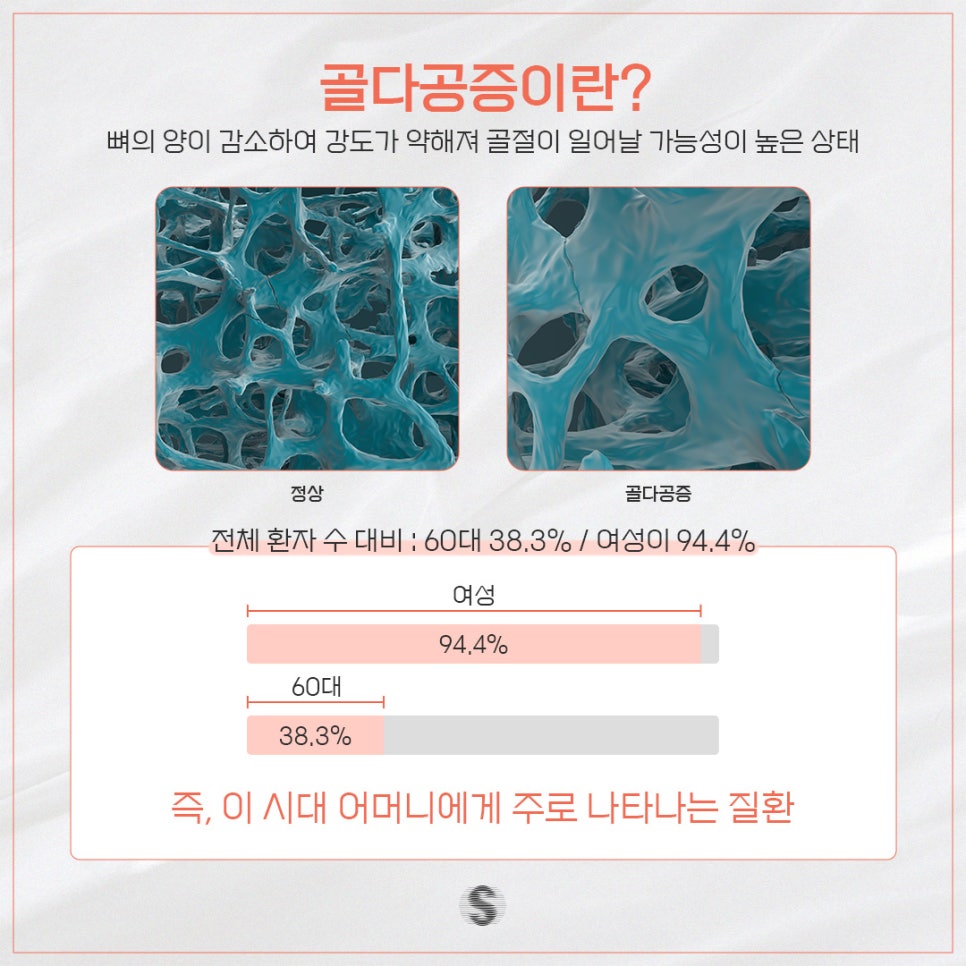
Osteoporosis
refers to a condition in which bone mass decreases and the internal structure weakens,
making bones easy to break.
It is not simply a condition described as “weak bones,”
but a disease in which reduced bone density and damage to bone microstructure progress together,
making fractures possible even with minor trauma.

In particular, women are at higher risk because bone loss accelerates after menopause due to decreased estrogen.
Known major causes include
menopause, older age, genetic factors,
calcium and vitamin D deficiency,
lack of exercise, low body weight,
and the use of certain medications such as steroids.
Symptoms of osteoporosis


Osteoporosis
often has no clear noticeable symptoms
in the early stages.
So it is not uncommon for people to think, “If it doesn’t hurt, I’m fine,”
only to find out after a fracture occurs.
Common fractures include the wrist, spine, and hip,
and repeated vertebral compression fractures can lead to a loss of height
and a hunched posture.
In severe cases, pain or fractures can occur even from coughing or a simple body movement.
The relationship between osteoporosis and implants

For implants,
a successful outcome depends on placing an artificial tooth root into the jawbone
and then achieving stable integration with the bone,
that is, good osseointegration.
However, in patients with osteoporosis, bone metabolism may be reduced,
or the medications used to treat osteoporosis may make the healing process and bone remodeling more difficult.
In particular, bisphosphonates or other antiresorptive agents
can also affect bone metabolism in the jaw,
so it is very important to check the medication history before dental surgery.
The most important issue to be careful about here is the risk of medication-related osteonecrosis of the jaw (MRONJ).
This risk can vary depending on the patient’s medication type, duration of use, method of administration,
and whether invasive procedures such as extraction or implants are performed.
Therefore, osteoporosis implants should not be understood as “if you have osteoporosis, it is absolutely impossible,”
but rather as treatment in which medication history and overall health status are first carefully evaluated,
and then the feasibility and method of PRF implants are determined.
Implants for patients with osteoporosis
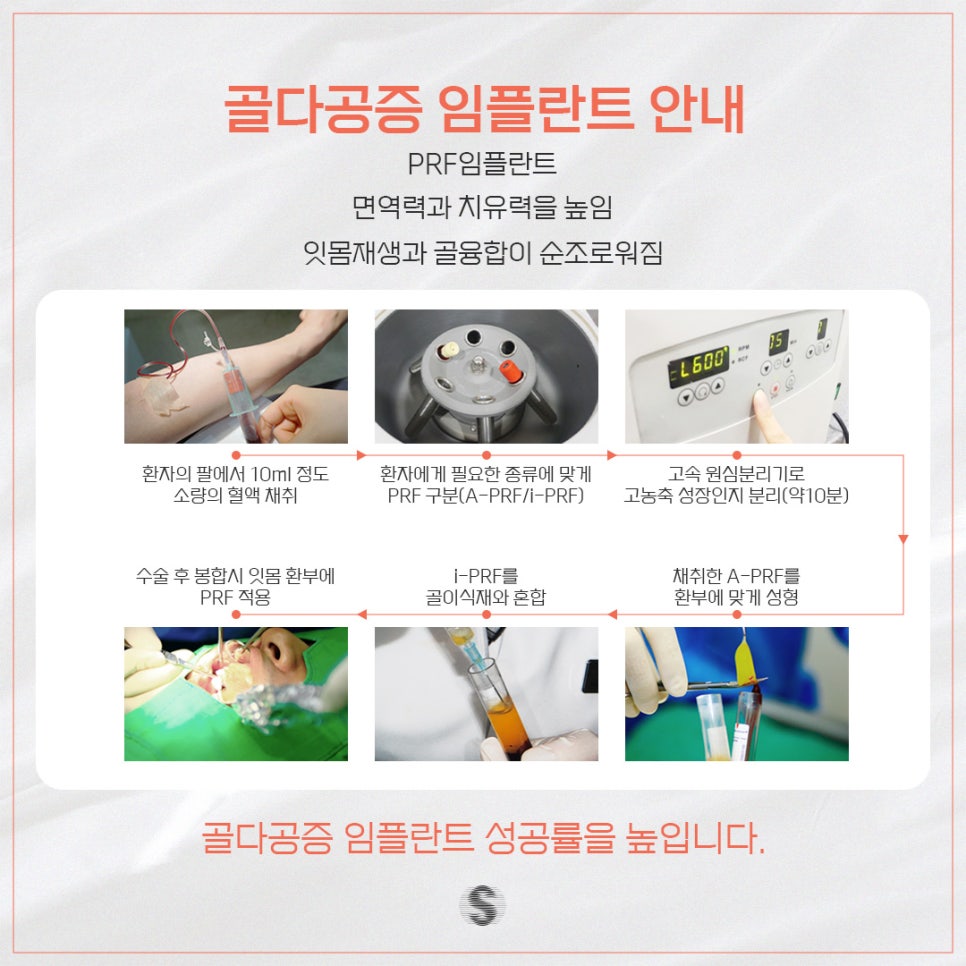
For patients with osteoporosis,
an auxiliary approach that more carefully supports recovery of the gums and bone is important.
One such approach is PRF implants.
PRF is a method in which platelets and white blood cell-rich components are concentrated from the patient’s own blood
and applied to the surgical site.
In dentistry, it is used as an adjunct to help soft tissue healing and early recovery,
and in cases such as osteoporosis implants,
where recovery and tissue response need to be examined more carefully,
it may be considered as an auxiliary option.
However, PRF implants themselves do not eliminate all risks,
so a detailed diagnosis and an evaluation of medications and systemic diseases
must be performed together.
Precautions during implant surgery for patients with osteoporosis

When a patient with osteoporosis plans an implant,
it is most important to accurately disclose the medications currently being taken.
In particular, antiresorptive agents such as bisphosphonates and denosumab,
or long-term steroid use,
have a direct impact on treatment planning,
and arbitrarily stopping medication can be dangerous,
so the prescribing physician and the dental team must make the decision together.
AAOMS also states that the risk assessment for medication-related osteonecrosis of the jaw
should be individualized, taking into account the type and duration of medication,
systemic diseases, and the planned invasive procedure.
In addition, before and after surgery,
it is important to reduce overall risk through approaches such as oral hygiene management,
checking gum condition,
and, if necessary, prioritizing conservative treatment over extraction.
Osteoporosis implants, PRF implants are
more about “planning safely” than “placing them quickly.”
Choosing a hospital for autologous blood implants
Osteoporosis implants
require a slightly more complex judgment than regular implants.
This is because bone condition, medication history, gum condition,
systemic diseases, and healing ability must all be considered together.
So what matters is
whether the clinic has experience treating many patients with osteoporosis,
whether it has extensive experience with PRF implant procedures,
whether precise imaging diagnosis and treatment planning are possible,
and whether, if necessary, internal medical conditions are also considered so that conservative treatment, extraction, and implant placement are carefully distinguished.
Just because the gums and bones are weak,
there is no need to give up from the start.
However, implants for patients with osteoporosis are a treatment that must be viewed more precisely, judged more slowly,
and managed more carefully.
When that principle is followed,
both functional recovery and aesthetic recovery can be fully expected.
A new smile
A choice for a new beginning,
enjoy the results through an accurate diagnosis!
- This post is a medical information post provided by a medical institution due to a third-party contractual relationship.