
What are the symptoms and causes of hypertension?
Implants are possible even for patients with hypertension
Hypertension Implant PRF Implant
As we get older, the importance of blood pressure management grows even more.
In fact, among people in their 60s and older,
50.6% of men and 45.5% of women
experience hypertension,
making it known as a very common condition.
Recently, even among people in their 30s,
17.3% of men and 2% of women
have experienced hypertension,
showing that it is no longer a problem limited to a specific age group.
Although it is such a common condition,
it should never be taken lightly when surgery or procedures are needed.
In particular, implants
require consideration of the gums, jawbone, blood vessel condition, and recovery process together,
so a hypertension implant requires more careful diagnosis and planning than a general implant.
Today, we will look in detail at the causes of hypertension, symptoms of hypertension,
and what to be careful about when receiving implant treatment as a patient with hypertension!
What is hypertension
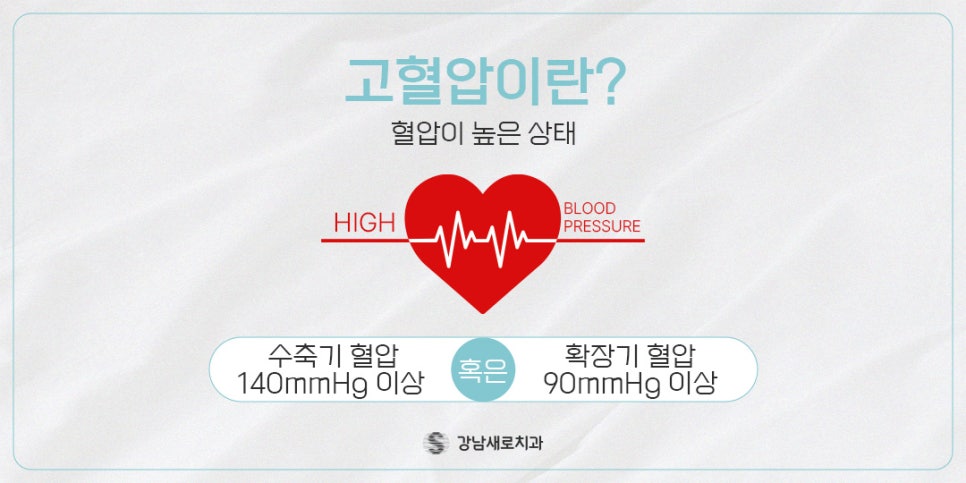
Hypertension does not simply mean that blood pressure readings are slightly high.
It refers to a state in which blood flowing through the blood vessels continuously places high pressure on the vessel walls,
causing a burden on overall health.
In general,
when systolic blood pressure is 140 mmHg or higher,
or diastolic blood pressure is 90 mmHg or higher,
it is diagnosed as hypertension.
As of 2021,
among adults aged 19 and older,
the prevalence of hypertension was
25.2% for men and 17.1% for women,
and the rate becomes even higher as age increases.
Although hypertension is common,
if it is not managed,
it can affect the heart, brain, blood vessels, kidneys, and the entire body,
so ongoing observation and management are essential.
If you are planning to get an implant,
it is necessary not only to look at the condition of your teeth,
but also to check these systemic health conditions together
for safe treatment.
That is why for a hypertension implant, pre-treatment consultation and checking blood pressure status are very important.
Causes of hypertension
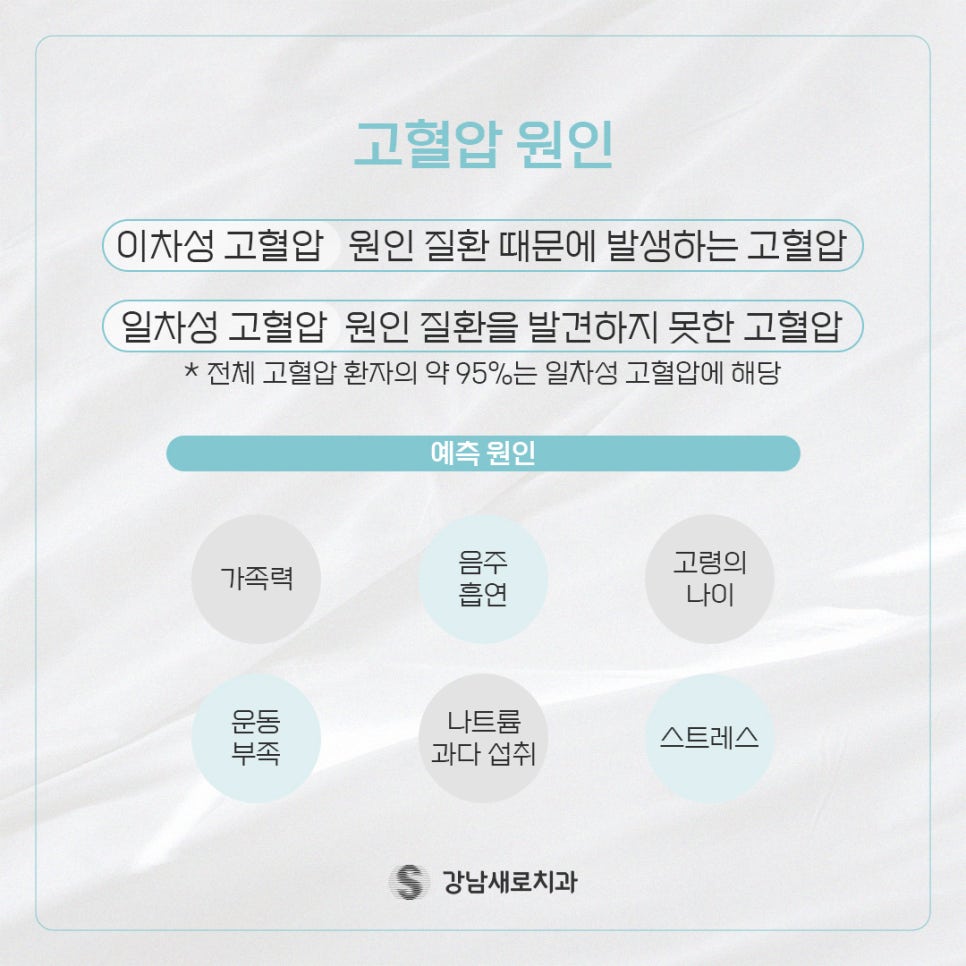
The causes of hypertension are broadly divided into two types.
One is secondary hypertension, for which the cause is relatively clear,
and the other is primary hypertension, for which a clear cause is difficult to identify.
Secondary hypertension accounts for about 5% of all patients,
and occurs due to specific diseases, medications, hormone abnormalities, and similar factors.
Meanwhile, the remaining 95% or so are primary hypertension,
which often results from a combination of lifestyle habits and constitutional factors.
Representative causes of hypertension include the following:
Family history and genetic factors
Hormonal changes after menopause
Excessive drinking and smoking
Lack of exercise and older age
Excess sodium intake
Chronic stress
Metabolic abnormalities such as obesity and hyperlipidemia
In other words, hypertension is not caused by just one reason,
but often develops as lifestyle habits and overall health status accumulate over a long period of time.
That is why, even during the process of preparing for an implant,
it is necessary to look not only at dental issues,
but also at any medications currently being taken and the usual blood pressure status.
Symptoms of hypertension

Hypertension is often called a “silent killer”
because its symptoms are often not obvious.
It is not uncommon for it to be discovered by chance during a health checkup or medical visit,
without any particular discomfort.
Commonly known symptoms of hypertension include the following:
Headache
Dizziness
Easy fatigue
Nosebleeds
Blood in the urine
Blurred vision or reduced vision

However, these symptoms of hypertension can also be easily confused with other conditions,
making it difficult to judge based on symptoms alone.
Even if there are no obvious symptoms,
damage to blood vessels may continue to progress,
so regular blood pressure measurement is important.
If blood pressure management is not properly maintained for a long period of time,
it can lead to cardiovascular and cerebrovascular diseases such as myocardial infarction, angina, heart failure, and stroke.
Therefore, before a treatment that requires a surgical procedure, such as a hypertension implant,
it is essential to first check whether the current blood pressure is stable.
The relationship between hypertension and implants

An implant is not simply a procedure to place a tooth.
It is a treatment that includes incision and suturing of the gums,
and the process of osseointegration, in which the artificial root firmly bonds with the jawbone.
In this process,
bleeding control, inflammation management, and recovery speed become very important factors.
If blood pressure is not stably controlled,
stress, pain, or anxiety during surgery can cause blood pressure to rise further,
which may prolong bleeding or slow recovery.
In addition, if vascular health is poor,
tissue recovery may not proceed smoothly, so more careful management is needed.
That is why a hypertension implant should not be judged only by whether the procedure is possible,
but should also comprehensively assess how well blood pressure is currently controlled,
what medications are being taken,
whether there are other systemic diseases,
and what the patient’s tension level and condition are on the day of surgery.
Ultimately, for a successful hypertension implant,
the judgment of experienced medical staff and the patient’s own consistent health management
must go hand in hand.
Implants for patients with hypertension
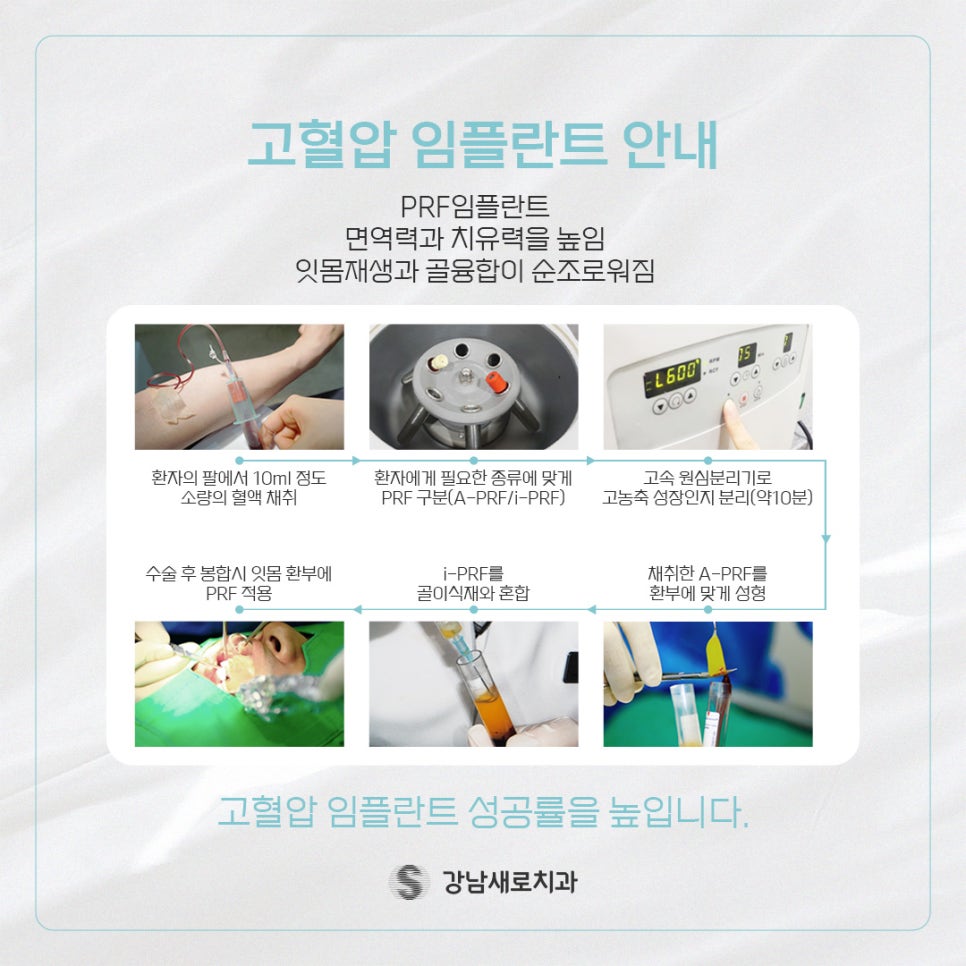
When considering recovery and tissue stability in implants for patients with hypertension,
one method that may be helpful is the PRF implant.
In a PRF implant,
PRF stands for Platelet Rich Fibrin,
and it refers to a method in which a concentrated component of platelets, white blood cells, and growth factors
is applied to the surgical site using the patient’s own blood.
Because it uses autologous blood,
it is biocompatible and is used as a supportive method to aid recovery.
Expected benefits of a PRF implant include the following:
Improving the recovery environment of the gums and jawbone
Supporting regeneration through growth factors
Helping stabilize the surgical site
Improving comfort during the recovery process
In particular, for patients for whom recovery is important,
applying a PRF implant may help establish a more stable treatment plan.
However, since it is not applied the same way for every patient,
it is important to determine its suitability after diagnosing the current systemic health and oral condition.
Precautions during implant surgery for patients with hypertension

For safe treatment,
the role of the clinic is important, but the patient’s cooperation is just as important.
In particular, following implant precautions well
has a major impact on the stability of surgery and recovery.
The implant precautions that patients with hypertension must check are as follows:
Any medications currently being taken, such as blood pressure medication, anticoagulants, or aspirin,
must be disclosed to the medical staff.
Do not decide on stopping medication on your own;
make the decision only after consulting the attending physician and dental staff.
On the day before surgery and on the day of surgery,
it is advisable to get enough rest and reduce tension.
Smoking and drinking can interfere with recovery,
so it is best to avoid them.
Blood pressure and pulse should be checked regularly in daily life,
and if there are any abnormalities, consult before treatment.
Salty and irritating foods, and irregular lifestyle habits,
can increase blood pressure fluctuations, so management is needed.
These implant precautions are not just simple lifestyle rules;
they are important factors that can actually affect stability during surgery
and the speed of recovery after surgery.
Especially if you are planning a hypertension implant,
pre- and post-procedure management can make a big difference in treatment outcomes.
Choosing a clinic for autologous blood implants
We have been explaining that implants for patients with hypertension
are not just dental treatment,
but treatment that also requires consideration of overall health, right?
Therefore, it is important to choose a clinic with experienced medical staff
and a systematic care system.
In particular, PRF implants for patients with hypertension require
checking blood pressure status before surgery,
reviewing medications being taken,
considering consultation with other departments if needed,
stable monitoring during surgery,
and recovery management after surgery,
so the overall process must be organically connected.
Gangnam Saero Dental Clinic
has experience treating implants for patients with systemic diseases such as hypertension, diabetes, and osteoporosis,
and carefully examines each patient’s condition to establish a customized treatment plan.
Even with the same implant,
the approach must differ depending on the patient’s physical condition,
and the experience of medical staff who understand these differences
can determine the stability of treatment.
Hypertension
is a common condition that can happen to anyone,
but depending on how it is managed, the safety and prognosis of treatment
can change greatly.
Especially when facing a treatment that requires surgery,
such as implant surgery,
it is necessary to look not only at the tooth problem,
but also at the current overall health status.
By accurately understanding the causes and symptoms of hypertension,
and managing blood pressure well in daily life,
you can greatly help prepare for treatment.
Also, depending on the patient’s condition,
considering methods such as PRF implants
can provide a more stable recovery environment.
Most importantly,
it is essential to work with medical staff who fully understand the patient’s physical condition
and approach treatment carefully.
The path to regaining a healthy smile
does not end with simply placing a tooth.
Care that also looks after overall health
can ultimately lead to safer and more satisfying results.
The starting line that marks the healthy beginning of a new smile,
that journey begins with an accurate diagnosis.
- This post is medical information provided by a medical institution due to a contractual relationship with a third party.