If you want to correct an underbite without surgery,
early treatment is key
Non-surgical underbite treatment for children
If your child begins to show symptoms in which
the lower jaw appears to protrude
ahead of the upper jaw,
what is commonly called an “underbite,”
it is best to get a dental evaluation as soon as possible!
During childhood,
since the jawbones and facial skeleton are still growing,
if the right timing is not missed,
there is enough potential for improvement through non-surgical underbite correction.
On the other hand, once a child becomes an adult
and most bone growth has ended,
simple orthodontic treatment may have limitations,
making a surgical approach more likely to be needed.
That is why childhood underbite
is a matter where “let’s wait a little longer” is far less important than “let’s check now”!
Causes and types of childhood underbite
An underbite is not simply
a visual issue where the jaw appears to stick out.
Because the treatment method changes depending on
what the cause is and what type of crossbite it is,
an accurate diagnosis must come first.
Sometimes parents think,
“Won’t it get better when the permanent teeth come in?”
but that may be a mistaken expectation.
When baby teeth fall out, permanent teeth usually erupt following
the existing alignment and direction,
so a problematic bite is more likely to continue
rather than improve on its own.
That is why childhood underbite
requires early diagnosis and early correction above all else.
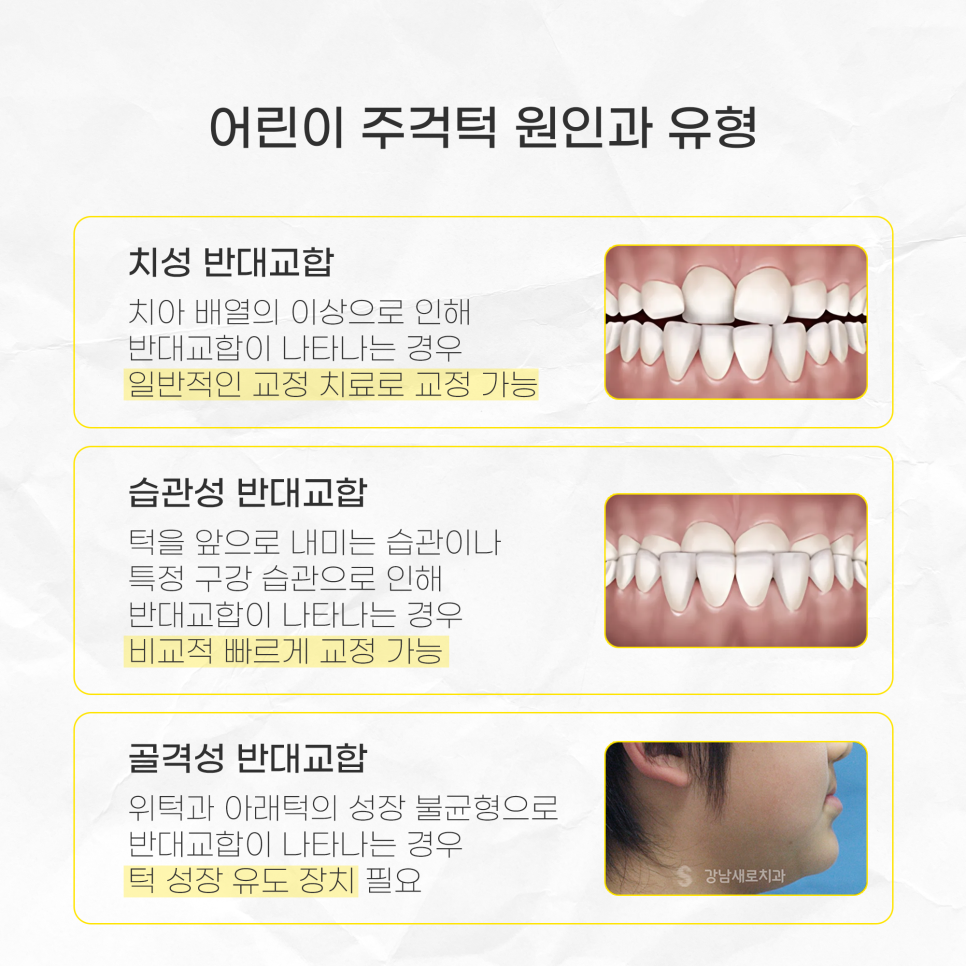
The main types are as follows.
Dental crossbite
This is a case in which crossbite appears
not because of a problem with the jawbone itself,
but because of an abnormal tooth alignment.
In this case, because the skeletal problem is relatively small,
improvement is often possible with standard orthodontic treatment alone.
Habitual crossbite
This is a case in which a child unconsciously
pushes the jaw forward as a habit or develops a crossbite
due to a specific oral habit.
If discovered during childhood,
it can usually be corrected relatively quickly,
and the prognosis for non-surgical underbite treatment is generally favorable.
Skeletal crossbite
This occurs when the growth balance between the upper and lower jaws
is not aligned,
so it is not just a matter of tooth alignment;
the direction of jawbone growth itself must also be considered.
In this case, more detailed examinations may be needed,
along with a jaw growth guidance device,
and the timing of treatment during the growth period is very important.
How childhood underbite correction is carried out
The treatment method for non-surgical underbite in children
depends on the type.
In the case of dental crossbite,
it can often be improved sufficiently
with a standard orthodontic appliance alone,
but habitual crossbite or skeletal crossbite
may require a more active growth guidance device.
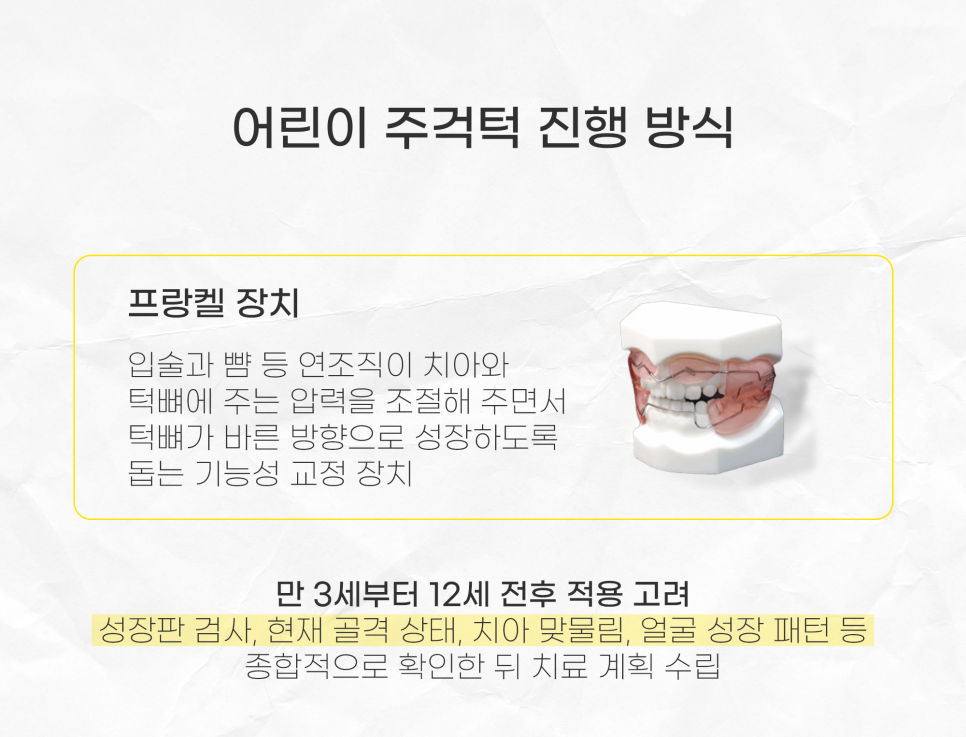
One of the representative appliances used is
the Frankel appliance.
The Frankel appliance
is a functional orthodontic device that helps the jawbone grow in a better direction
by controlling the pressure that soft tissues such as the lips and cheeks
exert on the teeth and jawbone.
In particular, when the goal is non-surgical underbite treatment,
it can play an important role in correcting the direction of jaw development
in children during the growth period.
It is generally considered for use from around age 3 to around age 12,
but the actual timing of treatment is not determined by age alone.
A treatment plan is established after comprehensively checking
growth plate tests, the current skeletal condition, the bite, and facial growth patterns.
In other words, even if it is the same childhood underbite,
it is not treated in the same way for everyone;
a customized approach suited to the child’s growth stage is needed.
Why early correction of childhood underbite is important
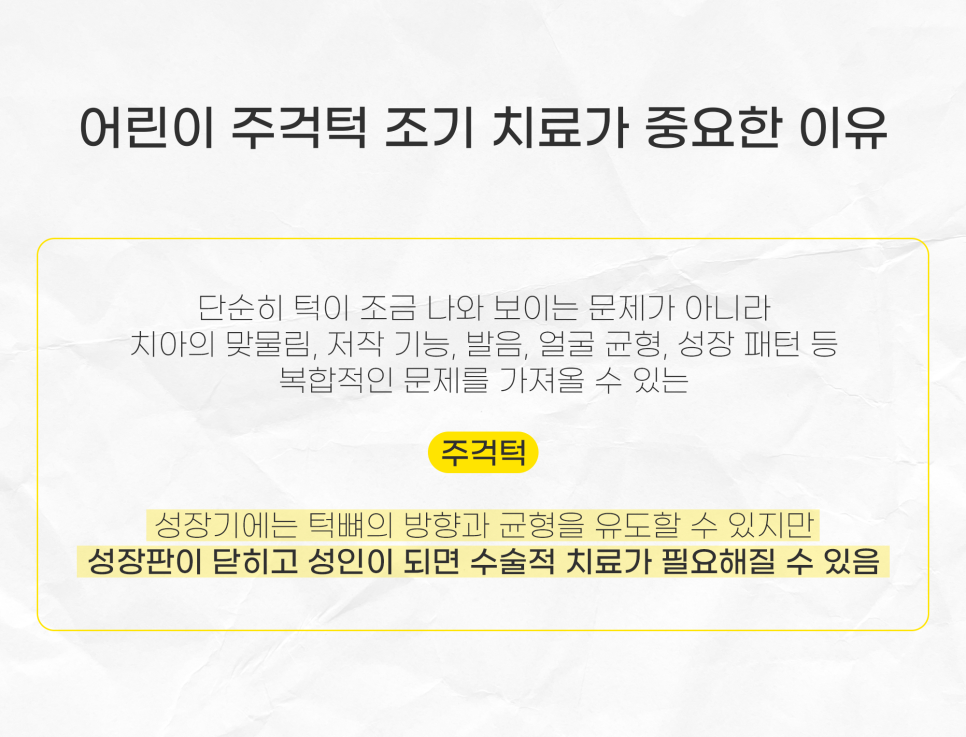
An underbite is not simply
a matter of the jaw looking a little protruded.
It can affect several factors at once,
including how the teeth fit together, chewing function, speech, facial balance, and growth patterns.
Therefore, it is difficult to expect it to be resolved
simply through massage or lifestyle habit correction.
The most important reason is that
during the growth period, the direction and balance of the jawbones
can be guided to some extent,
but after growth ends,
that possibility decreases significantly.
Once growth plates close and a child becomes an adult,
there may be limitations to non-surgical underbite correction alone,
and in some cases surgical treatment may become necessary.
Therefore, for childhood underbite,
it is most important to receive an accurate diagnosis early when symptoms appear
and to check whether this is the right time for correction.
In the end, the goal of early treatment is
not simply to change the current appearance,
but to correct the direction in advance
so it does not lead to more extensive treatment in adulthood.
Childhood underbite treatment results
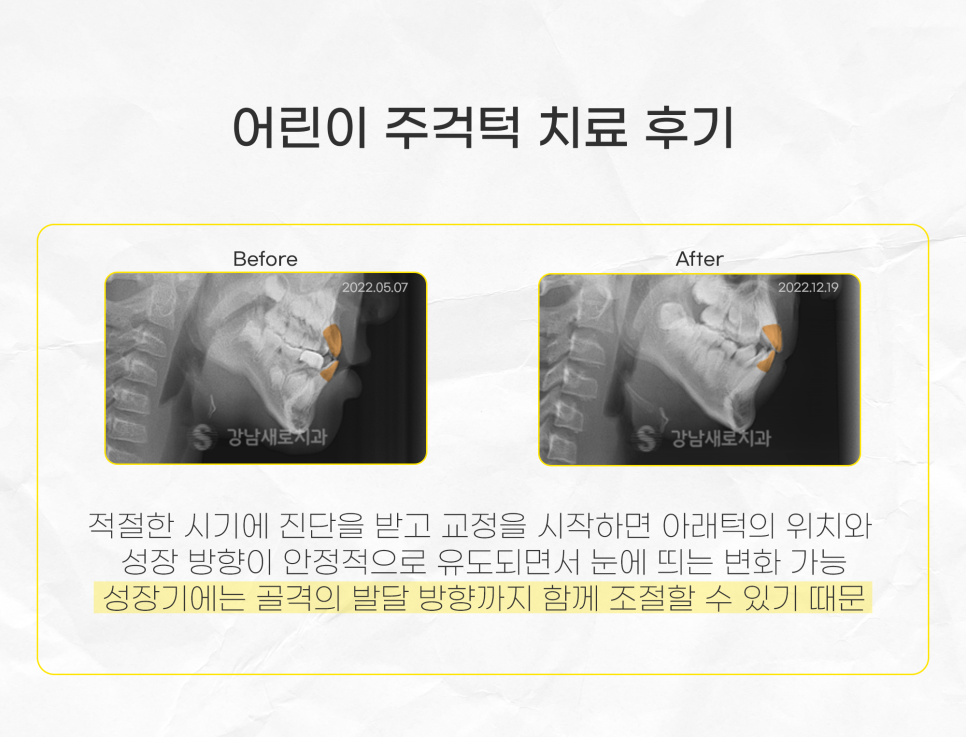
If diagnosis is made at the right time and correction begins,
the position and growth direction of the lower jaw
can be guided more naturally and stably,
allowing noticeable changes to be expected.
The reason the differences before and after childhood underbite treatment
are so clear is that during the growth period,
it is possible not only to move the teeth
but also to influence the direction of skeletal development at the same time.
In other words, rather than forcing alignment after growth has ended,
it is treatment that guides growth in the right direction as the child develops,
so more natural and efficient results can be expected.
From this perspective, non-surgical underbite treatment
is not something that simply “must be done someday,”
but a treatment that makes use of the opportunity for growth
that can be missed if not addressed now.
The center of early underbite treatment: choosing the right clinic
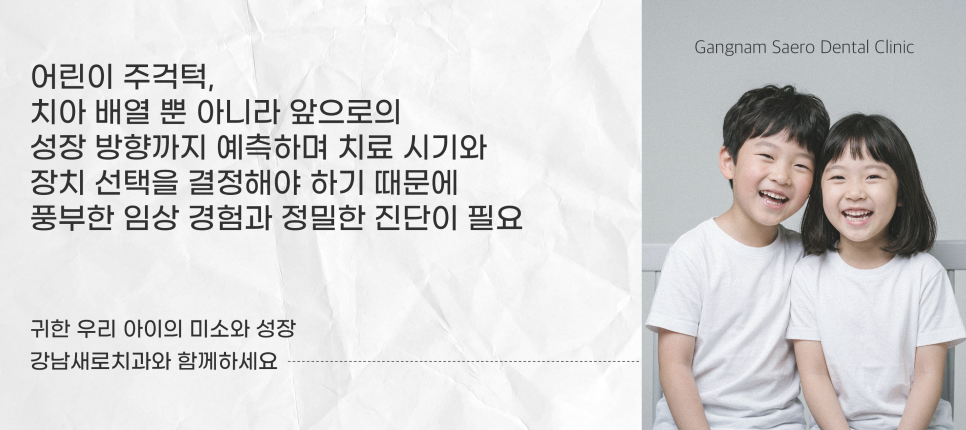
If you are considering underbite correction for your child,
rather than simply looking for a nearby clinic,
it is important to check whether the medical team has both expertise in orthodontic treatment
and experience in diagnosing skeletal growth during the growth period.
In particular, treatment for childhood underbite and crossbite
must not only look at the current tooth alignment,
but also predict future growth direction
in order to determine treatment timing and appliance selection,
so rich clinical experience and precise diagnosis are necessary.
Gangnam Sero Dental Clinic
builds on expertise and experience accumulated in orthodontics,
including experience as a celebrity orthodontic primary doctor,
publication in the only U.S. clinical orthodontic journal in Korea,
presentation of research papers on non-extraction orthodontic treatment,
and service as a consulting member for Nanonliner,
and provides customized treatment tailored to the child’s growth stage and bite type.
Because each child has a different jaw growth rate and direction,
as well as different tooth alignment,
an individualized diagnosis and plan are important rather than a uniform approach.
That is why underbite correction is even more effective
when started with an experienced medical team.
It is easy to think that an underbite will naturally improve over time,
but in reality, it can often become more pronounced as a child grows.
In particular, childhood underbite
can often be improved enough without surgery if detected early and treated appropriately,
but if the timing is missed,
the scope of treatment can become much larger.
So the key to non-surgical underbite treatment is
quick judgment and starting at the right time!
If you are looking for a clinic that can accurately check your child’s jaw growth
and bite condition, and, if needed, guide growth in the right direction through orthodontic treatment during the growth period,
for your precious child’s smile and growth,
a new smile, a new beginning.
Please come with Gangnam Sero Dental Clinic.
- This post is provided as medical information presented by a medical institution due to a third-party contractual relationship.