What if bad breath keeps coming back even after brushing?
Causes of bad breath and solutions
that need to be checked at the dentist
When you meet someone for the first time,
the first thing that usually has an impact is visual appearance.
But the sense that leaves the strongest impression next is
smell.
No matter how neat your appearance is or how good your image may be,
if an unpleasant odor is noticeable up close,
the first impression can easily be shaken.
The same goes for bad breath.
If you brush your teeth regularly,
but bad breath still persists,
it may not simply be a matter of not cleaning your mouth properly.
In fact, bad breath can also occur when several causes work together,
including the oral environment, the condition of the tongue, tartar and gum health, tonsil stones, and malocclusion.
This is also why simply masking it with mouthwash or increasing the number of times you brush does not solve the problem.
So to properly identify the causes of bad breath,
it is important to first know exactly where your bad breath is starting from.
Today, let’s organize the causes of bad breath that does not go away even after brushing,
and the solutions that can be checked at the dentist.
The causes of bad breath can be broadly divided into two types
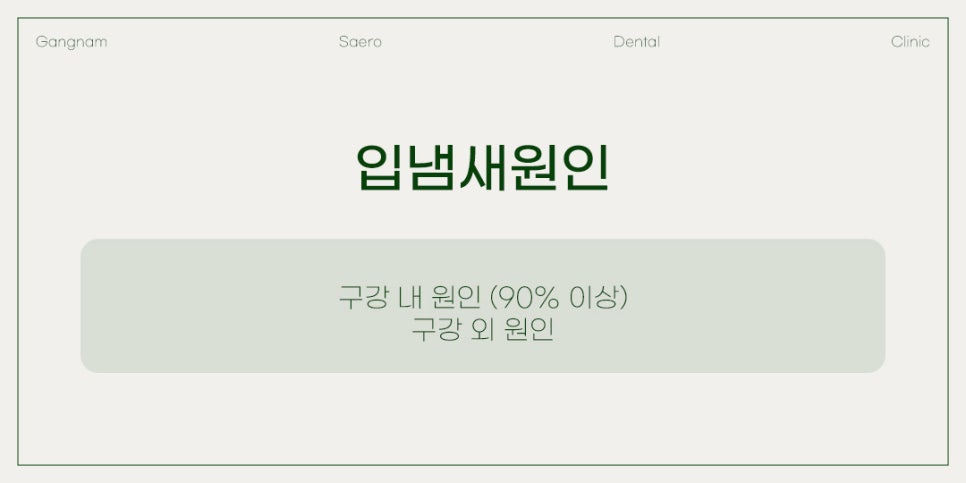
Bad breath can be broadly divided into
intraoral causes and extraoral causes.
Among these, most cases, meaning over 90%,
are often related to problems originating inside the mouth.
The mouth is a space where many factors work together,
such as food debris, bacteria, the amount of saliva, the condition of the tongue surface, and gum health.
If even one of these changes into an environment where bacteria can multiply,
an unpleasant odor can occur.
In other words, when looking for the causes of bad breath,
it is necessary to look not only at whether you brushed your teeth or not,
but also at oral hygiene status,
whether tongue care is being done,
tartar and gum condition,
whether tonsil stones are present,
and the alignment of the teeth and bite.
When brushing is not being done properly
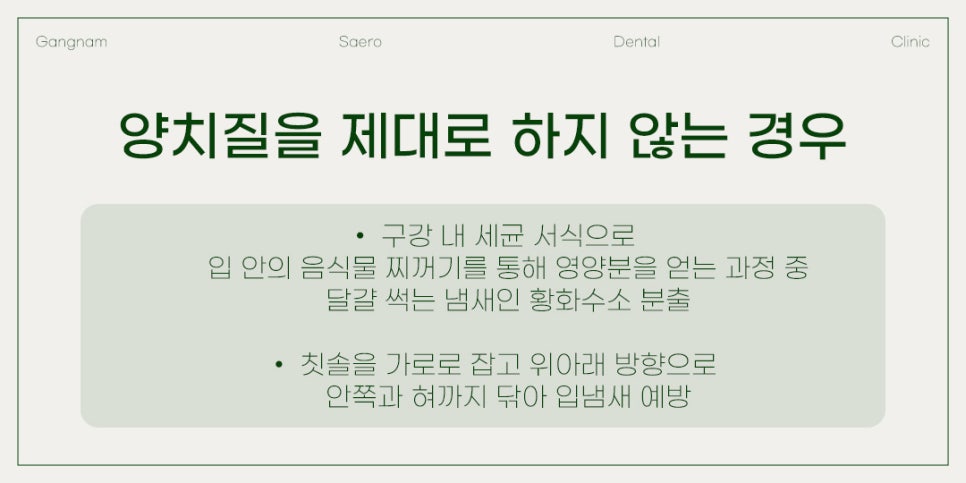
This is the most basic cause,
but it is still one of the most common causes.
It is the habit of brushing incorrectly.
Even if you brush every day,
if the spaces between the teeth, the gum line, and the inside of the tongue are not adequately cared for,
food debris and bacteria can remain in the mouth and become a cause of bad breath.
As oral bacteria break down food debris,
they produce volatile sulfur compounds such as hydrogen sulfide,
and this component is known as a major cause of unpleasant bad breath,
like the smell of rotten eggs.
Therefore, when brushing,
you should not simply clean only the front teeth that are visible,
but also care for the inner and outer surfaces of the teeth,
the gum line,
and the surface of the tongue.
Rather than brushing too forcefully,
it is important to clean gently and thoroughly along the tooth surfaces.
What matters more than how many times you brush is how properly you brush.
When tongue coating is not removed
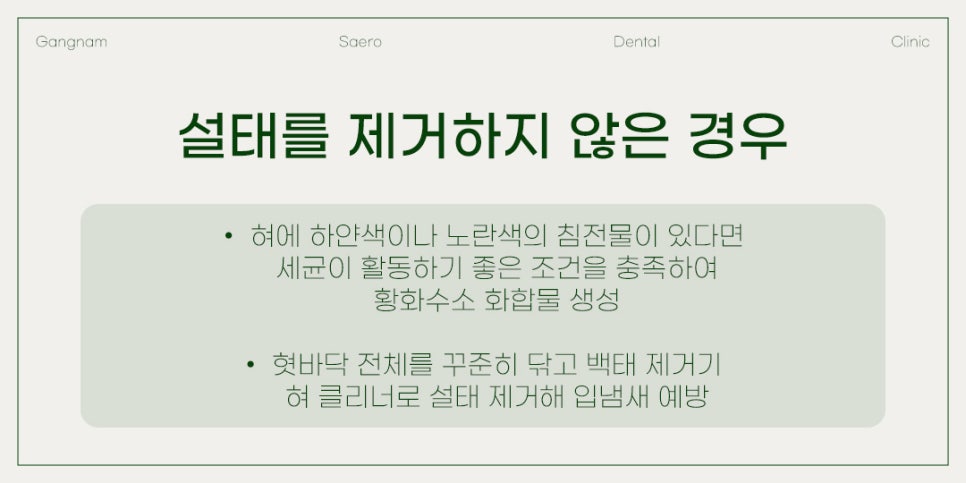
If you have seen a white or yellowish coating on the surface of your tongue,
it may not be just a stain,
but tongue coating.
Tongue coating forms when bacteria, food debris, and shed cells accumulate
between the tiny papillae on the tongue surface,
and this is also one of the 대표적인 causes of bad breath.
As tongue coating increases,
bacteria can multiply more easily,
and during this process,
compounds that cause unpleasant odors can also be produced.
So even if you brush very diligently,
if you do not care for your tongue,
bad breath may continue.
For tongue care, rather than scrubbing too hard with a toothbrush,
it is better to gently clean the tongue surface using a tongue cleaner or tongue scraper.
Especially if you tend to build up a lot of tongue coating in the morning,
it helps to also pay attention to tongue cleanliness.
When tonsil stones occur
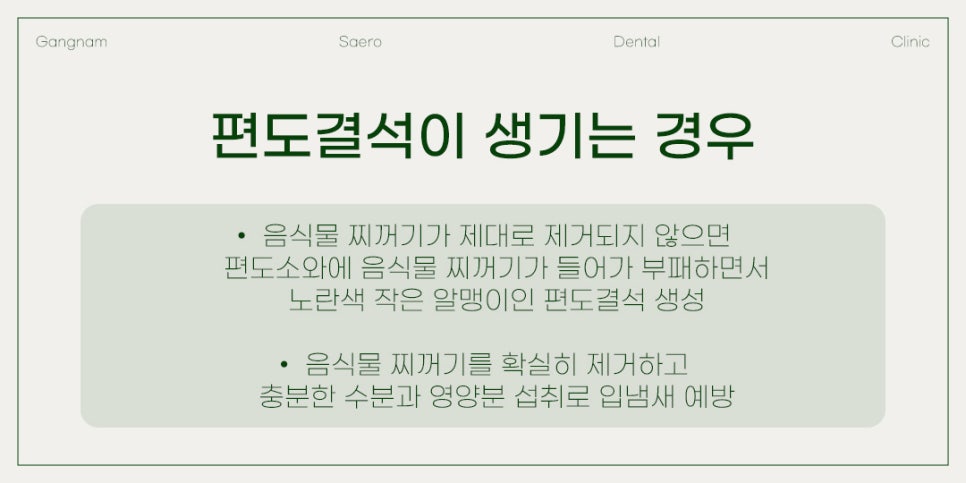
If bad breath continues even though you brush well,
there are cases where the cause comes from the throat rather than the mouth.
A representative example is tonsil stones.
Tonsil stones are small yellowish particles formed when food debris, bacteria, and saliva
clump together in the small openings of the tonsils.
They are not easy to see from the outside, but they often have a very strong odor,
so even if you feel that you are brushing properly,
others may notice the bad breath first.
People who frequently get tonsil stones often have food debris left behind easily,
inadequate oral cleanliness,
or a mouth that dries out often.
That is why maintaining proper brushing habits,
drinking enough water,
and preventing dry mouth are important.
Tonsil stones may sometimes come out when coughing,
but if they recur repeatedly, an ear, nose, and throat consultation may be necessary.
In other words, it is also important to remember that the causes of bad breath are not necessarily limited to the teeth.
When tartar and periodontal disease are present
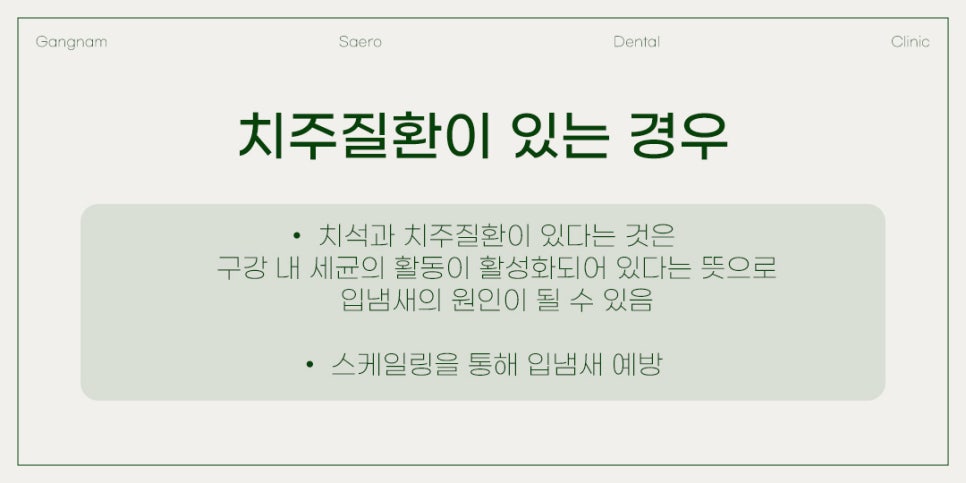
Even if you brush diligently,
if a lot of tartar has built up around the gums,
bad breath can continue.
Tartar is hardened plaque, which is a bacterial film,
and it is difficult to remove completely on your own,
creating an environment where bacteria can remain continuously.
If this tartar accumulates over a long period of time,
it can lead to periodontal disease,
causing gum inflammation,
bleeding, pus, swelling, and even a strong odor.
The smell in this case often feels heavier and more unpleasant
than a simple food odor.
Bad breath caused by tartar and periodontal disease is difficult to solve with brushing alone at home.
Tartar that has already become hard and attached must be removed at the dentist through scaling,
and if there is inflammation, appropriate gum treatment may be needed.
If periodontal disease is left untreated for a long time,
the jawbone can be damaged and the teeth may become loose or even fall out,
so early management is important not only for bad breath but also for overall oral health.
Why scaling helps with the causes of bad breath
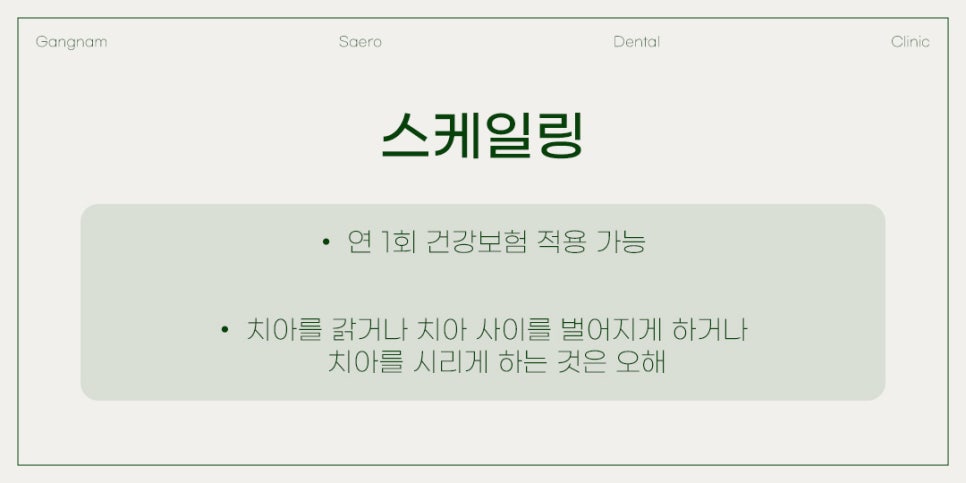
If bad breath is due to tartar and gum inflammation,
scaling alone may be enough to bring improvement in some cases.
In particular, if you have never had scaling,
or if it has been a long time since your last one,
tartar that has built up on the tooth surfaces and between the gums
may be the main cause of the odor.
If you are 19 years of age or older,
scaling is covered by national health insurance once a year,
so it can be received at a relatively low cost.
Even this basic care can help reduce the causes of bad breath
and also help prevent periodontal disease.
Some people worry that scaling
cuts down the teeth,
makes the spaces between teeth wider,
or makes teeth more sensitive,
but these are mostly misconceptions.
In reality, while removing tartar,
spaces that were originally hidden by tartar between the teeth may be revealed,
which can make it feel that way,
but it is not a treatment that damages the teeth.
When malocclusion is present
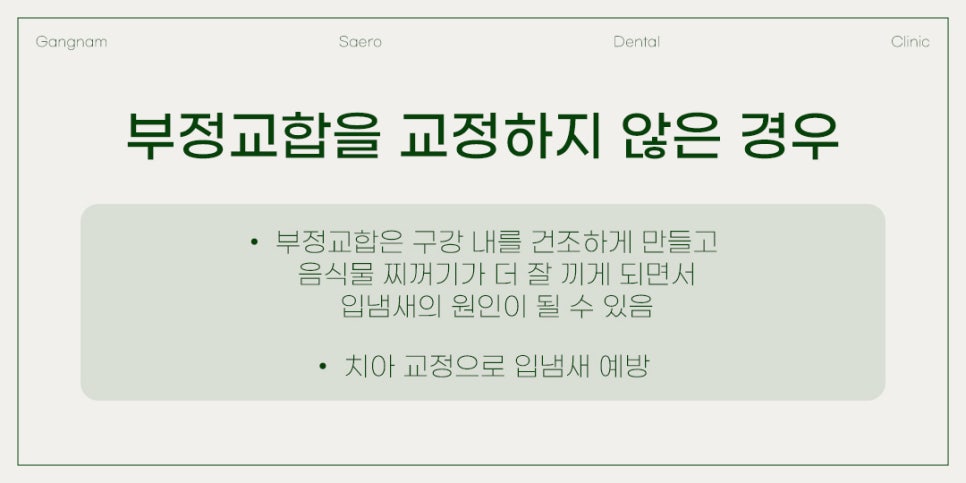
If bad breath continues even though you do not seem to have any of the causes mentioned above,
malocclusion can also be considered as one possibility.
In cases where the bite between the teeth and jaws is not normal,
such as protruding mouth, underdeveloped chin, underbite, deep bite, and open bite,
the mouth may not close properly,
the inside of the mouth can dry out more easily,
and food can get trapped more easily.
Such conditions create an environment where bacteria can thrive
and become a cause of bad breath.
In addition, malocclusion can be connected not only to bad breath,
but also to reduced chewing function,
temporomandibular joint discomfort,
dry mouth,
and breathing problems.
Therefore, if you need improvement in overall oral function,
not just the smell issue,
you may want to consider orthodontic treatment.
Why orthodontic treatment can solve the causes of bad breath

If malocclusion causes the mouth to dry out or food to get trapped frequently,
orthodontic treatment may help improve bad breath.
Orthodontic appliances are broadly divided into
traditional bracket braces, lingual braces, and clear aligners,
and can be selected according to the condition of the teeth and lifestyle patterns.
Traditional bracket braces have the advantage of strong orthodontic force and applicability to a wide range of cases,
while clear aligners are often chosen by people who value aesthetics and removability,
and who prioritize convenience in daily life.
Clear aligner systems include
Invisalign, NanoLiner, MagicAlign, Serafin, and DDHime,
and they can also be sufficiently used for correcting malocclusion and improving tooth alignment.
In other words, if bad breath is not simply a hygiene issue
but is connected to the alignment of the teeth and the bite,
orthodontic treatment may be needed as a more fundamental solution.
If bad breath does not go away even after brushing,
check the causes at the dentist

As you have seen so far,
the solution for bad breath differs completely depending on the cause.
It may be a brushing problem,
it may be due to tongue coating,
or there may be different hidden causes such as tartar and periodontal disease, tonsil stones, or malocclusion.
That is why what matters is not
simply using a product to mask bad breath,
but accurately checking where your bad breath is coming from.
In particular, although more than 90% of cases are due to oral causes,
there may also be extraoral causes in some cases,
so trying to solve the problem based only on guesswork can cause you to miss the real cause.
Gangnamsaero Dental Clinic
helps patients understand their condition comprehensively through various dental treatments such as scaling, periodontal disease treatment, and orthodontic treatment,
and helps accurately identify the causes of bad breath.
This is because we believe it is important to listen fully to the patient’s concerns
and suggest a direction that fits their current oral condition.
- This post is provided by a medical institution as medical information due to a third-party contractual relationship.