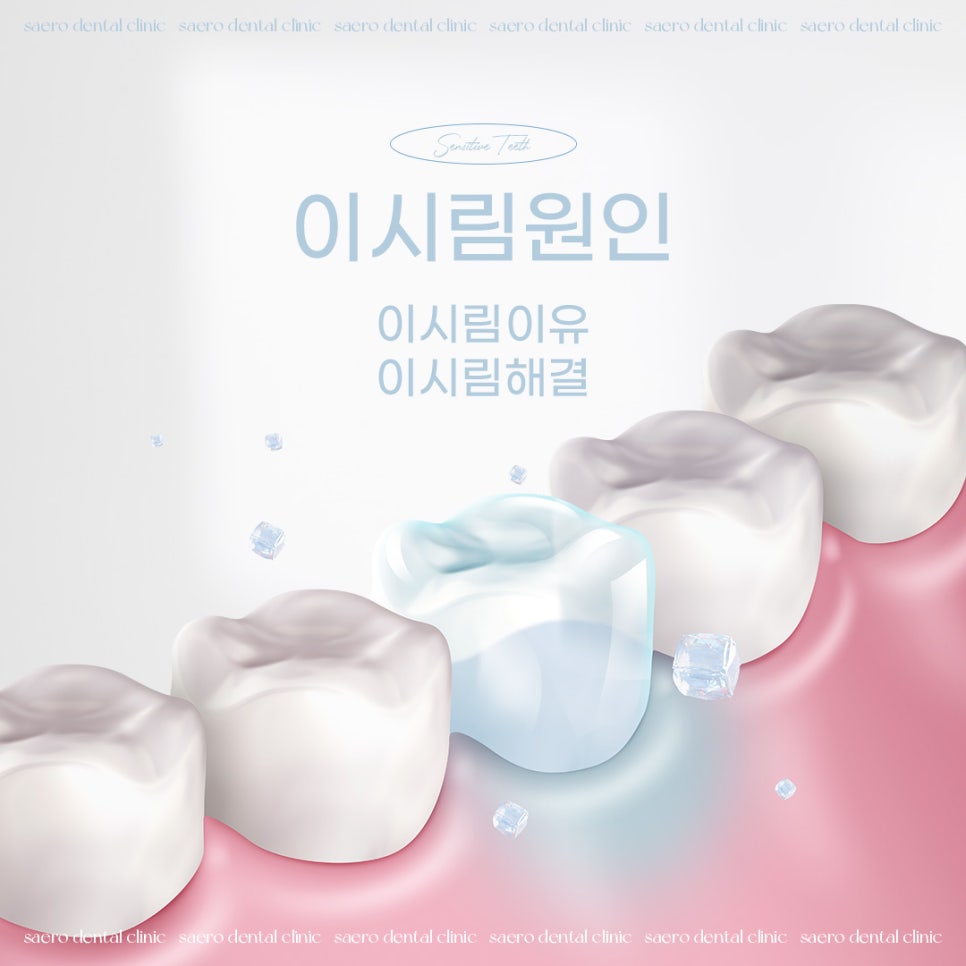
If your teeth suddenly feel sensitive
The exact causes and solutions you should know
Reasons for tooth sensitivity
When you drink cold water,
if your teeth briefly feel sharp and tingling,
or if a certain area feels especially sensitive while brushing,
most people first think of cavities.
However, not all tooth sensitivity is actually caused by cavities.
The reasons for tooth sensitivity are more varied than you might think,
and if you do not identify the cause accurately,
you may receive unnecessary treatment
or miss the right time for needed treatment.
In other words, the reasons for tooth sensitivity are not simply a problem with one tooth,
but can result from multiple factors working together,
including wear on the tooth surface, cracks, gum condition, periodontal disease, and lifestyle habits.
So even if the symptoms seem similar,
some people may improve with simple care alone,
while others may actually need treatment.
Today, let’s organize the causes of tooth sensitivity
that you can consider when your teeth suddenly feel sensitive,
and the solutions that vary depending on the cause!
Reason for tooth sensitivity 1. Problems with the tooth itself
If your teeth suddenly start to feel sensitive,
the first thing to check is whether anything has changed in the tooth itself.
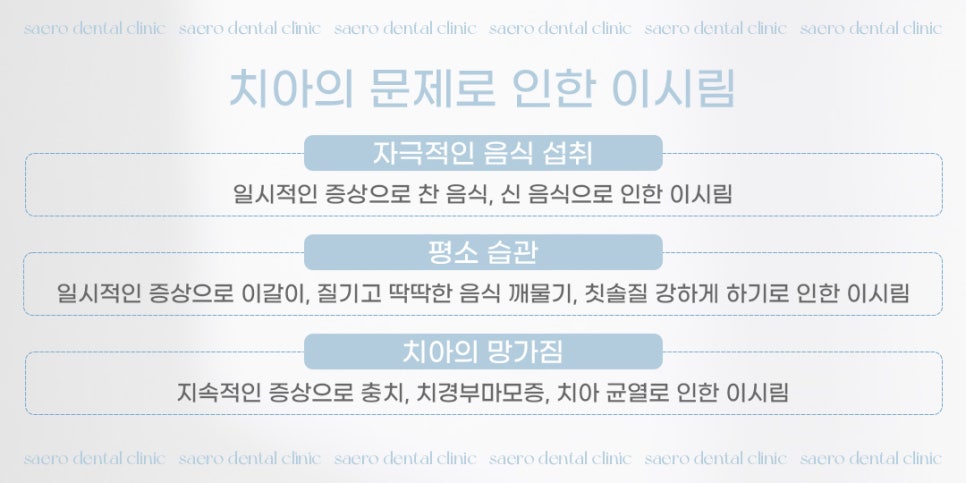
Typical causes of tooth sensitivity are as follows.
Eating irritating foods
Cold water, ice, carbonated drinks, and sour fruit juices
can stimulate the inside of the tooth,
causing temporary sensitivity.
In these cases, even without major damage to the tooth,
an immediate sensitive reaction can occur.
Everyday habits
Teeth grinding, clenching, repeated eating of hard or chewy foods, and brushing too hard
can gradually wear down the tooth surface.
In particular, when the enamel becomes thinner,
outside stimuli are transmitted more easily to the inner tooth,
which can become a reason for tooth sensitivity.
Tooth damage
Cavities, cervical abrasion, tooth cracks, and damage around old restorations
can be causes of tooth sensitivity that actually require treatment.
In these cases, the distance between the tooth’s internal nerve and external stimuli
becomes shorter, making the tooth more sensitive even to small temperature changes.
In other words, whether tooth sensitivity is just a brief feeling of sensitivity
or something caused by damage
needs to be checked accurately!
Reason for tooth sensitivity 2. Gum problems
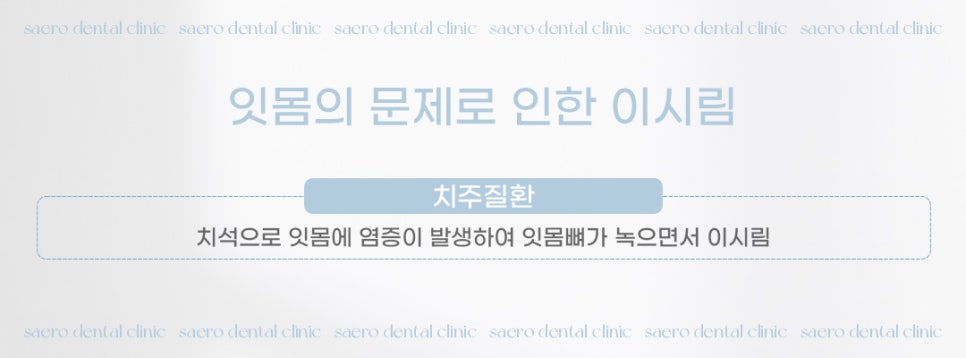
If your teeth keep feeling sensitive even though the teeth themselves do not seem to have any major problems,
you should suspect the gums this time.
One of the reasons for tooth sensitivity that many people easily overlook
is gum disease.
A typical case is periodontal disease.
If tartar is left untreated for a long time, inflammation develops in the gums,
and if this inflammation affects the jawbone as well,
the root area of the tooth becomes exposed.
When the part of the root that should normally be protected inside the gums becomes exposed,
it reacts much more sensitively to cold or hot stimuli.
At this time, in addition to simply feeling sensitive,
gums may swell,
bleed when brushing,
bad breath may become worse,
or you may feel discomfort when pressing on a certain area.
In other words, because the cause of tooth sensitivity is often in the gums rather than the tooth,
judging only by looking at the tooth can cause you to miss the cause.
Solutions that vary depending on the cause
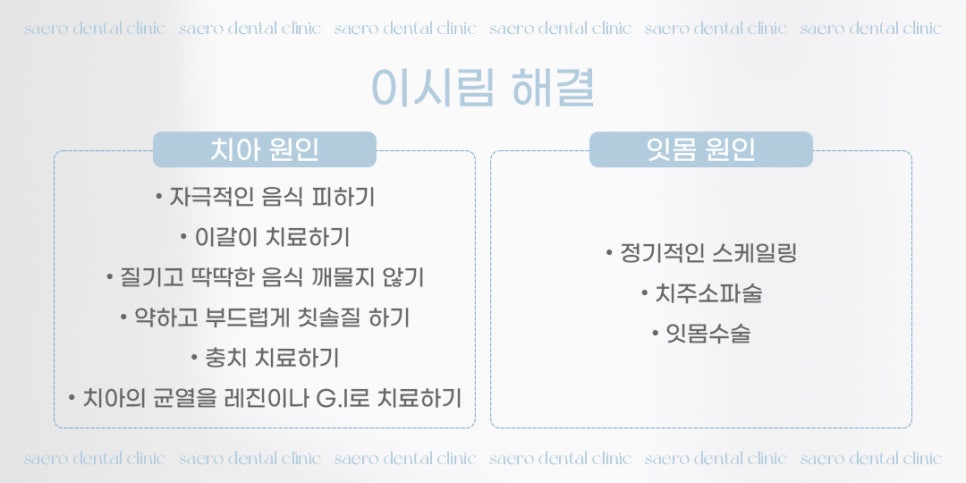
Although the symptom of tooth sensitivity looks similar,
if the cause is different, the solution is completely different as well.
So rather than simply using toothpaste for sensitive teeth or just enduring it,
it is important to first identify the cause.
Relief for tooth sensitivity caused by tooth problems
Reduce irritating foods
Control teeth grinding and clenching habits
Reduce intake of hard and chewy foods
Brush properly with a soft toothbrush
After treating cavities, reinforce the tooth with resin or an inlay
Protect cracked or worn areas with resin or G.I.
Relief for tooth sensitivity caused by gum problems
Regular scaling
Periodontal treatment to remove deep gum inflammation
Periodontal curettage if needed
If gum recession is severe, consider gum contouring or gum regeneration procedures
In other words, the key to solving tooth sensitivity
is not simply reducing the sensitive symptom,
but accurately determining whether the cause is the tooth or the gums,
and then choosing the appropriate treatment.
Sudden tooth sensitivity should not be brushed off lightly
Because tooth sensitivity cannot be judged solely by the outward symptom,
a cause-focused approach is important.
Gangnam Saero Dental Clinic places importance on a direction that does not involve excessive treatment,
but first accurately identifies why the sensitive symptom appeared
and then carries out only the necessary treatment.
With clinicians who have extensive clinical experience,
the clinic carefully checks tooth wear and cracks,
whether there are cavities,
gum inflammation and recession,
and the bite condition,
to ensure that even simple sensitivity is not overlooked in diagnosis.
In other words, solving tooth sensitivity does not mean doing extensive treatment no matter what,
but rather avoiding excessive treatment,
identifying the necessary parts accurately,
and approaching the problem with the most appropriate method.
The sharp sensitivity that appears several times a day
may not end as a simple inconvenience.
That is because teeth that react sensitively even to small stimuli
may be sending signals from your teeth and gums right now.
So it is important to understand the reasons for tooth sensitivity correctly
and examine the teeth and gums together.
The moment of sensitivity that you may have ignored
could actually be the starting point for preventing a bigger problem.
If you are currently feeling discomfort every time you drink cold water or brush your teeth,
it is a good idea to identify the cause accurately
and find the right solution for tooth sensitivity.
Regain a comfortable smile with only the diagnosis and treatment you truly need, without unnecessary procedures!
- This post is medical information presented by a medical institution due to a contractual relationship with a third party.