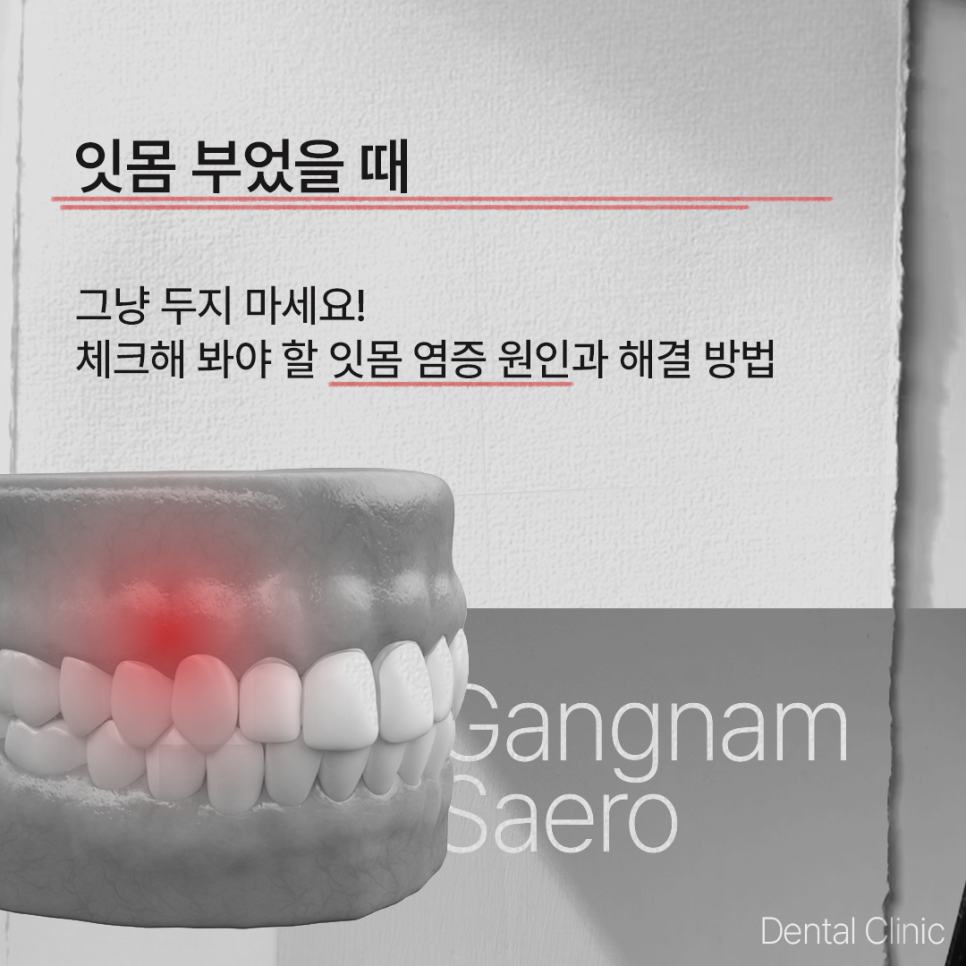
If your gums suddenly swell up
The exact causes of gum swelling and how to address it
a reasons for gum swelling
If your gums suddenly swell and start throbbing overnight,
many people first think,
“Maybe I’ve just been tired lately,” or “Maybe I haven’t brushed well enough,”
and tend to take it lightly.
Of course, temporary irritation or a drop in condition
can make them feel sensitive for a short time,
but if gum swelling continues for several days or keeps recurring,
it may be difficult to see it as a simple symptom.
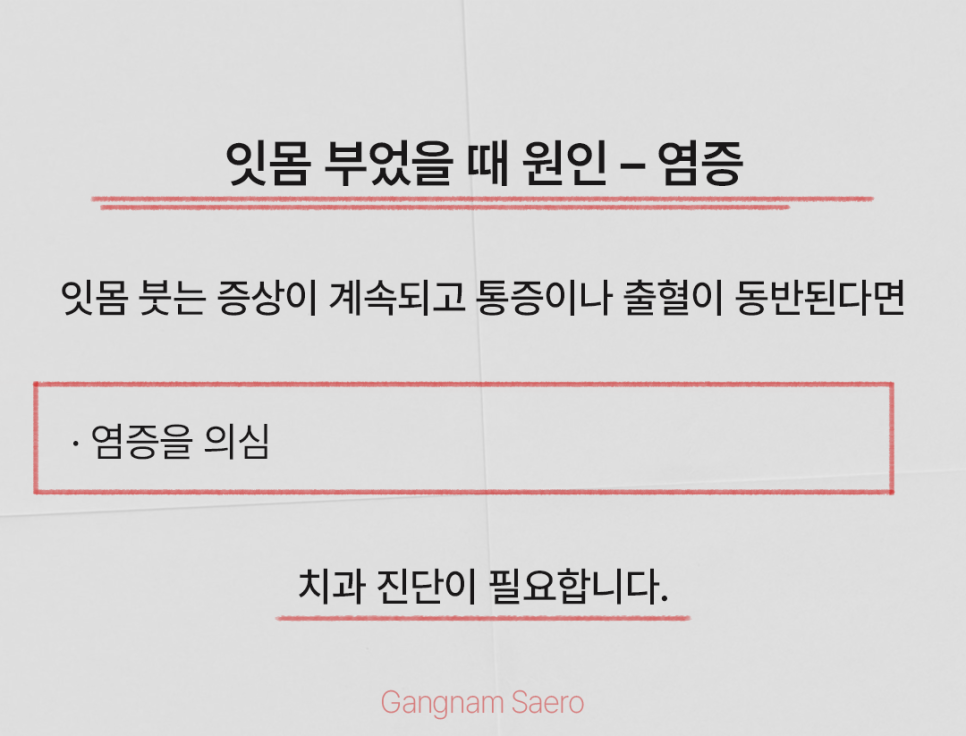
In fact, one of the most common causes of swollen gums
is gum disease caused by tartar and bacteria,
namely gingivitis or periodontitis.
At first, it may begin with just swelling and bleeding,
but if it is not managed at the right time,
it can affect the jawbone supporting the gums,
so early diagnosis is important.
Today, let’s go over the reasons for gum swelling, the causes of gum swelling,
and the solutions for gum swelling that vary depending on the cause,
step by step!
Reasons for gum swelling 1. Gingivitis
If you suddenly develop swollen gums,
the first condition to consider is gingivitis.
Gingivitis is a state in which bacteria invade
the area between the teeth and gums and cause inflammation,
and it can be seen as an early stage of gum disease.
Gingivitis is a very common condition.
It is so common that many adults experience it at least once,
and it can appear more easily when oral hygiene management is insufficient
or during periods when the gums are more sensitive.
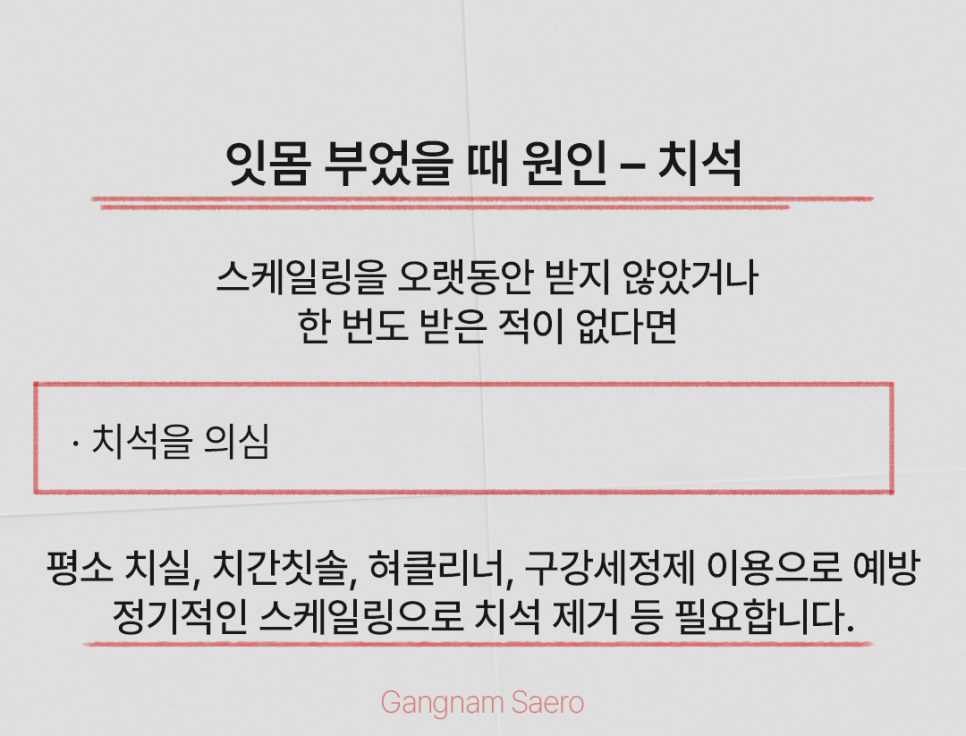
Typical causes of gum swelling include the following:
Plaque that has not been removed
Gum blood vessel dilation due to hormonal changes
An oral environment where bacteria can easily grow
Irregular brushing habits and insufficient flossing
Plaque is a sticky film formed when bacteria combine with proteins in saliva,
and if it is not properly removed,
it gradually turns into hard tartar over time.
If this tartar remains near the gums for a long time,
the gums can swell and bleed,
and you may feel pain or discomfort when brushing.
Fortunately, early-stage gingivitis
has a relatively good chance of recovery.
After an accurate diagnosis, removing tartar and bacterial film through scaling
can help the gums become firmer and reduce swelling.
In other words, if gingivitis is detected early,
it can be considered a stage of gum swelling that may improve
with relatively simple treatment.
Reasons for gum swelling 2. Periodontitis
If gingivitis is left untreated,
the inflammation can gradually progress deeper
and worsen into periodontitis.
Periodontitis does not mean only the gums are swollen;
it refers to a state in which inflammation has spread to the jawbone
and surrounding tissues that support the teeth.
In other words, if the reason for gum swelling is not simple gingivitis
but periodontitis, the depth of the problem is much greater.
When periodontitis progresses, the following symptoms may appear:
The gums swell and bleed frequently
Bad breath becomes worse
Teeth feel loose
The gums recede, exposing the tooth roots
Discomfort or pain when chewing
At this stage, simple scaling alone may not be enough.
To remove inflammation and tartar remaining deep in the gums,
a periodontal curettage procedure may be needed,
and depending on the condition, more active treatment such as
gum surgery, bone grafting, or gum regeneration treatment
may also be necessary.
In other words, if the cause of gum swelling has progressed to periodontitis,
a full treatment plan becomes important rather than simple care.
What matters most for gum swelling solutions and prevention?
After your gums start to swell,
receiving treatment is important,
but even more important is understanding the reasons for gum swelling in advance
and preventing it in daily life.
Because gum disease is not easy to recover from once it becomes severe,
early management makes the biggest difference.
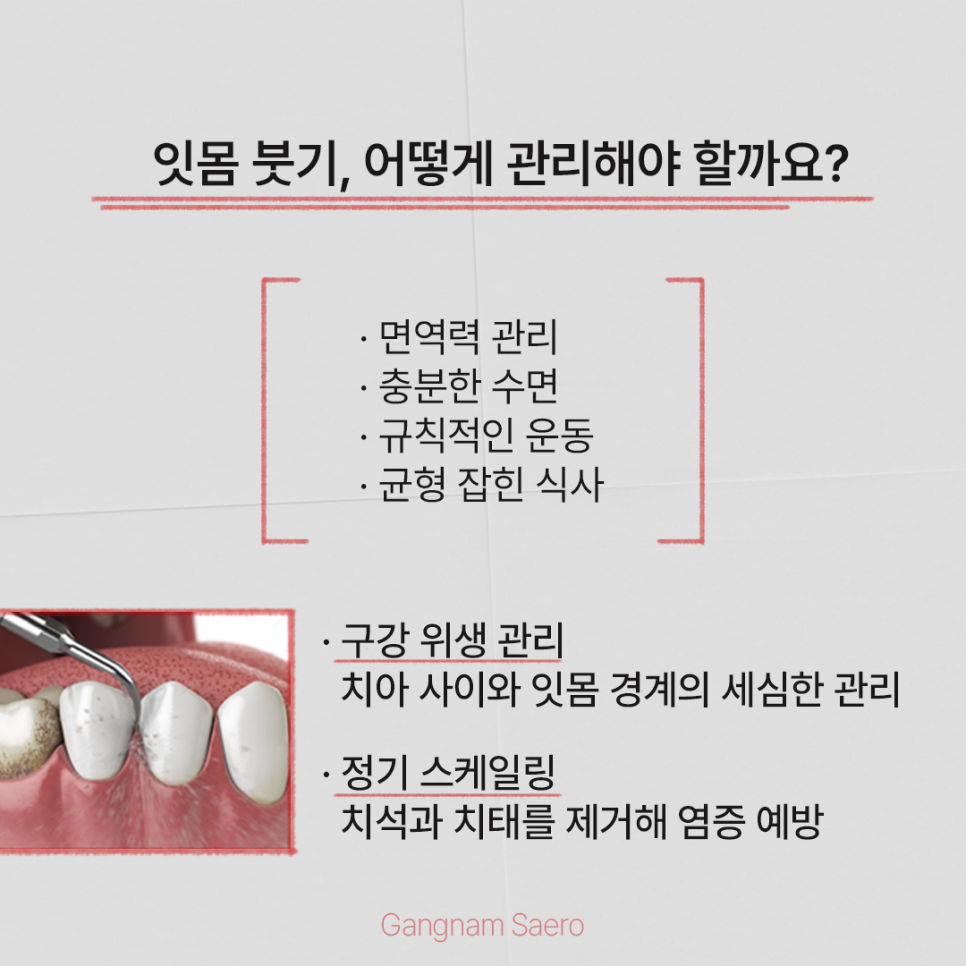
Prevention tips for daily life
Brush thoroughly at least twice a day
Manage plaque with floss and interdental brushes
Get regular scaling
Reduce spicy foods, smoking, and drinking
Get enough sleep and manage stress
In particular, scaling is not a procedure that grinds down the teeth,
but the most basic treatment for protecting gum health
by removing tartar,
and it is worth remembering that it is covered by health insurance once a year!
Also, for those who hesitate to get scaling because of pain,
depending on the dental clinic, methods such as painless scaling
may allow for more comfortable care.
In the end, consistent preventive care becomes the most basic solution for gum swelling.
If your gums swell, an accurate diagnosis comes first
Not all swollen gums are the same.
In some cases, it may be relatively mild gingivitis,
but in others, it may have already progressed to periodontitis
and require deeper treatment.
That is why what matters is not simply reducing the swelling,
but accurately identifying why your gums are swollen right now
and determining the cause of gum swelling.
If the cause is not properly identified, treatment may be delayed,
or conversely, you may end up worrying more than necessary.
The gums may look like a surface tissue,
but in reality, they are connected to the bone supporting the teeth
and deeper structures as well.
Once damage progresses, recovery is not easy,
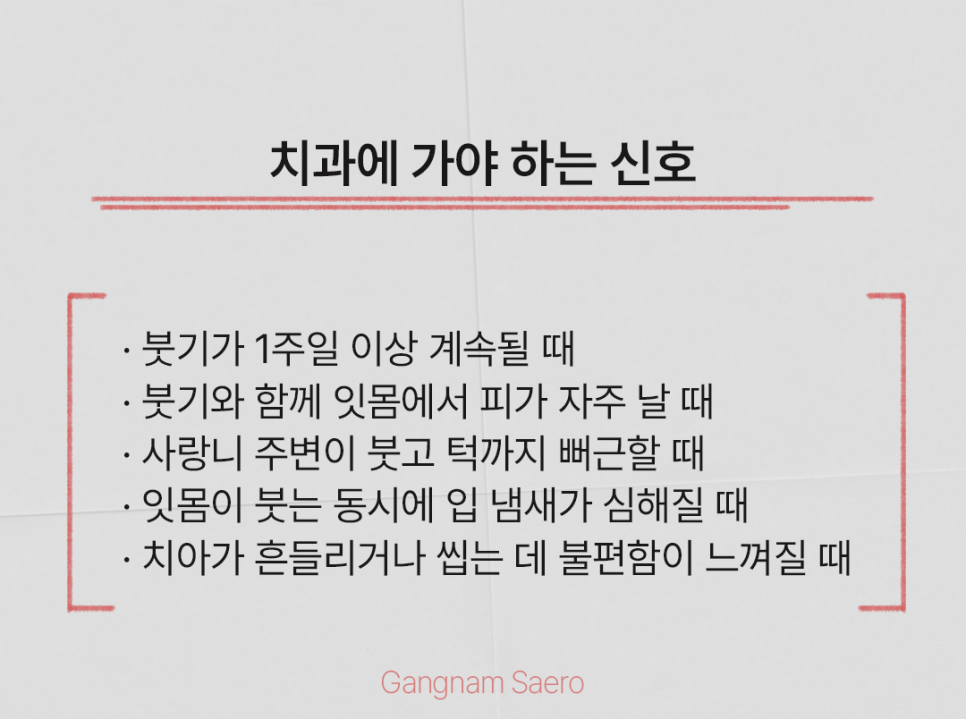
so when swelling and pain are felt,
it is most important to get diagnosed early.
Before the discomfort you casually brushed aside leads to a bigger problem,
I hope you can regain a healthy smile through accurate diagnosis and careful treatment!
- This post is an article on medical information presented by a medical institution due to a third-party contractual relationship.