Bad Breath Concerns Can Be Resolved by Identifying the Cause
Causes of Bad Breath
Several Things to Check at the Dentist
From the first coffee of the morning, to a brief conversation after lunch, and even a casual drink on the way home from work.
We talk countless times each day
and face others while exhaling.
That is why bad breath can be a more significant concern than it may seem.
Even if you do not notice it yourself,
it can affect first impressions and confidence
during conversations held at close range.
Many people think bad breath is simply caused by insufficient brushing,
but in reality, there are many different causes.
Coffee, smoking, alcohol consumption, irregular meals and sleep, dry mouth, tartar, and gum inflammation
can all work together in everyday life.
Most importantly, the majority of the causes of bad breath actually begin inside the mouth.
In other words, to properly resolve bad breath,
rather than simply covering up the odor,
you need to identify the exact cause
and begin the appropriate care or treatment.
Today, we will organize the causes of bad breath, methods for eliminating bad breath,
and the treatment options that should be checked at the dentist!
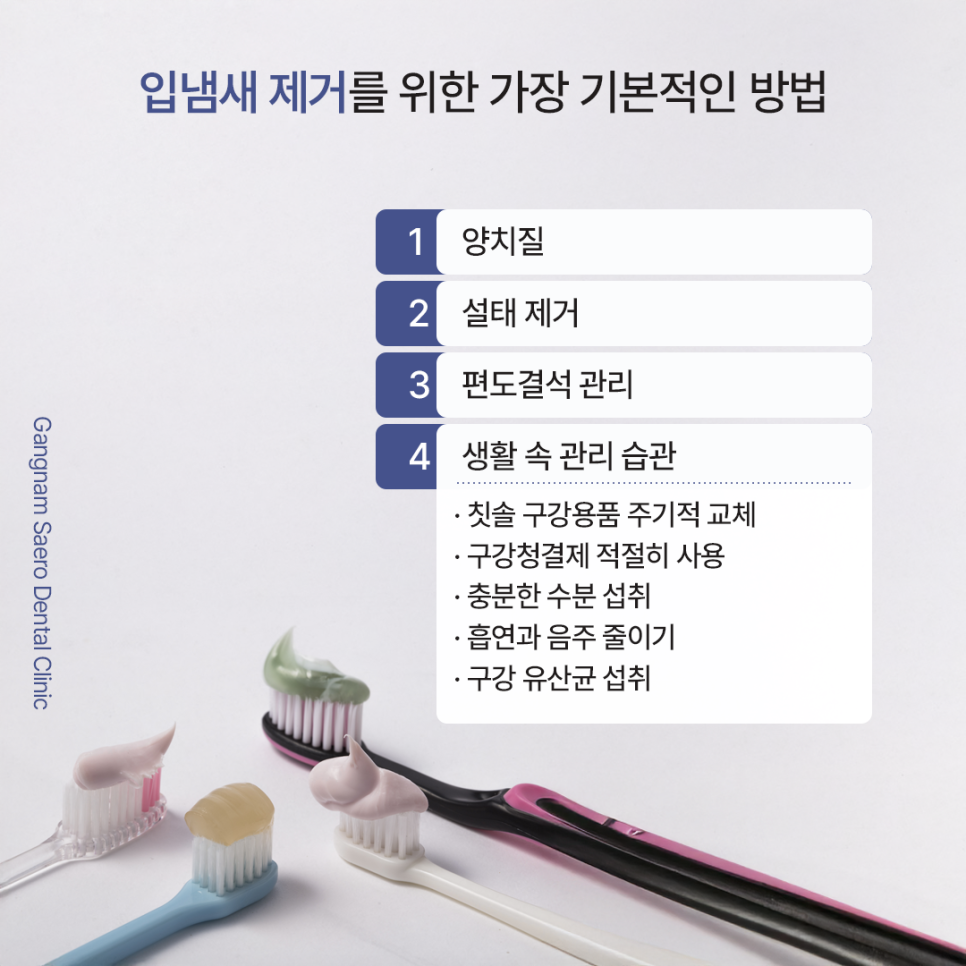
The Most Basic Ways to Reduce Bad Breath
To reduce bad breath,
the first thing to do is
keep your oral environment clean.
Food particles and bacteria left in the mouth
are especially common causes of bad breath,
so maintaining basic care habits can be very helpful.
- Brushing your teeth
This is the most basic yet most important form of care.
Food particles left in the mouth become nourishment for bacteria,
and substances that produce odors, such as hydrogen sulfide,
are created as these bacteria break down the food.
This is one of the representative causes of bad breath.
Brushing thoroughly as soon as possible after meals
can be considered the first step in eliminating bad breath.
- Removing tongue coating
Bacteria and deposits left on the tongue must also be managed.
If bad breath remains despite brushing carefully,
it is worth checking the condition of your tongue first.
A white film or yellowish deposit on the surface of the tongue may be a tongue coating,
which is also caused by accumulated bacteria and can contribute to bad breath.
Gently cleaning the tongue once a day with a tongue cleaner can be helpful.
- Managing tonsil stones
Although they are not easy to see, they can be a source of odor.
Small yellow particles that come from the back of the throat—
that is, tonsil stones—are formed when bacteria and food debris clump together
and often have a strong odor.
In such cases, gargling
or removing them using an appropriate method
may help eliminate bad breath.
- Everyday care habits
Basic hygiene and lifestyle habits are also important.
Replace your toothbrush and oral-care products regularly
Use mouthwash appropriately
Reduce dry mouth by drinking enough fluids
Reduce smoking and alcohol consumption
Consider oral probiotics to help manage the oral environment
Maintaining these basic habits well
can be very helpful in reducing bad breath.
However, if bad breath continues despite this care,
it is necessary to check for dental causes.
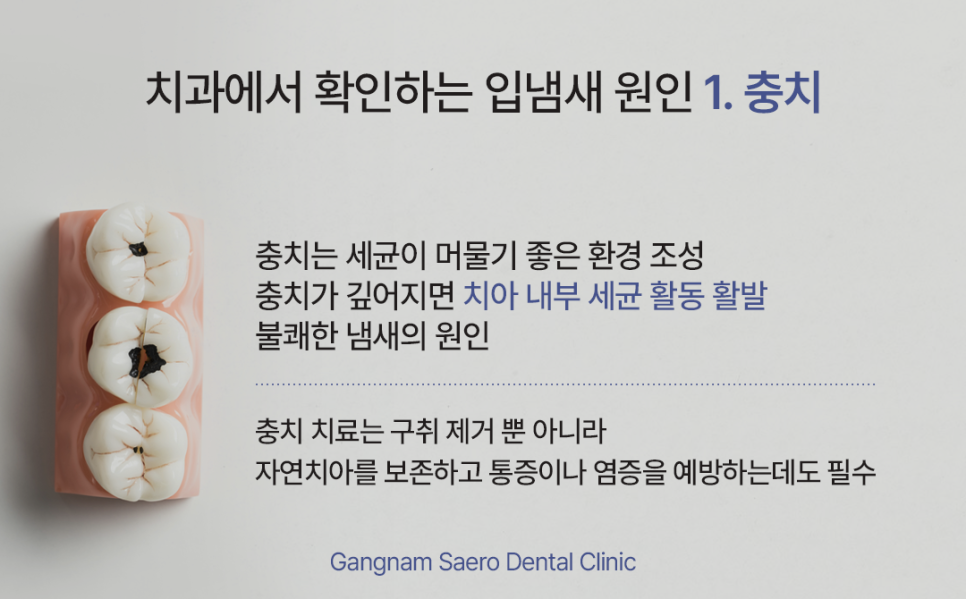
Cause of Bad Breath Checked at the Dentist 1. Cavities
Cavities do not simply end with tooth decay.
The affected area can easily trap food
and become a favorable environment for bacteria,
so it can itself be a cause of bad breath.
Especially when a cavity becomes deep,
bacterial activity inside the tooth increases,
which can produce an unpleasant odor.
Therefore, to eliminate bad breath,
it is important not only to manage the odor,
but also to treat the cavity itself accurately.
Cavity treatment is important not only for improving bad breath,
but also for preserving natural teeth
and preventing problems that may lead to pain or inflammation.
Cause of Bad Breath Checked at the Dentist 2. Tartar
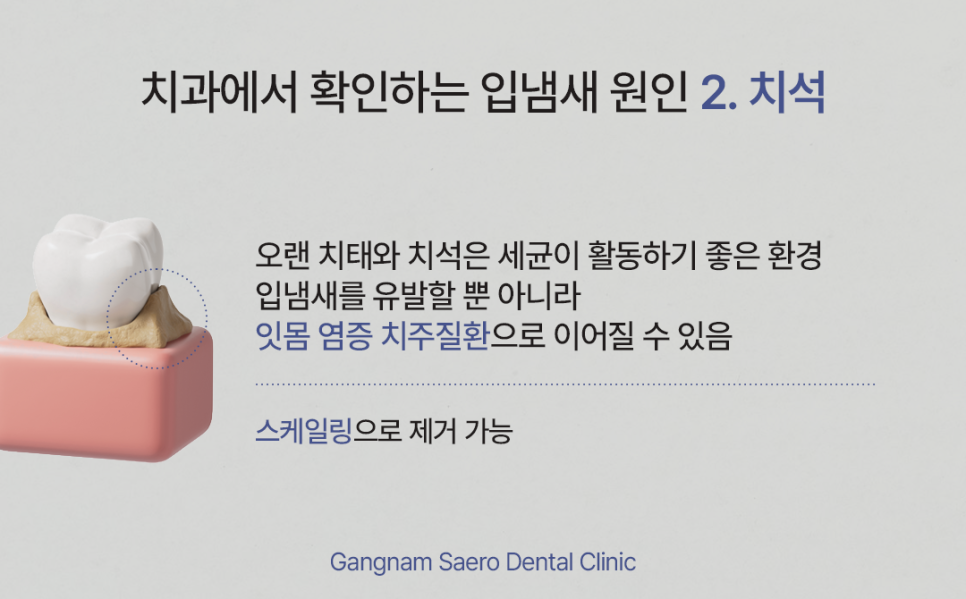
Plaque and tartar accumulated over a long period
create an environment that bacteria favor.
These bacteria not only cause bad breath,
but can also cause gum inflammation
and eventually lead to periodontal disease.
In other words, when there is a substantial amount of tartar,
bad breath may not disappear easily
even with diligent brushing.
In such cases, removing tartar through scaling at the dentist
can directly help address the cause of bad breath.
Scaling is not simply a way to clean the teeth;
it is also a fundamental treatment that is very important for
preventing periodontal disease,
maintaining gum health,
and eliminating bad breath.
If you are concerned about pain,
you can also ask whether more comfortable options,
such as pain-free scaling, are available.
Cause of Bad Breath Checked at the Dentist 3. Malocclusion
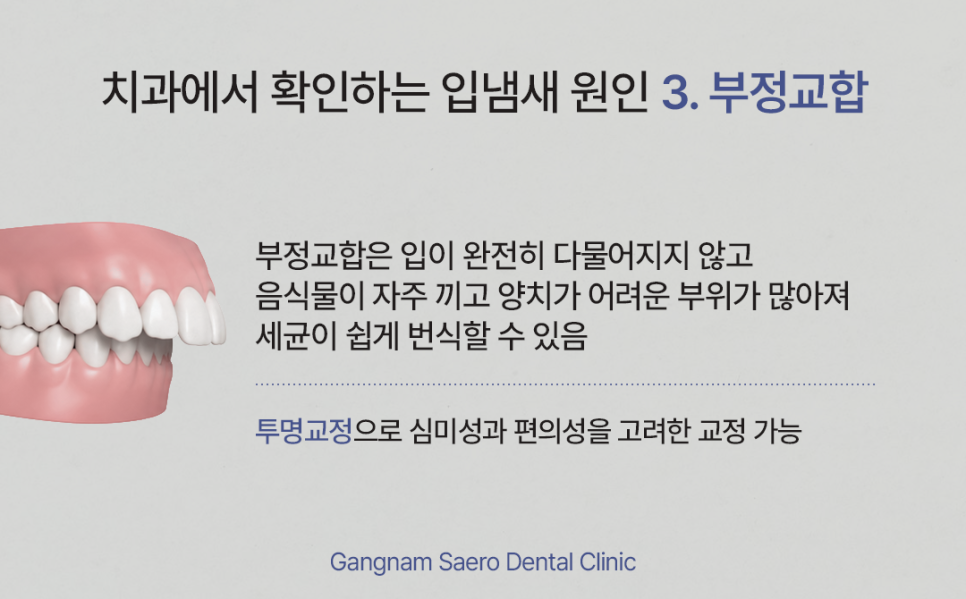
Many people think orthodontic treatment is only for cosmetic purposes,
but it can also be connected to bad breath.
Malocclusion can prevent the mouth from closing completely,
cause food to become trapped frequently,
and create more areas that are difficult to brush,
allowing bacteria to multiply more easily.
In addition, bite problems such as protruding teeth, open bite, and deep bite
can cause dry mouth
and become a cause of bad breath.
When the mouth is dry, the saliva's self-cleansing action is reduced,
which can worsen the bacterial environment.
In such cases, orthodontic treatment
means more than simply straightening the teeth.
In other words, orthodontics can be
not only a cosmetic improvement,
but also a more fundamental approach to eliminating bad breath.
These days, less noticeable clear orthodontic appliances are also available,
allowing both aesthetics and convenience to be considered.
Causes Outside the Mouth Should Also Be Considered
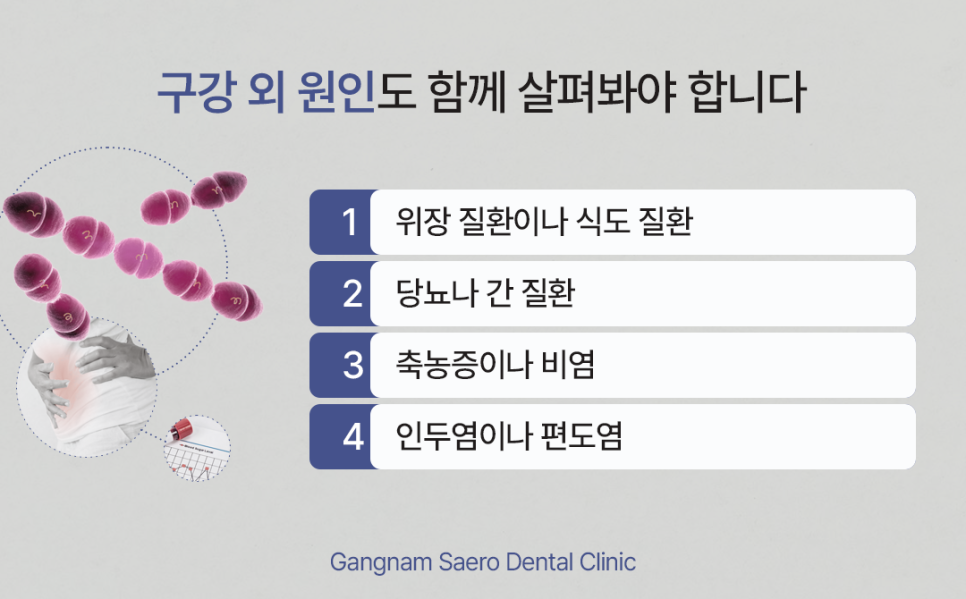
Although most bad breath begins inside the mouth,
some cases are connected to causes outside the mouth.
If bad breath continues even after dental treatment and oral care,
it may be necessary to check for other health conditions as well.
Examples include:
Gastrointestinal or esophageal conditions
Diabetes or liver disease
Sinusitis or rhinitis
Pharyngitis or tonsillitis
In other words, the causes of bad breath may not be limited to the mouth.
If symptoms continue even after dental causes have been checked first,
it may be advisable to coordinate with other medical departments when necessary.
The Start of Resolving Bad Breath Is an Accurate Diagnosis
Bad breath is not simply an unpleasant odor;
it may be a signal from your current oral environment, lifestyle habits, or health condition.
That is why the key to eliminating bad breath is not covering it up,
but identifying why the odor occurs.
강남새로치과
provides various types of care,
including cavity treatment,
scaling and periodontal disease management,
and orthodontic treatment,
to accurately identify the cause of bad breath for each individual patient
and suggest an appropriate approach.
Bad breath may improve through small changes in daily habits,
but if an underlying dental problem is present,
an accurate diagnosis comes first.
If you are concerned about persistent bad breath,
rather than trying to resolve it on your own,
having your oral condition checked at the dentist
may be a faster and more accurate approach.
Healthy Breath Is Also Part of Dental Care
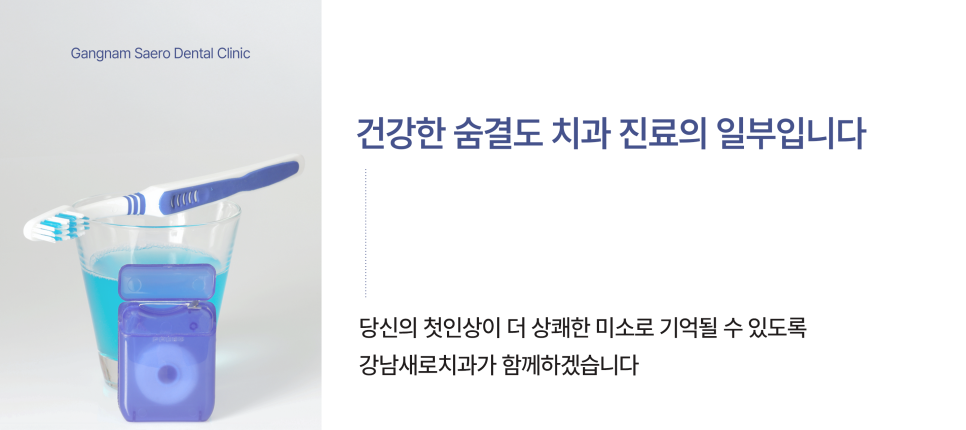
Bad breath is not simply an embarrassing issue;
it is a real concern that can affect confidence and relationships in everyday life.
However, once the cause is accurately identified,
it is possible to find a clearer solution than expected.
It may improve through brushing, tongue-coating care, and lifestyle changes alone,
while some cases require a dental approach,
such as cavity treatment, scaling, or orthodontic treatment.
The important thing is to accurately understand where your current condition began.
That starting point is diagnosis.
강남새로치과 will be with you
so that your first impression can be remembered with a fresher smile.
- This post was provided by a medical institution as medical information under a third-party contractual relationship.