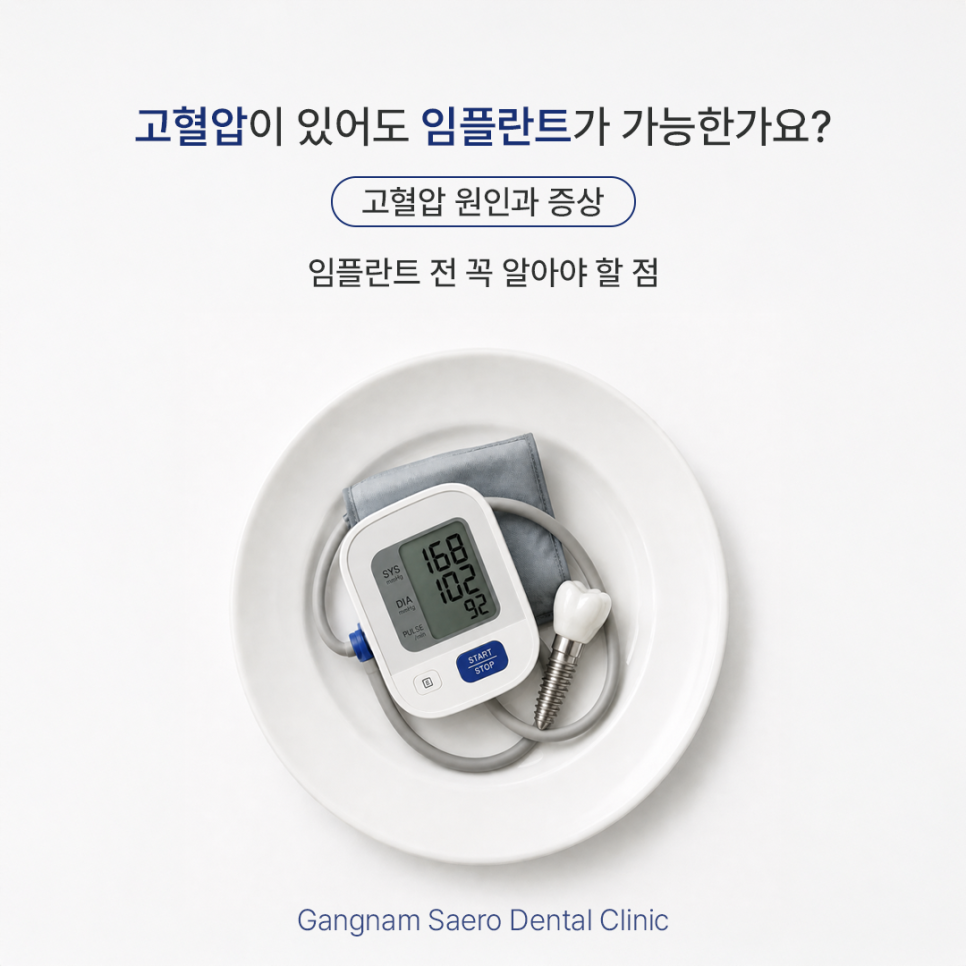
Can You Get Dental Implants Even If You Have High Blood Pressure?
Causes and Symptoms of High Blood Pressure
What You Must Know Before Getting Dental Implants
Managing blood pressure becomes increasingly important with age.
High blood pressure is particularly common among middle-aged and older adults,
but it is no longer an issue limited to a specific age group.
It is now one of the chronic conditions that continues to be found even among relatively young adults.
High blood pressure is very common among adults in Korea,
and it is estimated that more than half of those aged 65 and older
have high blood pressure.
The problem is that high blood pressure does not simply
end with elevated blood pressure readings.
Because it places continuous strain on the blood vessels,
it is closely connected to overall health,
and if you are preparing for treatment such as dental implants, where bleeding control and recovery are important,
more careful evaluation is needed.
So today, for those considering dental implants with high blood pressure,
we will organize information about what high blood pressure means, its causes and symptoms,
and what you should know before getting dental implants.
What Is High Blood Pressure?
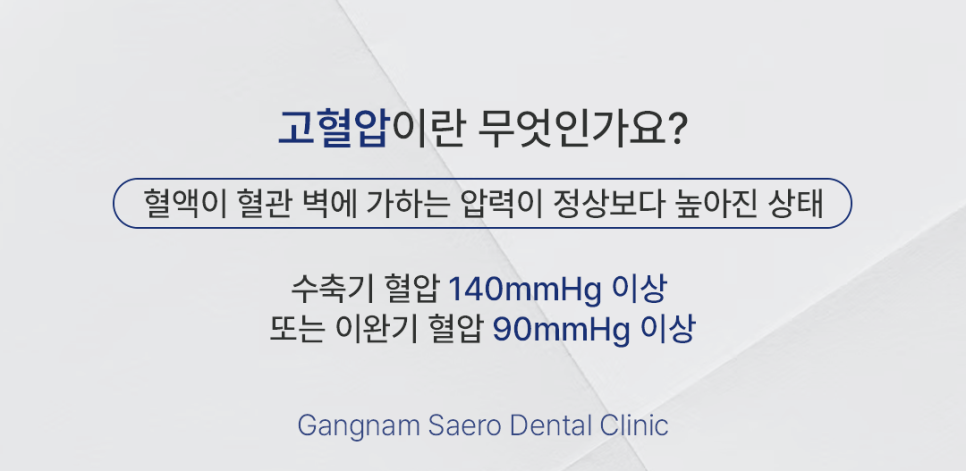
High blood pressure refers to a condition in which the pressure exerted by blood against the blood vessel walls
is higher than normal.
The standard generally used in Korea is
a systolic blood pressure of 140 mmHg or higher or a diastolic blood pressure of 90 mmHg or higher.
High blood pressure is a very common condition,
but it cannot be viewed simply as a problem in which the numbers are slightly elevated.
When blood pressure remains high for a long time,
strain builds up on the blood vessels, heart, brain, and kidneys,
and the risk of various complications may increase if treatment is delayed.
In particular, if you are preparing for treatment such as dental implants, which involves the gums, jawbone, bleeding, and recovery management, it is very important to check whether your current blood pressure is being stably controlled.
What Causes High Blood Pressure?
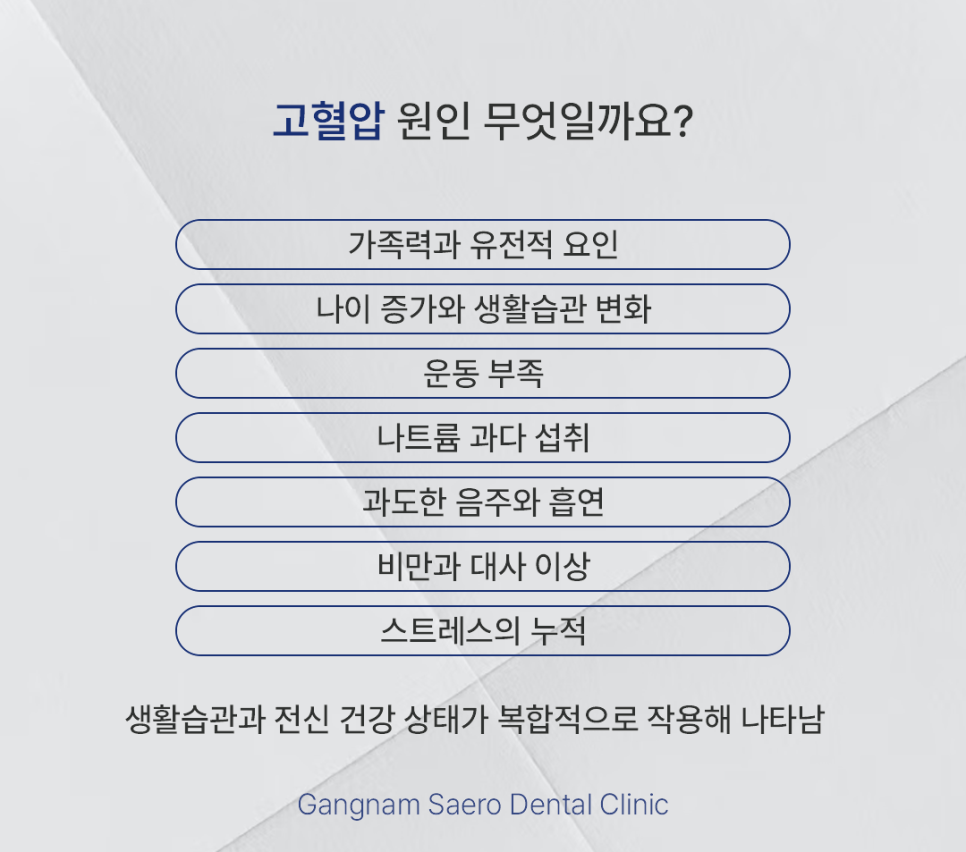
The causes of high blood pressure
can broadly be divided into two categories.
One is secondary hypertension, in which a specific disease or cause is relatively clear,
and the other is primary hypertension, in which it is difficult to identify one clear cause.
In general, primary hypertension, for which it is difficult to identify a single cause,
is more common.
Common causes of high blood pressure include:
Family history and genetic factors
Increasing age and lifestyle changes
Lack of exercise
Excessive sodium intake
Excessive alcohol consumption and smoking
Obesity and metabolic abnormalities
Accumulated stress
In other words, high blood pressure often does not arise from one single reason,
but results from a combination of lifestyle habits and overall health conditions.
Therefore, when preparing for dental implants with high blood pressure,
it is important not only to check whether you are taking blood pressure medication,
but also to consider your current lifestyle and overall health condition.
What Symptoms Can High Blood Pressure Cause?
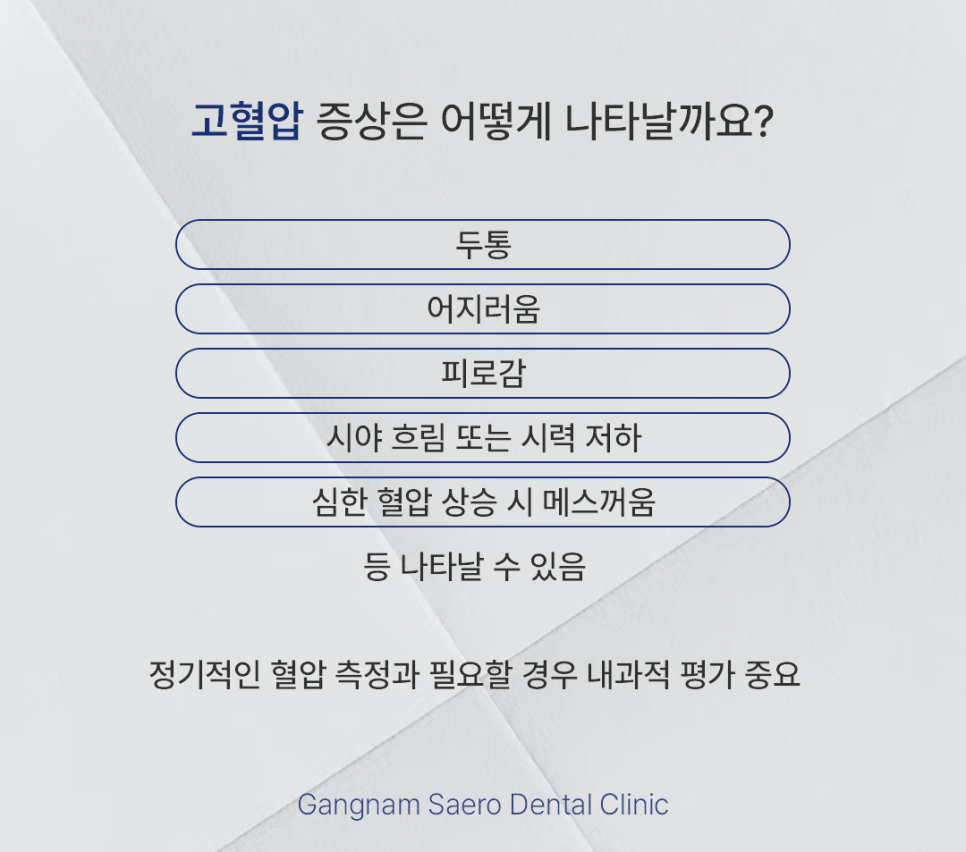
High blood pressure is often called a “silent disease”
because it frequently causes no obvious symptoms.
In fact, many cases are discovered by chance during a health checkup or while receiving care for another condition.
However, in some cases, the following symptoms may accompany high blood pressure:
Headache
Dizziness
Fatigue
Blurred vision or reduced visual acuity
Nausea when blood pressure rises severely, among other symptoms
However, these symptoms can also resemble those of other conditions,
so it is difficult to make a judgment based on symptoms alone.
For this reason, it is important to measure your blood pressure regularly
and, when necessary, undergo an internal medicine evaluation as well.
If high blood pressure is not properly managed,
the risk of cardiovascular and cerebrovascular diseases
such as myocardial infarction, stroke, and heart failure may increase.
High Blood Pressure and Dental Implants
Dental implant treatment is not simply a procedure for placing a tooth.
It includes an incision and suturing of the gums,
as well as the process through which the artificial tooth root becomes stably attached to the jawbone.
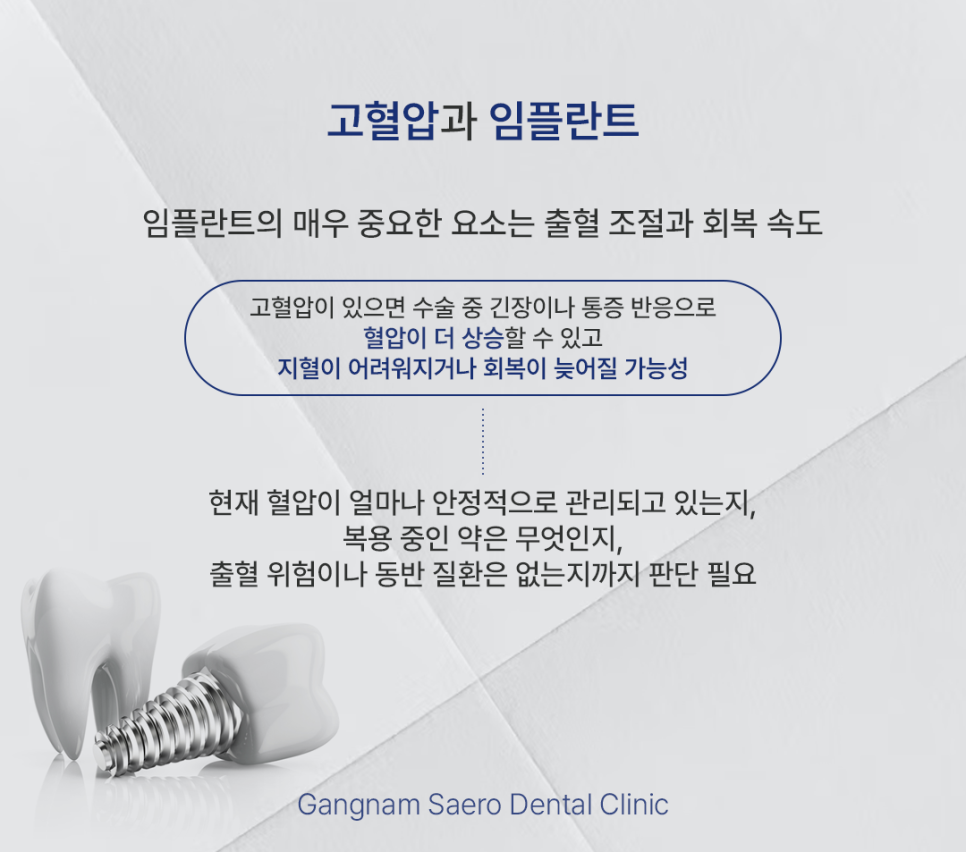
During this process, bleeding control and the speed of recovery
are very important factors.
If blood pressure is not stably controlled,
it may rise further because of tension or a pain response during surgery,
which may make it more difficult to stop the bleeding or delay recovery.
In particular, blood pressure on the day of surgery is directly related to patient safety,
so before getting dental implants, it is necessary to thoroughly check your current blood pressure control, medications,
and whether you have any systemic diseases.
In other words, dental implants for people with high blood pressure
do not mean that they are “absolutely impossible because you have high blood pressure.”
Rather, treatment should be planned safely by considering
how stably your blood pressure is currently being managed,
which medications you are taking,
and whether you have a risk of bleeding or any coexisting conditions.
What Are PRF Implants for People with High Blood Pressure?
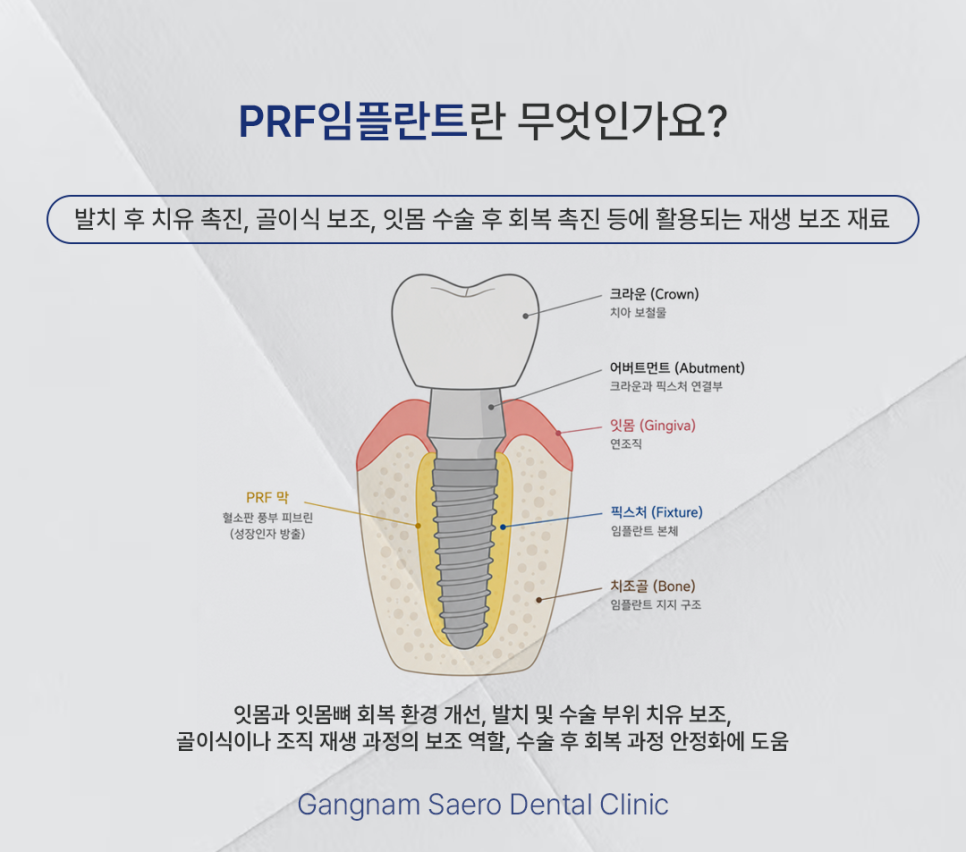
When giving careful consideration to the recovery environment
for dental implants in patients with high blood pressure,
one of the methods that may be discussed is PRF implants.
PRF stands for Platelet Rich Fibrin,
meaning fibrin rich in platelets and growth factors.
It is a regenerative-support material obtained by drawing the patient’s own blood and centrifuging it.
It is used to support healing after tooth extraction, bone grafting, and recovery after gum surgery.
The potential benefits of PRF implants include:
Improving the healing environment for the gums and jawbone
Supporting healing at extraction and surgical sites
Supporting bone grafting and tissue regeneration processes
Helping stabilize the recovery process after surgery
In other words, PRF implants are not a method exclusively for patients with high blood pressure.
They are better understood as a supportive approach that may be helpful when recovery needs to be managed with particular care.
However, the same approach is not suitable for every patient,
so whether it should be used must be determined by considering the current oral and overall health conditions together.
Precautions Before Dental Implants for Patients with High Blood Pressure
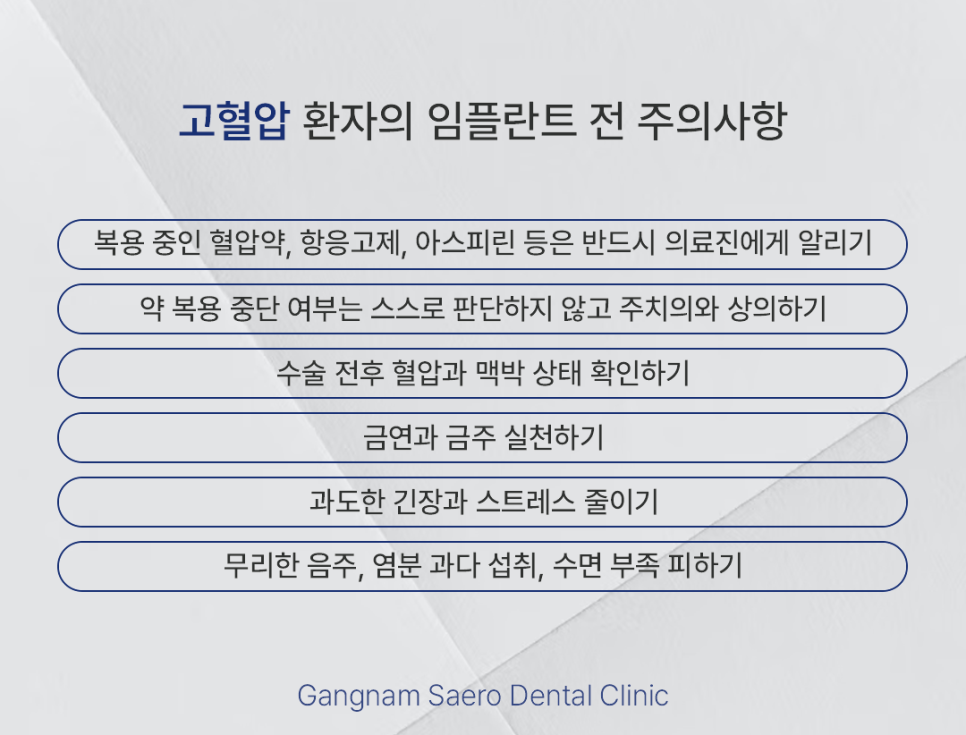
For safe dental implants in patients with high blood pressure,
not only the medical team’s diagnosis
but also the patient’s cooperation is very important.
In particular, following these basic guidelines can be helpful:
Be sure to inform the medical team about any blood pressure medication, anticoagulants, aspirin, or other medications you are taking
Do not decide on your own whether to stop taking medication; consult your primary physician
Check your blood pressure and pulse before and after surgery
Practice smoking and alcohol cessation
Reduce excessive tension and stress
Avoid excessive alcohol consumption, excessive salt intake, and insufficient sleep
In particular, whether you are taking antiplatelet agents or anticoagulants
is directly related to bleeding management,
so this must be decided based on consultation with both your dentist and your primary care physician.
In other words, the key to dental implants for people with high blood pressure
is not to proceed forcefully,
but to share all relevant information, achieve proper control, and proceed safely.
What Should You Look for in a Dental Implant Clinic for Patients with High Blood Pressure?
Dental implants for patients with high blood pressure
are not simply a procedure for placing a tooth.
They are a treatment in which overall health must also be considered.
Therefore, when choosing a clinic,
it is advisable to consider not only its experience with dental implants,
but also how many cases it has handled involving patients with systemic conditions
such as high blood pressure, diabetes, and osteoporosis.
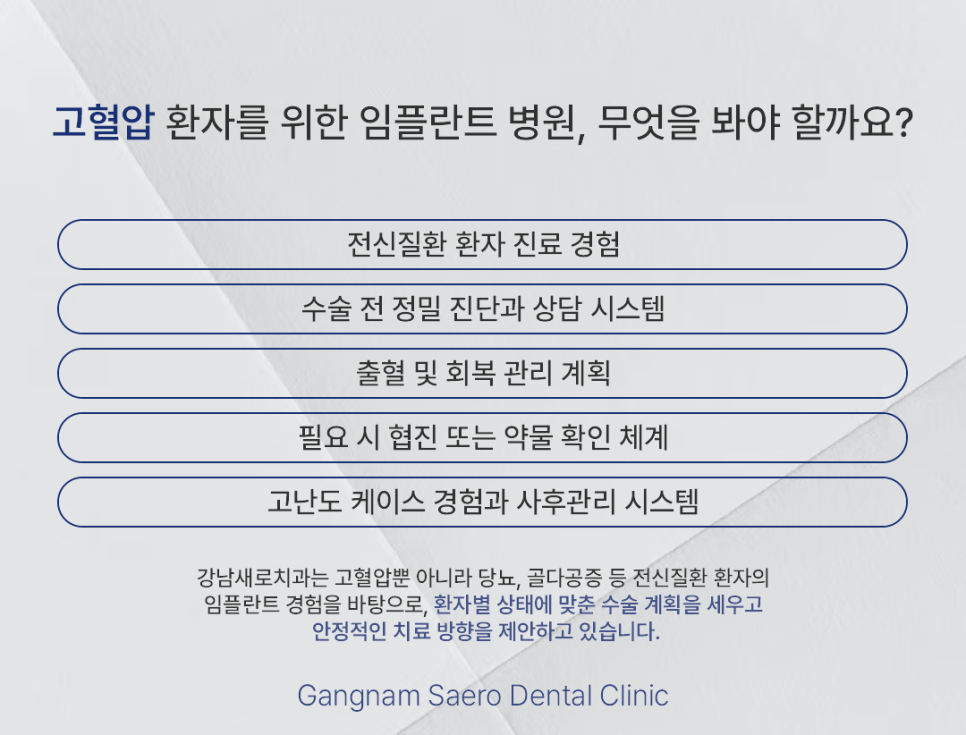
Important points to consider include:
Experience treating patients with systemic conditions
A detailed preoperative diagnosis and consultation system
A plan for bleeding and recovery management
A system for consultations with other specialties or medication review when necessary
Experience with complex cases and a post-treatment care system
Gangnam Saero Dental Clinic draws on its experience with dental implants for patients with systemic conditions,
including high blood pressure, diabetes, and osteoporosis,
to develop surgical plans suited to each patient’s condition
and suggest a stable treatment approach.
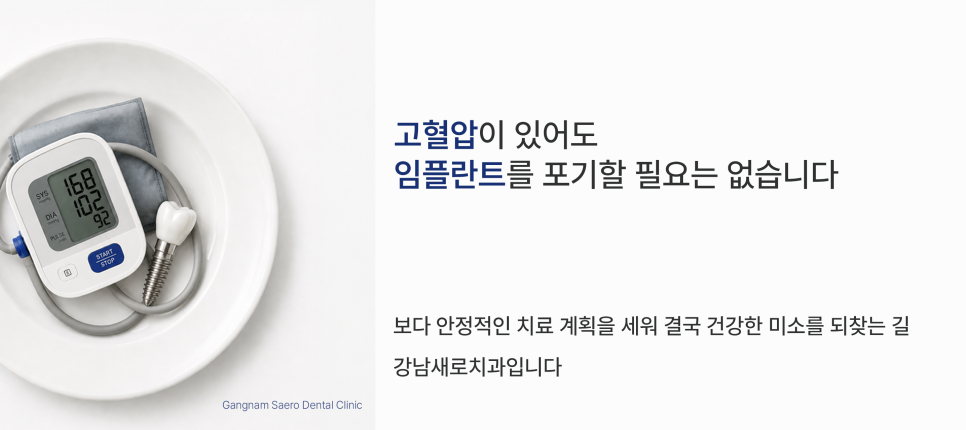
Even If You Have High Blood Pressure,
You Do Not Have to Give Up on Dental Implants
High blood pressure is a very common condition,
but that does not mean you must automatically give up on dental implants.
What is important is to accurately assess your current blood pressure,
carefully coordinate the necessary medications, lifestyle habits, and surgical plan,
and then proceed with treatment safely.
In particular, considering recovery-support methods such as PRF implants as well
may help in developing a more stable treatment plan.
Ultimately, the path to restoring a healthy smile
does not end simply with placing a tooth.
Care that considers your overall health as well
may lead to a safer choice.
A New Smile, A New Beginning
This is Gangnam Saero Dental Clinic.
- This post contains medical information and other content provided by a medical institution under a third-party contractual relationship.