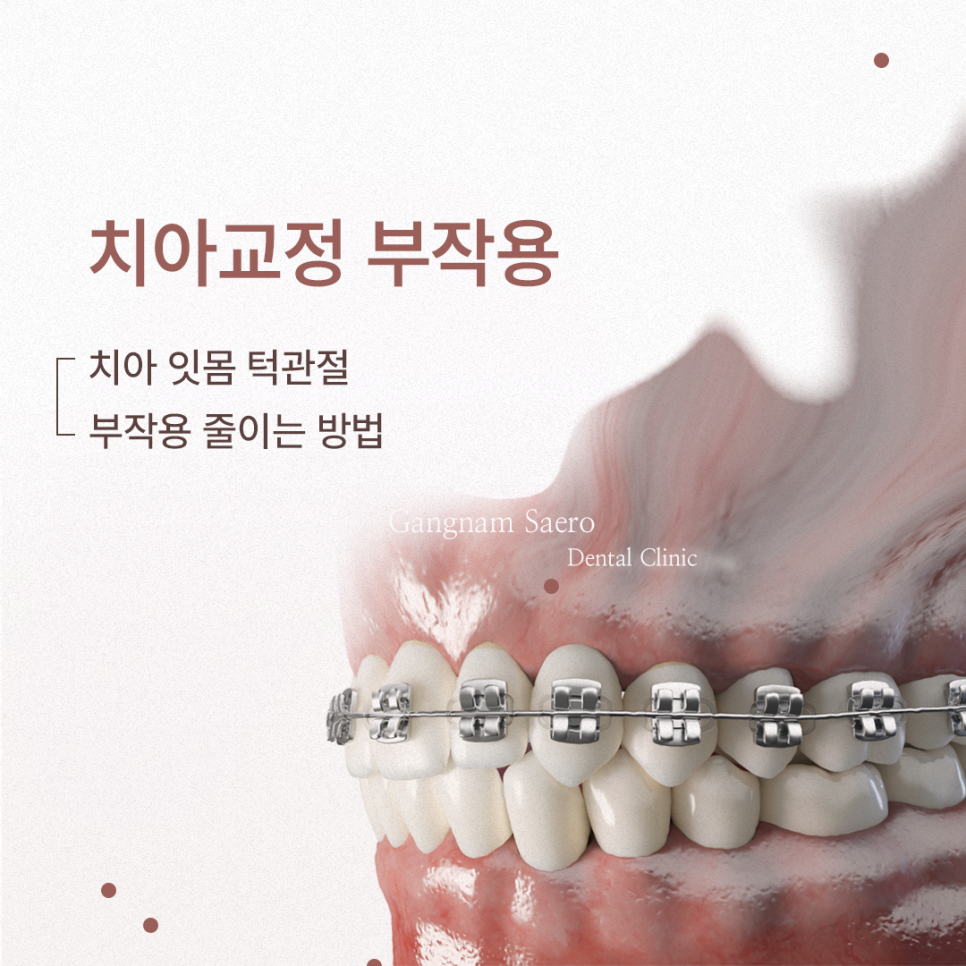
Side Effects of Orthodontic Treatment
Teeth, Gums, and Jaw Joints
How to Reduce Side Effects
One of the biggest concerns among people considering orthodontic treatment is the possibility of side effects. While the benefits of straighter teeth and a more refined appearance are clear, it is natural to worry about whether the treatment may place strain on the teeth, gums, or jaw joints.
In fact, because orthodontic treatment involves moving the teeth, various changes in the structures inside the mouth are unavoidable.
However, not all of these changes lead to serious problems. Some are natural parts of the adjustment process, while others can be sufficiently reduced by understanding and managing them in advance.
Today, we will organize the possible side effects of orthodontic treatment into three categories—<teeth, gums, and jaw joints>—
so they are a little easier to understand.
Side Effects of Orthodontic Treatment: Teeth
- Dental Demineralization
Dental demineralization refers to white, spot-like changes that occur as the surface of a tooth erodes. Although it may look like a simple stain, it is actually a weakened state in which minerals have been lost from the tooth surface. Demineralization can occur in anyone who frequently consumes foods high in sugar or acidity, or who does not brush thoroughly enough.
In particular, during orthodontic treatment, food is more likely to remain around the appliances and brushing becomes more difficult than usual. As a result, the possibility of demineralization may increase if oral hygiene is neglected. Above all, once demineralization occurs, it is not easy to completely restore the tooth to its original condition, so hygiene must be managed much more carefully than usual during orthodontic treatment.
- Feeling That the Teeth Are Loose or Weakened
Some people feel that their teeth are loose immediately after orthodontic treatment, or that their teeth feel weaker than before.
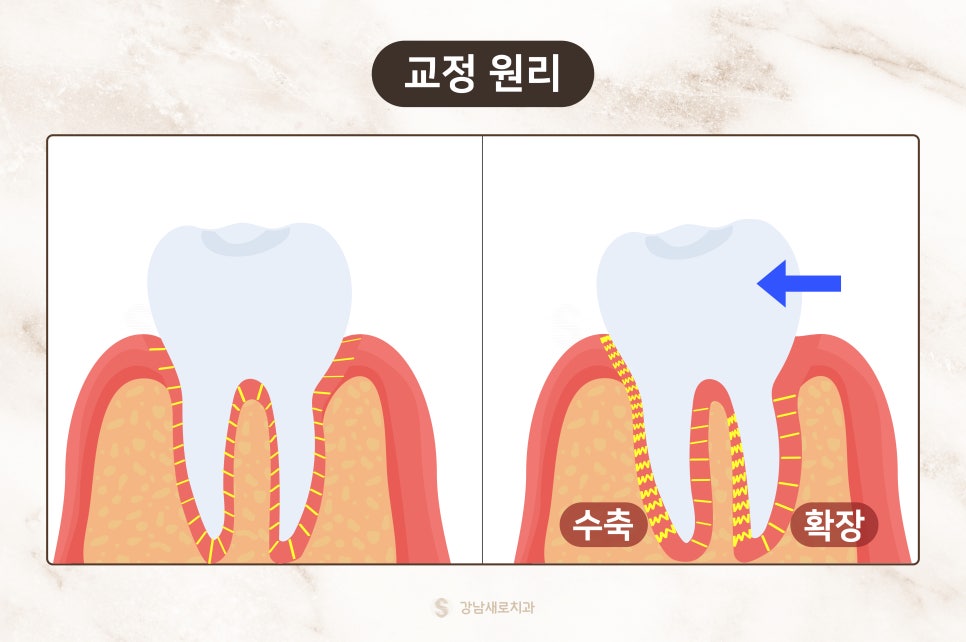
This is related to how orthodontic treatment works. As the teeth move in a particular direction, some of the bone in front of the teeth is resorbed, while new bone forms behind them, allowing the teeth to change position. During this process, the supporting strength may temporarily feel weaker than before, which can make the teeth feel loose or weakened.
In most cases, however, this is a natural phenomenon that gradually stabilizes over several months after the orthodontic appliances are removed. During this period, it is advisable to avoid putting strain on the teeth by eating hard or chewy foods.
Side Effects of Orthodontic Treatment: Gums
- Root Resorption
The root refers to the part of the tooth embedded in the gums. As the teeth move during orthodontic treatment, the body’s response may become more sensitive, causing the roots to gradually shorten. A small amount of root resorption is relatively commonly observed, and in most cases it does not lead to major problems.
However, if resorption progresses significantly, it may affect the stability of the teeth. In some cases, it may be necessary to reconsider the treatment plan or discontinue orthodontic treatment.
- Pulp Necrosis
The pulp is the tissue that fills the hollow space inside a tooth and contains nerves and blood vessels. This problem does not necessarily occur simply because of orthodontic treatment, but if a tooth has already suffered trauma before treatment, the pulp may be damaged or become necrotic during the process.
Therefore, if any teeth have previously been hit or injured, it is important to inform the medical professional before beginning orthodontic treatment.
- Gum Inflammation
Once orthodontic appliances are attached, brushing inevitably becomes more difficult. Some areas become difficult for the toothbrush to reach, and food is more likely to remain around the appliances.
If this condition continues, plaque and tartar can build up easily and eventually lead to gum inflammation. If swelling or bleeding occurs, do not simply dismiss it as temporary discomfort; it is advisable to check your oral hygiene again.
- Gum Recession
Gum recession refers to a condition in which the gums gradually recede, exposing the roots of the teeth. Although it can naturally occur with age, after orthodontic treatment in adults it may sometimes become noticeable more quickly. Receding gums can be a cosmetic concern and may make the teeth appear longer or cause sensitivity.
- Black Triangles
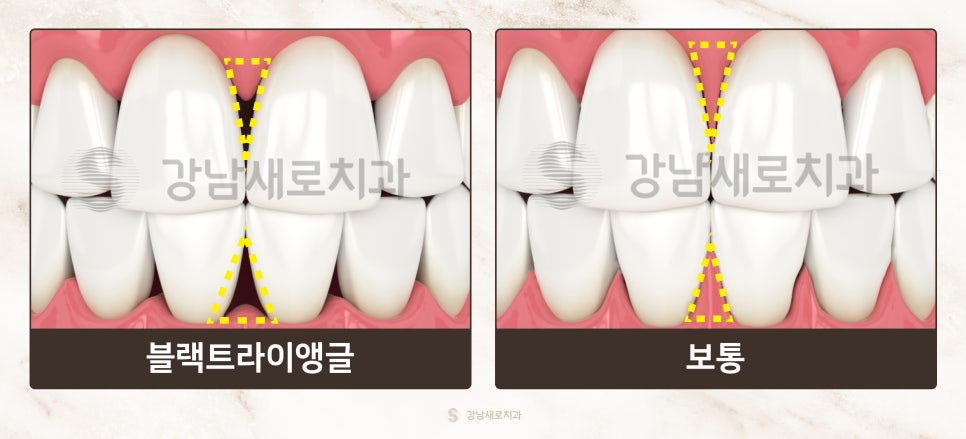
Black triangles refer to spaces between the teeth that appear empty in the shape of a black triangle. This can occur when the bone supporting the gums recedes or when the gums do not fully fill the space.
This is why, even though the teeth are aligned neatly after orthodontic treatment, the empty spaces between them may actually become more noticeable. It is especially important for adults undergoing orthodontic treatment to receive an explanation about this possibility in advance.
Side Effects of Orthodontic Treatment: Jaw Joints
During orthodontic treatment, some people may experience pain in the jaw joints, sounds when opening the mouth, or a feeling that the jaw is more tired than usual.
These changes may have been present before orthodontic treatment, or they may appear during or after treatment. As the teeth move, the bite changes, and temporary discomfort may occur as the jaw joints adapt. If the symptoms are mild, they can be managed while monitoring their progress. However, if the pain is severe or it becomes difficult to open the mouth, it should not be ignored.
In such cases, it may be necessary to receive care from an oral medicine department as well, or to undergo jaw joint treatment first, depending on the situation.
How Can the Side Effects of Orthodontic Treatment Be Reduced?

Although it is difficult to completely eliminate all of the changes that may occur during orthodontic treatment, there are clear ways to reduce the possibility of side effects and receive treatment more stably.
First, the examination before orthodontic treatment must be thorough.
It is necessary to check not only the alignment of the teeth but also the condition of the gums, the length of the roots, the condition of the jaw joints, and any history of previous trauma.
Second, oral hygiene during orthodontic treatment is extremely important.
Because demineralization and gum inflammation can vary greatly depending on hygiene habits, the areas around the appliances should be cleaned especially carefully.
Third, do not endure pain or discomfort; report it right away.
Because orthodontic treatment can be adjusted along the way,
it is advisable to quickly share even seemingly minor changes with the medical professional.
Fourth, it is important to find an experienced orthodontic specialist.
Even when the same appliances are used, the results may differ depending on the diagnosis and treatment plan, adjustments during treatment, and the finishing process.
Orthodontic Treatment Requires Careful Consideration
Orthodontic treatment certainly brings about many changes. During the process, the teeth, gums, and jaw joints may undergo various adjustments, and some of these may lead to side effects.
However, understanding these possibilities in advance can reduce unnecessary worry and help you continue treatment more safely.
The important thing is not to avoid treatment unconditionally because of fear of side effects, but to accurately assess your condition
and proceed according to an appropriate plan. Orthodontic treatment is not simply a treatment to improve appearance; it is a process that changes the alignment of the teeth, the bite, facial appearance, and self-confidence together.
That is why it requires greater care, and why a medical professional you can trust is needed.
- This post was presented by a medical institution due to a third-party contractual relationship, and contains medical information.