Orthodontic Treatment Side Effects
Buck Teeth, Sunken Mouth, Elongated Jaw, Elongated Philtrum, Peanut-Shaped Face
How to Reduce Side Effects
If you have decided to undergo orthodontic treatment to improve protruding teeth, you may expect not only your mouth to move inward but also improvements in issues such as a recessed chin, deep bite, and flared teeth. In fact, orthodontic treatment for protruding teeth can bring significant changes to your appearance, so it is natural for both expectations and concerns to be high.
In particular, people tend to be more sensitive to facial changes with orthodontic treatment for protruding teeth than with other orthodontic cases. Before treatment even begins, you may find yourself thinking about many things: How far will my mouth move inward? How will my jawline look? Will my lips look too sunken? Could my face change in a direction I do not want?
The causes of protruding teeth are not simple or limited to one factor. In some cases, the gums themselves protrude, while in others, only the teeth are protruded. Therefore, if these two situations are not distinguished and treatment simply focuses on moving the teeth backward, the face may change in a way that differs from the desired result.
Ultimately, the important thing is to accurately assess the patient’s gum health and the path along which the teeth will move, sufficiently predict how facial balance may change, and then establish an orthodontic treatment plan accordingly. Orthodontics is a functional treatment, but it is also a difficult decision made in pursuit of satisfaction with one’s outward appearance.
Today, I will discuss in detail the facial changes that many people are particularly sensitive to among the possible side effects of orthodontic treatment.
Principles of Orthodontic Treatment
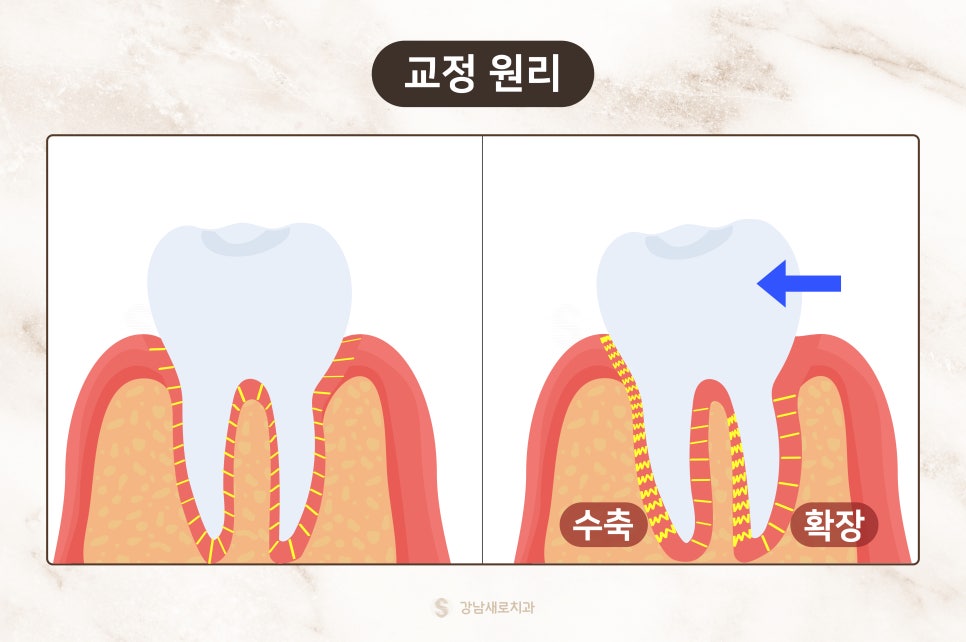
To understand the side effects of orthodontic treatment, it is helpful to first understand the principles behind orthodontic treatment.
Orthodontic treatment uses appliances to determine the direction in which the teeth should move and applies consistent pressure in that direction. The teeth then gradually move in response to the force. During this process, the periodontal ligament in front of the tooth is compressed, while the ligament behind it is stretched. The alveolar bone is resorbed on the side receiving pressure, while new alveolar bone forms on the opposite side, allowing the tooth to change position.
In other words, orthodontic treatment does not forcibly move only the teeth. It involves changes that occur as the teeth, alveolar bone, and periodontal tissues respond together. Therefore, the result and the possibility of side effects can vary depending on how the direction, strength, and speed of the force are controlled.
Orthodontic Treatment Side Effect: Buck Teeth
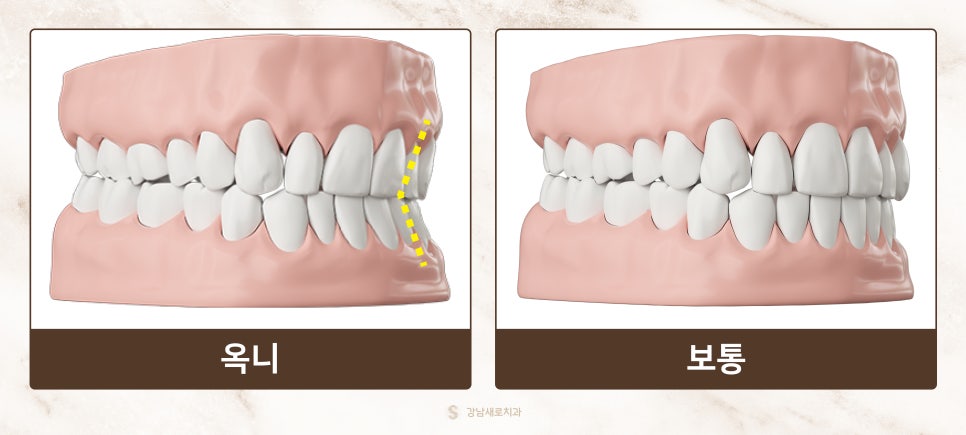
The side effect that most concerns people considering orthodontic treatment for protruding teeth is buck teeth.
During orthodontic treatment, the resorption and formation of the alveolar bone must remain balanced as the teeth move in order to achieve a natural and stable result. However, if the crown of the tooth is pushed excessively backward without sufficiently considering the response of the alveolar bone, the entire tooth may not move. Instead, the root may remain in place while only the crown tilts inward.
In other words, the tooth may appear to have an abnormally bent angle, a condition commonly referred to as buck teeth.
Although the mouth may appear to have moved inward from the outside, the teeth can look excessively tilted inward and may feel unnatural when smiling. For this reason, it is one of the changes that many people most want to avoid.
Orthodontic Treatment Side Effect: Sunken Mouth
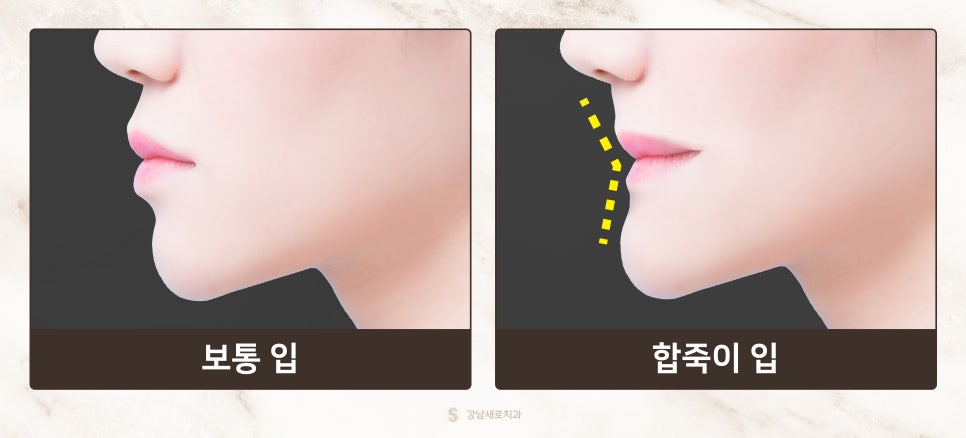
If the teeth tilt excessively inward, the entire lip profile may also appear to move too far inward when the mouth is closed. In such cases, the lower lip may seem to cover the upper lip, and the area around the mouth may look sunken, creating an overall dull or older-looking appearance.
When the lip profile moves too far inward, nasolabial folds may appear more prominent, and the lower face may look weak and hollow, giving a more tired and aged impression than before.
This condition is commonly described as a sunken mouth.
Some people begin orthodontic treatment because they are concerned about protruding teeth, only to feel disappointed afterward because their mouth looks too sunken. These cases fall into this category.
Orthodontic Treatment Side Effects: Buck Teeth and Sunken Mouth
How Can They Be Addressed and Prevented?
If buck teeth are believed to have developed after orthodontic treatment, retreatment may be considered to restore the tooth angle closer to its normal position. However, because teeth that have already been moved must be moved again, unnecessary movement may increase, along with the treatment time and burden.
That is why prevention from the beginning is much more important than addressing the problem after it occurs.
To prevent buck teeth and a sunken mouth, the treatment plan must consider not only how to move the teeth backward but also how the roots will move, how much the angle of the front teeth should be maintained, and how far the lip profile can naturally move inward. If necessary, auxiliary appliances behind the front teeth may also be considered to prevent the teeth from tilting.
Ultimately, the most important thing is for an orthodontic specialist to create a precise plan from the outset while considering the harmony of the entire face.
Orthodontic Treatment Side Effect: Elongated Jaw
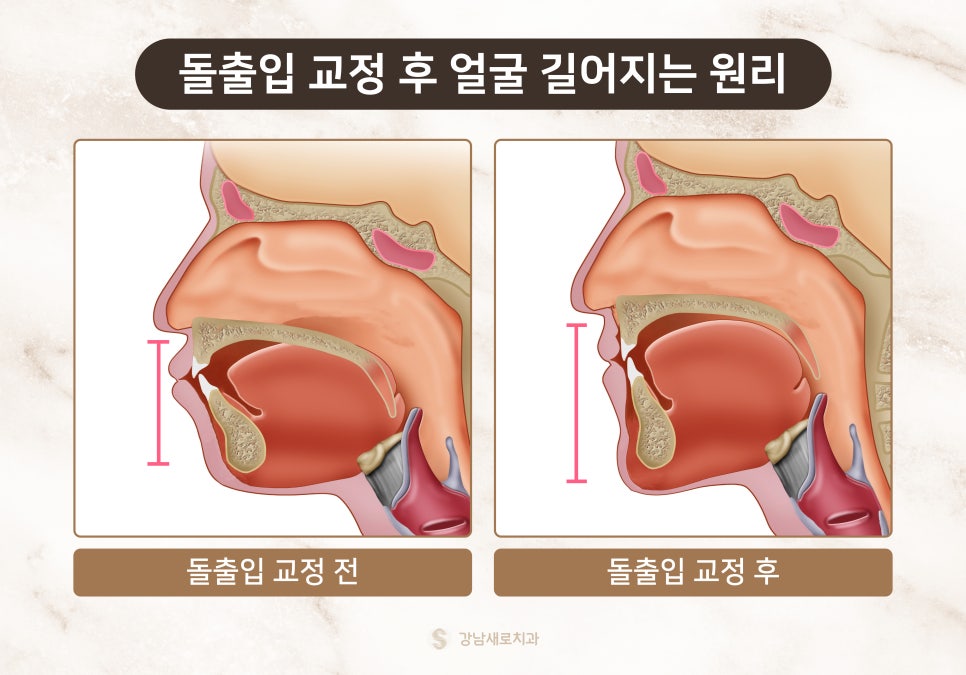
Some people say that their jaw appears longer after orthodontic treatment or that their lower face feels more elongated.
This is because changes in tooth position can also affect the position of the jaw and facial proportions.
Orthodontic treatment does not simply realign the teeth; it also adjusts the bite and vertical dimensions. Therefore, the direction in which the jaw rotates can change depending on how the teeth move.
For example, if the molars move inward as though being compressed, the jaw may rotate upward, making the face appear shorter. Conversely, if the molars move downward, the jaw may rotate downward, creating the impression of a longer lower face.
In other words, an elongated jaw often does not mean that the jawbone has actually grown longer. It may instead appear that way because the jaw’s position and direction of rotation have changed due to changes in the bite.
Orthodontic Treatment Side Effect: Elongated Jaw
How Can It Be Addressed and Prevented?
This issue can often be prevented sufficiently during the consultation stage before orthodontic treatment. By explaining the possibility of changes in jaw length in advance and planning how the height of the molars and the bite will be adjusted, unwanted changes to the lower face can be reduced.
Ultimately, the important thing is to take a perspective that considers facial proportions as well, rather than focusing solely on straightening the teeth.
It is advisable to communicate sufficiently with the medical team and clearly explain the direction in which you want your lip profile and jawline to change.
Orthodontic Treatment Side Effect: Elongated Philtrum
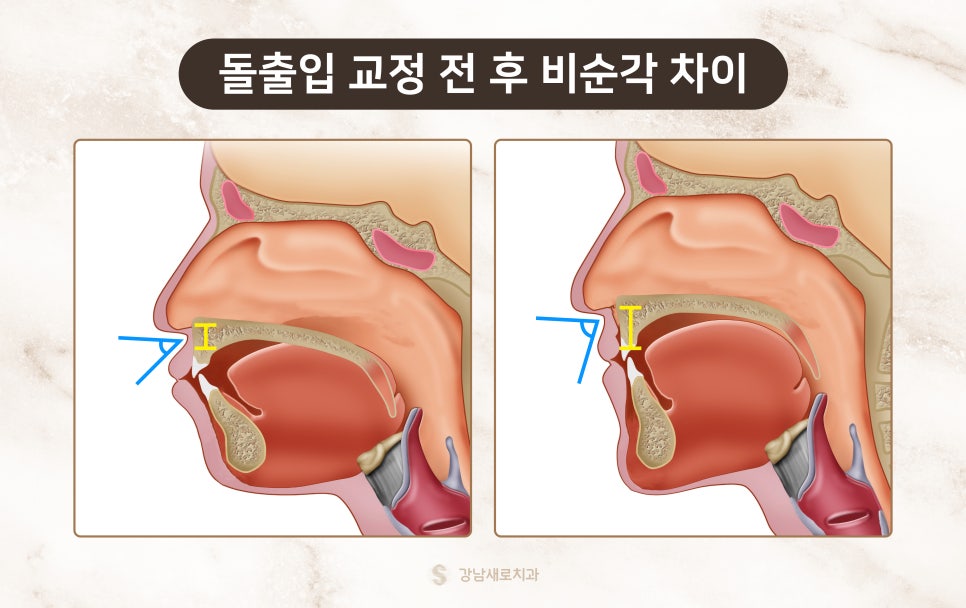
Along with buck teeth and an elongated jaw, an elongated philtrum is another common concern among people considering orthodontic treatment for protruding teeth. In most cases, the philtrum itself does not actually become longer; it simply appears that way as the mouth moves inward.
When the teeth protrude, the angle between the nose and lips, known as the nasolabial angle, appears narrow. When orthodontic treatment naturally moves the mouth backward, this angle widens, making the philtrum feel longer than before.
In other words, the actual length usually does not increase; rather, the change in the lip profile creates this visual impression.
Orthodontic Treatment Side Effect: Elongated Philtrum
How Can It Be Addressed and Prevented?
In rare cases, however, changes may occur that make the philtrum area actually appear longer. If improper appliance use, an overly aggressive treatment period, or excessive tooth-angle adjustments create a downward pull around the mouth along with the teeth, this may lead to an appearance of an elongated philtrum.
These changes can be sufficiently prevented through a treatment plan that considers not only the teeth but also the lip profile, muscles, and overall facial balance.
For this reason, diagnosis by an orthodontic specialist with extensive experience is particularly important when treating protruding teeth.
Orthodontic Treatment Side Effect: Peanut-Shaped Face
Some people feel that their cheeks look hollow after orthodontic treatment, their cheekbones appear more prominent, and their face has become peanut-shaped.
This can sometimes begin for a relatively simple reason. During orthodontic treatment, people often avoid hard and chewy foods. As a result, reduced use of the chewing muscles may temporarily decrease muscle volume. If food intake also decreases, weight loss can make hollow cheeks appear more prominent. This change may be felt more strongly by people who naturally have a slim face or prominent cheekbones.
Fortunately, in such cases, the appearance often improves naturally after the adjustment period following orthodontic treatment has passed and eating habits return to normal.
Orthodontic Treatment Side Effect: Peanut-Shaped Face
How Can It Be Addressed and Prevented?
However, not every case is simply due to a reduction in chewing-muscle volume. If orthodontic treatment is carried out excessively without sufficiently considering the patient’s bone, muscle, and skin structure, facial volume balance may be disrupted, creating the impression of a genuine structural change.
In such cases, the appearance may not return simply with time, and additional procedures or surgery may become necessary. Therefore, prevention from the beginning is much more important.
Ultimately, reducing this side effect requires a medical professional who can assess not only the oral structures but also the balance of the entire face, including the bones, muscles, and skin.
How Can Orthodontic Treatment Side Effects Be Reduced?
The buck teeth, sunken mouth, elongated jaw, elongated philtrum, and peanut-shaped face discussed above may appear to be different problems, but their prevention methods have something in common.
That common factor is the choice of medical professional.
A professional treatment plan, sufficient communication with the patient, extensive orthodontic experience, the ability to consider the harmony of the entire face rather than just the teeth, and the sensitivity to accurately understand the patient’s desired outcome—medical professionals with these qualities can significantly reduce unwanted changes in appearance.
Orthodontics is not simply a treatment for straightening the teeth. Because it can also change the overall impression of the face, it requires an equally delicate approach.
If You Want to Preserve Aesthetic Features as Much as Possible Through Orthodontics
Gangnam Saero Dental Clinic creates orthodontic treatment plans that take facial changes into account, based on 22 years of experience as an orthodontic specialist and experience providing orthodontic treatment to numerous entertainers and public figures.
As the only dental clinic at Gangnam Station offering all types of clear orthodontic appliances, it provides more flexible and precise appliance selection according to each patient’s condition and needs.
With a focus on non-extraction orthodontics, the clinic takes an approach aimed at reducing unnecessary extractions and preserving the natural balance of the face.
Because you have chosen Gangnam Saero Dental Clinic, we will remain attentive and work with you through the end to provide results you will not regret.
A new smile, a new beginning, a fresh start. Ease your concerns about orthodontic treatment side effects at Gangnam Saero Dental Clinic.
- This post was presented by a medical institution as medical information under a contract with a third party.