If you are considering dental implants as a gift for your parents
Full-Mouth Implants
Guide to National Health Insurance Coverage for Implants for Those Aged 65 and Older
There are many reasons why people lose teeth, but
among people in their 60s and 70s,
it is common for the number of natural teeth to gradually decrease
due to aging, gum disease, and problems with old dental prostheses.
Foods they used to enjoy without difficulty
may suddenly be avoided because they are too chewy or hard,
and when you see them unable to smile as brightly as they once did,
it is only natural for their children to feel concerned.
My father, who was like Superman to me,
and my mother, who was like Wonder Woman to me.
If seeing your parents smile now makes one corner of your heart ache,
you may begin to consider giving them a new smile.
Among the options many people are curious about
are full-mouth implants
and national health insurance coverage for implants for those aged 65 and older.
About Full-Mouth Implants
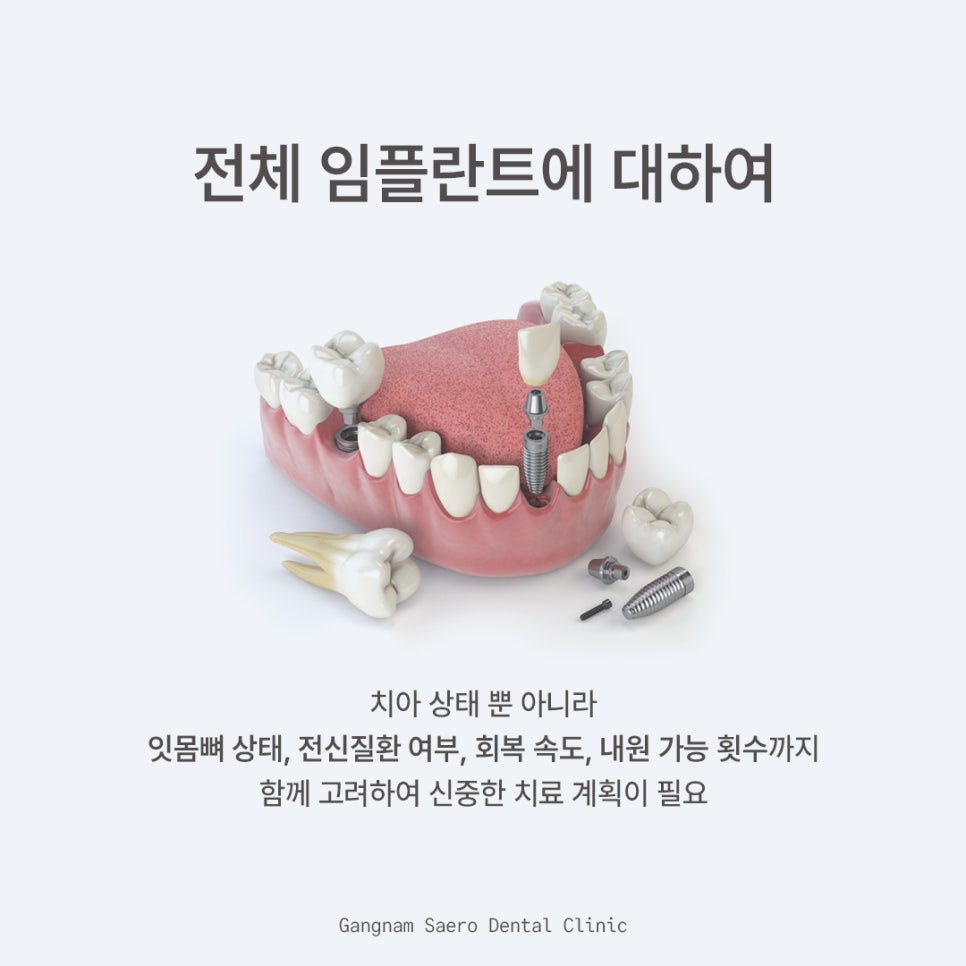
When people hear “full-mouth implants,”
they often first imagine
having a very large number of implants placed
in weakened jawbone.
Even imagining this can make the cost seem burdensome,
maintenance seem difficult,
and the treatment period seem lengthy,
so it is understandable to hesitate before beginning treatment with a parent.
In particular, for older patients,
it is necessary to consider not only the condition of the teeth,
but also the condition of the jawbone, the presence of systemic diseases,
the speed of recovery, and the number of visits they can manage.
This makes an especially careful treatment plan necessary.
About Minimal-Placement Full-Mouth Implants
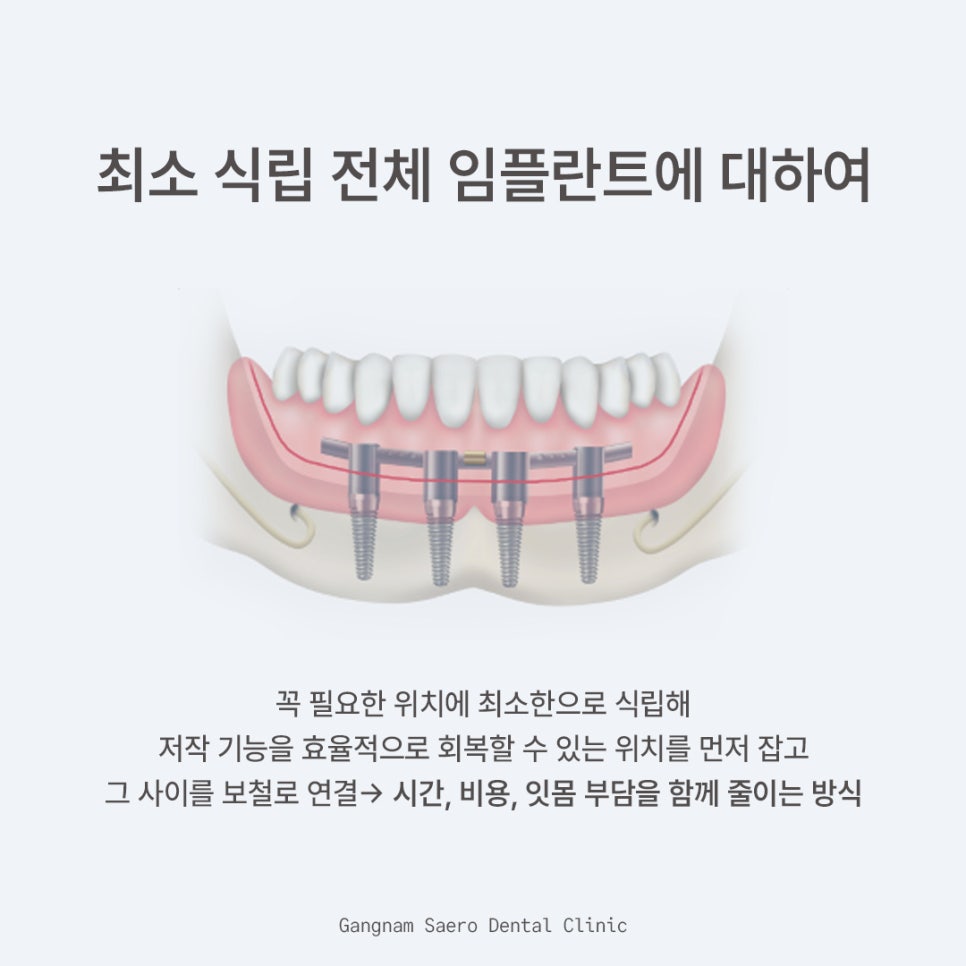
For this reason, in actual clinical practice,
rather than placing an excessive number of implants,
many treatment plans place the minimum number necessary
in essential locations,
while balancing function and stability.
For example,
instead of placing one implant in every area,
the locations that can efficiently restore chewing function are selected first,
and the spaces between them are connected with prostheses,
helping reduce treatment time, cost, and stress on the gums.
This approach
can be a more practical option,
particularly for the generation of parents,
whose gums may have weakened
or who may find it difficult to undergo an overly long treatment process.
Connecting Full-Mouth Implants with Bridges
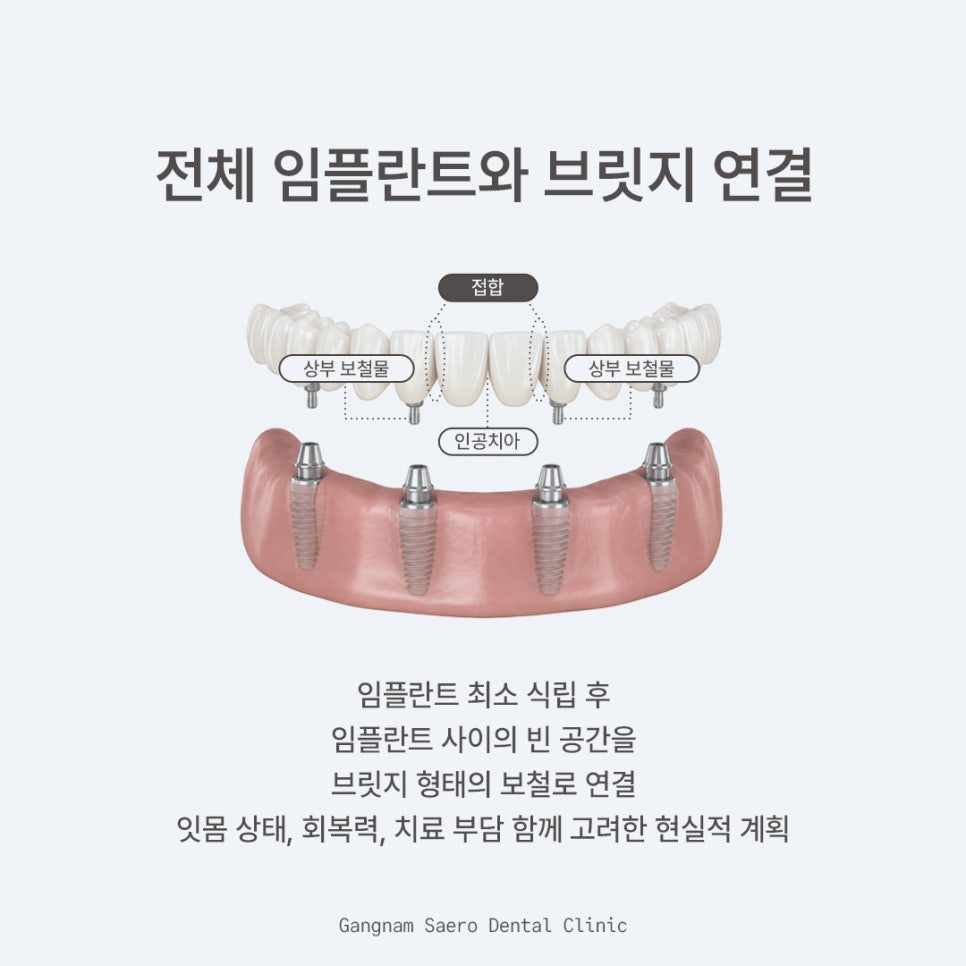
One reason full-mouth implants
can be planned with minimal implant placement
is that the empty spaces between implants
can be connected using bridge-style prostheses.
In other words, rather than placing one implant in every position,
implants are efficiently placed only in key locations,
and the spaces between them are connected with prostheses
to restore both chewing function and appearance.
This makes it possible
to create a more practical plan
that takes into account the patient’s gum condition,
recovery capacity,
and treatment burden.
Why Do Full-Mouth Implants Require Greater Caution?
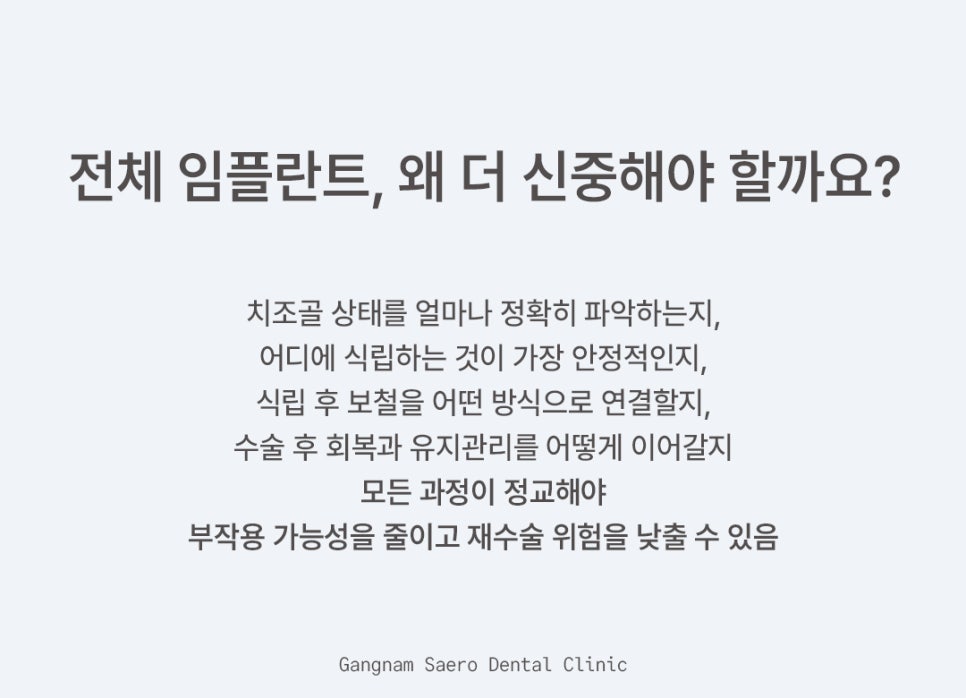
Full-mouth implants
are not difficult simply because they involve many teeth.
Every stage must be precise:
how accurately the alveolar bone is assessed,
where the implants can be placed most stably,
how the prostheses will be connected after placement,
and how recovery and maintenance will continue after surgery.
For this reason, when many family members
consider full-mouth implants for their parents,
they look for a dental clinic based not only on cost,
but also on how much it can reduce the possibility of complications
and lower the risk of repeat surgery.
Guide to National Health Insurance Coverage for Implants for Those Aged 65 and Older
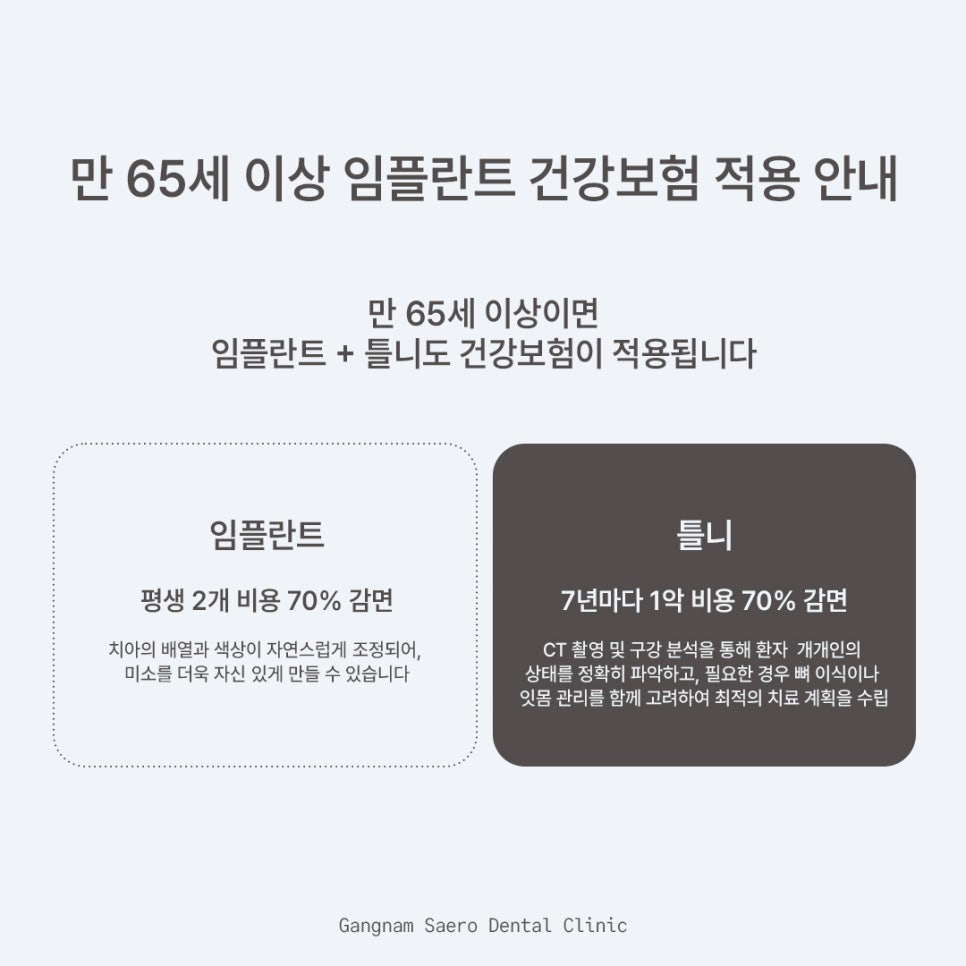
This is something you should understand accurately.
At present, national health insurance for dental implants
applies when the following criteria are met.
- Eligibility
The patient must be at least 65 years old and enrolled in national health insurance or be a dependent.
- Coverage requirements
Coverage applies to partial edentulism, meaning that at least one natural tooth remains.
By contrast, complete edentulism is not eligible for implant insurance coverage;
it is eligible for coverage for complete dentures.
- Number of covered implants
Insurance benefits apply to up to two implants per person over their lifetime.
Except in special circumstances where treatment had to be discontinued, the basic rule is two implants over a lifetime.
- Copayment
Those covered under standard national health insurance pay 30% out of pocket.
Lower copayment rates may apply to near-poverty households and other eligible groups.
- Prosthetic material
Previously, coverage focused mainly on PFM crowns,
but zirconia crowns have also been eligible for coverage since February 1, 2025.
In other words,
just because a parent receives implants at age 65 or older
does not mean that all implants are covered by insurance.
The most accurate understanding is that,
when some natural teeth remain and the patient has partial edentulism,
insurance coverage applies to up to two implants over a lifetime.
If the Patient Has Complete Edentulism
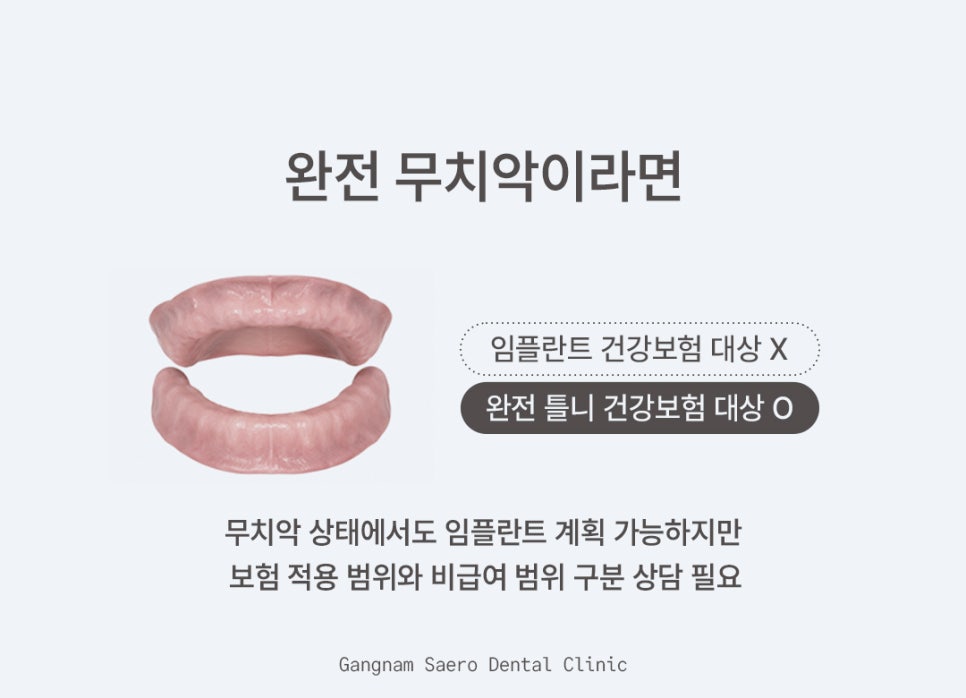
If your parent has no natural teeth remaining
in either the upper or lower jaw and has complete edentulism,
this is not currently eligible for national health insurance coverage for implants.
In this case, complete dentures are the treatment eligible for insurance coverage.
However, in actual clinical practice,
various restoration plans using implants can still be developed
even for patients with complete edentulism.
In that situation, you should receive a consultation
that distinguishes between the scope of insurance coverage
and non-covered treatment.
Avoiding Repeat Surgery After Full-Mouth Implants
With full-mouth implants,
the initial surgery is especially important.
If the condition of the jawbone is not properly assessed,
if the implant position and angle are inaccurate,
or if the prosthetic connection plan is insufficient,
discomfort or the possibility of repeat surgery may increase over time.
Therefore, when considering implants for a parent,
you should look beyond simply how many implants will be placed.
You should also consider who will make the diagnosis,
what equipment will be used for assessment,
and what surgical plan will be followed.
The Gift You Give Your Parents
May Be Everyday Life with a Smile Again, Rather Than Teeth

Losing teeth
changes more than simple comfort;
it can also affect meals, conversation, facial expressions, and confidence.
That is why the gift you give your parents
may be more than a single treatment:
it can be a way to help restore their everyday lives,
so they can smile, eat, and speak comfortably again.
However, throughout this process,
it is important to clearly distinguish
full-mouth implants from the eligibility criteria for national health insurance coverage for implants.
Implants for those aged 65 and older do not mean that full-mouth implants
are all covered by insurance.
At present, national health insurance for implants
applies to up to two implants over a lifetime for patients with partial edentulism,
while complete edentulism is eligible for coverage for complete dentures.
Gangnam Saero Dental Clinic
first considers an approach that preserves natural teeth whenever possible,
and when treatment is truly necessary,
works together with patients to develop a more stable implant plan suited to their parents’ condition.
If you would like to give your parents
a new smile and a new beginning this year,
we recommend receiving an accurate diagnosis first and foremost.
- This post presents medical information provided by a medical institution under a third-party contractual relationship and was created with partial use of AI.