Dental Implant Side Effects After Implant Surgery
Periodontal and Gum Tissue Damage
Ways to Reduce and Manage Side Effects
Age-related changes are not limited to visible signs such as wrinkles, hair loss, and various diseases. Tooth loss is also one of the representative changes associated with aging. In particular, losing a tooth is more than simply losing one tooth—it directly affects everyday activities such as eating and chewing.
Because tooth loss makes eating, one of our basic human needs, uncomfortable, treatment to replace missing teeth has become an essential part of recovery in many cases. Among these treatments, dental implants are the most widely known method for replacing teeth. As the population continues to age and tooth loss caused by aging increases, interest in dental implants is also growing.
In a previous post, we reviewed dental implant side effects overall, including prosthetic and surgical complications. This time, we will take a detailed look at periodontal and gum tissue damage—dental implant side effects that many people may easily overlook.
We will go through what periodontal tissue damage caused by dental implants is, how it can be prevented, and how to manage it if a problem has already developed.
Periodontal Tissue
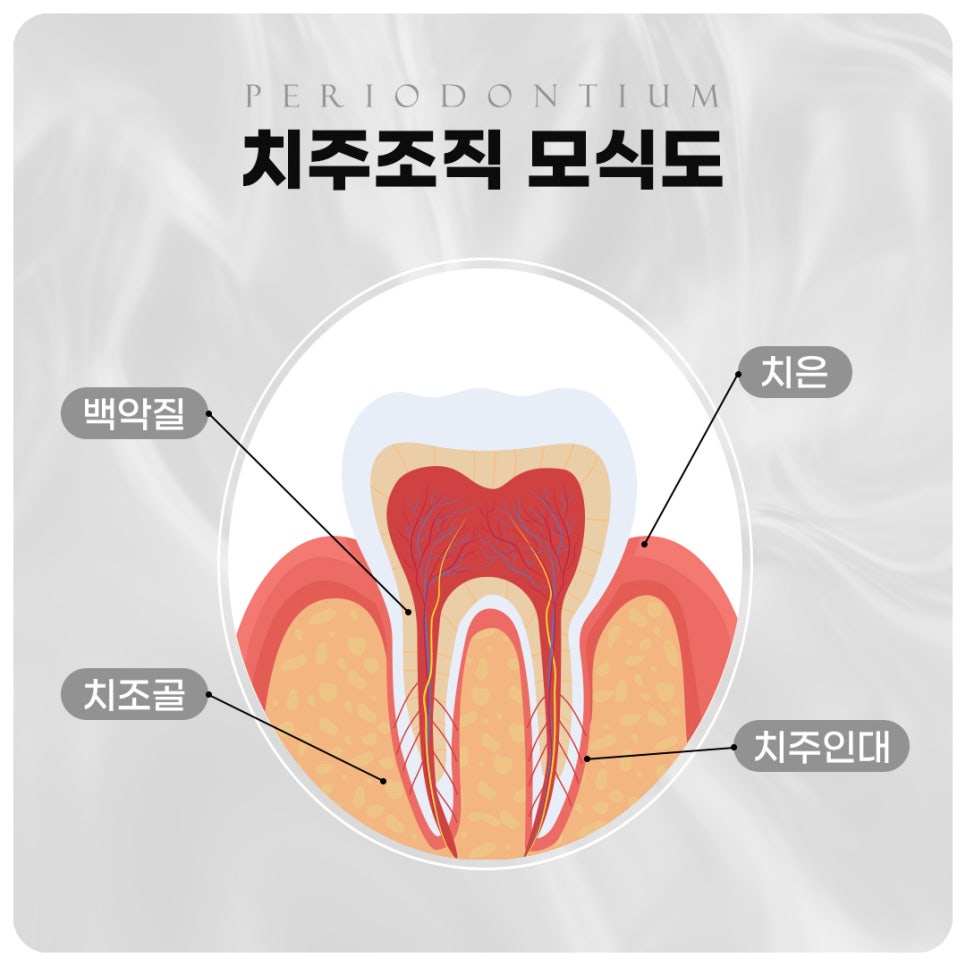
To understand dental implant side effects involving periodontal and gum tissue damage, it is first necessary to understand what periodontal tissue is.
Periodontal tissue refers to the tissues surrounding and supporting the teeth. It can be broadly divided into the gingiva, cementum, periodontal ligament, and alveolar bone. Put simply, it includes the gums and jawbone that hold the teeth in place, along with the various supporting structures around the teeth.
The gingiva is what we commonly call the gums, while the alveolar bone is the jawbone beneath the gums. These structures do more than simply surround the teeth: they firmly support the teeth, respond together with tooth movement, and contribute to supplying the blood flow and nutrients that teeth need.
In other words, both natural teeth and dental implants can be maintained stably only when the periodontal tissue is healthy.
Implant Loss After Dental Implant Surgery
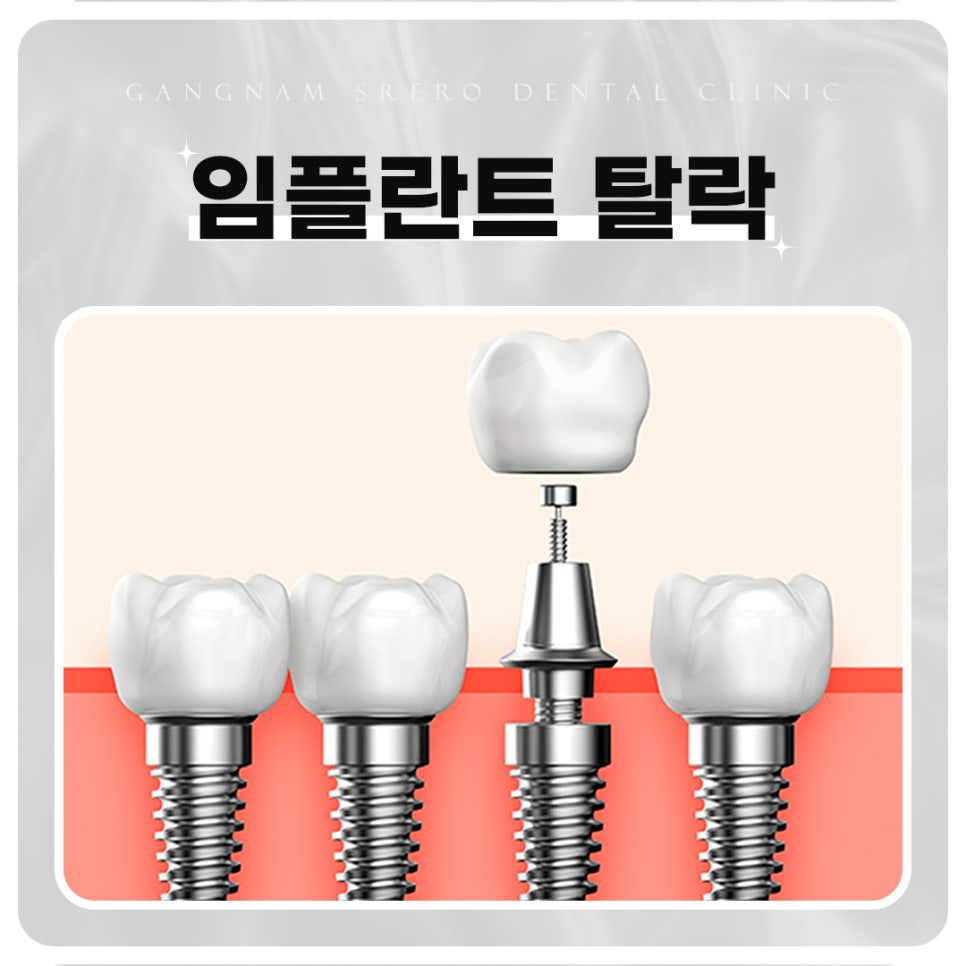
Periodontal tissue can be viewed as the physical foundation that supports the teeth. But what happens if an implant is placed when the periodontal tissue is not sufficiently healthy?
Dental implants require a process called osseointegration, in which the artificial tooth root is fixed in the gums and jawbone and then stably integrates with the alveolar bone. If the jawbone is insufficient or weakened, this integration may be difficult to achieve properly.
An implant that fails to osseointegrate may increase the possibility of peri-implantitis. In the process, it can cause further damage to the periodontal tissue and eventually lead to the implant becoming loose or being lost.
How to Prevent Dental Implant Loss
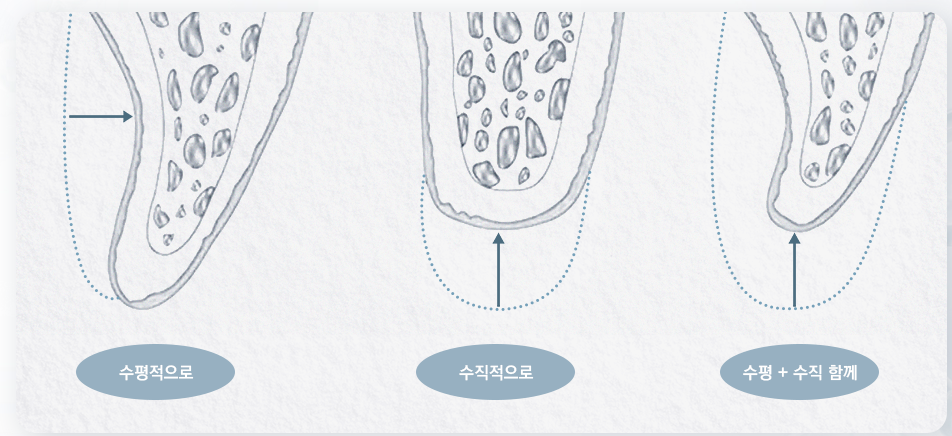
For this reason, if the periodontal tissue is considered unstable and the possibility of implant loss is high, regeneration and recovery of the periodontal tissue are considered first. Above all, the best approach is to keep the periodontal tissue as healthy as possible before implant placement.
However, the condition of periodontal tissue is not determined simply by whether a person brushes their teeth well. Even when oral hygiene is not poor, the tissue may shrink or be lost for various reasons, such as complications from previous orthodontic treatment, long-term denture use, or leaving an extraction site untreated for a long time. In severe cases, the tissue may even show signs of necrosis.
In other words, periodontal tissue may be weakened regardless of a person’s efforts to care for it. Therefore, a thorough examination before implant placement is essential.
Gum Recession After Dental Implant Surgery
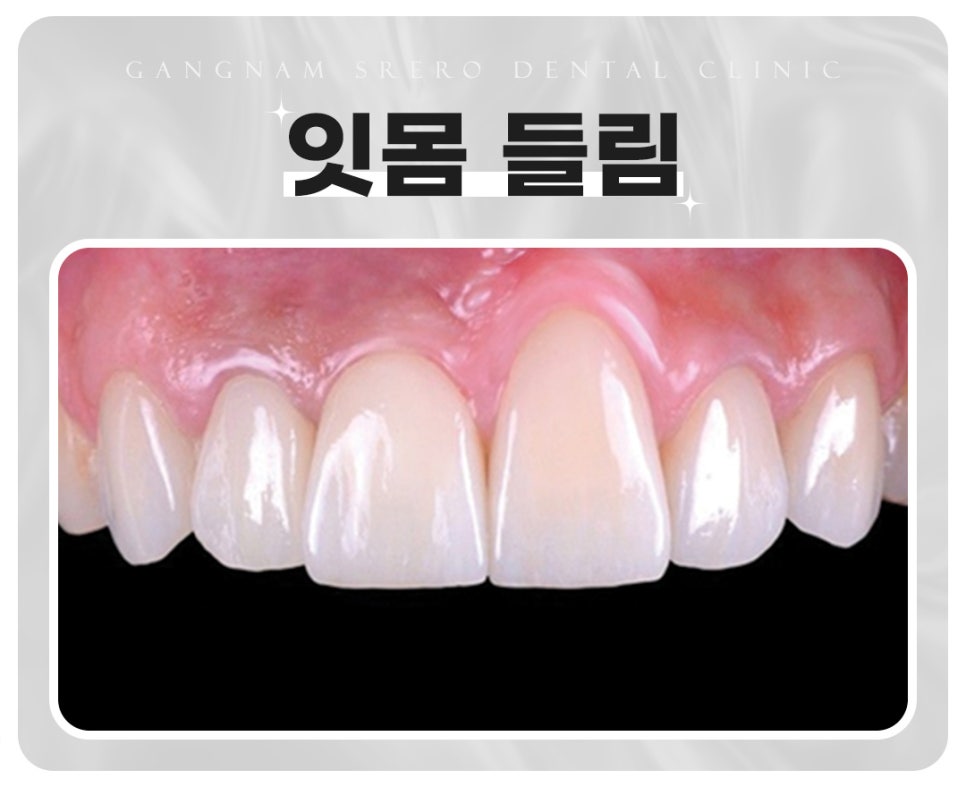
Periodontal tissue changes together with the shape and position of the teeth and prosthetic restorations, as well as the direction of force. Therefore, if an implant is placed without sufficiently considering an individual’s periodontal tissue condition, the gums and jawbone may undergo abnormal changes to accommodate the implant.
Typically, as the alveolar bone is gradually lost, the gums may appear to rise or, conversely, sink downward.
This can result in an implant that looks aesthetically unnatural and may also increase the possibility of further jawbone loss over time.
Prevention and Management of Gum Recession
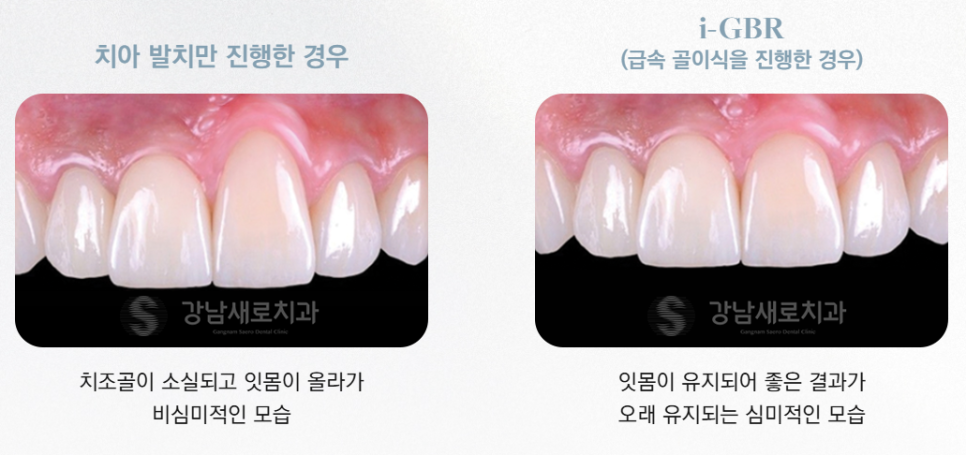
To reduce these problems, the position and angle of the implant must be calculated accurately, and a product with a size and shape appropriate for the patient’s age, health, and jawbone condition must be selected. When necessary, bone grafting may also be performed to reinforce the supporting structures.
If gum recession or sinking has already begun to appear, it is better not to assume that it will naturally improve over time and simply leave it untreated. Instead, visit a dental clinic as soon as possible to discuss the possibility of revision surgery or the appropriate direction for additional treatment.
This is because alveolar bone loss may become more extensive as time passes.
Metal Exposure After Dental Implant Surgery
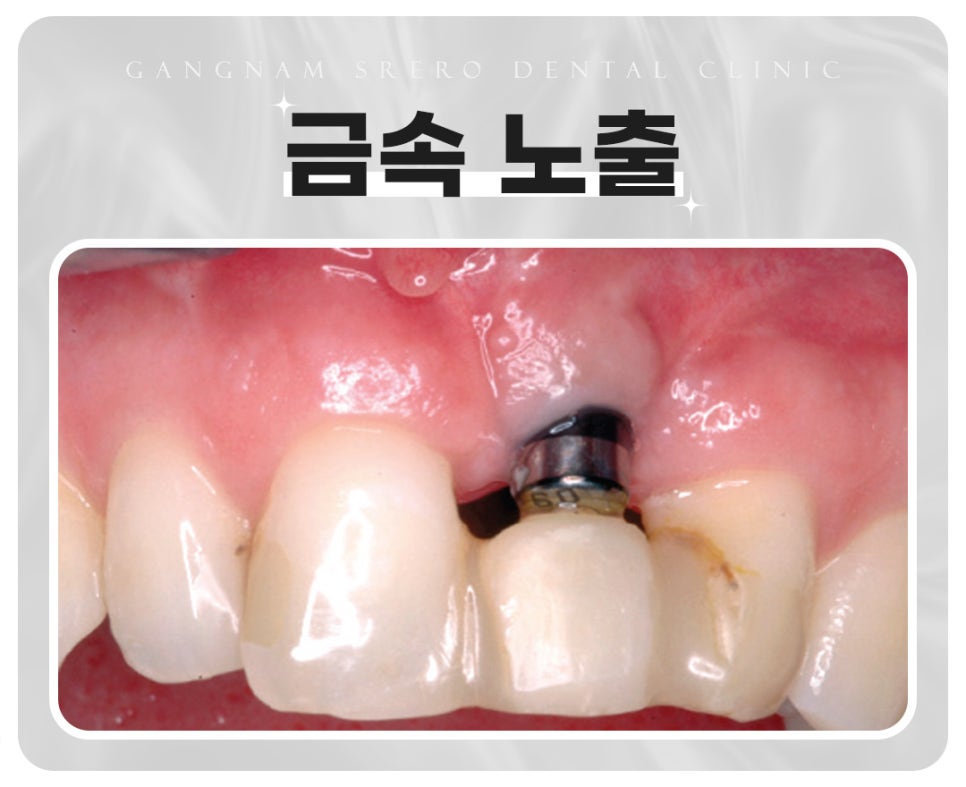
If gum recession or sinking begins after implant surgery and is left untreated, the loss of jawbone may progress further, causing the metal part of the implant to become exposed.
Once the metal begins to show, the problem is not limited to an uncomfortable appearance. It means that the bone supporting the implant has been reduced. If the condition progresses further, the entire implant may become loose or be lost, beyond simple metal exposure.
Prevention and Management of Metal Exposure
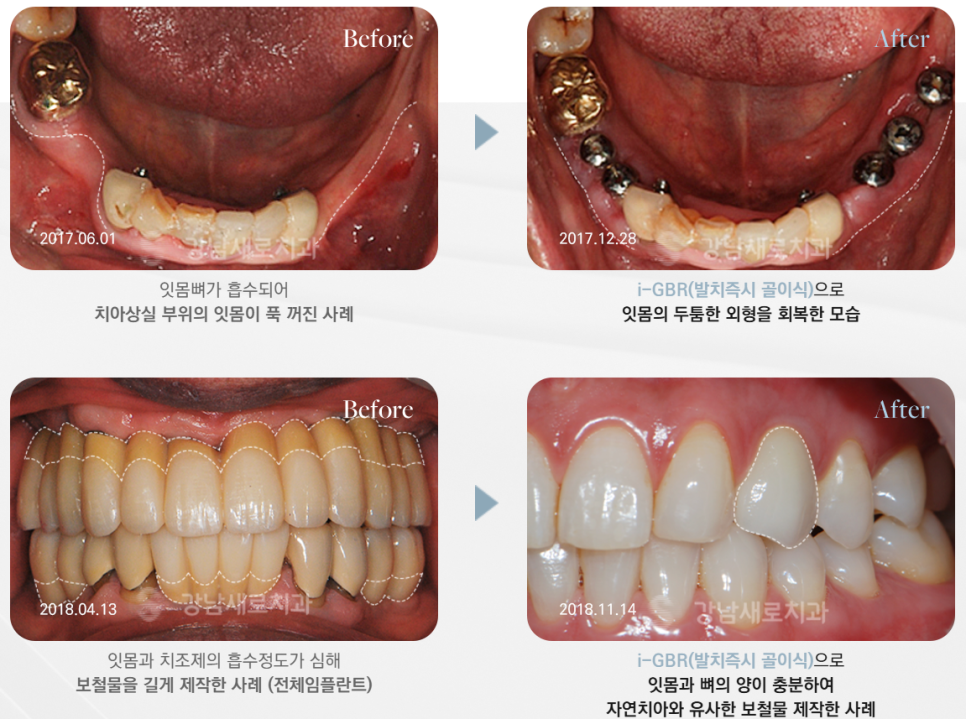
To prevent the condition from progressing to metal exposure, it is important to recognize the early signs of gum changes.
If the gums appear to have risen compared with before, the area around the prosthetic restoration looks longer, or the metal margin begins to show through, it is best to visit a dental clinic immediately rather than putting it off.
If the metal is already exposed, accurate diagnosis and management are necessary without further delay, as alveolar bone loss may become more extensive over time.
Why Jawbone Grafting Is Important
Problems such as implant loss, raised or sunken gums, and metal exposure ultimately demonstrate how important the condition of the periodontal tissue is.
In fact, among people considering revision implant surgery, many have been very interested in the type of product or prosthetic restoration but have not sufficiently considered the condition of the periodontal tissue or its potential for regeneration. As a result, a significant number later experience side effects related to periodontal tissue.
Therefore, to reduce dental implant side effects, it is particularly important to focus on the regeneration and preservation of periodontal tissue.
i-GBR (Alveolar Ridge Preservation)
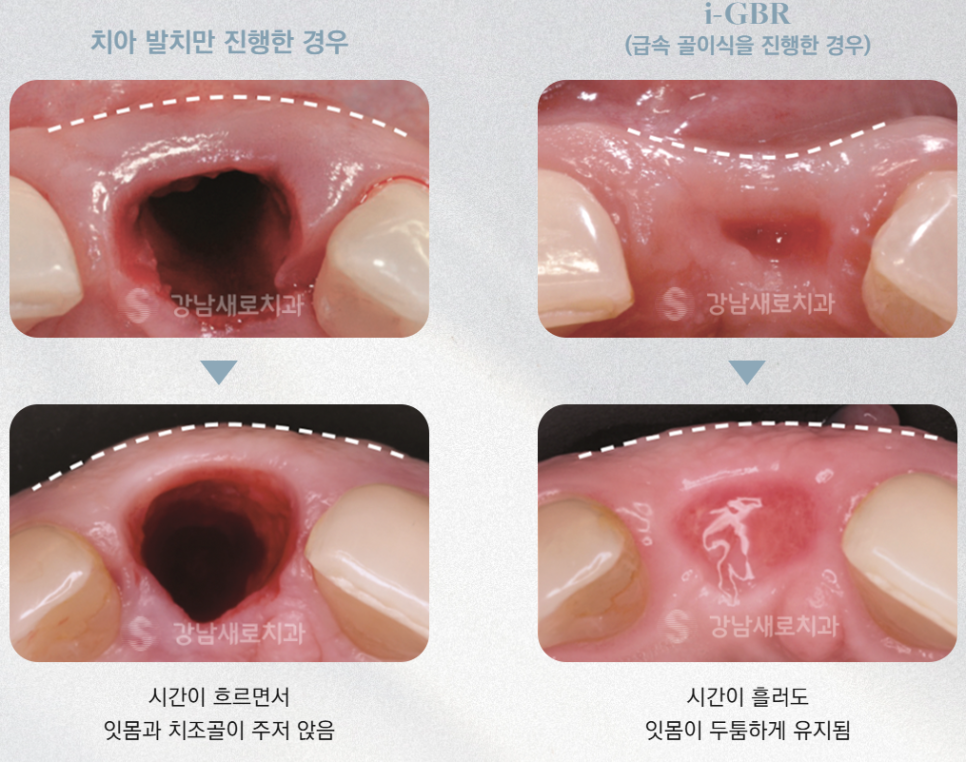
This is a representative method of preserving periodontal tissue that can be performed immediately after tooth extraction. After a tooth is removed,
the gums and jawbone may noticeably decrease in volume within 3–6 months.
If the extraction site is not treated with ridge preservation, recession of the gingiva and alveolar bone at the extraction site may continue, making implant placement much more difficult later.
If i-GBR, or alveolar ridge preservation, is performed as an immediate bone graft after extraction, bone graft material and a natural collagen membrane are added to the extraction site. This may help maintain the shape of the gums and jawbone more stably.
As a result, it can be beneficial for maintaining gum volume and firmness for a longer period even after implant surgery.
PRF (Autologous Blood-Product Treatment)

PRF is a biomaterial made by concentrating platelets and white blood cells extracted from the patient’s own blood. It contains growth factors and immune factors, so when applied together with bone graft material, it may help restore the gingiva and alveolar bone and promote regeneration.
PDRN (Salmon Injection)

PDRN is a DNA-based regenerative substance extracted from salmon reproductive cells. It is used in a way that may help suppress inflammation and support tissue recovery and vascular activity. It may also be considered as an adjunctive method to help regenerate damaged gingival and alveolar bone tissue.
Gangnam Saero Dental Clinic’s Periodontal Tissue Regeneration System
Application of Salmon Injections for Dental Implants
We take an approach that carefully considers the recovery and regeneration of periodontal tissue.
Immediate Bone Grafting After Extraction (i-GBR)
We focus on reducing gum and jawbone recession after extraction and creating a more stable environment for future implant placement.
Operation of an Adjunctive System to Maximize Gingival and Alveolar Bone Regeneration
We develop treatment plans aimed at reducing periodontal tissue damage and increasing the possibility of stable long-term implant maintenance.
Dental implant treatment does not end simply with placing a good product. Only when the gums and jawbone supporting the implant are sufficiently healthy can it lead to a result that lasts for a long time.
A new smile, a new beginning, a fresh start. We invite you to experience implant care at Gangnam Saero Dental Clinic, where your periodontal tissue is also examined with care.
- This post is a medical-information post presented by a medical institution under a third-party contractual relationship, and AI was partially used.