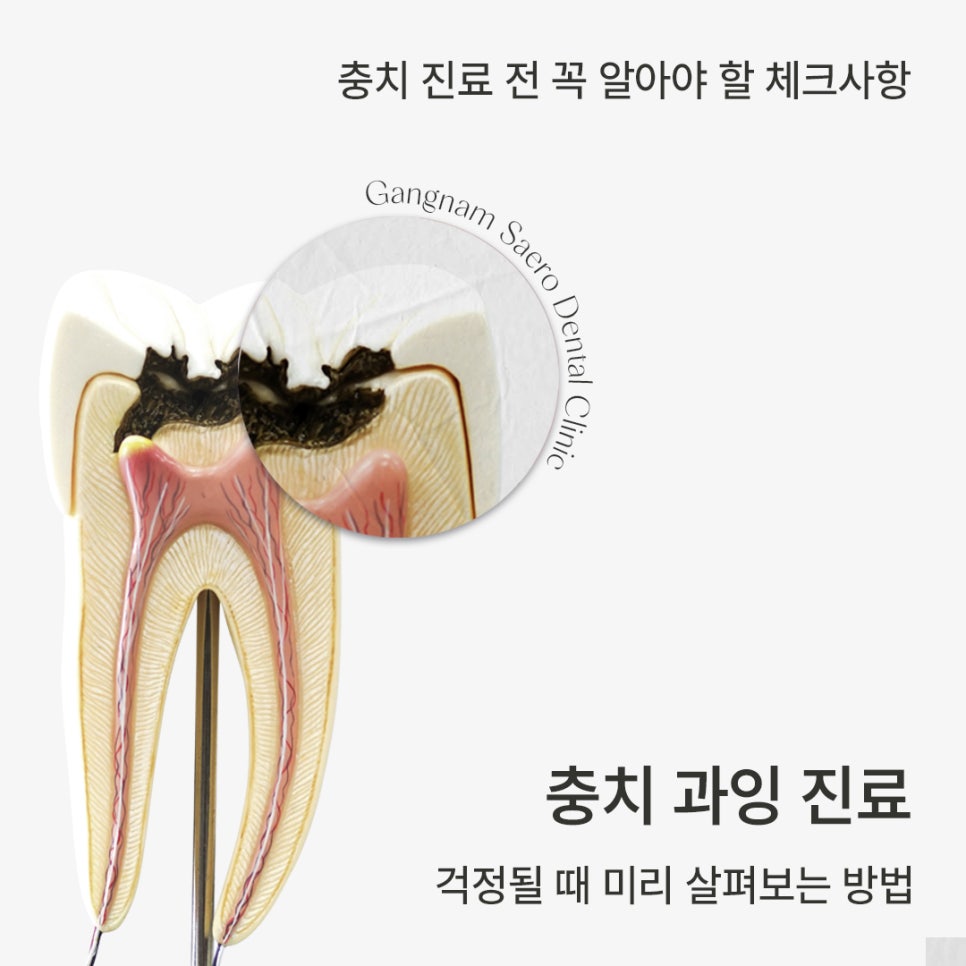
Essential Checks to Know Before Cavity Treatment
Overtreatment of Cavities
How to Check in Advance When You Are Concerned
You have probably heard many times that you should visit the dentist before your teeth start to hurt.
If minor discomfort in a tooth is left untreated for too long,
the pain can worsen and the scope of treatment can easily become more extensive,
which may ultimately increase both the time and financial burden.
Cavities in particular
can often be treated relatively simply when detected early,
but if you visit after the pain has become pronounced,
the treatment plan may be more complicated than expected.
So if you feel even a slight throbbing or sensitivity,
it is best to visit the dentist before it becomes more painful.
On the other hand,
many people are concerned about overtreatment of cavities.
Anyone may hesitate after hearing about cases where a cavity described as small led to a recommendation for more extensive treatment than expected,
or where a tooth that could have been preserved sufficiently
was too readily discussed in terms of extraction.
So this time,
we will organize some information that is helpful to know in advance
before receiving cavity treatment.
Overtreatment of Cavities 1. All Pain Is Caused by Cavities
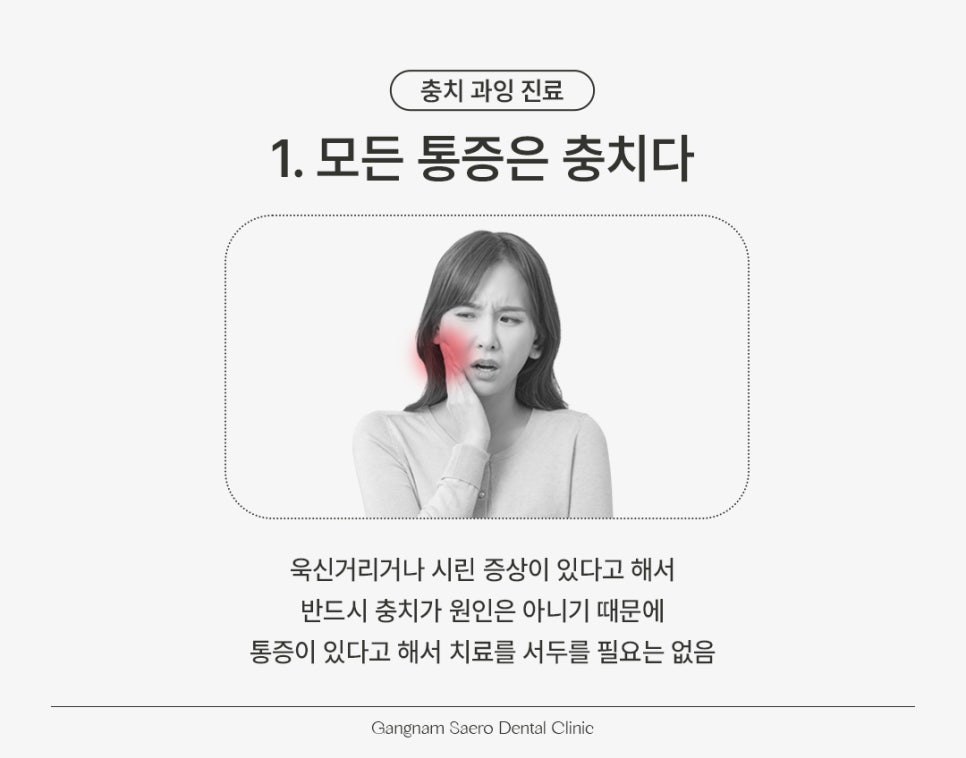
You cannot conclude that throbbing or sensitivity is necessarily caused by a cavity.
There are more possible reasons for tooth sensitivity or discomfort than you might expect.
Pain may occur temporarily because you brushed your teeth too forcefully,
because teeth grinding placed stress on your gums and teeth,
because of highly acidic fruits, carbonated beverages, or sports drinks,
or because of food that was too cold or too hot.
In other words, just because you have pain
does not mean you need to immediately assume it is a cavity and rush into treatment.
Even when the pain is temporary and caused by irritation,
some cases may involve immediately labeling it as a cavity
and recommending excessive treatment out of concern.
It is therefore best to calmly check this aspect.
Overtreatment of Cavities 2. Every Cavity Requires Root Canal Treatment
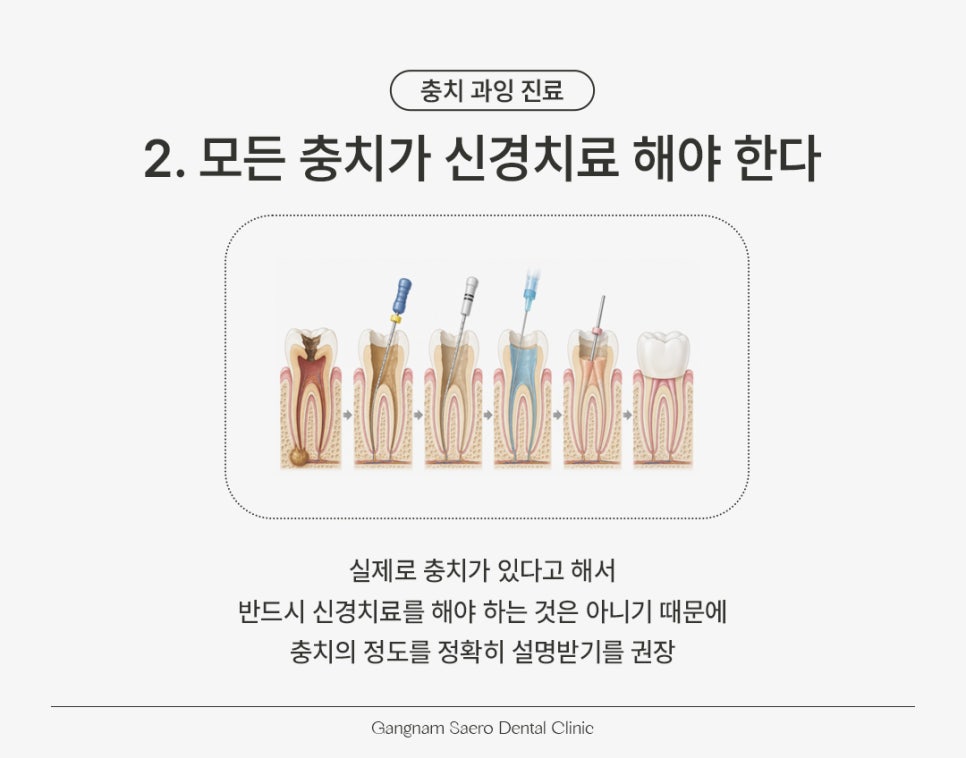
Even when a cavity is actually present,
overtreatment can take various forms.
One example is
immediately discussing root canal treatment
simply because a cavity is present.
If the cavity is not large or deep,
there are many cases where treatment can be completed with minimal removal of tooth structure
using resin or a simple restorative procedure.
However, even a small cavity may be described as extensive,
and after first increasing the patient's anxiety,
more treatment than necessary may be recommended.
With cavity treatment,
the important thing is not to perform the largest possible treatment,
but to provide only the amount of treatment appropriate for the current condition.
Overtreatment of Cavities 3. Extraction
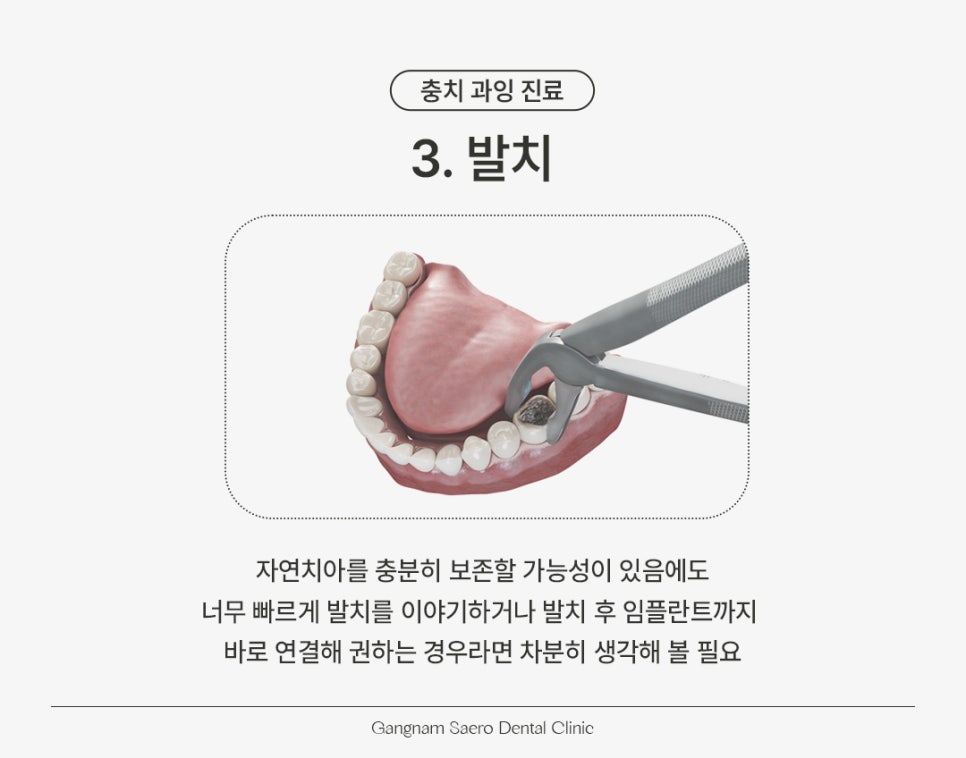
When a cavity has progressed significantly,
root canal treatment may become necessary,
and in more severe cases,
extraction may also need to be considered.
However,
that does not mean extraction should be decided on easily
just because treatment is somewhat difficult.
If extraction is discussed too quickly
even though there is a reasonable possibility of preserving the natural tooth,
or if an implant is immediately recommended following extraction,
it is worth taking another calm moment to consider the decision.
Once a tooth is removed, it cannot be brought back,
so the decision to extract requires even more caution than other treatments.
Why Overtreatment of Cavities Is Risky
Receiving excessive treatment does not simply mean paying more for treatment.
If more tooth structure than necessary is removed,
or if a natural tooth that could have been adequately preserved is lost,
it can lead to burdens that are difficult to reverse afterward.
In particular, losing a natural tooth
does not end with the problem of simply losing one tooth.
The alignment of neighboring teeth may change,
the condition of the gums and jawbone may change,
and prosthetic treatment such as an implant or bridge
may need to be considered later.
In other words, overtreatment
is not only a matter of spending more money;
it can affect your overall oral health in the future.
What to Check for Overtreatment of Cavities
If you want to reduce the possibility of overtreatment even slightly before visiting the dentist,
it is helpful to remember a few things in advance.
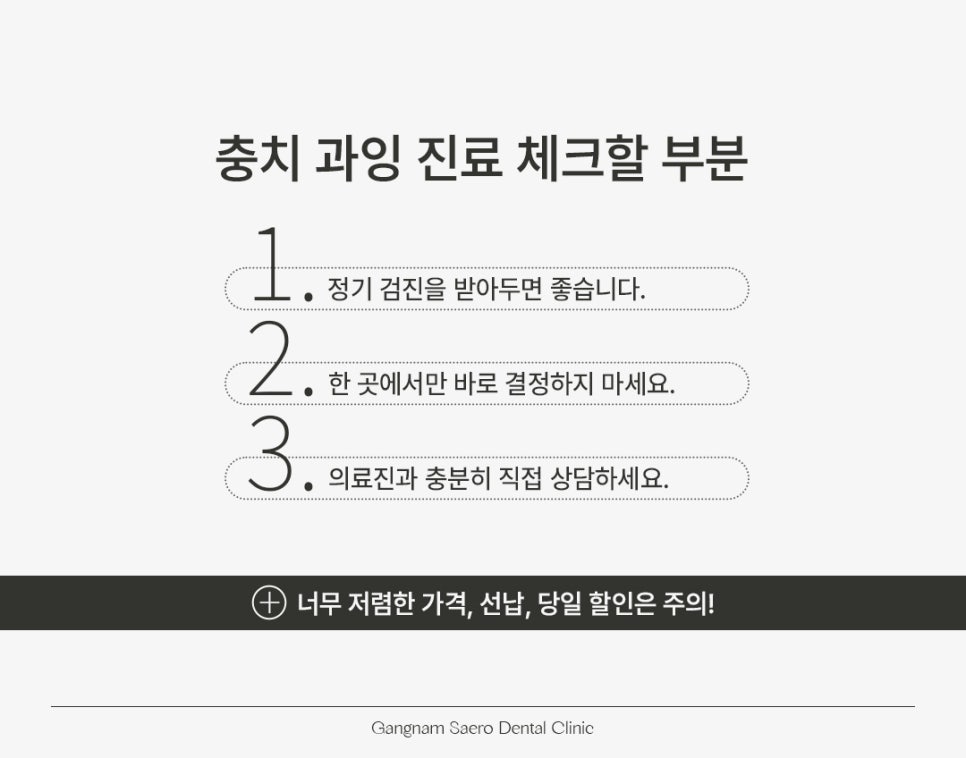
First, it is a good idea to have regular checkups.
If you have been regularly checking the condition of your teeth,
you can make a more objective judgment if you are suddenly told that you have a very large number of cavities.
You are also more likely to discover problems before they become more serious.
Second, it may help not to make an immediate decision at just one clinic.
Especially if the proposed treatment is extensive,
or if root canal treatment, extraction, and crowns are all discussed at once,
it may be helpful to hear the opinion of another dental clinic as well.
At this time, be sure to clearly state:
“I will not receive treatment today. I will listen to the diagnosis first and then decide.”
Third, you should check whether you can consult sufficiently and directly with the dental professionals.
Be cautious about places where someone other than the medical staff makes definitive statements about the diagnosis first,
or where the treatment plan is pushed forward without explanation.
Also, if they place unusual emphasis only on matters such as extremely low prices, advance payment, or same-day discounts,
it is worth considering whether the atmosphere gives more weight to contracts and payment than to the substance of the treatment.
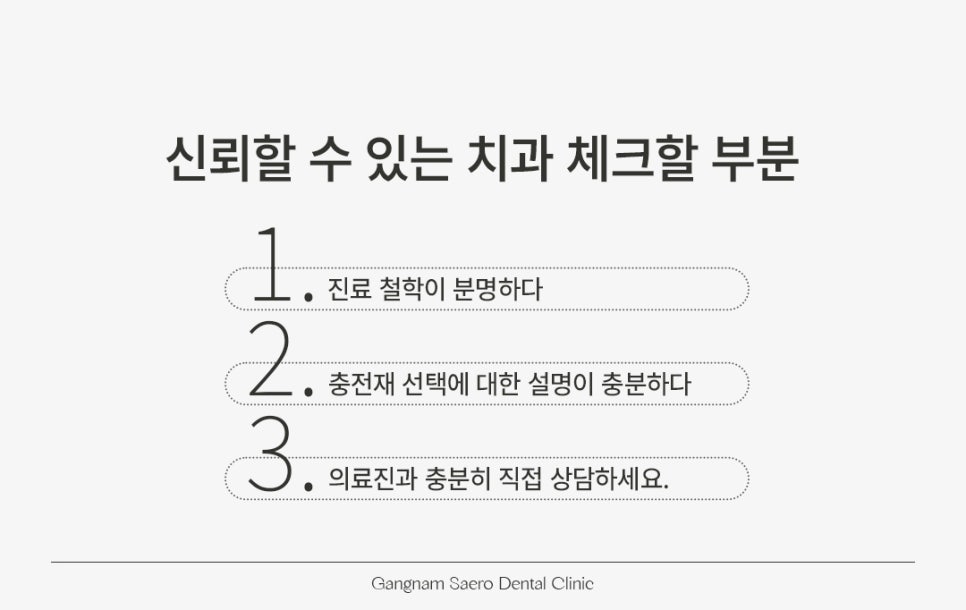
What to Check in a Trustworthy Dental Clinic
Then, conversely,
what does a trustworthy dental clinic look like?
- It has a clear treatment philosophy
It shows an attitude of putting the patient's health and needs before the clinic's profits.
Rather than automatically recommending extensive treatment,
it explains in an easy-to-understand way
why the treatment is necessary,
whether there are other options,
and whether it really needs to be done now.
- It provides sufficient information about the choice of filling material
After cavity treatment,
various materials may be used depending on the condition.
The important thing is not to push one particular material unconditionally,
but to sufficiently explain which options are available for the current condition of the tooth
and what advantages and disadvantages each material has.
If the patient has a preferred approach,
there also needs to be a process of explaining understandably
why that choice is possible,
or why it is not recommended.
- It does not pressure you into same-day treatment
If you clearly say that you only want an examination,
but they strongly recommend immediate treatment on the spot
or pressure you to make a quick decision,
it may feel burdensome.
(Of course, things may be different in a truly serious case!)
Conversely, a trustworthy clinic
helps patients have enough time to listen to the explanation and think it over.
Treatment should be a process of making a decision after understanding,
not one that pressures you to hurry.
If You Are Still Worried About Cavity Treatment
강남새로치과
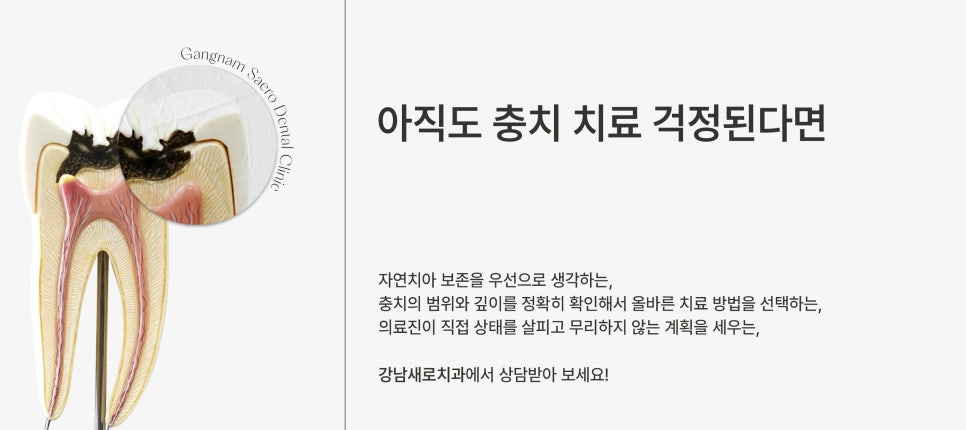
creates treatment plans with an approach that prioritizes preserving natural teeth.
Even when patients have been advised to receive implants at several clinics,
there have been cases where the possibility of preservation treatment was examined first
in an effort to extend the lifespan of the natural teeth.
In addition, after accurately determining the extent and depth of a cavity,
we select a treatment method suited to each condition
and aim to provide appropriate treatment that is neither excessive nor insufficient.
It is also important to us that the dental professionals directly examine the condition,
consider the patient's financial burden as well,
and suggest a reasonable plan.
If you are concerned about cavity treatment
and are looking for a dental clinic without overtreatment,
we recommend consulting 강남새로치과.
- This post is a medical-information post presented by a medical institution under a third-party contractual relationship, and AI was used in part.