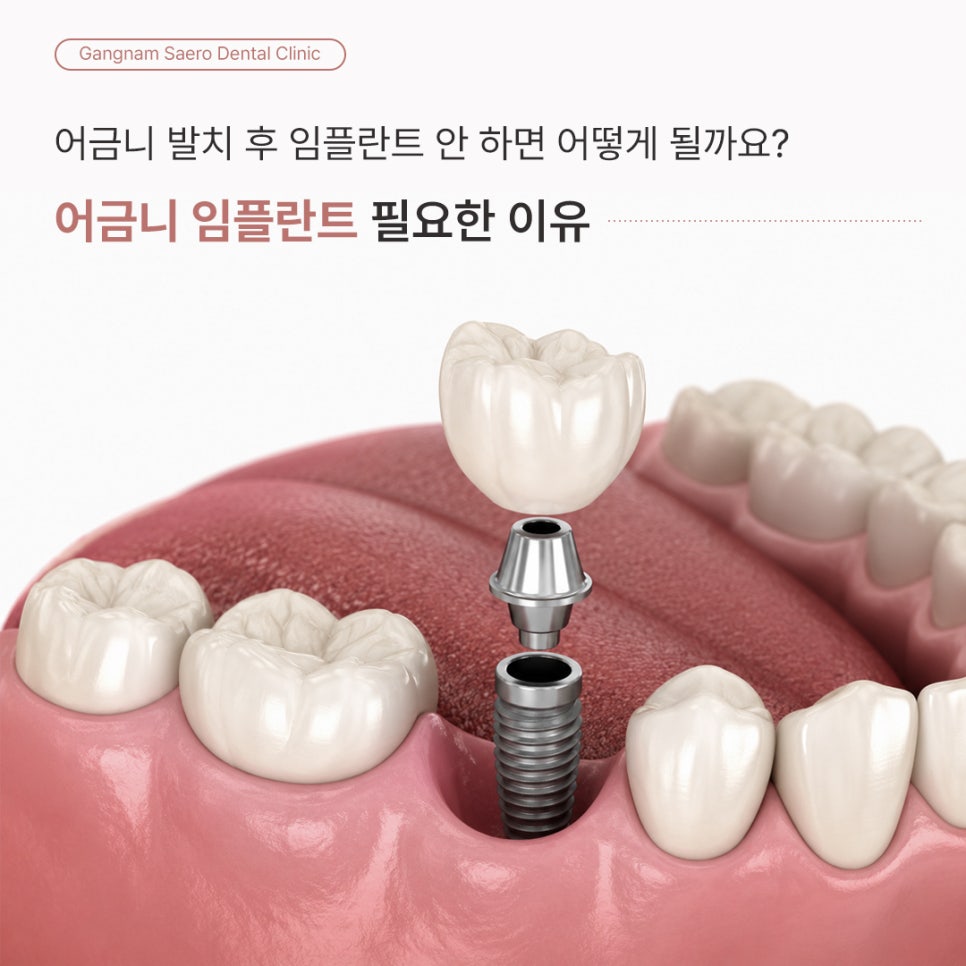
What happens if you don’t get an implant after a molar extraction?
Why molar implants are necessary
When people lose teeth that are clearly visible when they open their mouths, such as incisors or canines,
most of them feel that they absolutely need implants,
even for appearance-related reasons.
Molars, however, are a little different.
Even after they are lost, they are not immediately noticeable,
and some people do not experience as much discomfort as they expected at first,
so quite a few choose to leave them as they are.
That is why we are asked this question so often:
“Do I really need a molar implant?”
Gangnam Saero Dental Clinic gives a relatively clear answer to this question.
Yes, it is better to get one.
In many cases, this is the most stable choice.
Let us explain why,
step by step.
Permanent tooth structure
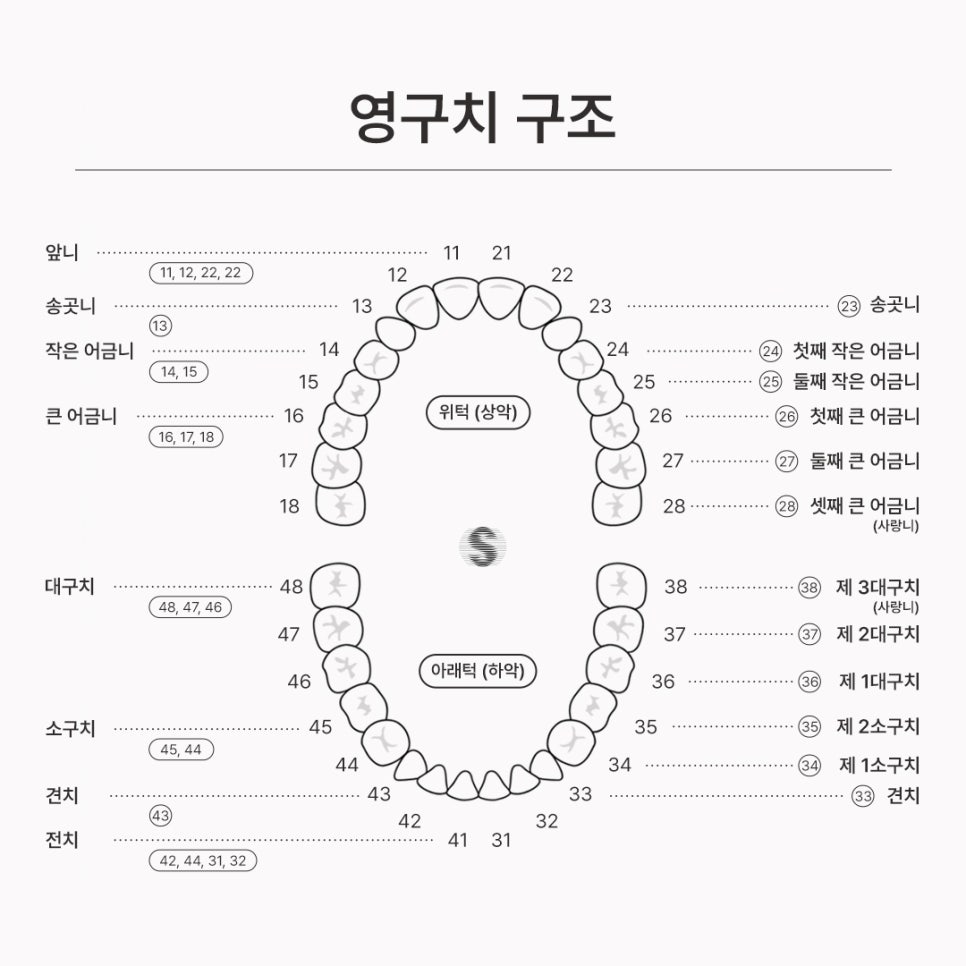
To understand why molar implants are important,
it is helpful to first have a basic understanding of the structure of permanent teeth.
Each tooth has a designated number and name according to its location.
The teeth that commonly cause people to consider molar implants are
usually teeth 17, 27, 37, and 47—
that is, the second molars located furthest back.
These teeth are not as noticeable as the front teeth,
but they play an important role in distributing chewing forces
and maintaining the balance of the overall bite.
Why perceptions of implants used to be different
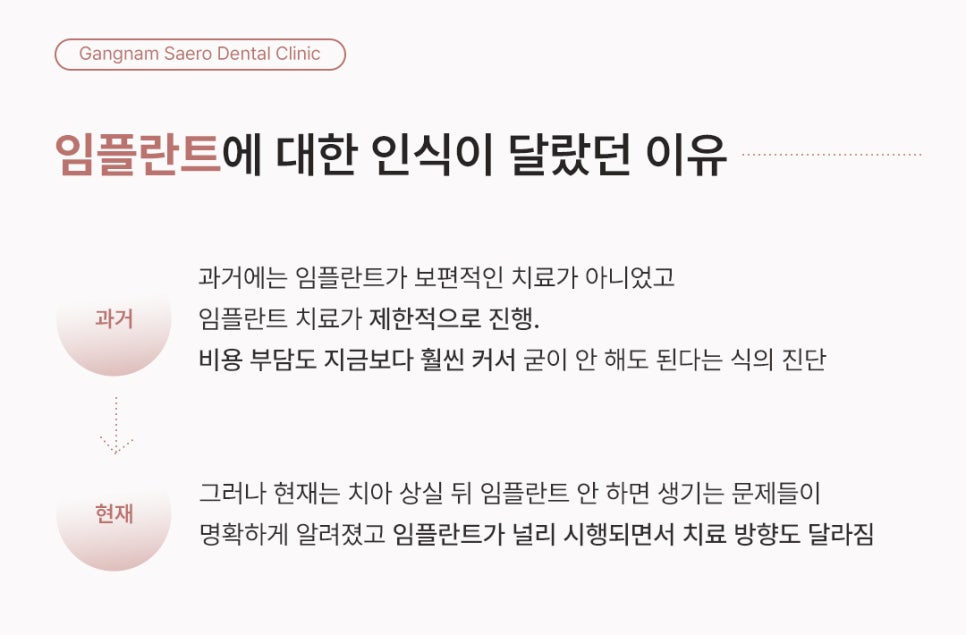
In the past,
more people than today simply lived without replacing an extracted molar.
This was because implants were not as widely available as they are now.
In the past,
implant treatment was performed on a limited basis,
and the financial burden was also much greater than it is today.
As a result, some people were told that treatment was not necessarily needed.
In particular, the rearmost molars were more often left untreated
because they were not immediately visible
and did not always cause significant functional discomfort at first.
But things are different now.
As implants have become more widely used,
the problems that can occur when a missing tooth is not replaced with an implant
have become much clearer,
and treatment recommendations have changed accordingly.
Why the diagnosis for molar implants used to differ
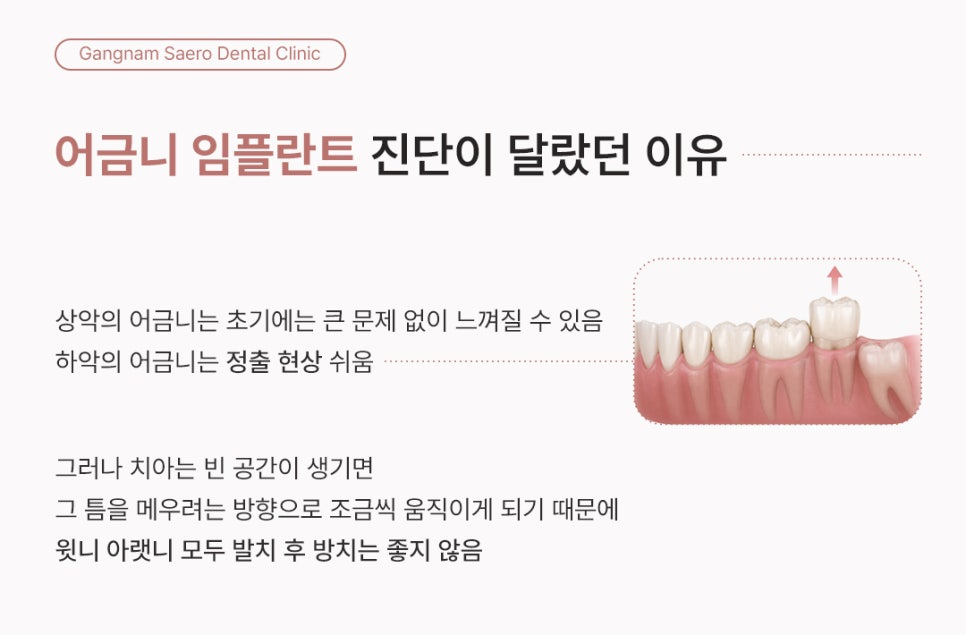
Even among the rearmost molars,
the changes that can occur when an implant is not placed after extraction
may feel somewhat different in the upper and lower molars.
For example,
teeth 17 and 27, the rearmost upper molars,
may in some cases make only partial contact with the lower teeth,
so they may not seem to cause major problems at first.
On the other hand, when teeth 37 and 47, the rearmost lower molars, are lost,
the upper molars that used to bite against them lose their opposing support.
This can make extrusion—that is, moving downward or upward—more likely to occur.
However, the important point is that upper molars are not necessarily safe,
and lower molars are not the only ones at risk.
When a space develops, teeth gradually tend to move in an attempt to fill it.
In other words, although the effects may differ depending on the location,
leaving a molar space empty for a long time is never an advantageous situation.
Problems that can occur when an implant is not placed
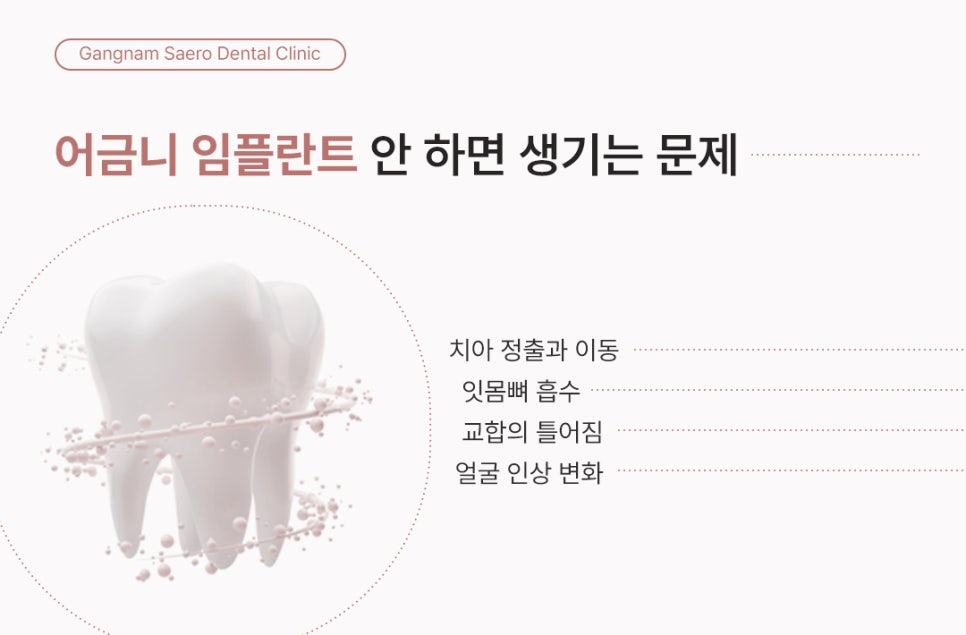
If you have a molar extracted and leave the space as it is,
it may initially feel better than expected.
However, over time,
the oral structures around the empty space may gradually change.
Typical changes may include the following:
- Extrusion and movement of the teeth
The opposing tooth may move downward or upward toward the empty space.
Nearby teeth may also tilt sideways,
which can disrupt the balance of the entire row of teeth.
- Resorption of the jawbone
The bone in the area where a tooth has been lost
is likely to decrease over time.
This can make treatment more complicated
if you later decide to receive an implant.
- Misalignment of the bite
Molars are central to chewing function.
When this area is left empty,
chewing forces may become concentrated on one side,
and the overall bite may gradually become slightly unbalanced,
affecting other teeth and the jaw as well.
- Changes in facial appearance
If a missing molar is left untreated for a long time
and both the bite and jawbone condition deteriorate,
it may also affect the balance of the mouth and lower face.
The changes may begin very subtly,
but differences can develop as they accumulate over a long period.
In other words,
you should not assume that the impact is small
just because a missing molar is not visible.
Problems in areas that are not visible are often noticed later.
So, should you get a molar implant?

The conclusion is the same once again.
Yes, it is better to get one.
Of course, the precise treatment plan may vary depending on the patient’s age,
the condition of the jawbone,
the location of the missing tooth,
and whether the patient has any systemic diseases.
However, compared with leaving the area untreated for a long time after a molar extraction,
restoring the missing tooth at an appropriate time is much more advantageous
for maintaining oral health and function.
Molars are especially easy to take lightly
because they are not very noticeable,
but they actually play a very important role in the bite and chewing function.
Therefore,
rather than delaying treatment based only on the feeling that
“It seems fine for now,”
it is best to accurately check your current condition
and proceed with treatment at the appropriate time if necessary.
If you are wondering whether it might still be okay
not to get an implant
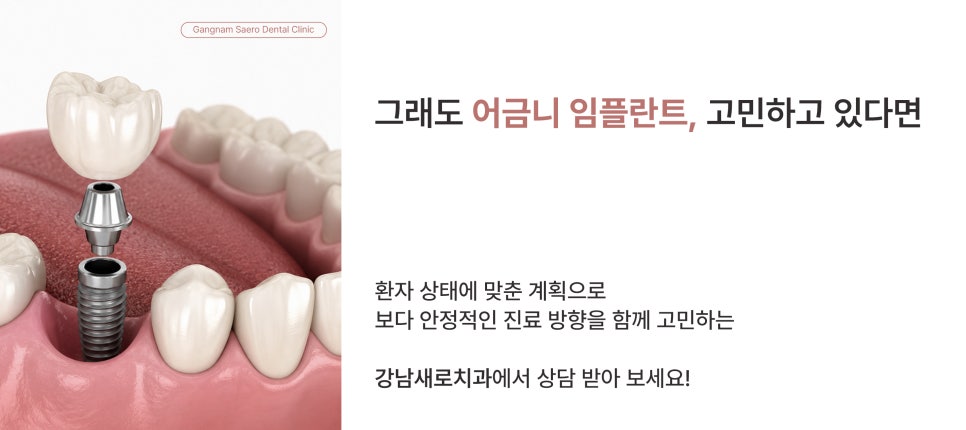
If you have been continuing to wonder
whether it might be okay not to get an implant after a molar extraction,
the first step now is to receive an accurate diagnosis rather than continue delaying.
It is important to properly assess your current condition:
What is the condition of your jawbone?
How much have the surrounding teeth moved?
Can the implant be placed right away?
Is any additional treatment needed?
Gangnam Saero Dental Clinic works with each patient to develop a treatment plan suited to their condition,
helping ensure that the appropriate treatment window is not missed after molar loss
and considering a more stable approach to care.
A new smile, a new beginning, a fresh start.
If you are considering a molar implant,
we recommend consulting Gangnam Saero Dental Clinic!
- This post presents medical information provided by a medical institution under a third-party contractual arrangement and was partially created using AI.