Orthodontic Tooth Extraction Guide
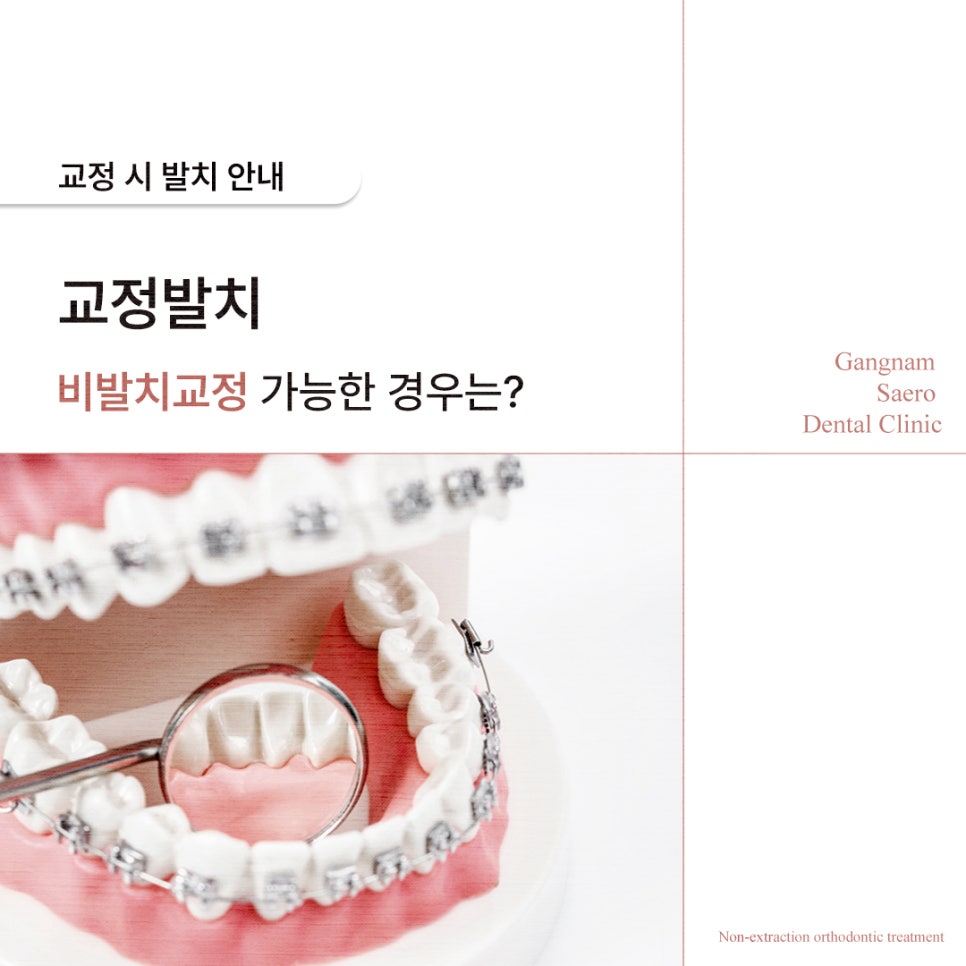
Orthodontic Extraction
When Is Non-Extraction Orthodontic Treatment Possible?
One of the biggest concerns for people considering orthodontic treatment
is whether tooth extraction will be necessary.
“Do I absolutely have to have teeth removed to get orthodontic treatment?”
“Is it really okay to remove healthy, natural teeth?”
“I’ve heard that tooth-extraction orthodontic treatment can change the face. Is that okay?”
Because of these concerns,
many people delay treatment
even when they know orthodontic treatment is necessary.
In particular, since natural teeth cannot be restored after extraction,
an even more careful decision is needed!
Then, why is tooth extraction performed during orthodontic treatment?
And is extraction really necessary for all orthodontic treatments?
Gangnam Saero Dental Clinic
explains when non-extraction orthodontic treatment is possible
and why extraction-based orthodontic treatment may be necessary.
When Non-Extraction Orthodontic Treatment Is Possible
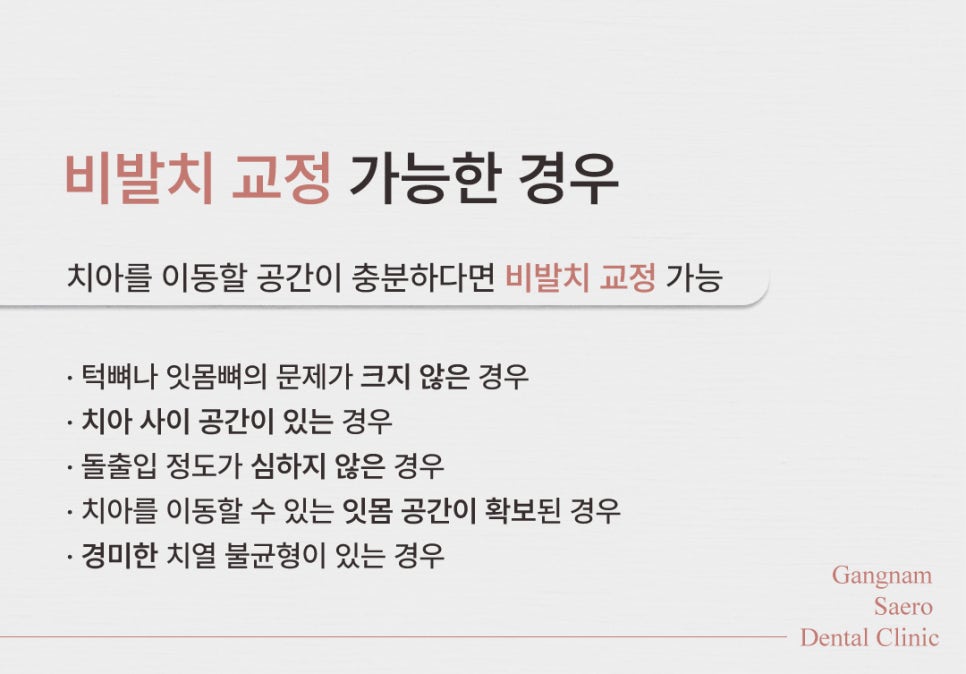
First, let’s look at cases in which orthodontic treatment is possible without extraction.
The basic purpose of orthodontic treatment
is to properly align irregularly positioned teeth
and create a normal bite.
Therefore, if there is enough space to move the teeth,
orthodontic treatment can be performed without extraction.
Typical cases include:
- When there are no significant problems with the jawbone or alveolar bone
- When there are spaces between the teeth
- When the degree of protrusion is not severe
- When sufficient gum space is available for tooth movement
- When there is mild dental arch or tooth alignment imbalance
In these cases, non-extraction orthodontic treatment may be considered.
Recently, as the importance of preserving natural teeth has increased,
treatment plans are often designed to favor non-extraction treatment over extraction whenever possible.
However, not every patient is eligible for non-extraction orthodontic treatment.
Why Tooth Extraction Is Performed During Orthodontic Treatment
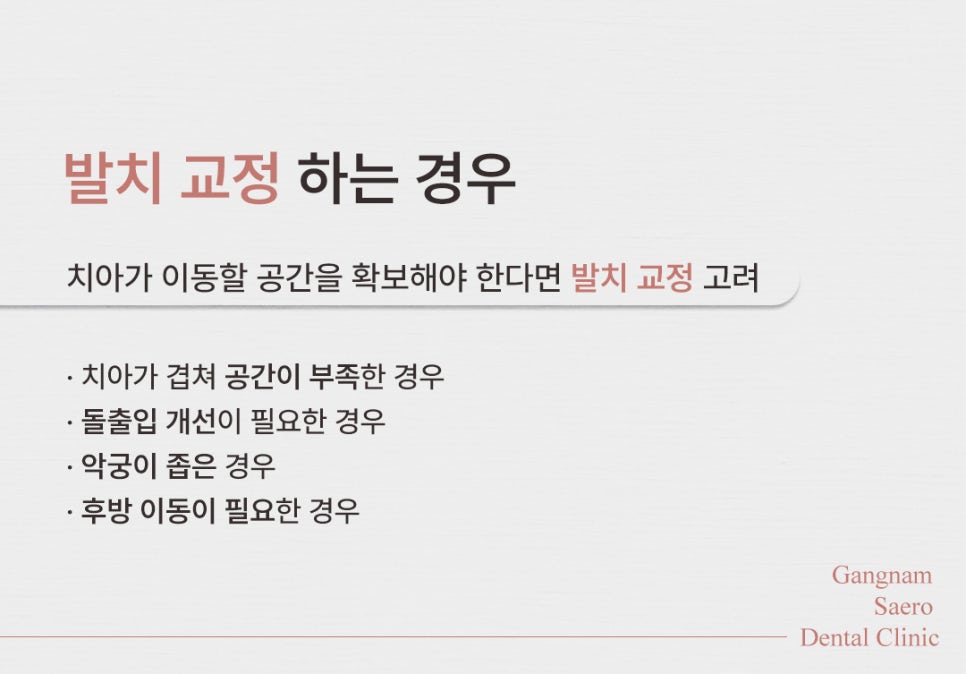
Then, in what cases is extraction performed?
The primary purpose of tooth extraction during orthodontic treatment
is to secure space for moving the teeth.
If there is not enough space for the teeth to be aligned
and they are moved forcefully,
problems may occur, such as the teeth being pushed outside the gums
or their angles moving beyond the normal range.
Typical cases in which extraction-based orthodontic treatment is considered include:
- When the teeth overlap and there is insufficient space
When teeth overlap, as with crowded or rotated teeth,
or when there is insufficient space for proper alignment,
extraction can secure room for tooth movement.
- When improvement of protruding teeth or lips is needed
In some cases, space needs to be created
to move protruding front teeth backward.
- When the dental arch is narrow
If there is not enough room for the teeth to settle into position,
extraction can help guide them into a balanced alignment.
- When backward movement is necessary
If the front teeth need to be moved backward
but there is not enough space,
extraction may be included in the treatment plan.
In other words, extraction-based orthodontic treatment
is not simply a process of removing teeth;
it can be viewed as a process of creating space
for more stable tooth movement.
Why Facial Changes May Occur After Extraction-Based Orthodontic Treatment
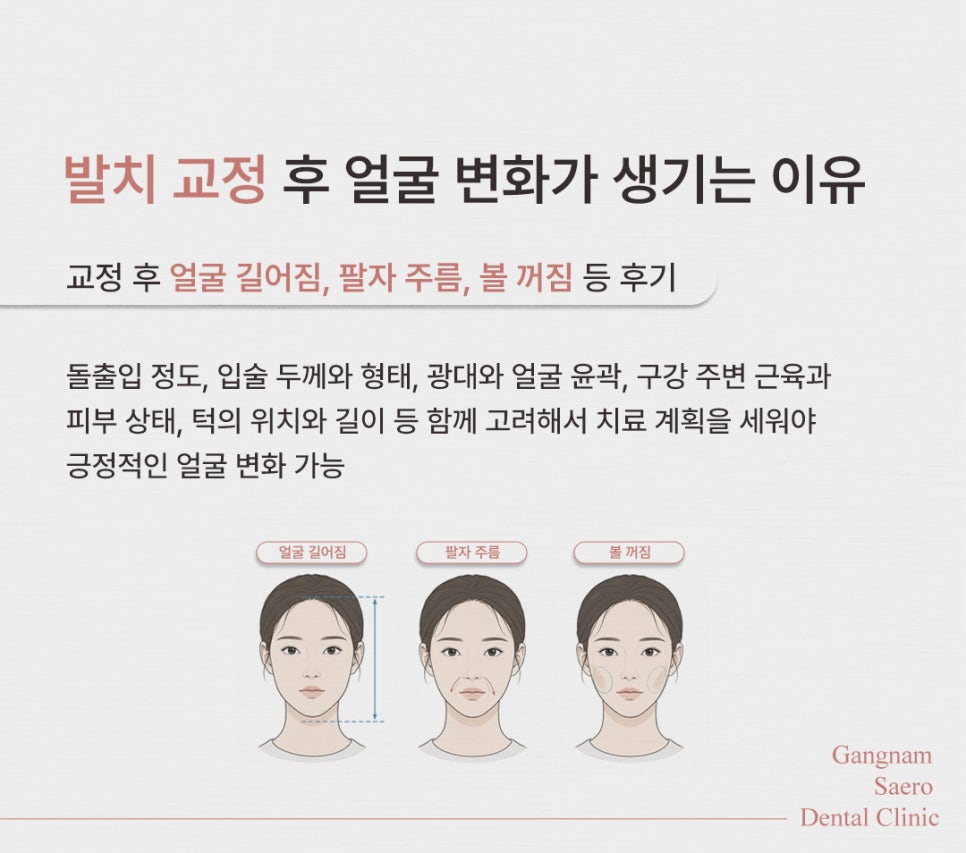
The biggest concern for people considering extraction-based orthodontic treatment
is facial change.
On the internet, it is easy to find cases describing:
“My face became longer after orthodontic treatment,”
“My nasolabial folds became deeper,”
“My cheeks look sunken,”
and so on.
However, not all extraction-based orthodontic treatment
causes negative facial changes.
Because extraction-based orthodontic treatment
rearranges the teeth using the space left by the extracted teeth,
changes in the appearance of the mouth and overall facial impression may occur.
What is important
is whether the treatment plan takes the patient’s facial structure and harmony into account.
When establishing an orthodontic treatment plan, the following should be considered together:
- The degree of protrusion
- Lip thickness and shape
- The cheekbones and facial contours
- The condition of the muscles and skin around the mouth
- The position and length of the jaw
For example,
the direction of jaw rotation may vary depending on the direction in which the molars are moved,
which may also lead to anticipated changes in facial length.
In addition, if the face is slender or the cheekbones are prominent,
changes in cheek volume may be felt more noticeably after orthodontic treatment.
If the lips are thin or the philtrum is long,
changes in the appearance of the mouth may also be more noticeable after the front teeth are moved backward.
Therefore, what is important
is not simply whether extraction or non-extraction is chosen,
but whether the treatment plan is appropriate for your facial and oral structure.
Things to Confirm Before Extraction-Based Orthodontic Treatment
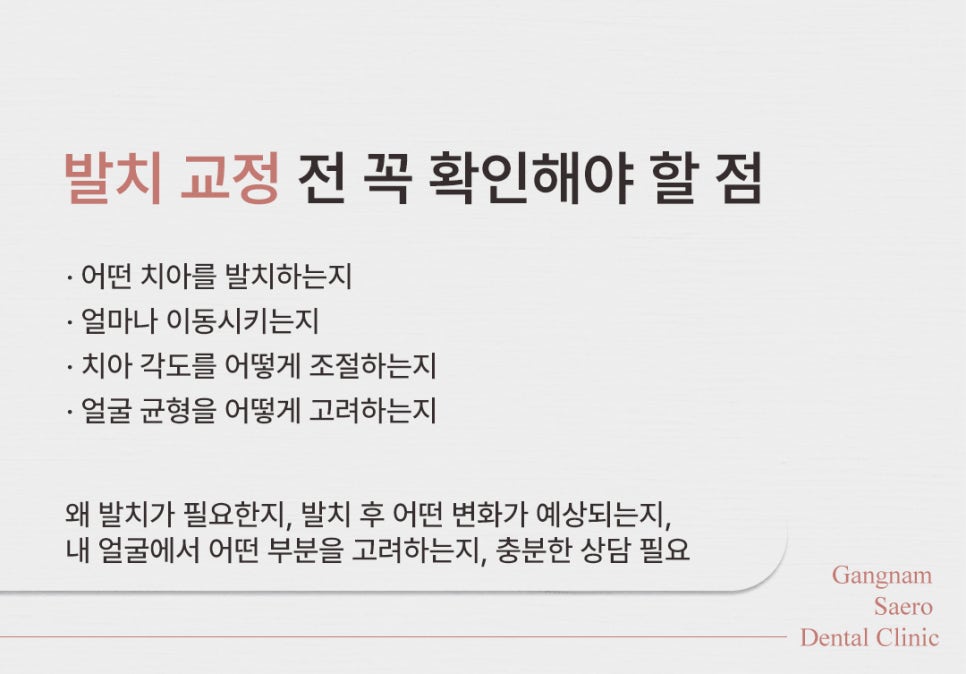
Even when extraction-based orthodontic treatment is necessary,
the same results do not necessarily occur in every case.
Even with the same extraction-based treatment,
results may vary depending on:
- Which teeth are extracted
- How far the teeth are moved
- How the tooth angles are adjusted
- How facial balance is taken into account
Therefore, before orthodontic treatment,
rather than simply being told, “Extraction is necessary,”
there should be a thorough consultation about:
- “Why is extraction necessary?”
- “What changes can be expected after extraction?”
- “Which aspects of my face will be taken into account?”
Gangnam Saero Dental Clinic: Orthodontic Treatment Focused on Non-Extraction Treatment
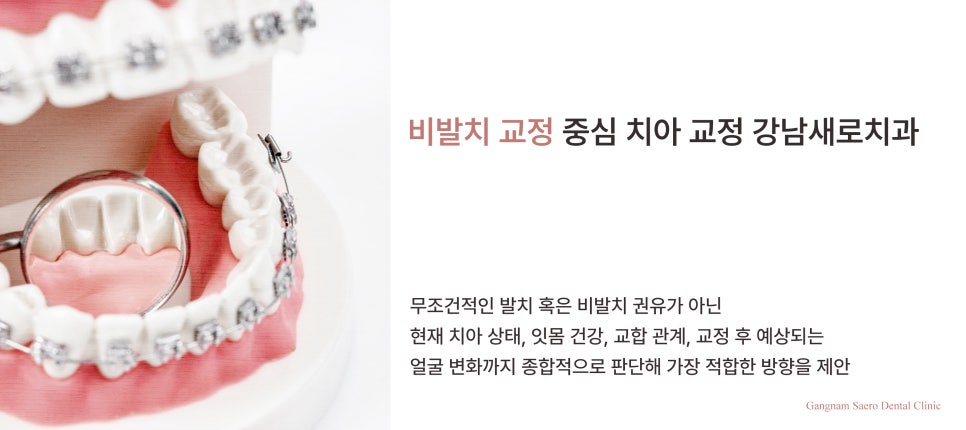
Gangnam Saero Dental Clinic
prioritizes preserving natural teeth whenever possible
and establishes orthodontic treatment plans by considering both the patient’s oral condition and facial balance.
Rather than recommending extraction unconditionally
or insisting on non-extraction treatment in every case,
we comprehensively assess the current condition of the teeth, gum health, bite relationship,
and anticipated facial changes after orthodontic treatment
to suggest the most appropriate approach.
Orthodontic treatment is not simply a procedure to straighten the teeth;
it is a process of creating harmony between the teeth and the face.
If you are concerned about extraction-based orthodontic treatment,
rather than worrying on your own,
we recommend confirming the orthodontic method that is right for you
through an accurate diagnosis!
A new smile, a new beginning, a new start.
Gangnam Saero Dental Clinic is with you.
- This post presents medical information and other content provided by a medical institution under a third-party contractual relationship and was created with partial use of AI.