The dentist says it needs to be extracted!
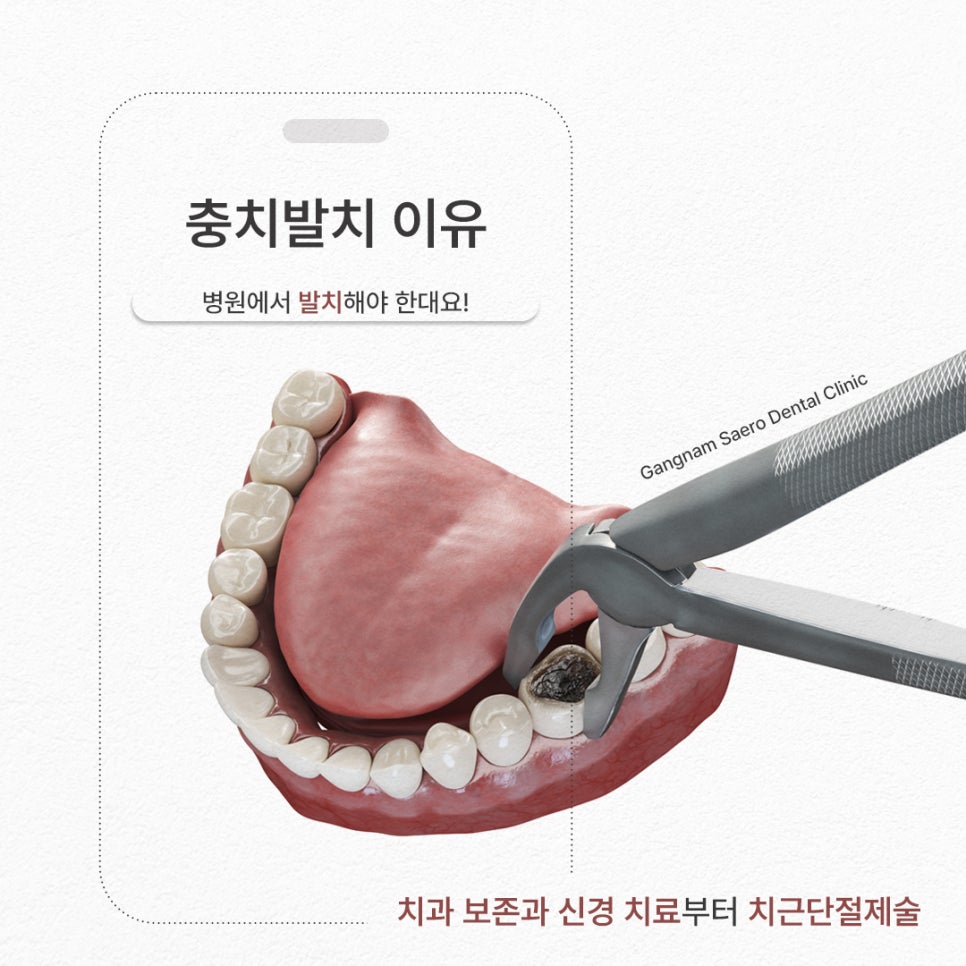
Reasons for Tooth Extraction Due to Decay
From Root Canal Treatment to Apicoectomy in Conservative Dentistry
With the development of implants as an effective treatment option,
many people feel less apprehensive about tooth extraction than in the past, right?
However, an implant is ultimately
an alternative treatment that replaces a missing tooth.
Natural teeth are connected to the jawbone through a tissue called the periodontal ligament,
which allows them to have slight movement and sensation,
whereas implants are directly fused to the jawbone,
so they cannot perform exactly the same functions as natural teeth.
For this reason, dental clinics
prioritize preserving natural teeth as much as possible whenever feasible.
Then, when severe tooth decay develops,
how long can the natural tooth be saved?
When is extraction truly the only option?
Gangnam Saero Dental Clinic
will explain everything from the stages of decay treatment to the final treatment option before extraction.
Types of Tooth Decay Treatment by Stage
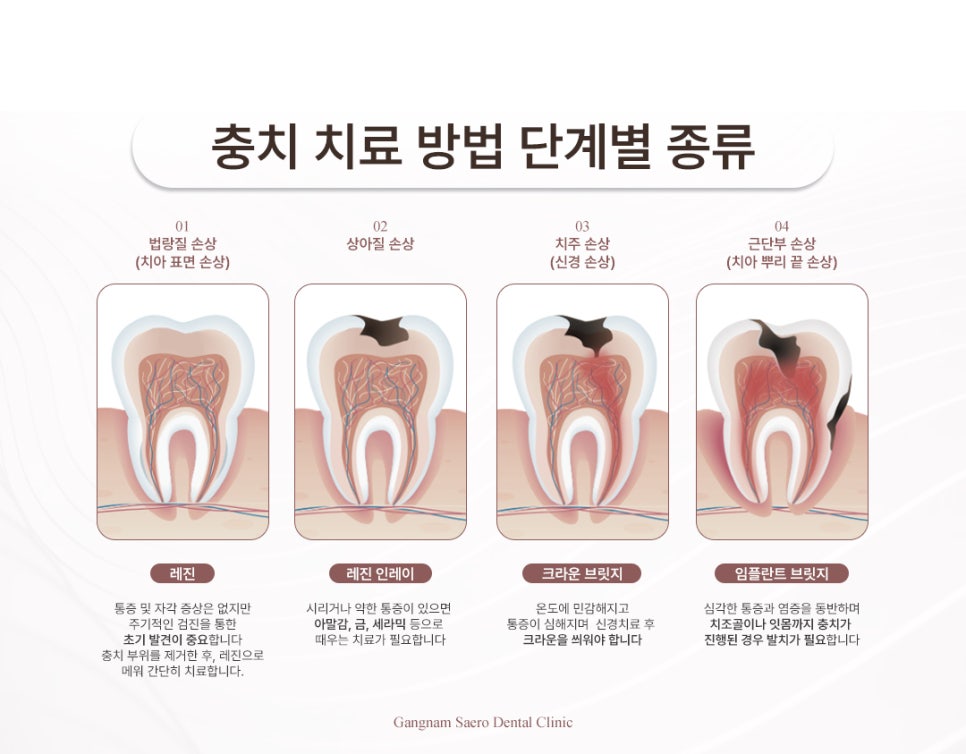
Treatment methods vary
depending on how far the decay has progressed.
Let’s look at the types of decay treatment by stage,
from early decay to severe decay!
- Enamel Decay – Resin Treatment
If decay has developed only in the enamel,
the outermost layer of the tooth, in its early stage,
it can be treated relatively simply with resin treatment.
This method involves removing the minimum amount of decayed tooth structure
and filling it with a material similar in color to the tooth.
Because it requires minimal tooth reduction,
it is also advantageous for preserving the natural tooth.
- Dentin Decay – Inlay or Onlay Treatment
If the decay has progressed beyond the enamel
and reached the dentin,
inlay or onlay treatment may be considered.
Depending on the extent of the decay,
an inlay is used when the affected area is relatively small,
while an onlay is used
when the affected area is extensive.
This treatment reinforces the damaged area
using materials such as ceramic or gold.
- Pulpitis Stage – Root Canal Treatment and a Crown
If the decay progresses further
and reaches the pulp, the nerve tissue inside the tooth,
root canal treatment may be necessary.
Root canal treatment
removes the infected nerve tissue,
disinfects the inside of the tooth,
and fills the root canals
through a process that eliminates inflammation inside the tooth.
However, during root canal treatment,
some tooth structure must be removed
to treat the inside of the tooth.
When a significant amount of tooth structure has been removed,
a crown is often placed as well
to protect the remaining tooth and maintain chewing function.
Cases in Which Extraction May Still Be Necessary After Root Canal Treatment
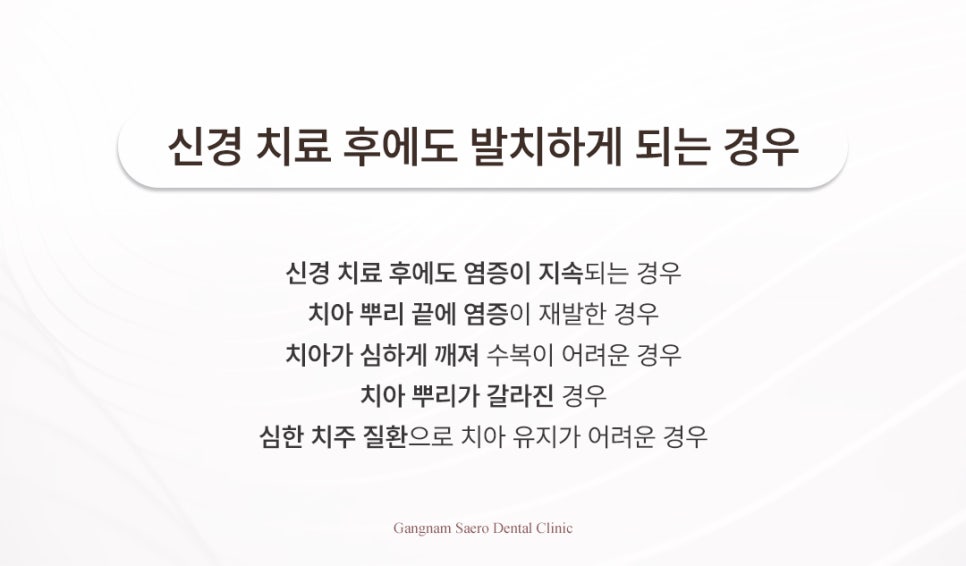
Then, even after root canal treatment,
why might extraction still be necessary?
Typical cases include:
Inflammation that persists even after root canal treatment
A recurrence of inflammation at the tip of the tooth root
Severe tooth damage that makes restoration difficult
A fractured tooth root
Severe periodontal disease that makes it difficult to maintain the tooth
and other situations.
However, failure of root canal treatment
does not always immediately lead to extraction.
There is a final natural-tooth preservation option
that can be considered before extraction.
The Final Opportunity Before Extraction: Apicoectomy
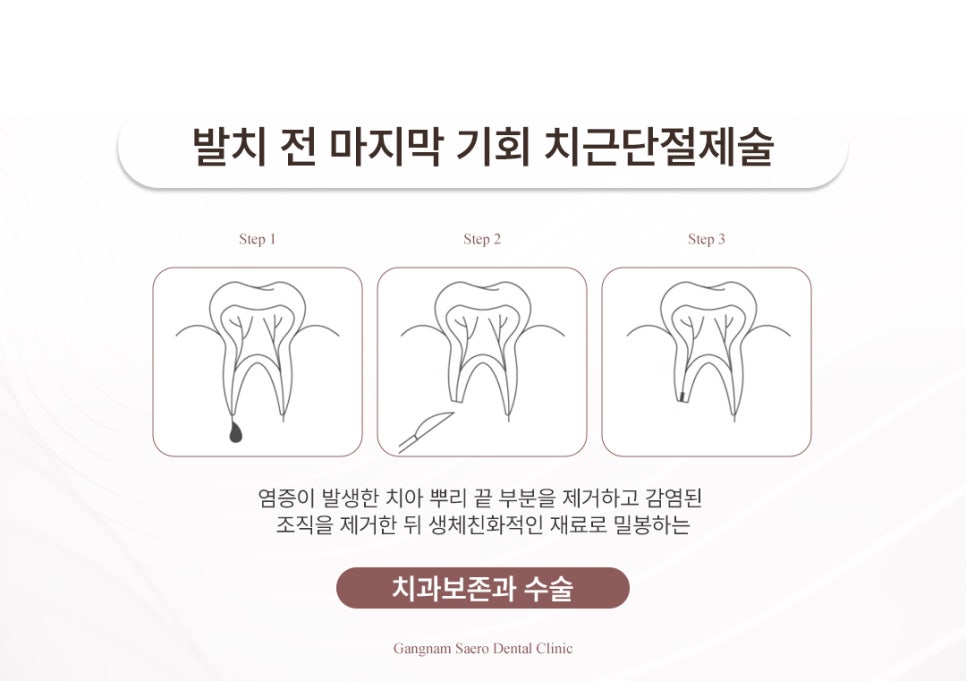
If inflammation remains after root canal treatment
or retreatment is difficult,
an apicoectomy may be considered.
An apicoectomy
is a conservative dental surgery that removes the inflamed tip of the tooth root,
removes the infected tissue,
and then seals the area with a biocompatible material.
Simply put,
before removing the entire tooth,
this method treats only the problematic root tip
in order to preserve the natural tooth.
It may be considered particularly when:
Inflammation recurs after previous root canal treatment
Retreatment is difficult because of a restoration
A lesion has developed at the tip of the tooth root
and in other similar situations.
Of course, not every tooth is suitable for this procedure,
so the condition of the tooth, the shape of the root, and the extent of inflammation
must be evaluated carefully.
Stages That May Lead to Tooth Extraction Due to Decay
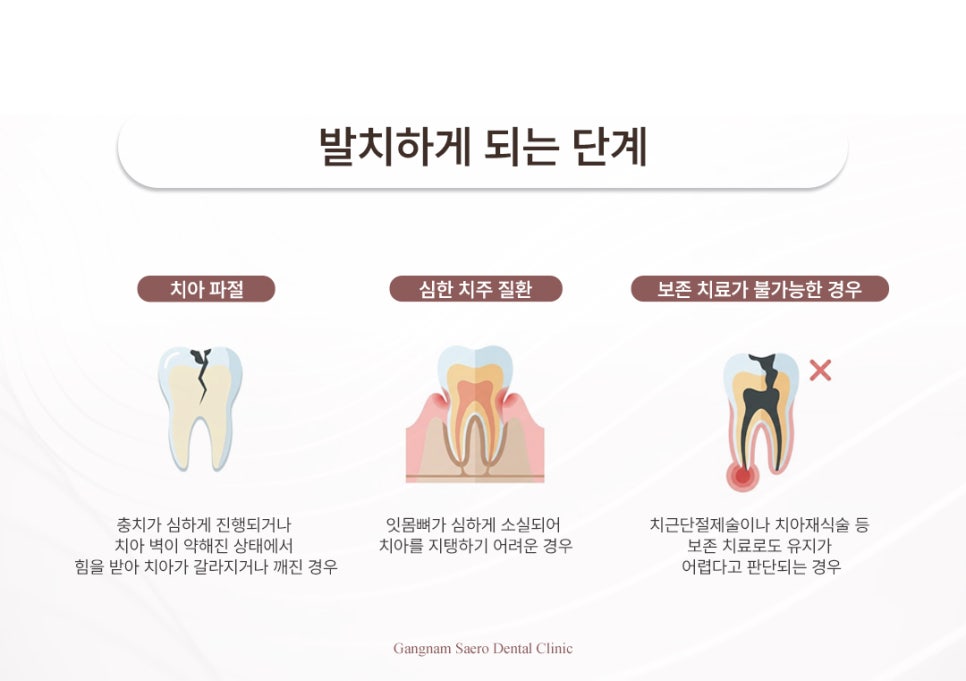
Even after various treatments have been performed
to save the natural tooth,
there are cases in which extraction is ultimately necessary.
Typical examples include:
Tooth fracture
This may occur when the tooth splits or breaks
under force because the decay has progressed severely
or the tooth walls have become weakened.
Severe periodontal disease
This occurs when the jawbone has been severely lost,
making it difficult to support the tooth.
Cases in which conservative treatment is not possible
This applies when it is determined that the tooth is difficult to maintain
even with conservative treatments such as an apicoectomy or intentional replantation.
In such cases, after extraction,
treatments that replace the missing tooth, such as an implant, may be considered.
How to Prevent Tooth Extraction Due to Decay
To avoid extraction due to severe decay,
prevention is most important.
The most basic methods are:
Proper brushing habits
Regular dental checkups
Periodic scaling
Early detection and treatment of tooth decay
Tooth decay may not cause significant symptoms in its early stages,
but the longer it is left untreated, the more extensive the treatment becomes,
and the lower the chances of saving the natural tooth become...
That is why!!! When you notice that something feels even slightly unusual,
getting an examination promptly
is the best way to preserve your natural tooth!
Gangnam Saero Dental Clinic: Treatment Focused on Preserving Natural Teeth
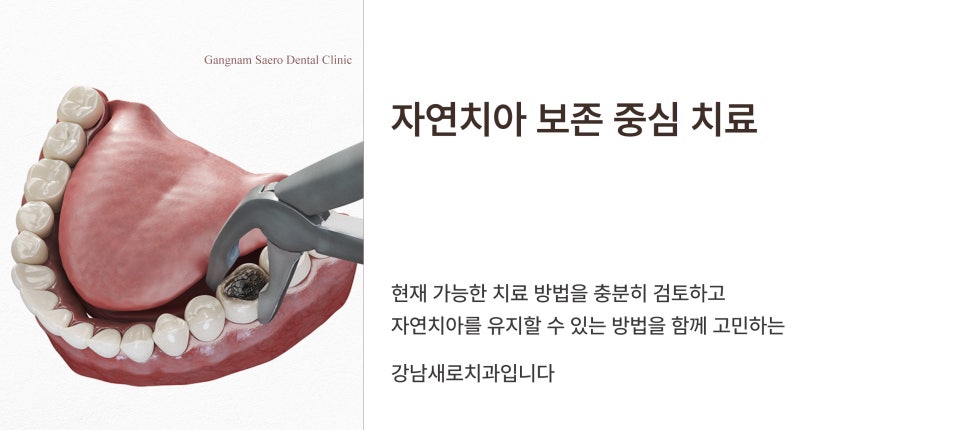
The most important goal of tooth decay treatment
is not simply to remove the decay,
but to preserve the patient’s natural tooth for as long as possible.
Gangnam Saero Dental Clinic
accurately evaluates the extent of the decay and the condition of the tooth
and plans a treatment approach suited to the patient’s condition,
including resin, inlay or onlay treatment, root canal treatment,
and, when necessary, an apicoectomy.
Rather than deciding on extraction from the outset,
we thoroughly review the treatment options currently available
and consider together how the natural tooth can be maintained.
Even in cases of severe decay,
extraction is not always the answer.
We recommend starting with an accurate diagnosis
to determine whether there is a way to save your tooth.
A new smile, a new beginning, a fresh start.
Gangnam Saero Dental Clinic is here with you.
- This post, which presents medical information provided by a medical institution, was created under a third-party contractual relationship with partial use of AI.