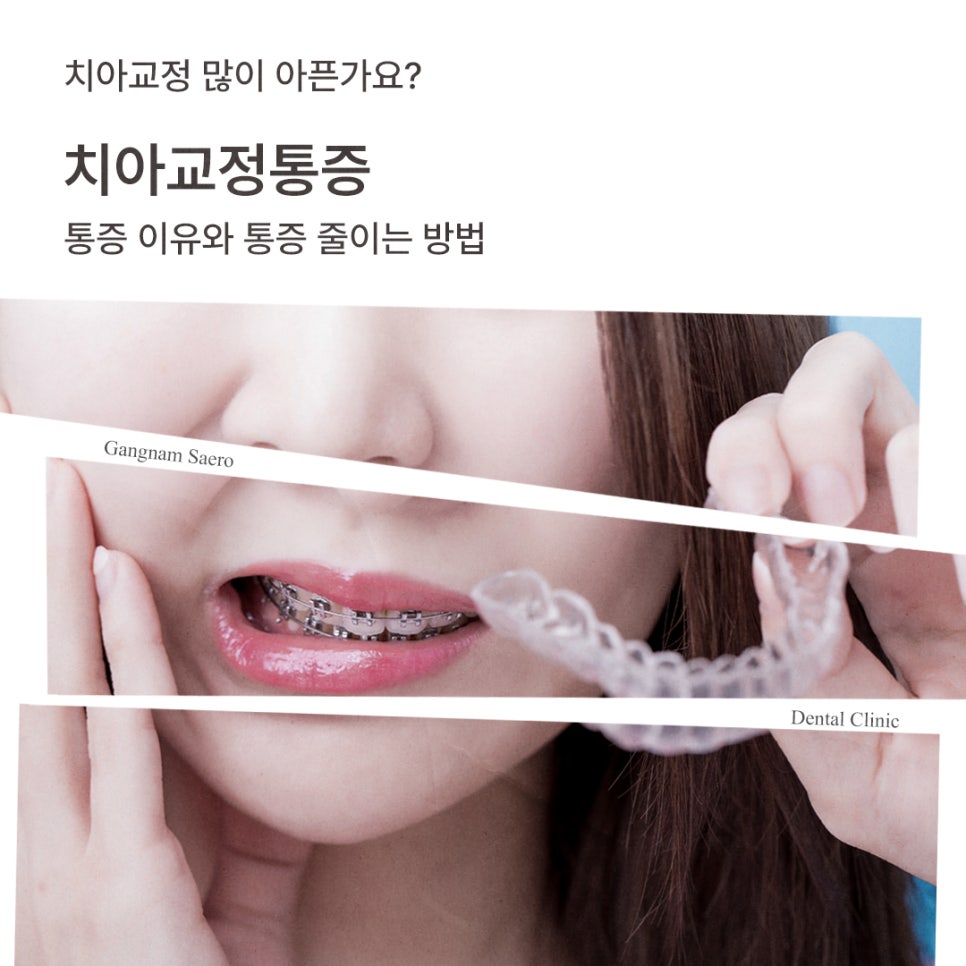
Does orthodontic treatment hurt a lot?
Orthodontic pain
Reasons for the pain and ways to reduce it
People considering orthodontic treatment
often ask before their consultation:
“Does it hurt a lot when you get braces?”
“Is it okay if my teeth feel loose?”
“Will orthodontic pain make daily life difficult?”
Because orthodontic treatment is not completed in a single appointment like cavity treatment,
but instead moves the teeth over an extended period,
it is natural to be concerned about pain.
However, orthodontic pain is often
a natural response that occurs as the teeth move,
rather than pain caused by damage to the teeth.
Gangnam Saero Dental Clinic
will explain in detail why orthodontic pain occurs,
the types of pain, and ways to reduce it.
Orthodontic Treatment Principles
Although teeth may appear to be firmly fixed in place,
there are actually periodontal ligaments and jawbone
around the roots of the teeth,
which can respond to subtle changes.
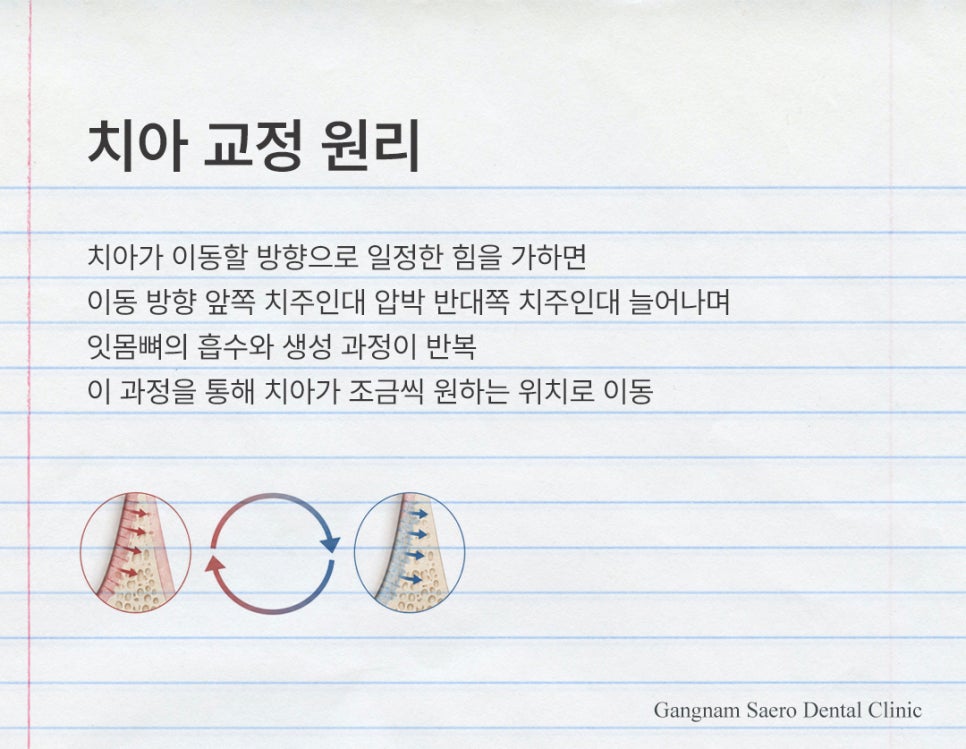
Orthodontic treatment uses this principle.
When a consistent force is applied through orthodontic appliances
in the direction the teeth need to move,
the periodontal ligament in front of the direction of movement is compressed,
while the periodontal ligament on the opposite side is stretched.
The jawbone then repeatedly undergoes resorption and formation,
allowing the teeth to gradually move
to their desired positions.
In other words, orthodontic treatment is not simply a matter of pushing the teeth into place.
It is a biological treatment
that uses the body's natural healing process.
Why Orthodontic Treatment Takes a Long Time
“Wouldn't applying stronger force
shorten the orthodontic treatment period?”
Some people may wonder this,
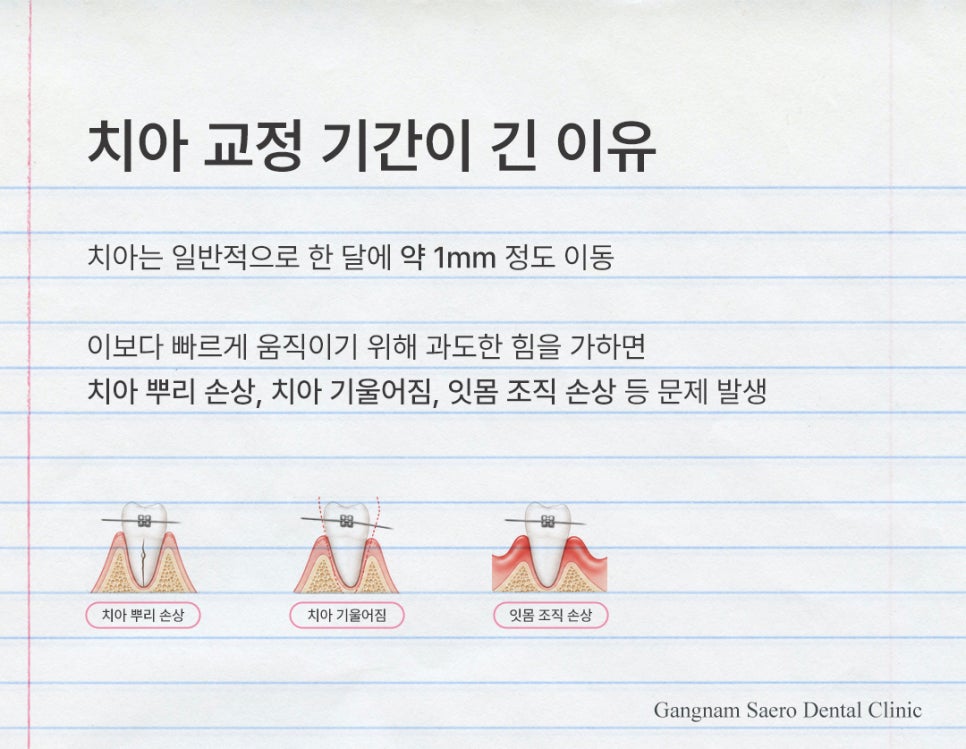
but tooth movement has
biological limits to its speed.
Teeth are generally known
to move approximately 1 mm per month.
Applying excessive force to move them faster
can cause problems such as:
Damage to the tooth roots
Tilting of the teeth
Damage to the gum tissue
Therefore, with orthodontic treatment,
it is important to move the teeth stably
while maintaining the health of the teeth and gums,
rather than simply trying to finish quickly.
Type 1. Pain Caused by Tooth Movement
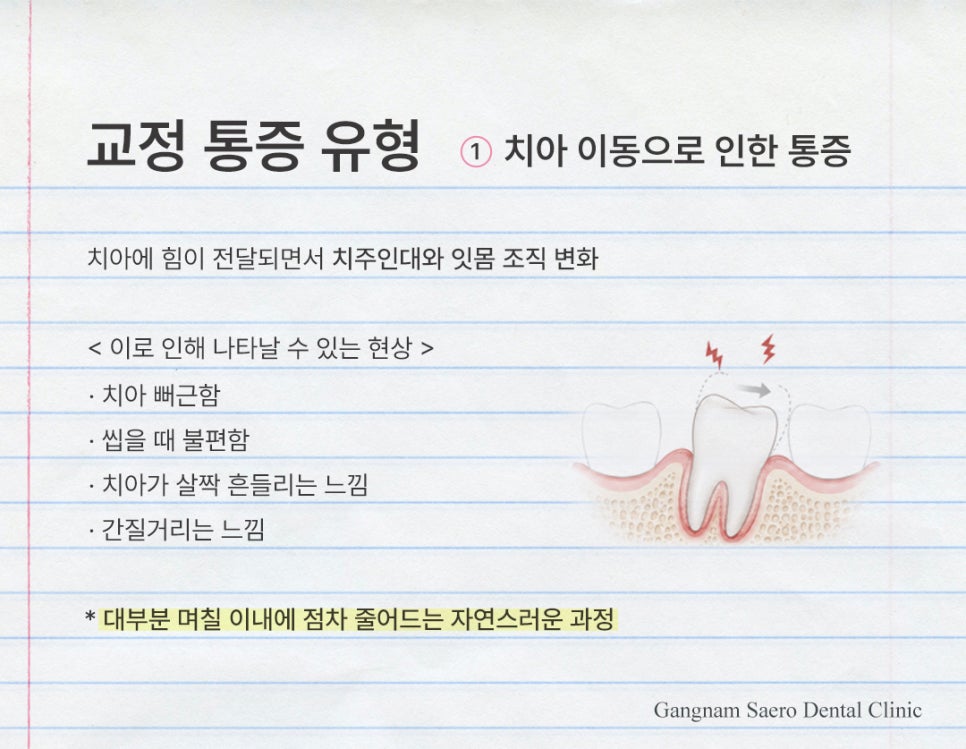
This is the most common type of orthodontic pain.
As force is applied to the teeth
and the periodontal ligaments and gum tissue change,
you may experience:
A dull or aching sensation in the teeth
Discomfort when chewing
A slight feeling that the teeth are loose
A tingling sensation
These sensations may be more noticeable
when orthodontic appliances are first attached
or when new force is applied after a monthly adjustment.
In most cases, they gradually decrease within a few days as part of a natural process.
Type 2. Pain Caused by Orthodontic Appliances
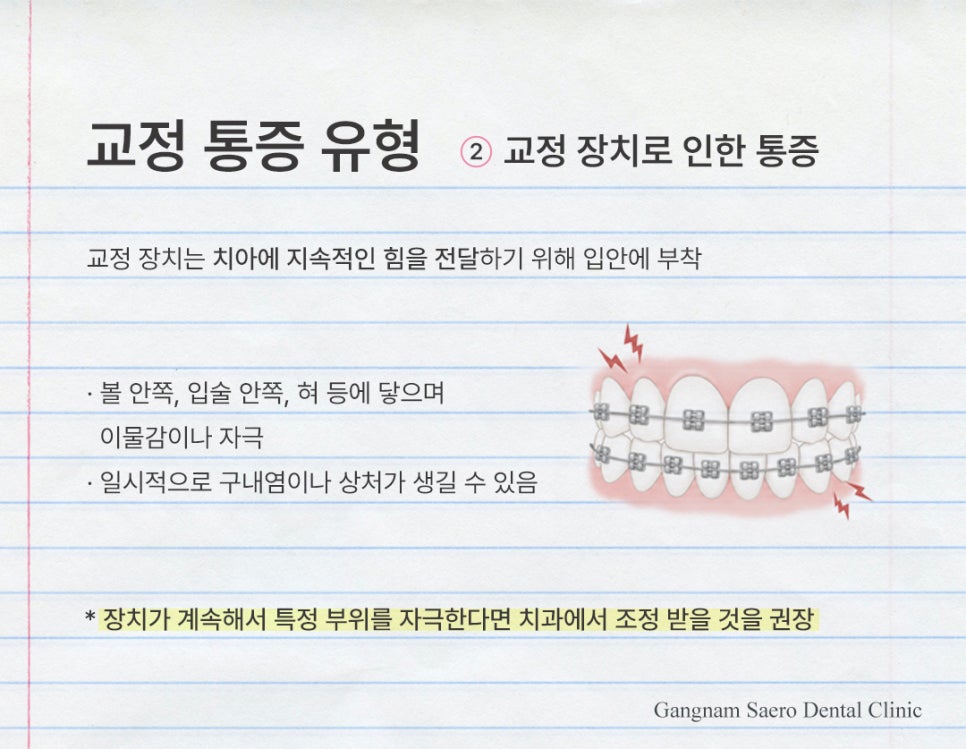
Orthodontic appliances are attached inside the mouth
to continuously apply force to the teeth.
At first, the appliances may touch
the inside of the cheeks,
the inside of the lips,
or the tongue,
causing a foreign-body sensation or irritation.
Temporary mouth ulcers or sores may also occur.
These symptoms usually improve during the adjustment period,
but if the appliance continues to irritate a particular area,
it is advisable to have it adjusted at a dental clinic.
Type 3. Pain Caused by Correcting Malocclusion
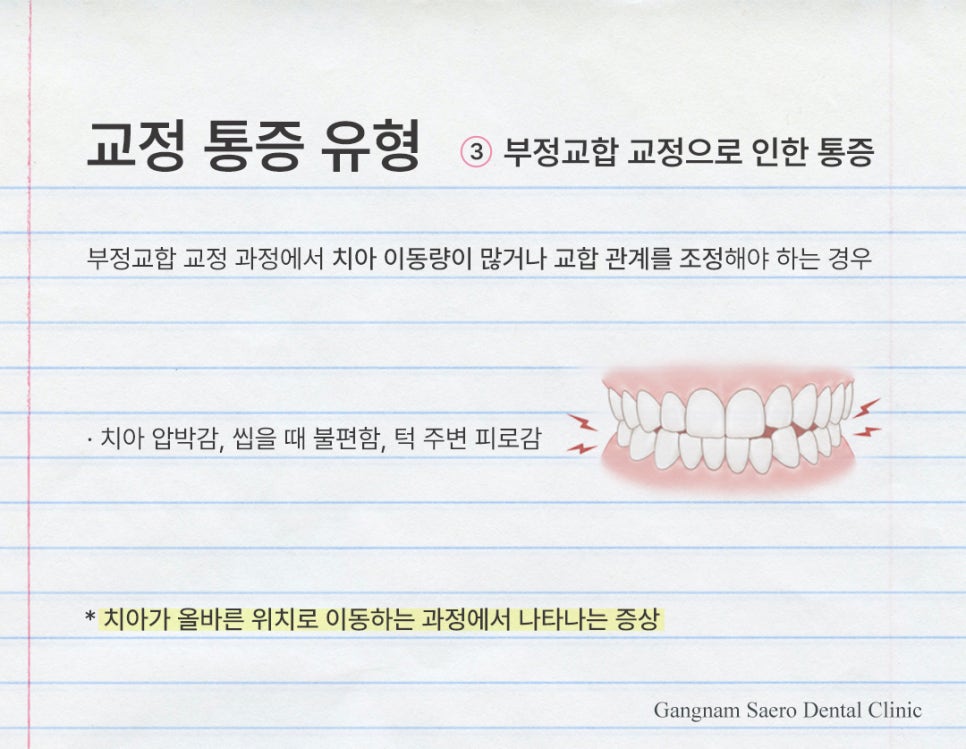
Compared with routine alignment of the teeth,
correcting malocclusion such as protruding teeth or a protruding jaw,
an open bite, or a deep bite
can involve a more complex treatment process.
When the teeth need to move significantly
or the bite relationship needs to be adjusted,
you may experience:
Pressure on the teeth
Discomfort when chewing
Fatigue around the jaw
These symptoms may occur as the teeth move
to their proper positions.
Type 4. Pain Occurring During Space-Creation Procedures
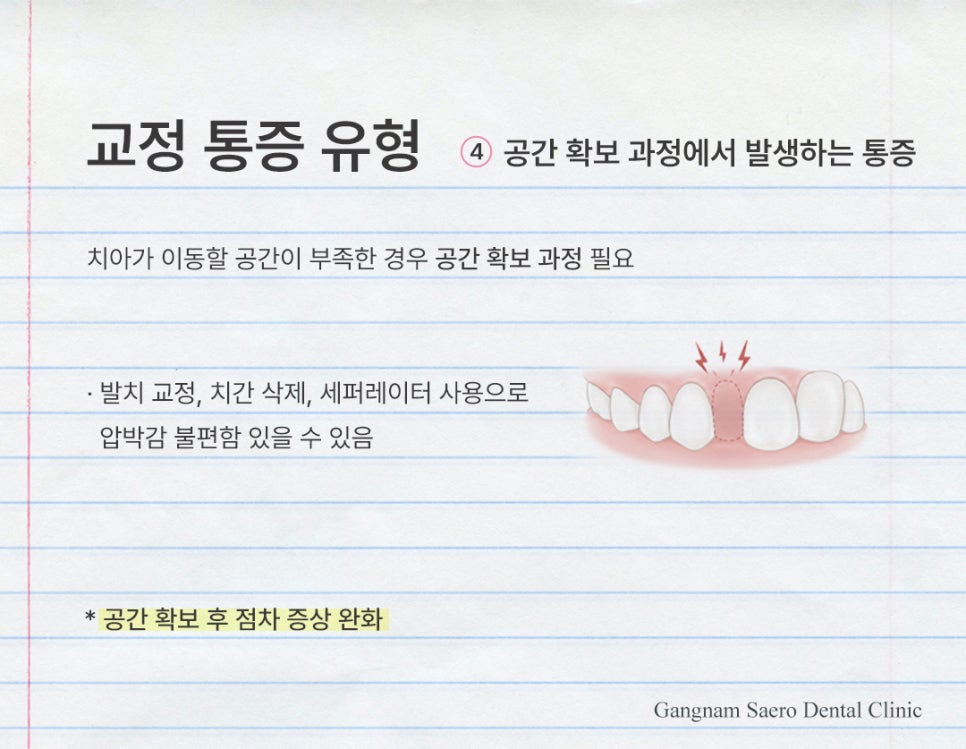
If there is not enough space for the teeth to move,
space may need to be created.
Common methods include:
Extraction orthodontics
Interproximal reduction
Use of separators
In particular, separators involve inserting rubber rings
to create small spaces between the teeth.
During the first few days,
you may feel significant pressure or discomfort when chewing.
However, the symptoms gradually ease
once sufficient space has been created.
Ways to Reduce Orthodontic Pain
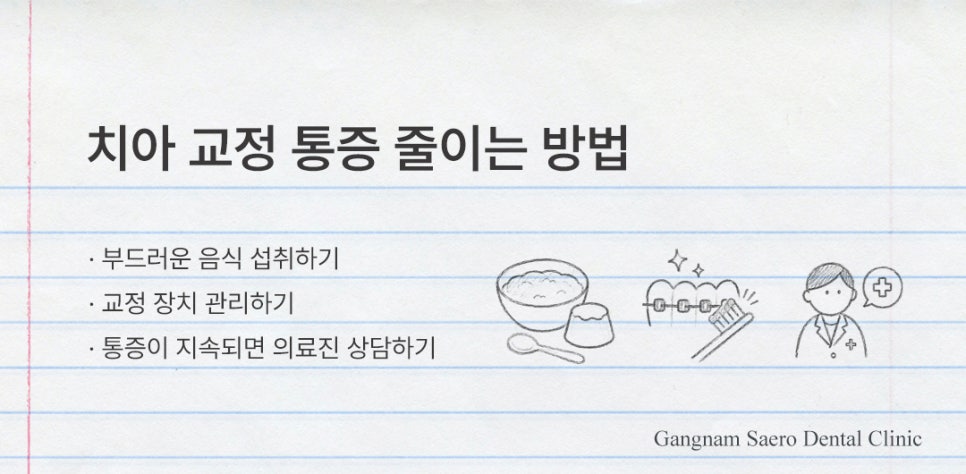
It is difficult to eliminate orthodontic pain completely,
but proper management can help reduce discomfort.
- Eat Soft Foods
Immediately after orthodontic treatment,
force has been applied to the teeth,
so it is better to eat soft foods
rather than hard or chewy foods.
- Care for Your Orthodontic Appliances
Food remaining around the appliances
can cause gum inflammation or additional discomfort,
so thorough oral care is necessary.
- Consult Your Medical Provider if the Pain Persists
The usual pain that occurs during orthodontic treatment
is different from pain caused by a problem.
If the pain continues for a long time
or only a specific area continues to hurt,
it is advisable to have it checked by a medical professional.
What Is More Important Than Orthodontic Pain
Because orthodontic treatment involves tolerating some discomfort,
what is even more important
is establishing the right treatment plan from the beginning.
Even with the same type of orthodontic treatment,
results can vary depending on:
The direction of tooth movement
The condition of the gums
Facial shape
The bite relationship
The desired direction of improvement
Rather than pursuing fast results at all costs,
an accurate diagnosis that considers
the patient's dental and facial balance
is important.
Gangnam Saero Dental Clinic: Specialized Orthodontic Care
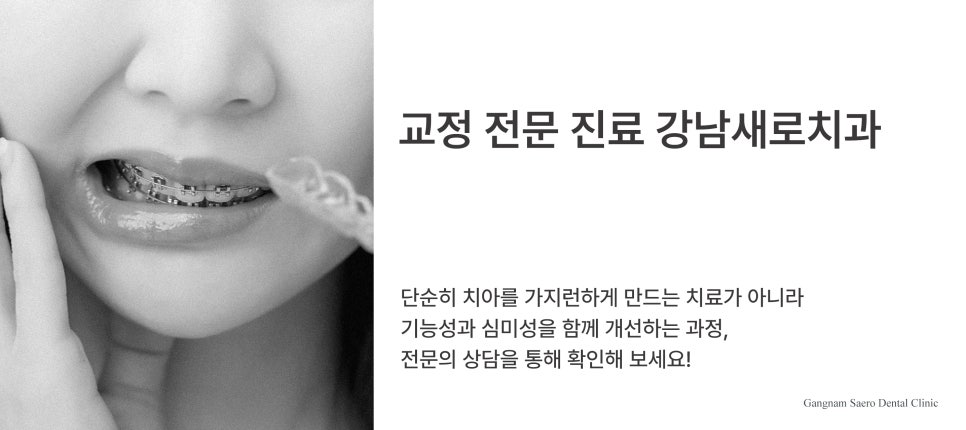
Gangnam Saero Dental Clinic
develops orthodontic treatment plans tailored to each patient,
taking into account not only tooth alignment
but also the bite and facial balance.
Orthodontic treatment is not simply a procedure to straighten the teeth.
It is a process that improves both function and appearance.
If you have been postponing treatment
because you are concerned about orthodontic pain,
please consult a specialist to first learn about
the orthodontic method suited to you and the expected process.
A new smile, a new beginning, a new start.
Gangnam Saero Dental Clinic is with you.
- This post presents medical information provided by a medical institution pursuant to a third-party contractual relationship.