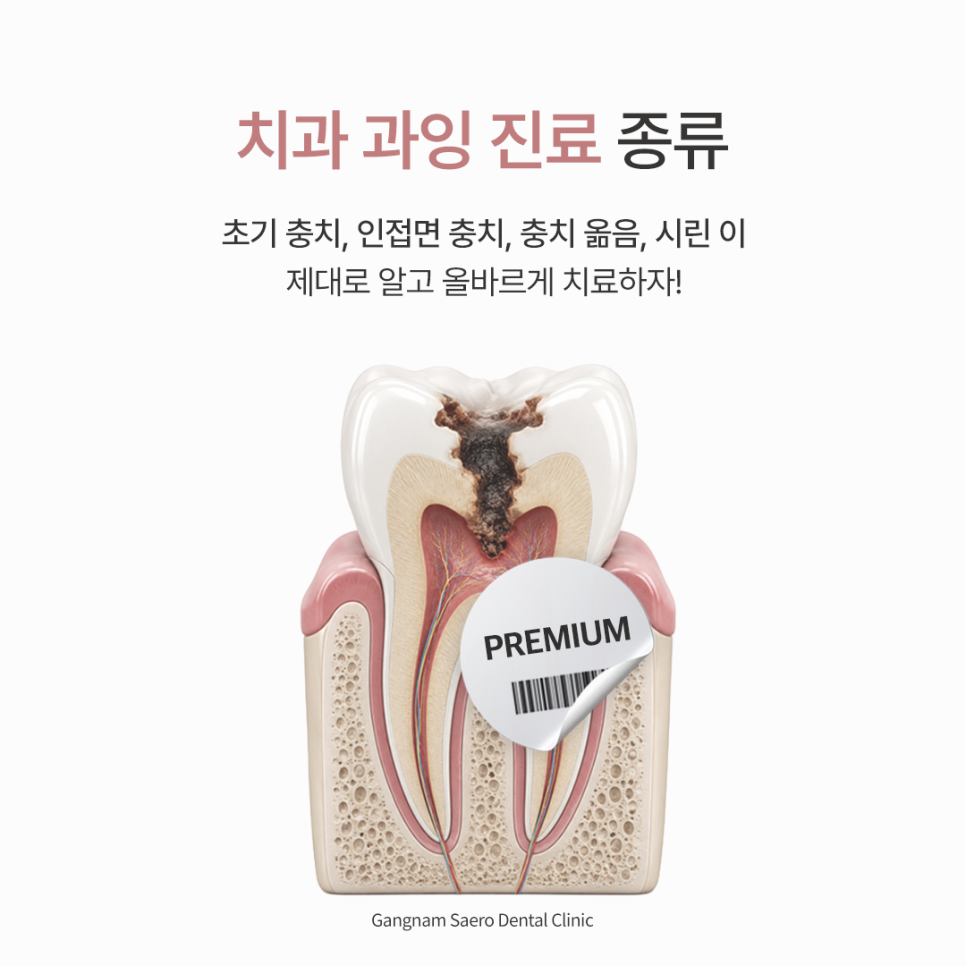
Types of Dental Overtreatment
Early cavities, interproximal cavities, “cavities spreading,” and sensitive teeth
Know the facts and get the right treatment!
When looking into dental care,
you may find yourself wondering:
If I have a cavity, do I really need treatment?
Why do different dental clinics give different diagnoses?
Could I be receiving treatment that I do not actually need?
Because dentistry involves diagnosing and treating areas
that are difficult to check with the naked eye,
patients often have no choice but to trust their dental professional’s explanation
when deciding on a course of treatment.
That is why, when learning about dental overtreatment,
what is even more important
is taking the time to fully understand
why a recommended treatment is necessary.
Gangnam Saero Dental Clinic
explains what you should be sure to check before receiving dental care.
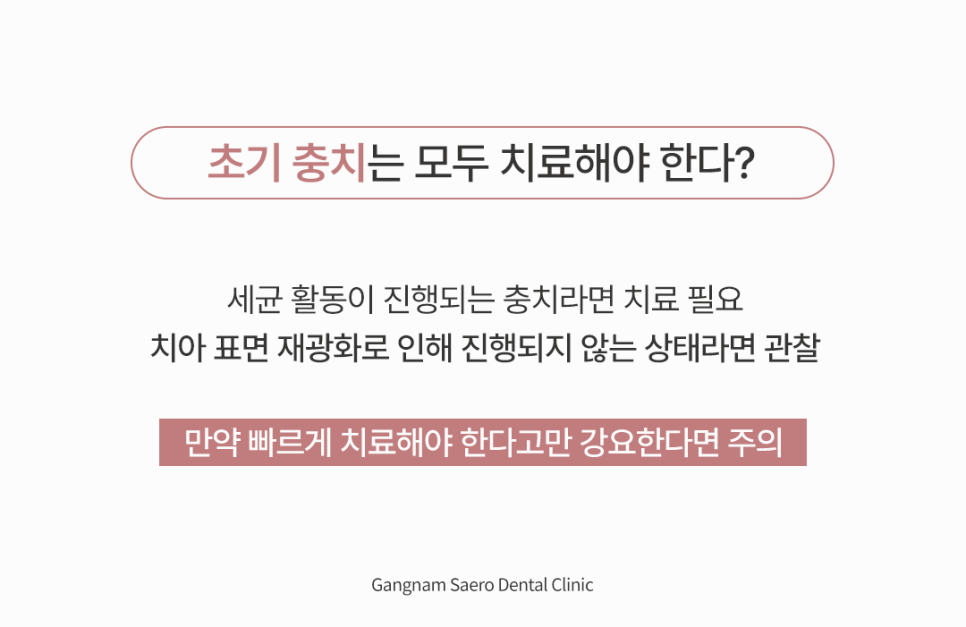
Do All Early Cavities Need to Be Treated?
If a cavity is left untreated,
it can progress in the order of
enamel > dentin > pulp,
which may expand the scope of treatment.
That is why many people think
an early cavity should be treated as soon as it is discovered.
However, the important point is
that not all cavities are in the same condition.
Depending on whether a cavity is progressing,
it may be classified as either
requiring treatment
or suitable for observation over time.
If a cavity is progressing because bacterial activity is continuing,
treatment may be necessary.
However, if it is no longer progressing
because of remineralization on the tooth surface,
it may be monitored through regular checkups and oral care.
Therefore, if you have been diagnosed with an early cavity,
it is important to listen to a thorough explanation
and then decide after confirming
whether the cavity is currently progressing
and whether it has reached a stage requiring treatment.
One point to keep in mind is that
this does not mean everyone should postpone treatment
simply because the cavity is in its early stage.
If you are wondering, “Then how can I identify dental overtreatment?”
pay attention to whether the clinic places excessive emphasis on acting quickly!
If you clearly state,
“I’ll just have the diagnosis today and come back,”
but are still pressured only with claims that treatment must be done immediately,
then you should reconsider your decision.
What If You Are Diagnosed with an Interproximal Cavity?
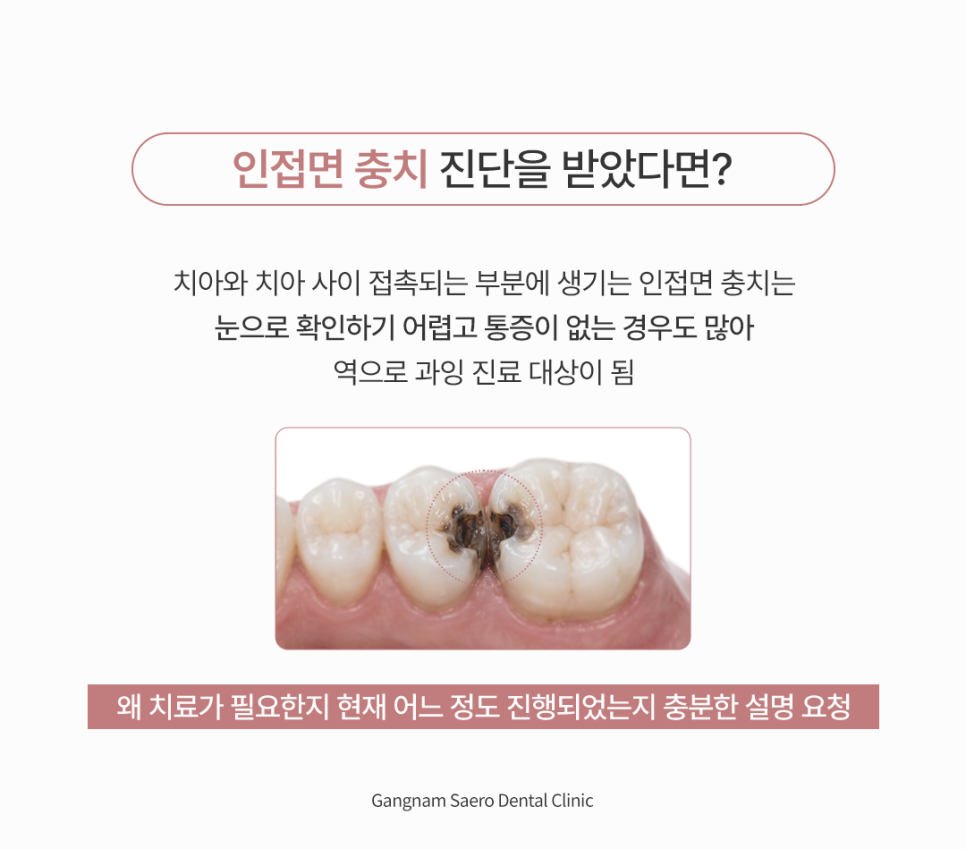
An interproximal cavity
is a cavity that develops
on the contacting surfaces between teeth.
It is difficult to see with the naked eye
and often does not cause pain,
so it is frequently discovered during an examination.
The problem is that with an interproximal cavity,
even a small cavity
may require the removal of a relatively large amount of tooth structure during treatment.
Therefore,
you should decide whether treatment is needed
after checking the size and extent of the cavity.
This is where an important caution arises.
Because interproximal cavities are often difficult to see
and may not cause pain,
this fact can be misused,
leading even teeth without cavities
to be labeled as having interproximal cavities
and becoming subject to dental overtreatment!
If you have been diagnosed with an interproximal cavity,
it is a good idea to ask your dental professional for a sufficient explanation of
why treatment is necessary
and how far the cavity has currently progressed.
Can Cavities Spread to Other Teeth?
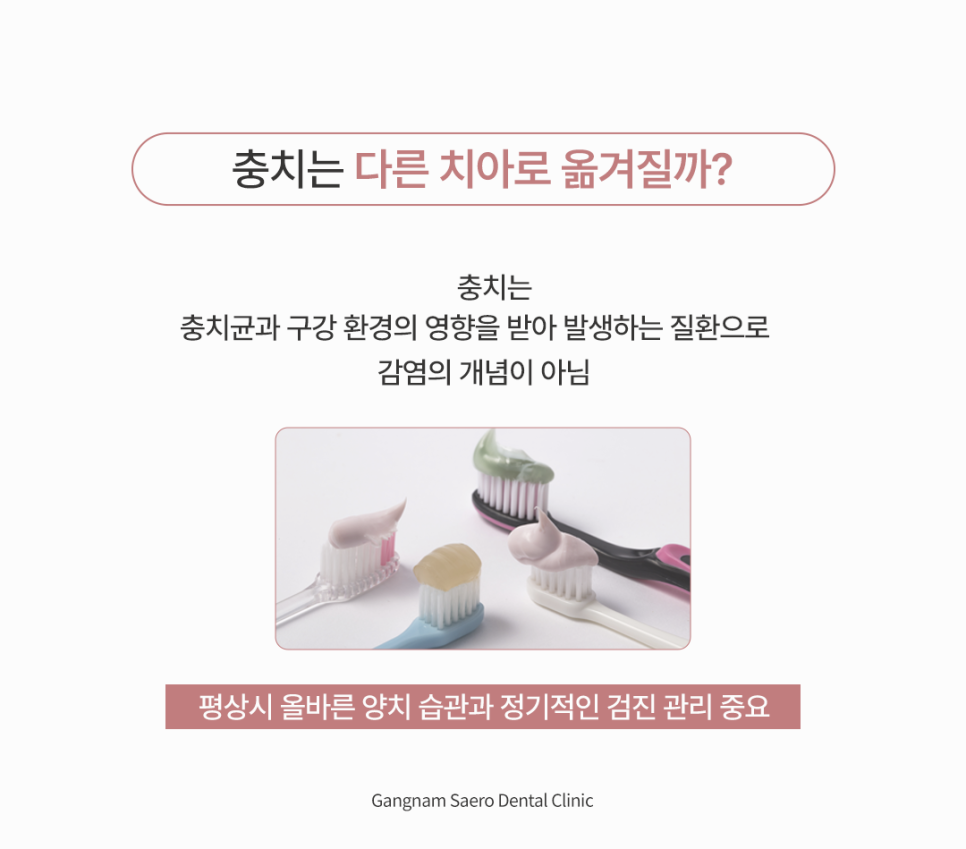
When you have clearly said,
“I’ll just have the examination today and come back,”
but are still pressured with claims that treatment must be done quickly,
one reason you may find it difficult to resist that pressure
could be the claim that cavities spread to other teeth!
Cavities
are conditions that develop under the influence of cavity-causing bacteria and the oral environment.
This is different from the idea that one cavity directly moves
and infects another tooth.
Simply put,
if one cavity develops,
the oral environment is already
more favorable to the bacterial activity
that makes cavities likely to develop.
That is why additional cavities may form;
it does not mean that bacteria residing in one cavity
move to other teeth!
If the oral environment makes cavities more likely to develop,
there is a higher possibility that cavities will also occur in other teeth.
That is why proper brushing habits
and regular dental checkups are important.
Therefore, rather than emphasizing rapid treatment unconditionally
simply because a cavity is present,
it is necessary to confirm
the current condition of the cavity
and whether treatment is actually needed.
Are All Sensitive Teeth Caused by Cavities?
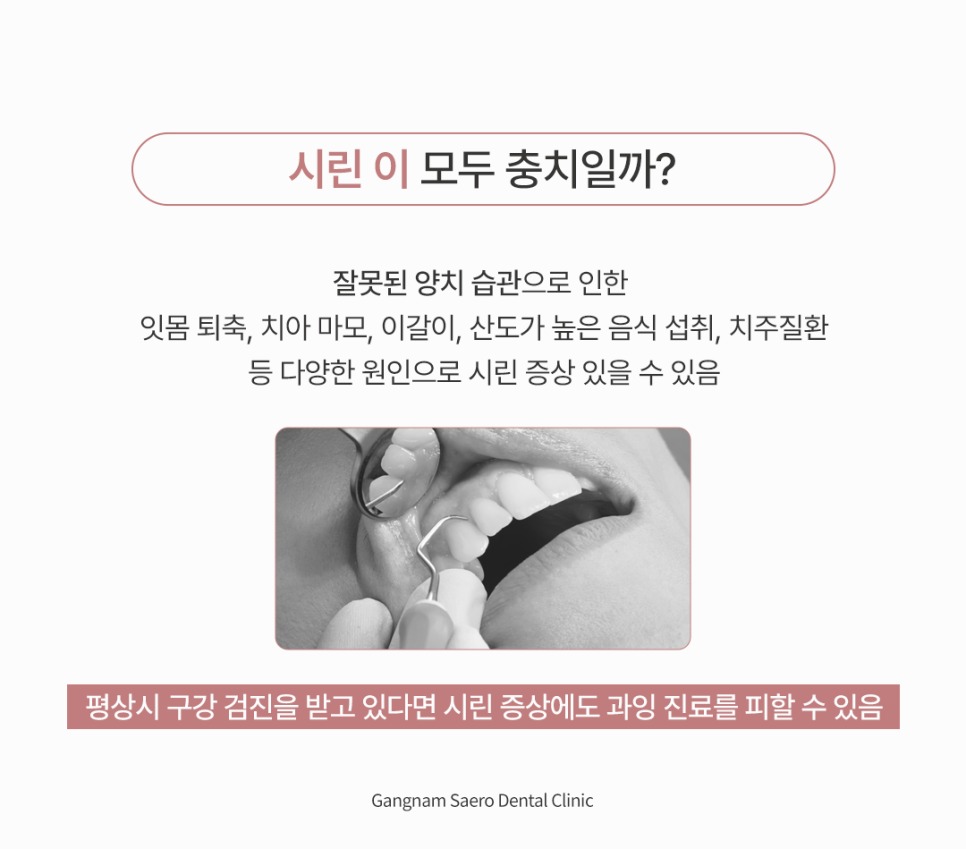
One of the common reasons people visit a dental clinic
is sensitivity in the teeth.
However, cavities are not the only cause
of tooth sensitivity.
There are various possible causes, including
gum recession caused by improper brushing habits,
tooth wear,
teeth grinding,
consuming highly acidic foods,
and periodontal disease.
Of course, tooth sensitivity can also occur because of a cavity,
so it is risky to make your own diagnosis.
The important point, however,
is that when tooth sensitivity occurs,
various possible causes should be checked together,
not just whether a cavity is present!
One thing to consider here is this:
If you receive regular oral examinations
but are diagnosed with a cavity because of tooth sensitivity,
you may be able to avoid undergoing cavity treatment hastily
and prevent dental overtreatment.
Therefore, you should make regular dental checkups
part of your routine!
What to Look for When Choosing a Good Dental Clinic:
The Treatment Principles of Gangnam Saero Dental Clinic
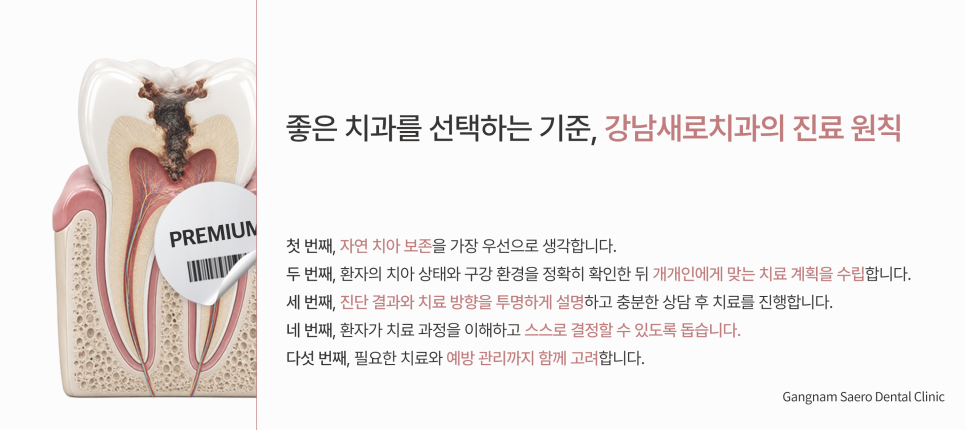
The standard for choosing a good dental clinic
is not whether it recommends a large number of treatments,
but whether it sufficiently explains
the treatment approach suited to the current condition of your teeth.
It is important to explain these points
so that the patient can understand them:
why treatment is necessary,
what changes may be expected if treatment is not performed,
and whether there are any alternative treatment options.
Gangnam Saero Dental Clinic
first,
places the preservation of natural teeth above all else.
Second,
after accurately assessing each patient’s tooth condition and oral environment,
we establish an individualized treatment plan.
Third,
we transparently explain the diagnosis and treatment approach
and proceed with treatment after a thorough consultation.
Fourth,
we help patients understand the treatment process
and make their own decisions.
Fifth,
we consider both necessary treatment and preventive care.
The most important thing in dental treatment
is not receiving treatment quickly,
but accurately receiving the treatment you need.
A new smile,
a new beginning,
a fresh start,
Gangnam Saero Dental Clinic.
- This post is medical information provided by a medical institution under a third-party contractual relationship.