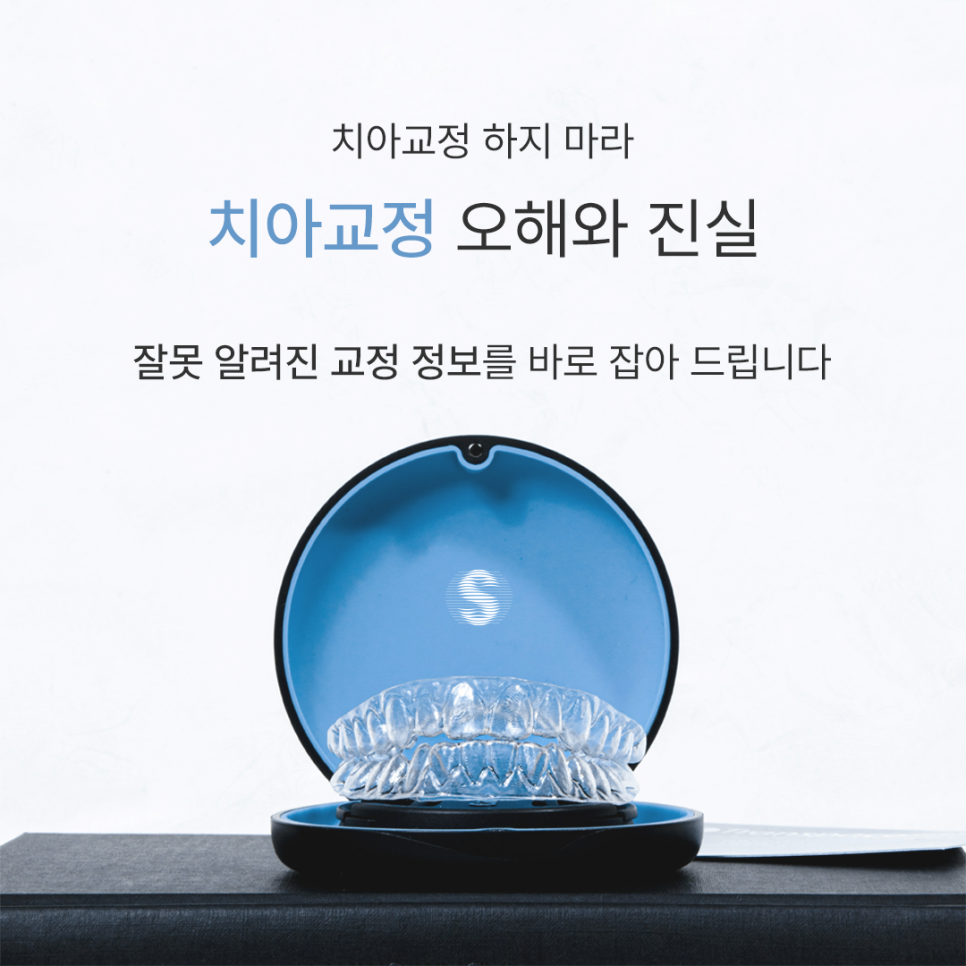
Don't Get Braces
The Truth About Orthodontic Treatment: Myths and Facts
We are here to correct misinformation about orthodontic treatment.
Orthodontic treatment is not simply a procedure
that straightens crooked teeth.
It corrects improper bites
and restores both chewing function and aesthetics.
As orthodontic appliances have become more diverse in recent years,
many adults, as well as children who are still growing, are choosing orthodontic treatment.
As a result, all kinds of stories
have also spread online and across social media.
Have you heard some of these stories before?
Did you know that many of them are different from the facts?
강남새로치과 will examine these misconceptions one by one.
The Claim That Orthodontic Treatment Causes Tooth Loss Later in Life
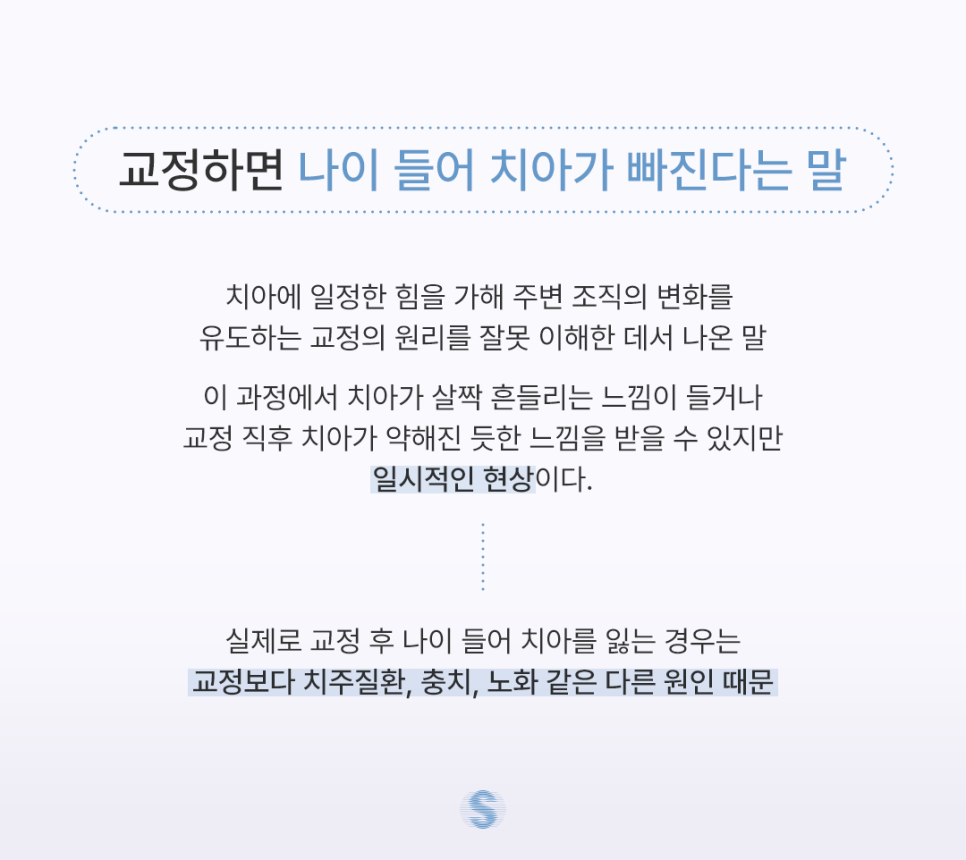
There is a belief that
orthodontic treatment weakens the gums because it forcibly moves the teeth,
ultimately causing tooth loss later in life.
However, this claim comes from
a misunderstanding of how orthodontic treatment works.
Orthodontic treatment applies a controlled amount of force to the teeth
to induce changes in the surrounding tissues.
The alveolar bone in the direction the tooth moves is resorbed,
while new bone forms on the opposite side,
allowing the tooth to gradually move to its new position.
During this process, you may feel that your teeth are slightly loose,
or that they feel weaker immediately after orthodontic treatment.
However, after the appliances are removed and time passes,
the periodontal tissues stabilize again.
In other words, the claim that orthodontic treatment causes you
to lose all your teeth later in life
is not true!
Then why do some people actually
lose teeth later in life after orthodontic treatment?
In most cases, the cause is something other than orthodontic treatment,
such as periodontal disease, tooth decay, or aging.
Regardless of whether you have had orthodontic treatment, changes in the jawbone and gum tissue naturally occur with age!
If this is the reason you say, “Don't get braces,”
beep—this is a misconception.
The Claim That Orthodontic Treatment Makes It Impossible to Chew Food
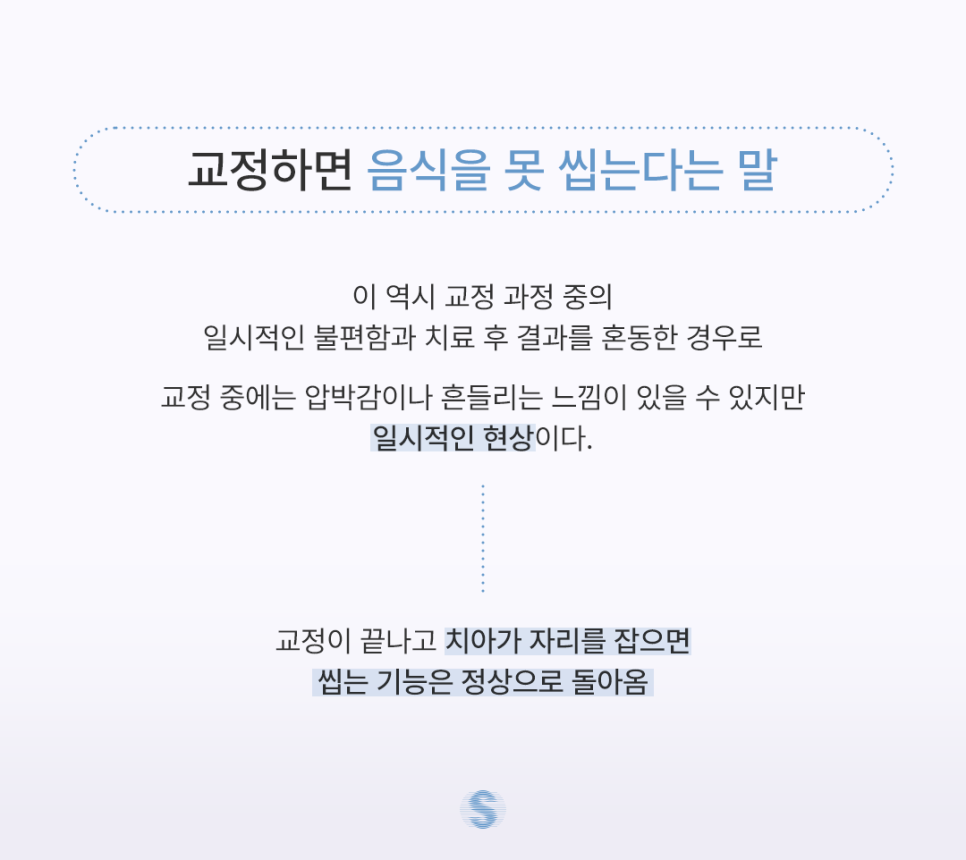
You may also hear that weakened gums after orthodontic treatment
make it difficult to chew food properly.
This is likewise a case of confusing
temporary discomfort during treatment with the outcome after treatment.
During orthodontic treatment, the teeth are constantly moving,
so you may experience pressure or a feeling of looseness.
Especially when appliances are first attached,
it is advisable to reduce your intake of hard or chewy foods.
However, once treatment is complete
and the teeth settle into their new positions,
chewing function returns to normal.
If this is the reason you say, “Don't get braces,”
beep—this is a misconception.
The Claim That Orthodontic Treatment Causes Nasolabial Folds
When considering orthodontic treatment,
one of the biggest concerns
is how the face may change.
Nasolabial folds become deeper,
cheek volume decreases,
or the face looks older—
these are some of the common claims, right?
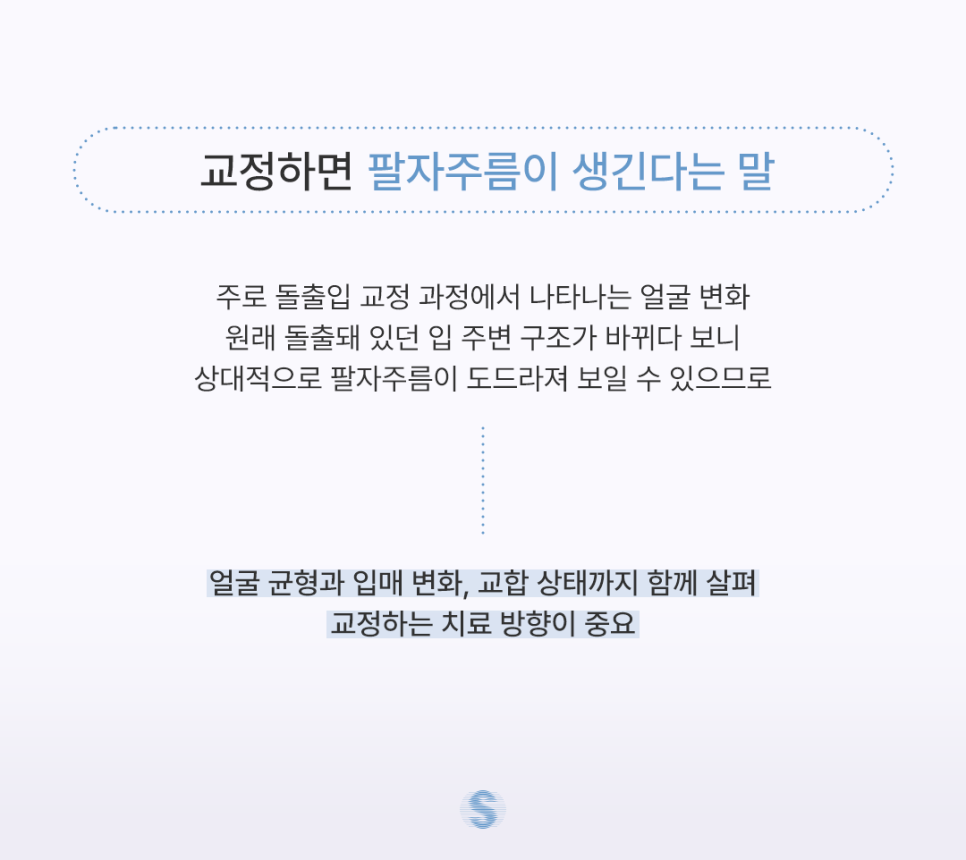
This is mainly related to facial changes
that may occur during treatment for protruding teeth.
When protruding front teeth and gums move inward,
the shape of the mouth changes as well.
Because the structures around the mouth that originally protruded have changed,
the nasolabial folds may appear more pronounced by comparison.
It is not that new wrinkles have formed because the skin sagged;
in some cases, they simply appear that way because the facial structure has changed.
However, there are certainly cases in which people are dissatisfied
with facial changes after orthodontic treatment.
Common causes include extraction plans that do not sufficiently consider facial shape,
treatment that moves the teeth too far backward,
or a treatment approach that does not suit the individual's skeletal structure.
That is why orthodontic treatment should consider more than tooth alignment alone:
facial balance, changes in the shape of the mouth, and bite condition should all be evaluated together.
When “Don't Get Braces” Is Actually True
So far, we have discussed misconceptions and facts
about incorrect information regarding orthodontic treatment.
However, there are also situations in which orthodontic treatment should not be performed.
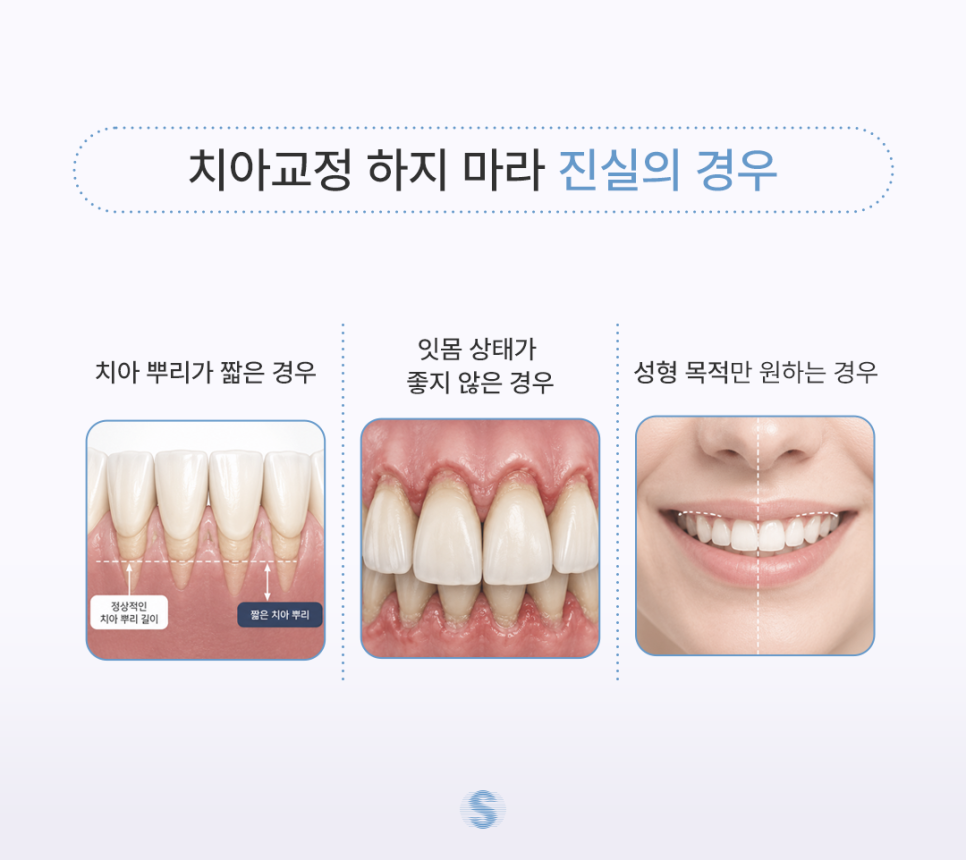
Short tooth roots
During orthodontic treatment,
minor changes may occur in the tooth roots.
Although this does not cause major problems in most cases,
if the roots are naturally short
or have previously been damaged by trauma,
there may be a greater risk of root resorption,
so the treatment plan must be prepared more carefully.
Poor gum condition
Orthodontic treatment uses the process by which the alveolar bone is resorbed and regenerated,
so it requires healthy periodontal tissues as a foundation.
If your gums bleed frequently
or periodontal disease has progressed,
gum treatment should be completed first,
and then it should be determined whether orthodontic treatment is appropriate.
Seeking treatment solely for cosmetic purposes
Orthodontic treatment is not cosmetic surgery that changes the entire face.
When the cause is related to the teeth and oral structures,
such as protruding teeth or a malocclusion,
the shape of the mouth or overall facial impression may change as well.
However, if you choose orthodontic treatment solely expecting cosmetic effects on the nose, cheekbones, or jawline,
the treatment may not be the right approach from the outset.
Conversely, When Orthodontic Treatment May Be Needed
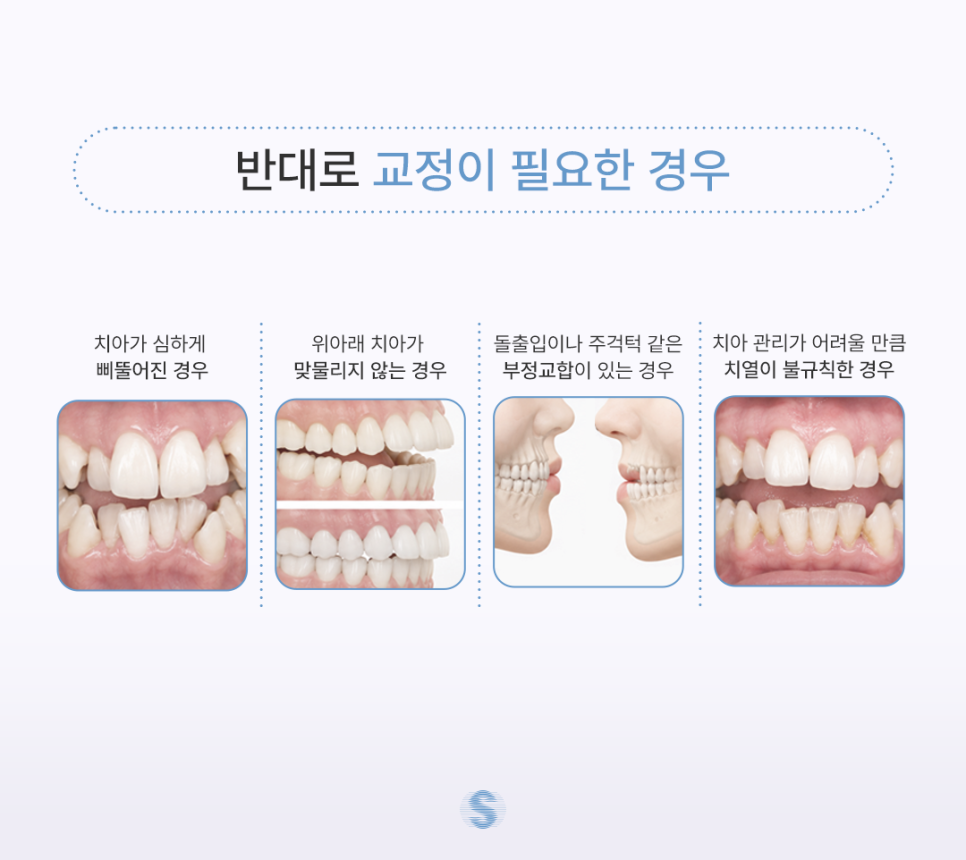
If your teeth are severely crooked,
if the upper and lower teeth do not meet properly,
if you have a malocclusion such as protruding teeth or a protruding lower jaw,
or if your teeth are so irregularly aligned that they are difficult to maintain,
orthodontic treatment can improve both aesthetics and function.
The important thing is not whether you must always undergo treatment or never undergo it,
but to accurately assess the current condition of your teeth and gums
and determine whether the treatment is truly necessary for you!
Finding the Right Orthodontic Treatment for You
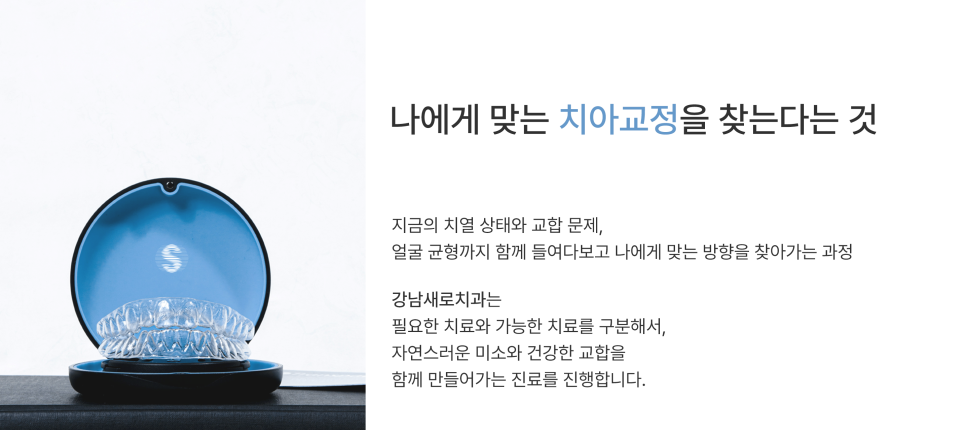
Orthodontic treatment
is not a matter of choosing and attaching
the appliance that is currently popular.
It is a process of examining your current tooth alignment and bite problems,
as well as your facial balance,
and finding the approach that is right for you.
강남새로치과
distinguishes between necessary treatments and feasible treatments,
providing care that works toward creating both a natural smile and a healthy bite.
Rather than worrying about stories circulating online,
we encourage you to check the facts first using accurate information.
A new smile, a new beginning, a fresh start—this is 강남새로치과.
- This post is an informational medical article provided by a medical institution under a third-party contractual arrangement.