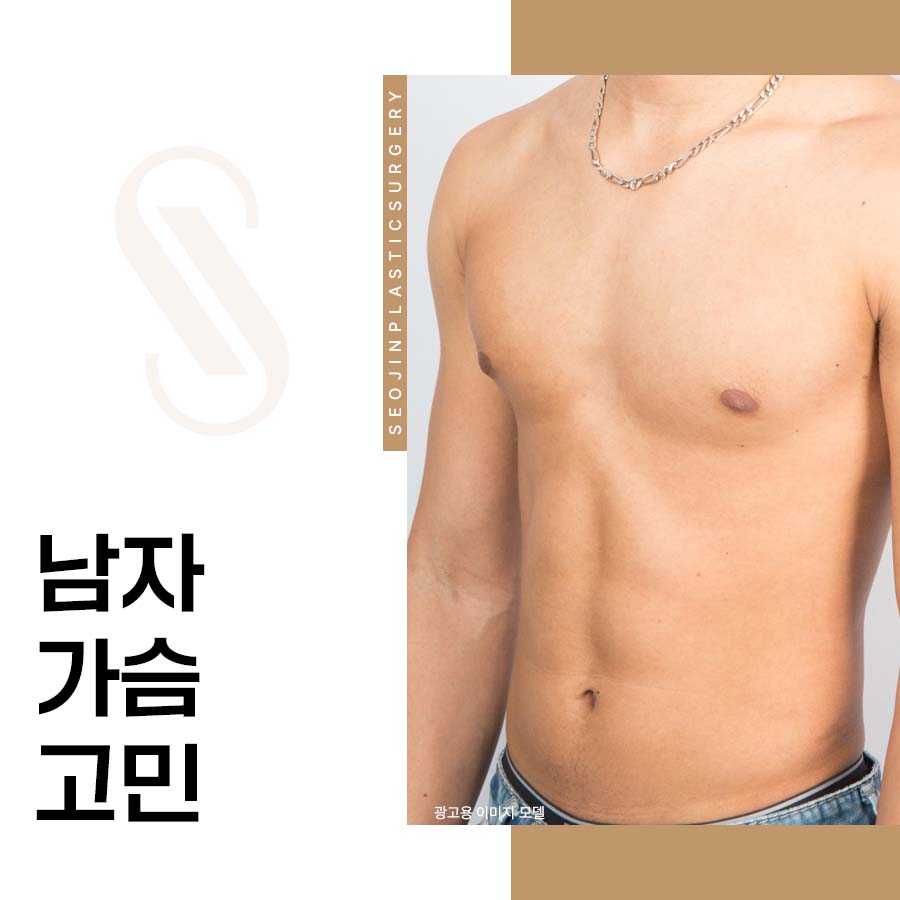
Do you think only women worry about their breasts? That was not the case. It may be hard to talk about, but some men also express concerns about their breasts. You might say, “Huh? What could a man possibly worry about when it comes to his chest?” but some men reportedly struggle inside because their breasts develop in a way similar to women’s.
When a man’s chest develops in a way similar to a woman’s, it is called “gynecomastia.”
According to the National Health Information Portal of the Korea Disease Control and Prevention Agency, gynecomastia is said to occur mainly in 60–70% of adolescent boys.
Gynecomastia that appears during puberty often improves as a person becomes an adult. However, if male breast concerns continue into adulthood, it is important to look into the cause. Today, I’ve summarized gynecomastia and the self-diagnosis criteria for gynecomastia.
Male breast concerns, gynecomastia

Gynecomastia is also called simply “gynecomastia.”
Gynecomastia refers to a condition in which glandular tissue is present in the male chest, causing a man’s chest to develop in a way similar to a woman’s.
As glandular tissue proliferates excessively, the chest may feel palpable or the breasts may appear enlarged, which can create aesthetic concerns for men. Gynecomastia can have various causes depending on the individual. So what are those causes?
❗ Hormonal imbalance
It can temporarily appear mainly during periods of hormonal imbalance, such as adolescence and old age. During adolescence, it can result from hormonal imbalance, and in old age, it can appear as gynecomastia due to excessive secretion of female hormones.
❗ Obesity
Obesity can be a cause of gynecomastia. People with obesity tend to accumulate a lot of fat.
Fat cells also affect estrogen, which can lead to gynecomastia.
❗ Side effects of medication
Are you taking medication for a long time? Long-term use of related drugs such as steroids or hair loss treatments can cause side effects that contribute to this condition. In addition, endocrine disorders such as liver cirrhosis, poor kidney function, and hypothyroidism can also be causes.
Self-diagnosis criteria for gynecomastia
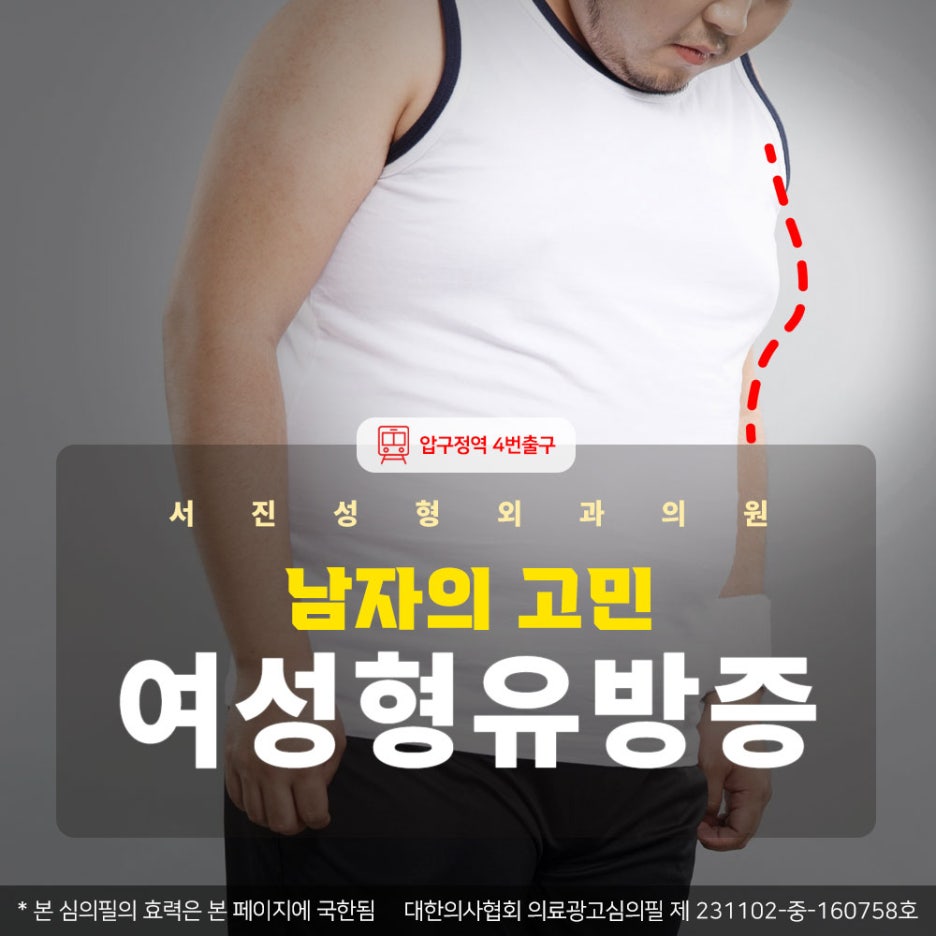
So how can you tell whether you have gynecomastia?
If your chest seems to protrude forward like a woman’s, does that automatically mean gynecomastia? If many of the following self-diagnosis items apply to you, it may be worth suspecting gynecomastia. The general self-diagnosis criteria for gynecomastia are good to consider based on the following:
✔ The chest is rounded and protrudes like a woman’s
✔ The area around the nipples is rounded or large
✔ Even with dieting or exercise, the chest fat does not go away easily
✔ A lump can be felt in the chest, causing male breast concerns
✔ The shape of the left and right breasts is different
Improvement methods by cause
So far, we’ve looked at the various causes of gynecomastia and the self-diagnosis criteria.
Because there are so many different causes, the improvement methods also differed depending on the cause. If the problem is simply fat accumulation around the chest due to obesity or similar factors, improvement can be expected through exercise and dieting. If not, other methods can be considered.
If gynecomastia has occurred because glandular tissue has developed, the problematic glandular tissue must be removed appropriately in order to expect improvement. Since it is impossible to tell by appearance alone whether the cause is simply fat accumulation or the development of glandular tissue, it is advisable to apply the appropriate improvement method after an accurate diagnosis through ultrasound.
So far, we have looked at gynecomastia as a male breast concern. An abnormally developed chest in men can itself be a major source of stress. Gynecomastia itself is not a condition that affects health, but since it can reduce confidence as a man in terms of appearance, if you want improvement, it is advisable to carefully diagnose the cause of your gynecomastia first.








Previous image
Next image