
A regular menstrual cycle is an indicator of women’s health. If you are in good health, it usually comes every 28 days and lasts 2 to 7 days. If the period or cycle deviates significantly from this range, you may want to consider whether there is an issue with women’s health. Of course, there are cases where the cycle is temporarily off for a few periods after being normal, but in such cases environmental factors are more likely, so there is usually no need to worry too much.
Some causes of a late period may be due to disease, so if menstrual irregularity continues, it is advisable to visit a medical facility and identify the exact cause. Today, we will look at what menstrual irregularity means and briefly review the conditions that should prompt you to seek medical care when your period is late.
What Menstrual Irregularity Means

First, let’s look at what menstrual irregularity means.
Menstrual irregularity means that the menstrual cycle is not consistent. This includes both the amount and the duration.
When the cycle is shorter than normal, it is called “frequent menstruation,” and when the cycle becomes longer, it is called “infrequent menstruation.”
Before menopause, anovulation becomes more frequent over several years. At this time, the menstrual cycle may become longer or be skipped, but if this is observed frequently even when that is not the case, it may be a sign of an abnormality in women’s health, so it is advisable to determine the exact cause.
Below is a self-check list for identifying menstrual irregularity.
If many of the following apply to you, please check your current women’s health status.
 Menstrual Irregularity Self-Check
✅ The last menstrual date and cycle are not consistent (the menstrual cycle is irregular, either less than 21 days or 35 days or more)
✅ Changes in the color and amount of menstrual flow are not consistent
✅ Blood clots are mixed in during menstruation
✅ Menstrual cramps have suddenly become severe
✅ The menstrual period of 2 days or less, or 8 days or more, continues
✅ There is a change in the smell of menstrual blood
Causes of a Late Period

So far, we have looked at what menstrual irregularity means.
Uterine health can be affected by a variety of causes. Menstrual irregularity can occur not only due to disease, but also due to various environmental factors such as fatigue, sudden weight changes, and stress.
However, because there are cases where a woman’s cycle or condition becomes abnormal due to an underlying disease, if menstrual irregularity continues, it is advisable to determine the exact cause at a medical facility. Below are the disease-related causes of a late period.

- Polycystic Ovary Syndrome (PCOS)
One disease that can cause a late period is polycystic ovary syndrome. It is a condition in which hormonal abnormalities in the hypothalamus-pituitary-ovary axis increase male hormone secretion in the ovaries, making ovulation difficult. This can lead to menstrual irregularity, hirsutism, and obesity, and is also associated with metabolic syndrome in the long term.
In addition to menstrual irregularity, symptoms may include abnormal bleeding, acne, and amenorrhea. It is said to be one of the most common endocrine disorders in women, with a reported prevalence of about 6 to 15%.

- Thyroid Dysfunction
Thyroid dysfunction can also be a cause of a late period.
This may include hypothyroidism and hyperthyroidism. Thyroid hormones affect the balance of female hormones, and when these hormones are secreted in insufficient or excessive amounts, they can disrupt that balance and affect menstruation.
In the case of hypothyroidism, menstrual flow may increase or the cycle may become longer, leading to infrequent menstruation. In the case of hyperthyroidism, reduced menstrual flow or, in severe cases, amenorrhea may occur.
- Uterine Fibroids
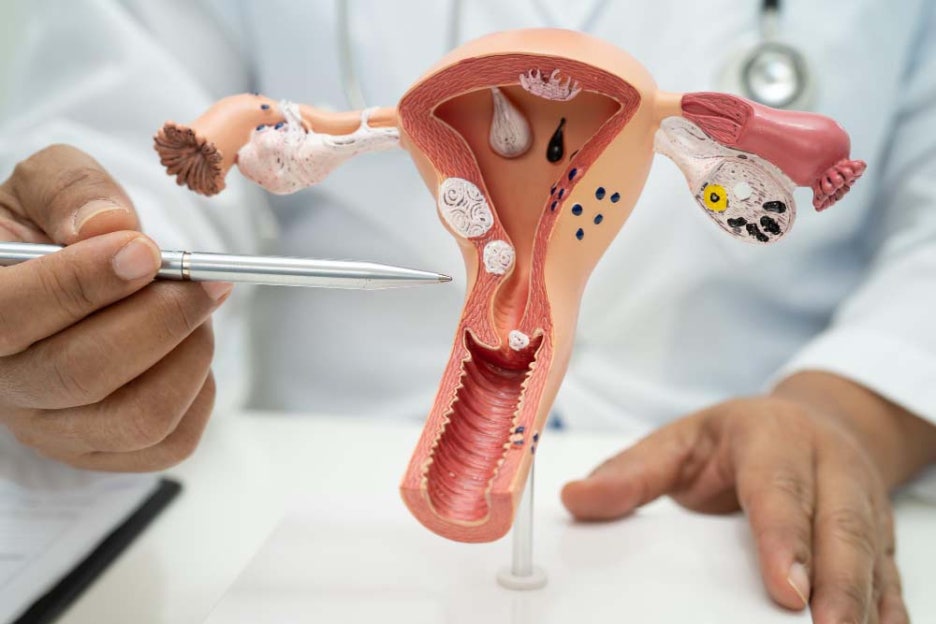
Lastly, one cause of a late period may be uterine fibroids. These are benign tumors that arise from the smooth muscle of the uterus and are the most common tumors found in women. They occur more often in women in their 30s and 40s, and after menopause they tend to shrink and new fibroids are relatively rare.
The cause of uterine fibroids is believed to involve multiple factors, but estrogen is known to be one of the causes. In addition, if there is a family history of uterine fibroids, the risk of developing them may be higher. If uterine fibroids are present, symptoms such as heavy menstrual bleeding, abnormal uterine bleeding, pelvic pain, abdominal bloating, and constipation may occur.
Conclusion
We have looked at the causes of a late period and what menstrual irregularity means. The menstrual cycle is an important indicator of women’s health and can be seen as a marker that reflects physical and hormonal status.
Therefore, if you continue to have periods that deviate from the normal cycle, it may be considered a sign of an abnormality, so it is advisable to determine the exact cause at a medical facility. Changes in the menstrual cycle can also lead to systemic health issues such as liver health, digestive problems, and cardiovascular issues, in addition to uterine health, so rather than leaving it untreated, it is advisable to identify the exact cause.









Previous image
Next image