
What fruit comes to mind when you think of summer? It would be watermelon. Watermelon is known for its crisp and sweet texture, which many people enjoy. Did you know that watermelon is not only delicious but also rich in nutrients? If you know watermelon’s nutritional components, you can understand its benefits. Today, let’s take a look at watermelon’s nutrients and briefly go over its benefits as well as the side effects of eating too much watermelon.
- Nutritional Components of Watermelon
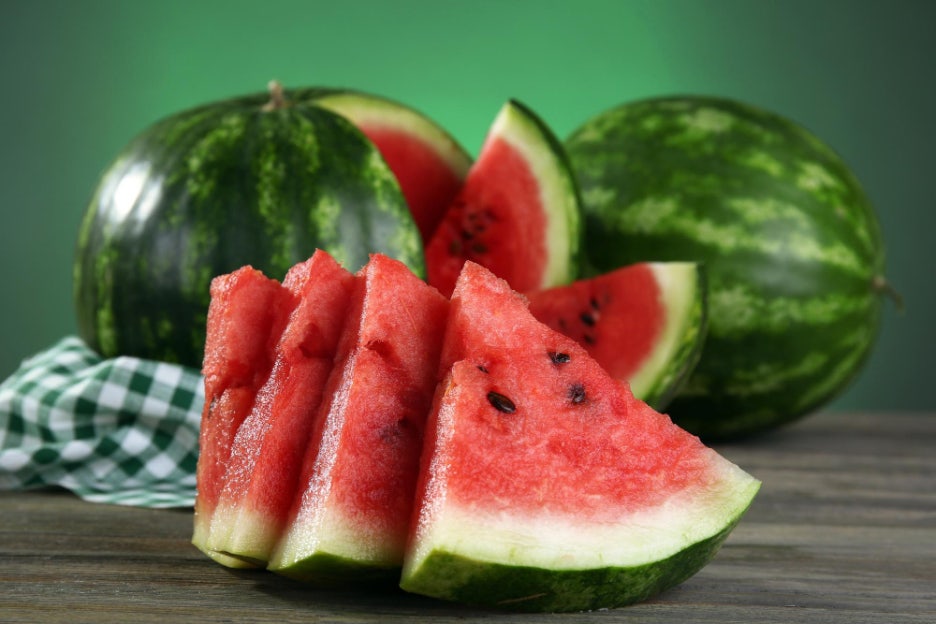
Watermelon is low in calories but contains a variety of nutrients. It is made up mostly of water and is rich in vitamins, minerals, and phytochemicals.
-
Water: Comprises about 90% or more.
-
Lycopene: A key component that gives watermelon its red color. It is a powerful antioxidant and is also abundant in tomatoes.
-
Citrulline: A non-protein amino acid abundant in watermelon, especially in the white part.
-
Potassium: An essential mineral that helps the body excrete sodium.
-
Vitamin C: An antioxidant vitamin important for immunity and skin health.
-
Vitamin A (beta-carotene): Helps protect vision and has antioxidant effects.
-
Dietary fiber: Beneficial for gut health.
-
Magnesium, B vitamins, and more: Various minerals and vitamins are present in small amounts.
- Benefits of Watermelon
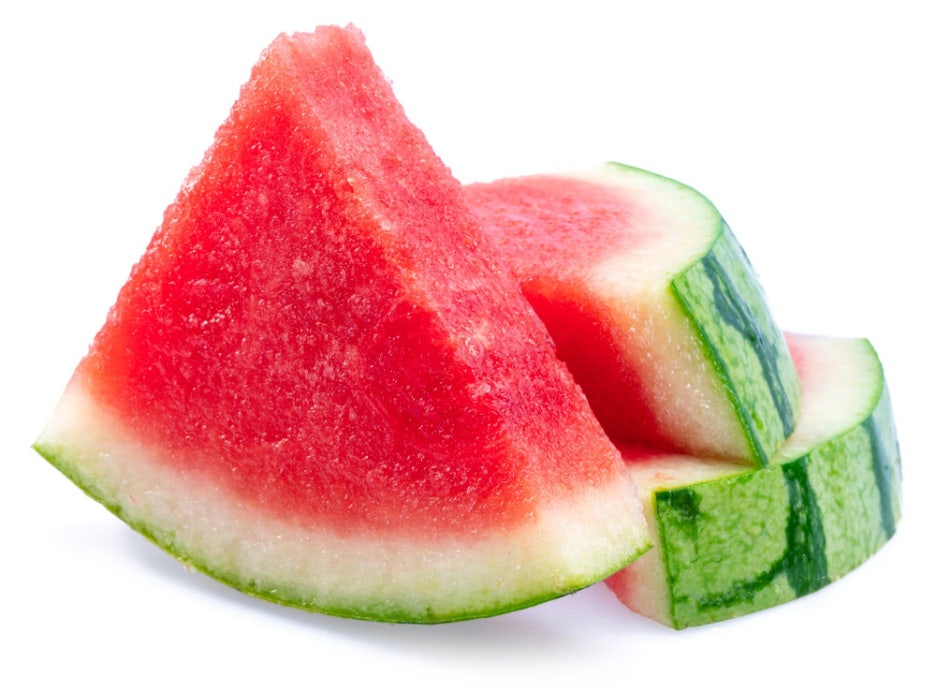
So how do these nutrients affect watermelon’s benefits? Let’s briefly look at what benefits watermelon’s rich nutrients may provide.
- Relieving thirst
Because watermelon is made mostly of water, it may help relieve thirst by replenishing fluids that are often lacking in summer. Its abundant water content may help quickly cool the body and support temperature regulation in hot weather.
- Reducing swelling
The potassium in watermelon may help reduce swelling through its diuretic effect, which helps the body excrete sodium and waste. It may be helpful for people who frequently experience swelling in the face or legs. In addition, citrulline may help prevent high blood pressure and support cardiovascular health.
- Antioxidant effects
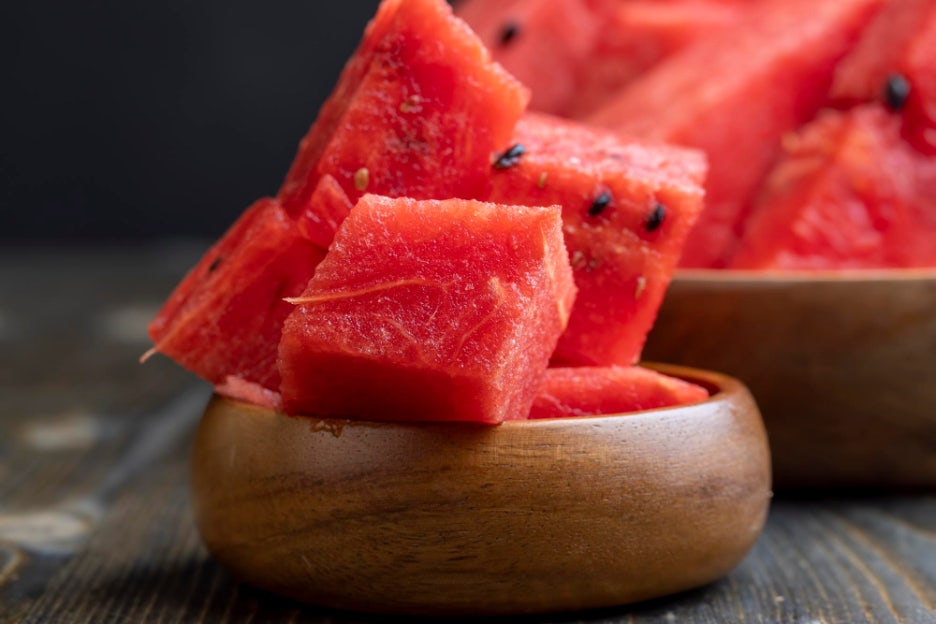
The lycopene, vitamin C, and beta-carotene in watermelon may help protect cells and prevent aging through their antioxidant effects. In particular, lycopene, which gives watermelon its red color, may help protect cells from free radicals and slow aging.
- Recovery from fatigue
Citrulline in watermelon may help reduce muscle fatigue by removing lactic acid that accumulates in muscles after exercise.
- Weight management
Lastly, one of watermelon’s benefits is that it may help with weight management. Watermelon is mostly water, so it is low in calories. It also has a high water content, which can help you feel full more easily, potentially preventing overeating and supporting dieting.
- Side Effects of Watermelon
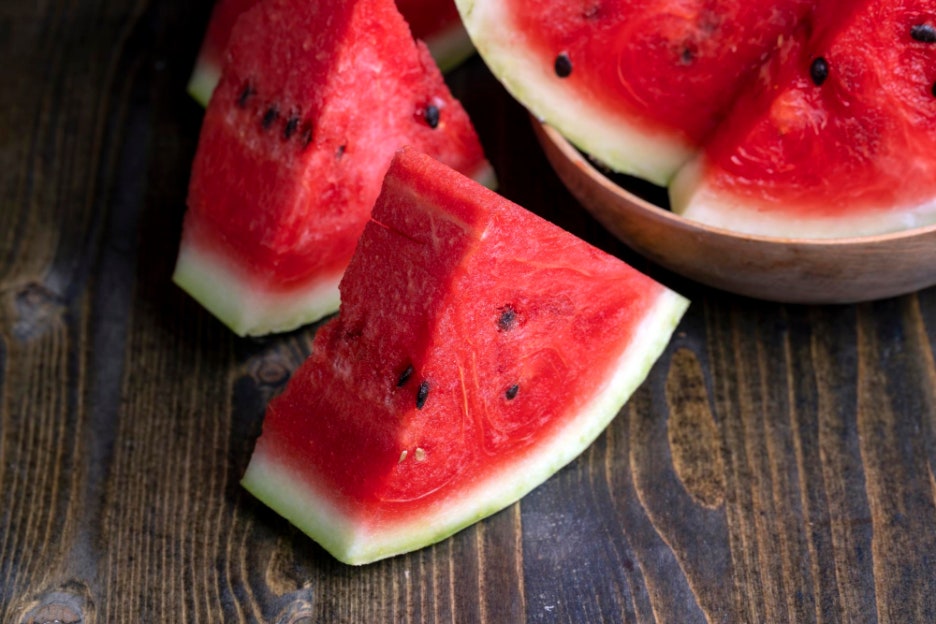
So far, we have looked at the nutrients and benefits of watermelon. Watermelon is nutritious and tasty, but is it good to eat a lot of it? For most people, watermelon is a fruit that can be enjoyed comfortably, but for some patients, it is advisable to be cautious about eating it.
☝ Caution for people with diabetes
Watermelon is quite sweet and high in glucose and fructose, so people who need to manage their blood sugar should be careful. For such individuals, it is important to limit intake and closely monitor post-meal blood sugar changes.
☝ Indigestion and diarrhea
Because watermelon contains a lot of water, eating too much at once may dilute gastric juices, making digestion difficult or placing a burden on the intestines, which can cause stomach upset or diarrhea. Also, watermelon is a cooling fruit, so people with a cold constitution or those who often have diarrhea may develop diarrhea if they eat too much.
☝ Caution for kidney disease patients
Lastly, people with poor kidney health should be careful. Excessive potassium intake can raise potassium levels in the body and lead to hyperkalemia. If you have kidney disease, it is best to adjust your intake appropriately.

So far, we have looked at the nutrients and benefits of watermelon.
Watermelon is delicious, so it is easy to eat a lot, but some patients should be careful not to overeat it.
Please enjoy watermelon deliciously and healthily while considering your health condition and intake amount.








 Previous image
Next image
Previous image
Next image