
Hair loss in men in their 30s often occurs due to a combination of genetic factors, the effects of male hormones (DHT), irregular lifestyle habits, stress, and other influences.
In particular, the 30s can be a period when social life becomes more active and stress levels rise, which may accelerate hair loss.
In the early stages, it may appear in various forms, such as thinning at the crown or a receding hairline in an M-shape, and it may also show a tendency to progress more quickly.
Therefore, early response is important, and accurately diagnosing your own type of hair loss becomes the foundation for the next step.
What Is Hair Transplantation? Understanding the Procedure and Process 🦱
Hair transplantation is a surgical procedure that 'moves and implants' hair to areas affected by hair loss. The basic principle is to collect hair from the occipital area, which is not affected by hair loss,
and transplant it to areas where hair loss has progressed (the hairline, crown, etc.). The transplanted hair retains the characteristics of the donor area and becomes resistant to hair loss.
The hair transplantation procedure can be broadly divided into two steps. The first is the process of harvesting the hair,
and the second is transplanting the harvested hair to the hair-loss area. The success of hair transplantation depends on more than simply transplanting a large amount; the survival rate changes according to the quality of the entire process, from harvesting to transplantation
and post-transplant care. Improving the survival rate is a key factor that determines satisfaction with the procedure. For male patients in their 30s with hair loss, density enhancement and design are especially important, and for this,
experience from medical staff who are skilled in both harvesting and transplantation is essential.
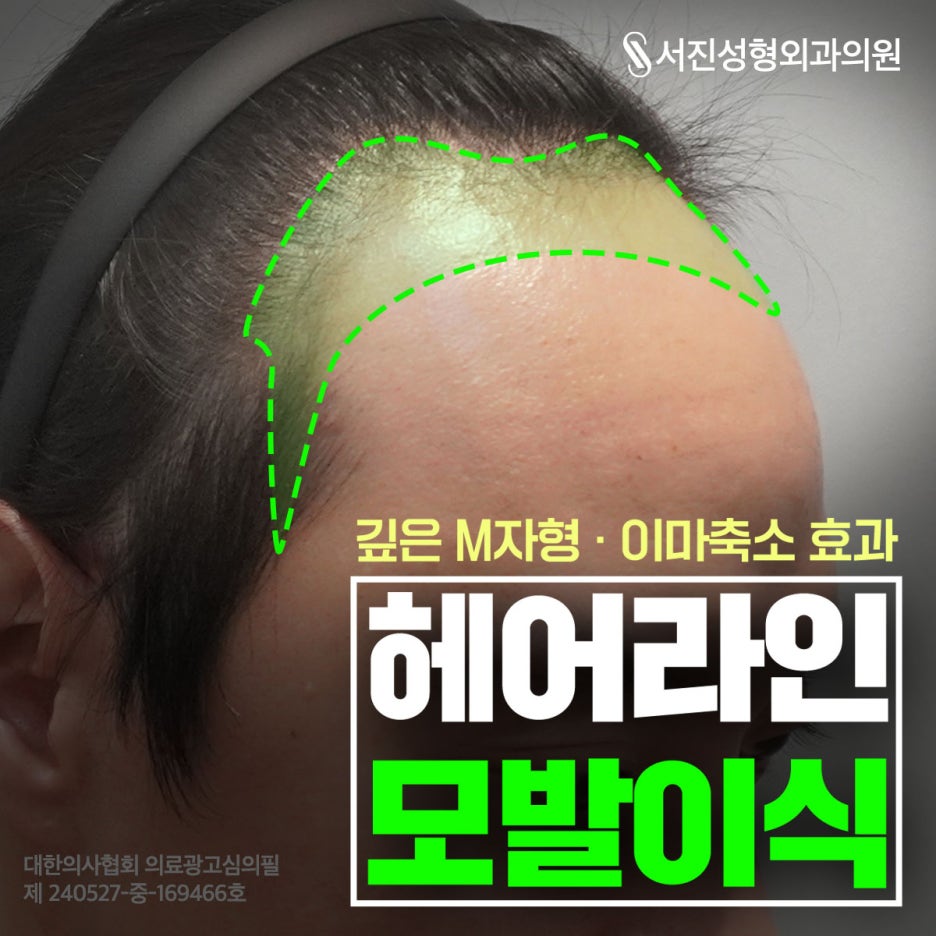

Comparison of Strip vs. Non-Strip Hair Transplantation ✂️
Depending on the hair harvesting method, it is divided into strip and non-strip methods.
Strip method: This is a method in which the scalp tissue containing the needed hair is excised at once, harvested, and then sutured. It has the advantage of a relatively short operation time and the ability to collect a large number of follicles at once. However, a linear scar may remain at the donor site, and there is a relatively higher possibility of pain during recovery.
Non-strip method: This is a method of harvesting follicular units one by one. Because the scar is small, there is less burden related to pain or scarring, so it is generally preferred.
However, the operation time is longer, and to collect a large amount of hair, the occipital area often needs to be shaved (partial shaving or no-shave methods are also available).
It is difficult to say that one method is always the correct answer. What matters is comprehensively considering the patient's degree of hair loss progression, scalp condition, hair characteristics, lifestyle, and other factors, and proceeding with the method that is most advantageous for the patient. In the case of hair loss in men in their 30s, there is a tendency to prefer the non-strip method because of higher activity levels,
but if the area to be transplanted is large or a high-volume transplant is needed, the strip method may be more appropriate. These days, various harvesting methods such as line cut and no cut,
which compensate for the shortcomings of non-strip procedures, are also being used.

Procedure Costs, Considerations, and Consultation Checklist 💰
The cost of hair transplantation varies depending on the amount of hair (hairs, follicles) to be transplanted, the harvesting method (strip/non-strip), and the experience and technical level of the medical institution performing the procedure.
Rather than focusing only on low cost, it is important to choose a place that can take responsibility for the entire process and carry it out in a way that maximizes the survival rate and produces natural results.
 Before consulting about treatment for hair loss in men in their 30s, you can check the following points.
Survival rate management system: Check whether there is a systematic system in place to improve the survival rate throughout the entire process, from harvesting to post-transplant care.
Extensive surgical experience: Check whether experienced medical staff can flexibly perform both strip and non-strip procedures according to the patient's condition.
Hair loss in men in their 30s covers a wide spectrum, from early-stage hair loss to severe cases, so experience with a variety of cases is important.
Design and density: Check whether there is the aesthetic sense and technical skill to create a natural hairline design and sufficient density from a long-term perspective.
Aftercare: It is advisable to check whether a systematic aftercare program is provided to help with transplant survival and maintain scalp health.
Concerns about hair loss in men in their 30s can begin to be addressed by receiving an objective diagnosis through 충분한 consultation with medical staff and
setting up a treatment plan that suits you.









Previous image
Next image