
A signature orange gift of autumn, sweet persimmons are loved for their crisp texture and sweetness! This fruit has almost no astringency, making it a great variety to enjoy fresh right away.
Persimmons are broadly divided into astringent persimmons and this variety, and this fruit is especially known for the crisp bite and refreshing sweetness you get after peeling and taking a bite.
The astringent taste of persimmons comes from a component called tannin, but in this fruit, tannin becomes insoluble during cultivation, so you do not sense the astringency.
Shall we take a closer look at this autumn treasure that offers both flavor and nutrition?
Persimmon calories and key benefits ✨
This fruit is delicious and has many health-friendly qualities.
Calorie information, great for dieting too!
This fruit has a relatively low calorie content of about 44–51 kcal per 100 g (varies by variety and measurement).
It is rich in dietary fiber, so even a small amount can make you feel full, making it an excellent snack for people managing their weight.
💪 Immune support:
This fruit is rich in vitamin C, containing about twice as much as tangerines.
Thanks to this powerful antioxidant, the first of the persimmon benefits is immune support and cold prevention.
👀 Eye health improvement:
It is rich in beta-carotene, a precursor of vitamin A, which helps produce rhodopsin, essential for maintaining vision, and helps relieve eye fatigue, so persimmon benefits are also good for eye health.
💖 Vascular health support:
Persimmon benefits also include improving vascular health. Dietary fiber and antioxidant components (such as tannins and catechins)
help regulate cholesterol levels and contribute to the prevention of cardiovascular disease.
🥂 Hangover relief:
Fructose and vitamin C help break down alcohol, and tannins absorb acetaldehyde in the body and help eliminate it.
Because of this, persimmon benefits are also effective for hangover relief.
🌟 Anticancer effects:
Components with excellent antioxidant activity, such as cryptoxanthin and vitamin C, help prevent cell damage, slow aging,
and may also play a positive role in helping prevent various cancers.
🚽 Gut health and constipation prevention:
The abundant dietary fiber promotes intestinal peristalsis and helps bowel movements run smoothly.
When eaten in moderation, persimmon benefits can actually help prevent constipation.
Constipation-related precautions ⚠️
Many people think of 'persimmon = constipation,' but this applies to 'unripe persimmons' or 'astringent persimmons.'
The soluble tannins that create the astringent taste of unripe persimmons can absorb water in the intestines and make stools harder.
✨ Sweet persimmons are different!
Low tannin content: In this fruit, tannins are insolubilized, so the amount of soluble tannins that can cause constipation is very low.
Rich in dietary fiber: In fact, thanks to its abundant dietary fiber, it is good for gut health.
However, no matter how good a food is, too much is not good! If you consume too much,
and also eat a lot of the white fibrous core around the stem where tannins may not have fully become insoluble,
there is still some possibility of constipation or digestive discomfort.
📌 Tip: For people with anemia, tannins can interfere with iron absorption,
so it is better to eat it as a snack in a moderate amount (1–2 per day) rather than right after a meal.
Storage and selection tips 🛒
How to choose sweet persimmons
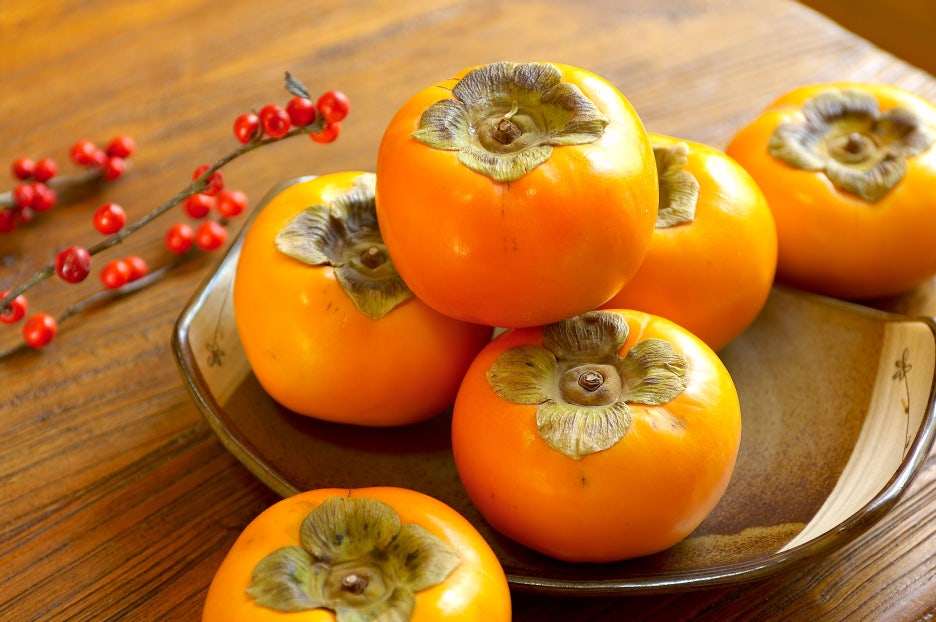
Color: Choose ones that are evenly orange overall and deeper in color, as they are well ripened and have higher sweetness.
Appearance: Choose fruits with few blemishes or black spots, a glossy surface, and a square, even shape.
Stem: Fresh fruits have a clean stem with a slight greenish tint.
How to store them for a long time
This fruit becomes soft and changes flavor easily when moisture evaporates.
Individual wrapping: Wrap each one in newspaper or a paper towel to prevent moisture loss.
Stem position: Storing them upside down with the stem facing downward can help reduce moisture loss.
Cold storage: It is best to place them in a plastic bag or airtight container and store them at a low temperature of around 0–2°C (in a kimchi refrigerator).
This helps keep them crisp for a long time.









Previous image
Next image