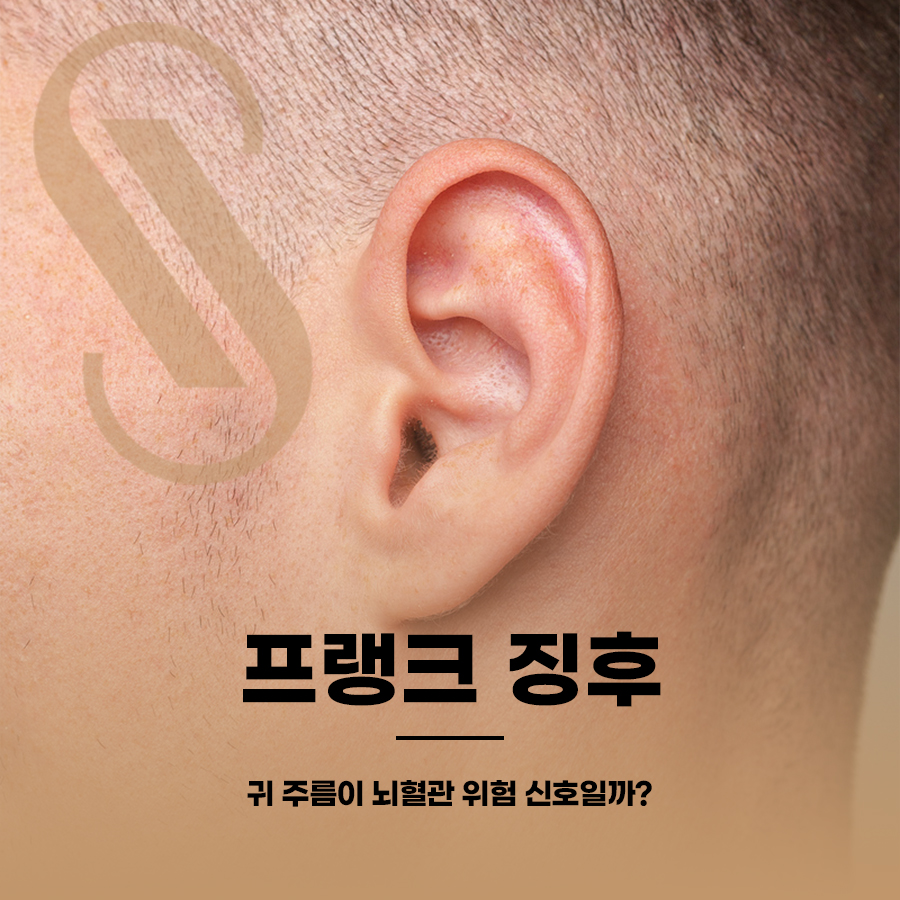
🙋♂️ What is Frank's sign?
This unusual sign was first discovered and reported in 1973 by Dr. Sanders Frank, a physician in the United States,
and it came to be called Frank's sign after his name. While observing patients with heart disease, Dr. Frank
noticed that many of them commonly had a deep diagonal crease in the earlobe.
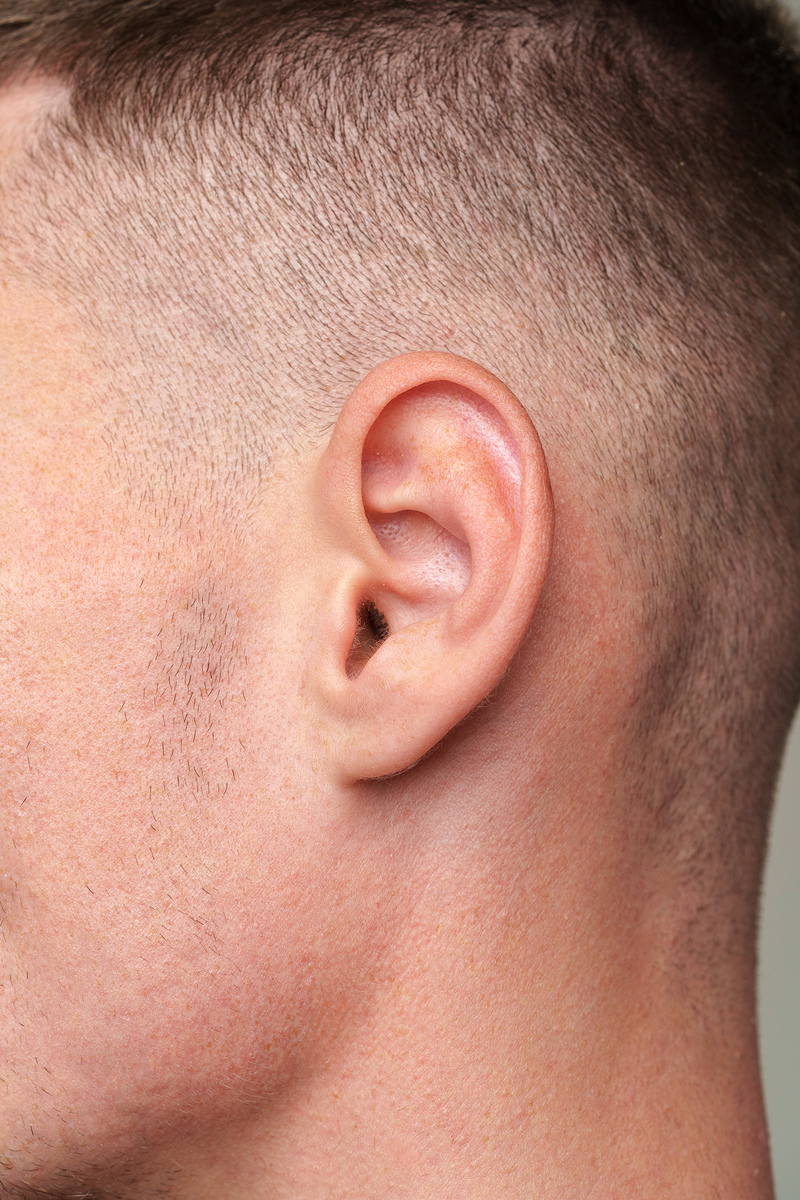
Frank's sign refers to a deep crease in the earlobe that runs at about a 45-degree angle from the lower part of the earlobe toward the back.
This crease may appear on only one ear or on both ears.
It is known to be closely related to damage to the microvasculature, and it has attracted attention as an early indicator
of cardiovascular or cerebrovascular disease. If you have Frank's sign, it is a good idea to check your vascular health.
💡 A signal of cerebrovascular disease
So how is an earlobe crease connected to cerebrovascular health? All tissues in our body are supplied with nutrients by tiny blood vessels.
The earlobe is no different, and it is one of the tissues that is sensitive to nutrient supply through blood vessels. If vascular aging such as arteriosclerosis progresses,
blood flow to the microvessels in the earlobe, which is one of the most peripheral areas, becomes less smooth.
It is thought that this impairment of blood flow causes the earlobe tissue to lose elasticity and form a diagonal crease, namely Frank's sign.
In particular, because cerebrovascular structures are also made up of microvessels, a crease on the earlobe may serve as a kind of "warning light"
that similar problems may be occurring in the brain and heart microvessels as well. According to several research findings, people with this sign had a higher risk of developing cerebrovascular and cardiovascular diseases such as cerebral infarction and
myocardial infarction than those without it.
⚠️ Caution
Frank's sign is only one indicator that may suggest a risk of cardiovascular and cerebrovascular disease, and having this crease does not mean you will definitely develop a disease.
You do not need to become overly anxious just because the crease is present, but it should not be ignored. The important thing is
to use this earlobe crease as an opportunity to reflect on your vascular health.
If you find this crease on your ear, it is important to check and manage other major cardiovascular and cerebrovascular risk factors such as smoking, obesity, high blood pressure, diabetes, and hyperlipidemia.
Because this crease cannot replace a professional medical diagnosis,
it is wise to consult a specialist and undergo any necessary tests to confirm your exact health status.
Maintaining lifestyle habits that keep blood vessels healthy is the key to prevention.


🧠 Is it related to dementia?
Recently, research has been actively exploring not only the relationship between earlobe creases and cerebrovascular disease, but also their association with cognitive decline and dementia.
One of the main causes of dementia, vascular dementia, is caused by damage to the brain blood vessels. As explained earlier, considering that this sign is closely related to microvascular problems, a logical connection emerges that microvascular damage in the brain may also lead to cognitive decline.
Some studies reported that when a diagonal crease is present in the earlobe, the prevalence of silent cerebral infarction or
microcerebrovascular diseases such as white matter degeneration was higher than in those without it. Such microcerebrovascular damage can, over time,
lead to cognitive decline. Therefore, those with this sign need to pay close attention not only to heart health, but also to brain health (cognitive function)
and make efforts to prevent problems.










Previous image
Next image