Male M-shaped hair loss: characteristics by early and progressive stages

Many men become deeply concerned when they look in the mirror and notice changes in their hairline. In particular, the phenomenon in which both ends of the forehead gradually widen and change into an alphabet-like M shape can significantly alter one’s appearance and lead to psychological shrinkage. Because the speed and pattern of this change differ from person to person, it is difficult to dismiss it as a simple, natural sign of aging. It is necessary to closely examine the condition and learn the appropriate information. Today, we will look at the phenomenon at the center of hairline changes and the corresponding coping methods based on objective information.
📌 Causes and progression structure of male M-shaped hair loss
The main background behind this phenomenon lies in genetic factors and the action of male hormones. When a specific enzyme in the body meets male hormones and converts them, it interferes with follicle growth, and as a result, the hair becomes thinner and falls out. In particular, the frontal hairline area has many receptors that are sensitive to this reaction, so changes are often detected there before other areas.
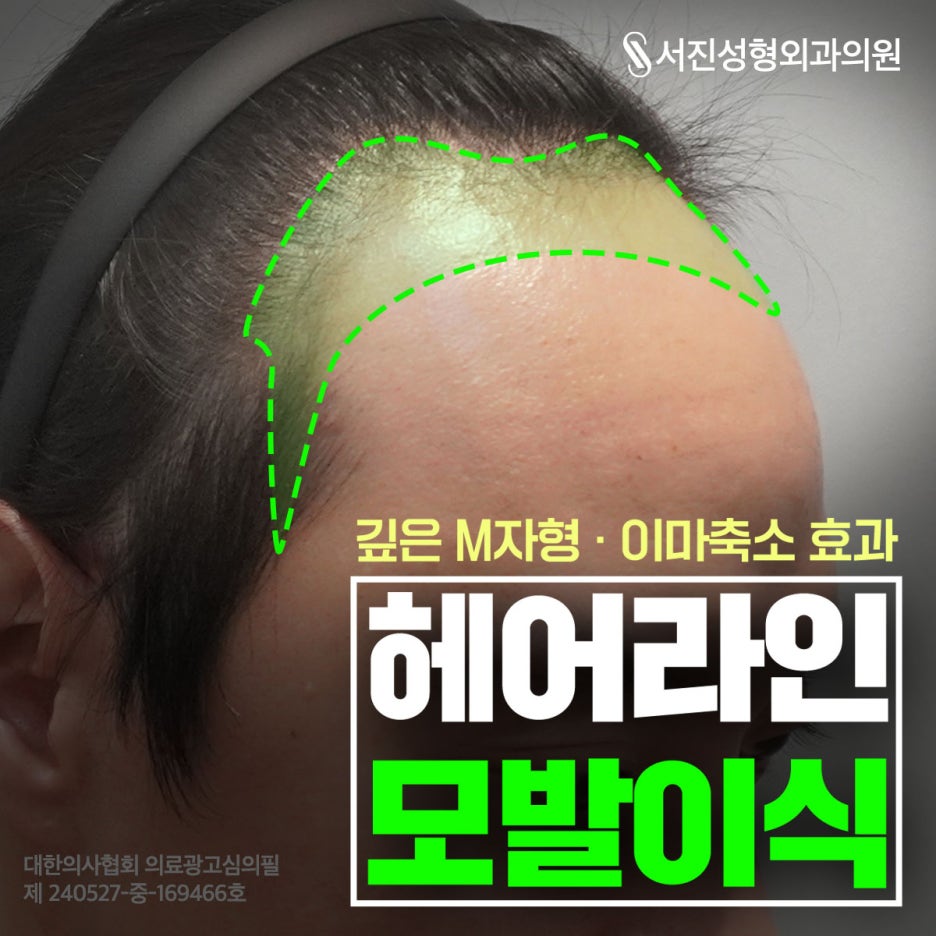
In the early stage, the hair at both ends of the forehead begins to lose strength and thin out. At this point, it may not be clearly visible to the naked eye, but as the hairline gradually recedes, it takes on a typical shape. As male M-shaped hair loss progresses more rapidly, the hair in the center of the forehead remains while only the sides become deeply recessed, and eventually, in combination with changes around the crown, the entire forehead appears wider. Because this structural change is often caused by ongoing hormonal action rather than a temporary drop in condition, a long-term perspective is required.
📋 What is the key to hair transplantation?
One of the methods many people consider to improve an advanced condition is transplantation. The most important factor in this process is graft survival rate. No matter how much is transplanted, if the hair does not properly take root in the new location, it is difficult to expect a positive result. To support graft survival, every step from harvesting to transplantation must be carried out quickly and carefully.
In addition, rearranging the follicles while considering their characteristics is a key part. Hair harvested from the back of the head varies in thickness and texture, and the key is to arrange it naturally from the front hairline toward the crown. Among the areas affected by male M-shaped hair loss, finer and softer single follicles should be placed at the front, and thicker, fuller follicles should be positioned toward the back to create a natural appearance without a sense of mismatch. Beyond simply filling empty spaces, the process must be supported by harmoniously settling the hair while considering the original flow and density of the hair.

🔍 When hair transplantation is needed
When male M-shaped hair loss has already progressed to a considerable extent and it is difficult to achieve visible changes with medication alone, transplantation may be an alternative. If the hairline has noticeably receded and the forehead appears wider, and if this outward stress is interfering with daily life, it is a good idea to check the condition through a consultation.
In particular, when the stage of hair thinning has passed and the area where the follicles are closed becomes wider, it becomes difficult for new hair to grow in that area. At such times, transplanting healthy follicles from the back of the head and increasing density can be an effective method. It is also a positive option when you want to correct the deeply recessed forehead line caused by male M-shaped hair loss and balance the overall harmony of the face. However, since feasibility may vary depending on the amount and density of hair in the donor area, a careful diagnosis should come first.

⚠️ Management methods and considerations based on hair loss progression
If you notice changes in your hairline, you should establish a care method that matches the condition. In the early stage, efforts to slow the progression through oral medication or topical products should be combined. Even if you are planning a transplantation, this is an essential process for maintaining and preserving existing hair. In terms of lifestyle, the basics are to reduce heat applied to the scalp and get enough nutrition and rest.
When considering a surgical method, you should carefully weigh your scalp condition and your preferred recovery process. It is important to determine which is more suitable for you: a method that secures follicles by making a certain incision in the scalp, or a method that extracts follicles one by one without an incision. This is because the type of harvesting method changes the form of the scar, the degree of pain, and the timing of returning to daily life. Since responding to male M-shaped hair loss should focus on long-term maintenance rather than a one-time solution, it is necessary to check whether a systematic aftercare program is in place. It is advisable to approach male M-shaped hair loss management carefully by comprehensively considering one’s current stage and the predicted future progression.










Previous image
Next image