
Even if you visit the gym consistently and pay close attention to your diet, it can be a significant source of concern when your chest area appears particularly prominent. Since this is also a time when interest in one's physique is high, many people experience stress when getting dressed or in their everyday lives. However, it is important to distinguish whether the condition is simply due to a high level of body fat or whether it involves the development of glandular breast tissue. Today, we will look at the characteristics of gynecomastia in your 20s, the limitations of exercise, situations in which surgery may be considered, and post-treatment management.
🩺 What Is Gynecomastia?
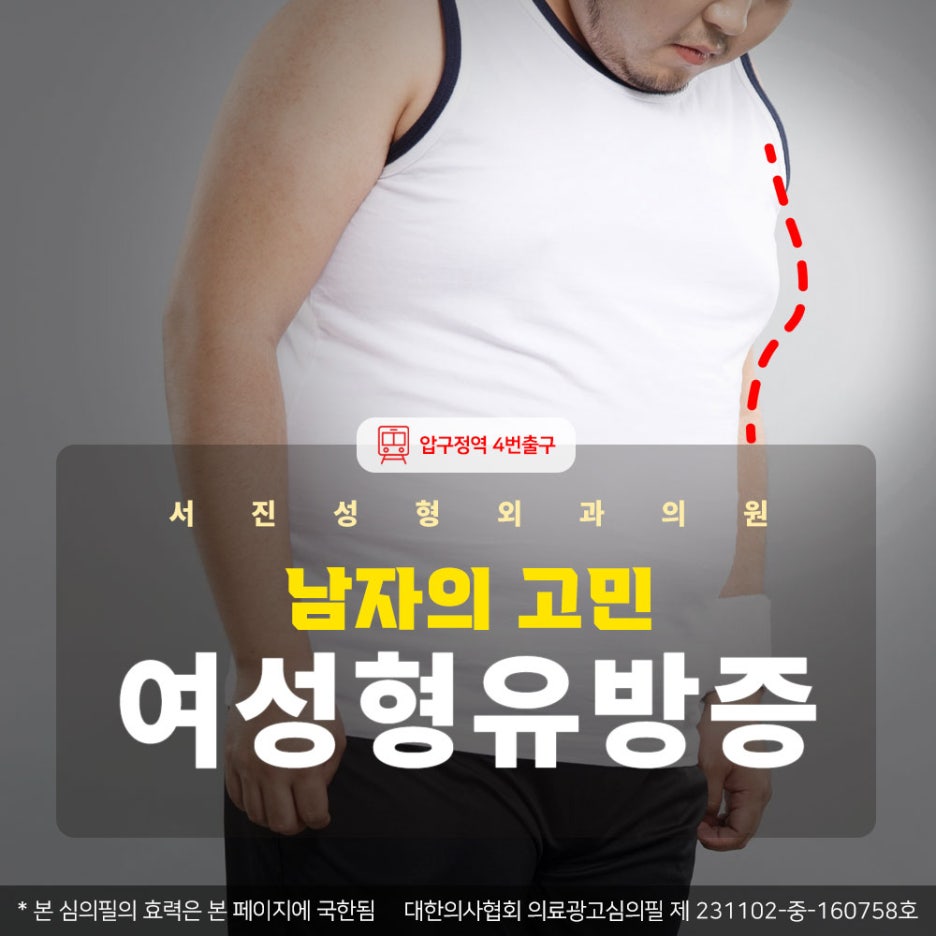
Gynecomastia refers to a condition in which a man's chest develops a female-like shape. It may occur through a combination of factors, primarily the growth of glandular tissue and the accumulation of fat.
There are various possible causes. Changes in hormonal balance, weight gain, the effects of certain medications, and endocrine disorders may be involved, although in some cases no specific cause can be identified.
Gynecomastia can broadly be divided into true and pseudo-gynecomastia. True gynecomastia refers to an increase in glandular tissue, while pseudo-gynecomastia describes a chest that appears enlarged due to fat accumulation. Therefore, if gynecomastia in your 20s is suspected, it is necessary to confirm the condition through an examination and testing rather than judging it based solely on appearance.

💪 Why the Chest May Still Look Prominent Despite Exercise
Many people expect the protruding shape to improve naturally if they work hard on chest exercises. In fact, weight loss and strength training may help with body-shape management.
However, the situation is different when glandular tissue has developed. Although exercise can reduce fat, it is difficult to reduce the glandular tissue that has already formed.
In some cases, the chest may actually appear more pronounced as muscle mass increases. In particular, if the area around the nipples protrudes despite a low body-fat percentage, or if the upper body is relatively thin but the chest alone appears prominent, the condition may have a different cause than simple excess fat.
For this reason, some cases of gynecomastia in your 20s may show little noticeable change despite consistent exercise and weight control. Therefore, if there is no significant change in shape even after improving your lifestyle habits, it may be helpful to objectively assess your current condition.
👨⚕️ Who Might Consider Surgery?
Surgery is not necessary in every case. First, it is important to identify the cause and determine whether lifestyle adjustments may be effective.
However, surgical treatment may be discussed in the following situations:
-
Chest protrusion persists even after weight loss
-
Glandular tissue is identified
-
There is a clear difference in size between the two sides
-
There is significant external discomfort when wearing clothing
-
Psychological distress continues for an extended period
In particular, gynecomastia in your 20s can become a greater concern because it coincides with a time when social and interpersonal activities are often active. In such cases, it is important to evaluate the current condition and its cause thoroughly before deciding on a treatment approach, rather than considering the issue solely from a cosmetic perspective.
Surgical methods may include removing glandular tissue, liposuction, or combining both procedures. Whether these methods are appropriate may vary depending on the individual's condition. Therefore, a treatment plan for gynecomastia in your 20s should not be determined uniformly; it should be considered in light of each person's physical characteristics.
✨ Postoperative Precautions and Management
After surgery, management suited to the recovery process is important.
During the initial period, wearing a compression garment may be recommended, as it may help manage swelling and support the skin's adjustment. It is also advisable to avoid strenuous exercise and lifting heavy objects for a certain period.
Alcohol consumption and smoking may affect recovery and therefore require caution. It is also important to have the recovery progress checked according to the scheduled appointments.
Weight management may also be helpful. If rapid weight gain occurs after surgery, fat accumulation in the chest area may become prominent again.
Above all, gynecomastia in your 20s can often be difficult to assess based on appearance alone, so identifying the cause should come first. The appropriate approach may differ depending on whether the condition can improve through exercise or involves the development of glandular tissue. Therefore, if gynecomastia in your 20s is suspected, it is advisable to consider a treatment approach suited to you based on sufficient consultation and diagnosis.









Previous image
Next image