
When a man's chest appears to have developed in a feminine pattern, it is easy to assume that the change is simply due to weight gain. However, an increase in body fat and the development of glandular tissue may have different causes and require different approaches. In particular, if the appearance of the chest does not improve significantly even with exercise or dietary management, it may be a good idea to check whether gynecomastia is present.
Gynecomastia refers to a condition in which glandular tissue develops in the male chest area or increases along with fat. Various factors may influence it, including growth, hormonal changes, and medication, and its appearance can vary from person to person. Therefore, rather than judging it solely by outward appearance, it is necessary to examine the current condition.
In today's post, we will look at a simple gynecomastia self-test, the differences between the fat-predominant and true types, and situations in which a diagnosis may be needed.
🔍 What Is Gynecomastia? Basic Information to Know Before a Self-Assessment
Gynecomastia is a condition that occurs when the glandular tissue in a man's chest develops abnormally. It may occur temporarily due to hormonal changes during puberty, and it can also develop in adulthood under the influence of changes in the body's hormonal balance or certain medications.
Not all cases of an enlarged-looking chest have the same cause. When volume develops because subcutaneous fat has accumulated, the appearance may change with weight fluctuations, but
a chest in which glandular tissue has developed may be difficult to improve through exercise or weight loss alone.
In addition, the shape of the two sides of the chest may differ, or a firm sensation may be felt in a particular area, so it is important to examine your condition carefully.

✋ Simple Gynecomastia Test: A Checklist to Use at Home
A simple gynecomastia test can be used at home to check the condition of your chest. However, this is only for reference and cannot
substitute for a medical assessment.
First, check the shape of your chest in a mirror. Observe whether the area around the chest is spread out and soft overall, or whether the area around the nipples protrudes noticeably.
Next, feel the area around your chest with your hands and check whether firm tissue can be felt beneath the nipple. Simple fat tends to feel relatively soft, but when glandular tissue has developed, it may feel like firm tissue with a disk-like shape.
The following changes may also be included in the simple gynecomastia test:
-
Little change in the chest area even after losing weight
-
The area around the nipple appears rounded and protruding
-
A difference in the size of the two sides of the chest
-
A firm area can be felt when pressing the chest
If several of these characteristics appear together, it may be necessary to examine your current condition.
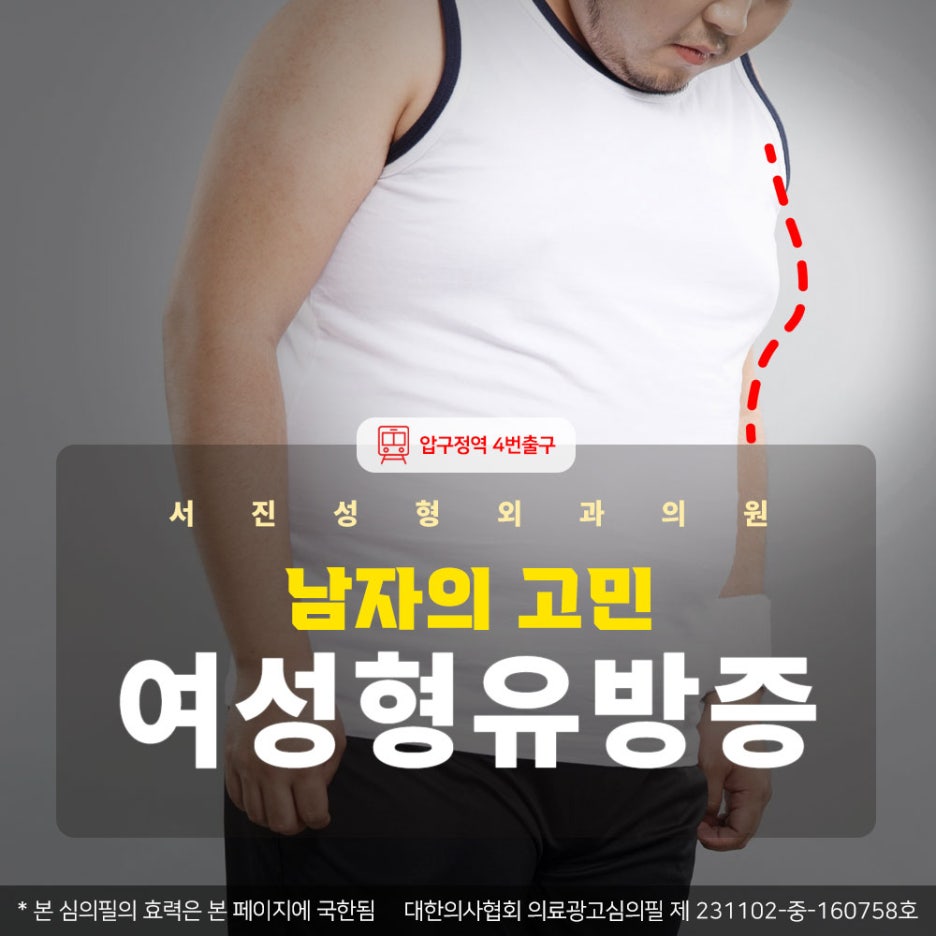
⚖️ How Can Fat-Predominant and True Gynecomastia Be Distinguished?
The causes of a man's chest appearing enlarged can generally be considered in two categories: the fat-predominant type and the true type.
The fat-predominant type occurs when fat accumulates around the chest due to weight gain. It is characterized by an overall soft texture, and changes may occur through weight management and exercise.
In contrast, the true type refers to cases in which glandular tissue has developed. Firm tissue may be felt around the nipple, or the chest may appear protruding. There is also a mixed type in which fat and glandular tissue are present together, so the appearance can vary from person to person.
When performing a simple gynecomastia test, it is better to consider not only the size of the chest but also its texture, when the change began, and its relationship to changes in body weight.
In particular, if the shape of the chest remains unchanged even after exercising consistently and reducing body fat, it is worth checking whether there may be a cause other than fat.
👨⚕️ When an Accurate Diagnosis and Treatment May Be Needed
Self-assessment can help you understand your current condition, but consultation with a medical professional may be necessary for a final evaluation. To distinguish the cause of chest development, a medical history and physical examination may be performed, along with imaging tests when necessary.
Although changes may occur naturally during growth, it is a good idea to get checked if a sudden change in size occurs after reaching adulthood or if it is accompanied by pain or discomfort.
Treatment methods may vary depending on the cause and type. The approach may differ when the proportion of fat is high and when glandular tissue has developed, so an option suited to the individual's condition should be considered.
Finally, a simple gynecomastia test can be used as a first step in checking your condition. Rather than dismissing it as a simple concern about appearance, it is important to determine what may be causing the current change and find an appropriate way to manage it.









Previous image
Next image