Male gynecomastia: Can prominent nipples also be gynecomastia?
These days, as clothing becomes lighter, quite a few men are concerned that their chest looks more rounded than before or that their nipples noticeably protrude. Some may dismiss it as a simple change in body shape, but the appropriate approach can vary depending on the cause. Not all prominent nipples indicate the same condition, and it is necessary to consider several factors together, including fat accumulation and glandular tissue development. In this post, we will take a step-by-step look at the characteristics of male gynecomastia, how to distinguish it from other conditions, and when treatment may be considered!
🔎 Can prominent nipples also be male gynecomastia?
💡
If your nipples appear to protrude farther forward than usual,
it is important to first identify the cause.
Male gynecomastia refers to a condition in which glandular tissue develops in a man's chest, creating a shape similar to a woman's breasts. Various factors may contribute to it, including hormonal changes, weight gain, certain medications, and endocrine abnormalities.
However, prominent nipples do not always indicate the same condition. The entire chest may appear larger as body fat increases, or glandular tissue beneath the areola may develop and push the nipples forward. Conversely, even people with a lean build may have noticeable protrusion if their glandular tissue has developed, so it is difficult to make a judgment based on appearance alone.
It is also helpful to consider whether the change is temporary or a persistent symptom.

⚠️ How can male gynecomastia be distinguished from simple fat accumulation?
When fat accumulates due to weight gain, the entire chest often becomes softly enlarged. On the other hand, when glandular tissue development is involved, firm tissue may be felt beneath the areola, and the nipples may appear to protrude relatively farther forward.
In many cases, it is difficult to distinguish between them through self-examination alone. If you notice any of the following changes, it may be helpful to seek medical evaluation to identify the cause.
-
The area around the nipple feels firm.
-
A noticeable difference in size exists between the left and right sides.
-
Tenderness or discomfort persists.
-
The shape of the chest does not change significantly even after exercising and losing weight.
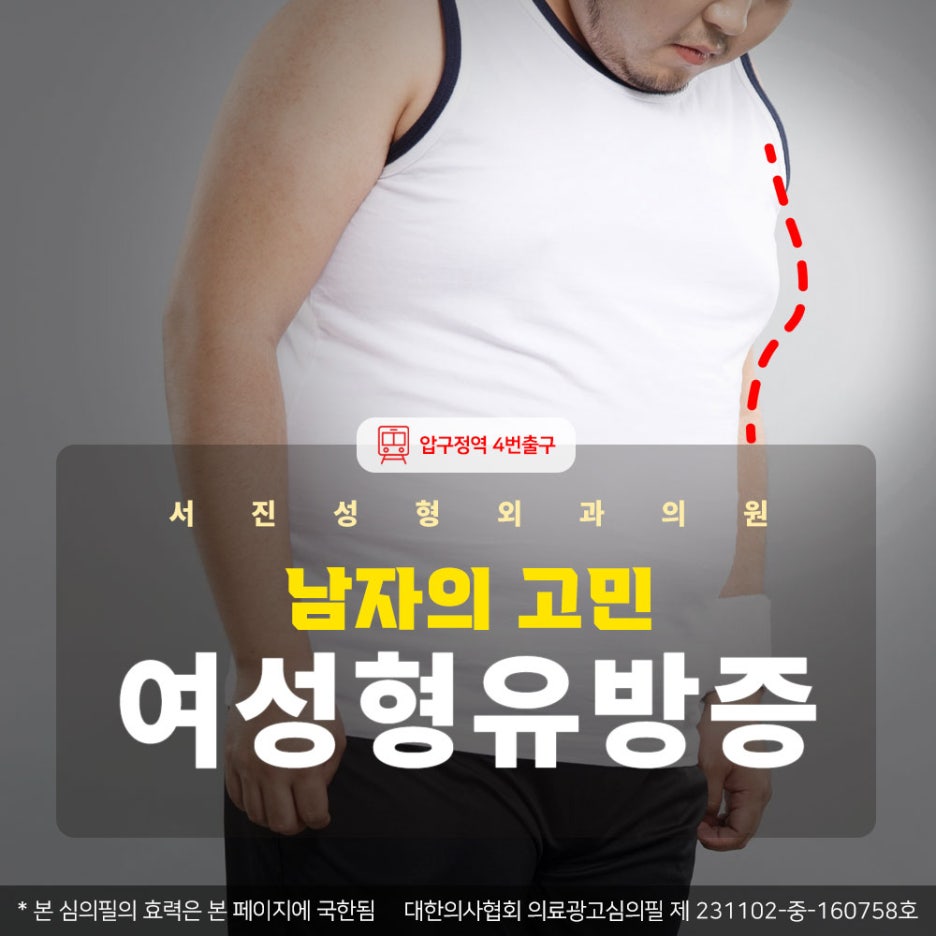
As shown in the image, the condition may also be classified as true or pseudogynecomastia. True gynecomastia is primarily characterized by glandular tissue development, while pseudogynecomastia refers to a form in which fat accumulation accounts for a larger proportion. Since the approach may differ between the two, it is necessary to first assess the condition.
🩺 What are the characteristics of male gynecomastia that may require treatment?
Not every case requires treatment. However, consultation may be considered if the change in appearance persists or causes discomfort in daily life.
For example, some people may feel psychological discomfort because the chest contour is noticeable when wearing thin clothing, or the shape may remain unchanged despite exercising consistently. In addition, if pain or a feeling of pressure around the nipples recurs, it is advisable to check whether another cause may be involved.
The degree of male gynecomastia can vary from person to person, and it is difficult to determine its stage based on appearance alone. In general, the condition is assessed by checking both the presence of glandular tissue development and the distribution of fat through a physical examination and imaging tests.
💡 Treatment methods for male gynecomastia and points to consider
Treatment for male gynecomastia may vary depending on the cause and the characteristics of the tissue.
When fat makes up a larger proportion, methods to reduce the fat may be considered. If glandular tissue development is confirmed, removal of the glandular tissue may also be considered.
In some cases, the two methods may be used together as needed.
Depending on the degree of sagging in the chest skin, an approach that takes skin elasticity into account may also be necessary. Simply removing fat may not produce the desired shape, so it is important to thoroughly assess the current condition before developing a treatment plan.
If sufficient removal is not achieved, some tissue may remain and changes in shape may continue. Therefore, rather than automatically applying only one method, it is necessary to consider each individual's characteristics.
It is difficult to determine that a person has male gynecomastia based on nipple protrusion alone. However, if the change persists for a long time or causes discomfort, it may be helpful to identify the cause.
This is because the appropriate approach may differ depending on whether the cause is fat accumulation or glandular tissue development.
If it is difficult to make a judgment on your own, it is advisable to confirm your current condition through consultation and examinations,
and to review lifestyle management and whether any necessary treatment is needed.
Since male gynecomastia can have various causes and forms, understanding your own condition first can be considered the first step.









Previous image
Next image