
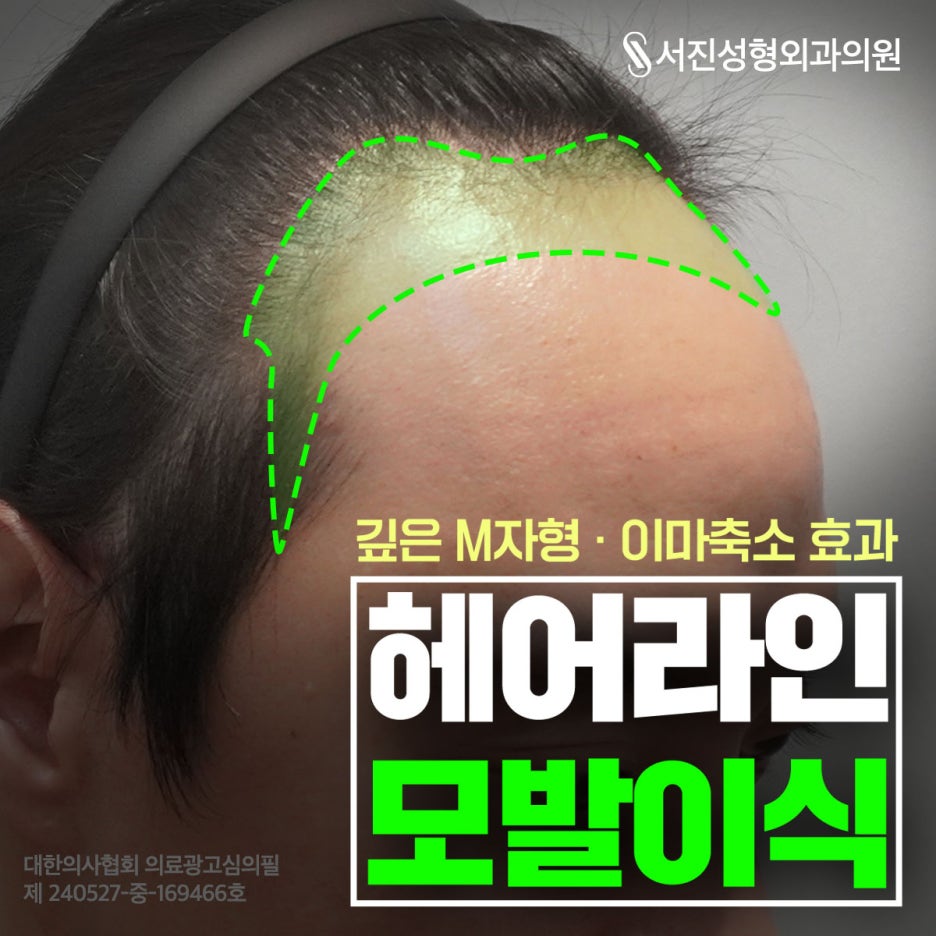
As both sides of the hairline gradually recede and the forehead appears wider, changing your hairstyle may not easily conceal the empty areas. In particular, changes to the frontal hairline that commonly occur in men can vary from person to person in their rate and extent of progression, so it is important to monitor your usual condition. If you are considering a hair transplant, it is also a good idea to learn about not only the procedure itself but also daily care afterward, including washing and exercise.
🧑🦱 Why Does Male M-Shaped Hair Loss Appear Empty Starting at the Hairline?
Male M-shaped hair loss refers to a pattern in which the hair becomes thinner starting at the corners on both sides of the forehead, making those areas appear relatively sparse compared with the center. Genetic factors influenced by male hormones, age, and lifestyle habits may all play a role, and the pattern of progression can differ from person to person.
At first, you may simply feel that your forehead has become wider, but it is a good idea to check whether the thickness and density around the hairline are changing as well. If male M-shaped hair loss is suspected, comparing past photos with your current appearance can also help you assess the extent of the change.
🌱 Graft Take After Hair Transplantation: How Does the Hair Settle in?
If you undergo a hair transplant for male M-shaped hair loss, the transplanted follicles need time to settle into their new location. During the early period, the follicles may be sensitive to external irritation, so it is important to avoid touching or scratching them as much as possible.
Redness, swelling, or scabs may appear immediately after the transplant, and these are commonly observed changes during the recovery process. The extent to which the transplanted follicles settle can vary depending on an individual’s condition, the scope of the procedure, and aftercare. Rather than judging the outcome based on a specific number alone, it is better to calmly monitor the progress.
🚿 Shampooing After Hair Transplantation: When Can You Start?
One of the most common questions after a procedure for male M-shaped hair loss concerns when to start washing. In general, immediately after the transplant, you should take care to prevent water or pressure from your hands from directly contacting the area, and you will typically be instructed to wash gently after a certain amount of time has passed.
The starting point may vary depending on the transplant method and the condition of your scalp, but gentle washing is often considered from around two to three days after surgery. However, following a method suited to your current condition is more important than adhering to a set number of days.
When washing for the first time, use lukewarm water and avoid strong water pressure. After creating enough lather, gently rinse the transplanted area rather than rubbing it. It is generally advisable to remove moisture by lightly patting with a towel instead of rubbing. You should also avoid forcibly removing flakes or scabs if they form.
🏋️ Exercising After Hair Transplantation: When Can You Start Working Out Again?
After a procedure for male M-shaped hair loss, it is advisable to take a short break from strenuous exercise, considering factors such as sweating, friction, and increased blood pressure. You may be able to resume light daily activities relatively quickly, but it is safer to limit high-intensity exercise, such as running or weight training, for a certain period.
You may often be advised to avoid light exercise for several days and strenuous activities for about one to two weeks, but this can vary from person to person. In particular, you should be careful during the early period in environments where you sweat heavily or when you need to wear a hat for an extended time.
If you have chosen a hair transplant to manage male M-shaped hair loss, your lifestyle habits afterward are just as important as the procedure on the day of surgery. The basics are to adjust the timing of washing, touching with your hands, and exercise intensity according to your recovery rather than rushing. Since male M-shaped hair loss can progress in various ways, it is advisable to manage your recovery based on your own condition and your medical professional’s instructions instead of applying someone else’s recovery period exactly to yourself.










Previous image
Next image