


Hello. This is Re&Well Plastic Surgery Clinic.
Many people considering revision eyelid surgery often feel as much concern about scars and the recovery process as they do about the results. If satisfaction after the previous surgery was low, or if functional discomfort remains, a more precise approach is needed.
Recently, methods that reduce the burden of scarring while still allowing for natural-looking changes have been drawing attention.
In particular, dynamic fold revision eyelid surgery is known as a method that takes the eye’s movement and structure into account. In this article, we will take a closer look at the characteristics of this procedure and the factors that should be considered. Let’s go over what should be checked when preparing for revision eyelid surgery.
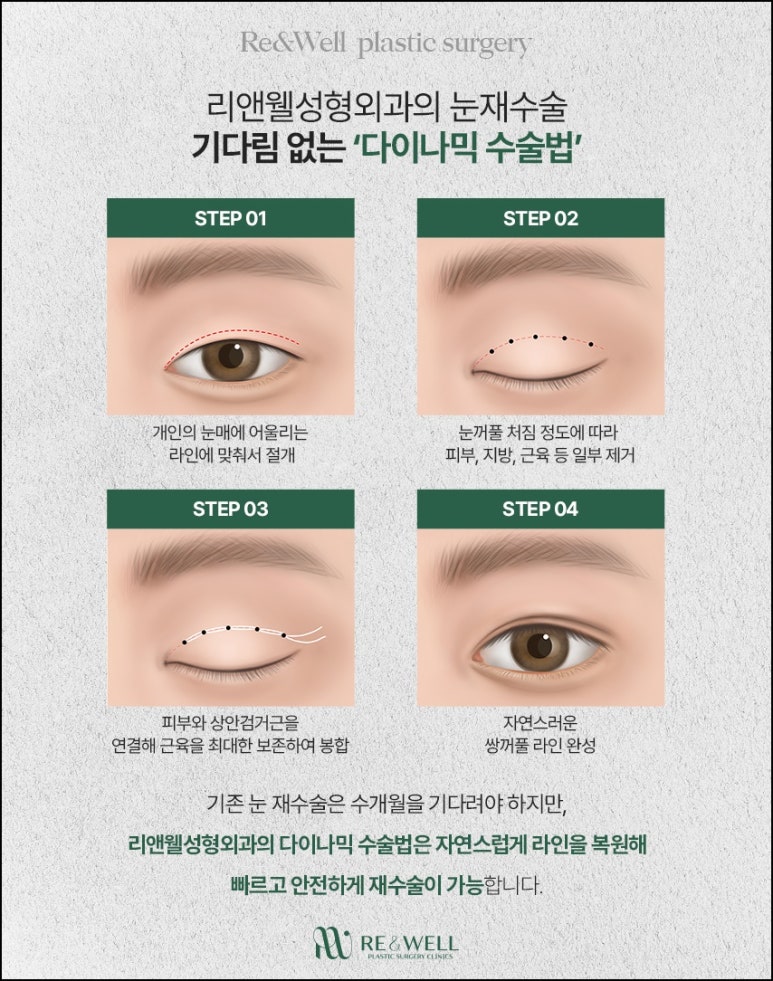

The Concept and Features of the Dynamic Method
The dynamic fold method is not simply about reshaping the crease line; its key point is inducing a natural change by considering eye movement and the action of the muscles.
Because it is often performed in a way that minimizes tissue damage and respects the existing structure, the focus is on reducing recovery burden. It is also noted for being designed to create less awkwardness when opening and closing the eyes. The application method may vary depending on the individual’s eye condition and previous surgical history.
Therefore, at Yeoksam-dong plastic surgery clinic, thorough diagnosis and planning are important.

Who Needs Dynamic Revision Eyelid Surgery?
Reasons for considering revision eyelid surgery vary, including dissatisfaction with the crease line, asymmetry between the left and right sides, and functional discomfort. In particular, if naturalness is lacking after the previous surgery, or if changes appear over time, consultation for revision surgery may be sought.
Because the dynamic method requires a detailed analysis of the structural characteristics of the eyes, a personalized plan at Yeoksam-dong plastic surgery clinic is important.
Rather than choosing it unconditionally, it is advisable to determine suitability through sufficient consultation and examination. Various factors, such as the condition of the eyes and lifestyle patterns, should be considered together.

The Importance of the Medical Team’s Experience and the Surgical Plan
Revision eyelid surgery is often regarded as more difficult than the first surgery, so the medical team’s clinical experience and skill are often mentioned as important factors.
In particular, it may be helpful to check whether the surgeon is a board-certified plastic surgeon who has experience with a wide range of cases over many years.
It is advisable to look comprehensively at not only the number of years of experience but also actual revision surgery cases and the clinic’s treatment philosophy.
A systematic plan and a step-by-step approach can affect the stability of the results. These factors should be discussed sufficiently during the consultation process.

Checking Whether the Specialist Provides Direct Consultation
Because revision eyelid surgery may require detailed planning depending on the condition of each person’s eyes, it is important during the consultation stage to check whether the specialist provides direct care. It is helpful to see whether actual diagnosis and explanations about the surgical direction are given, rather than just general guidance.
Whether there is an environment at Yeoksam-dong plastic surgery clinic where sufficient questions and communication are possible can also be a consideration.
It is advisable to confirm whether explanations about expected results and limitations are clearly provided during the consultation. This can also affect the formation of trust.

Reviewing the Transparency of the Procedure and Safety System
Recently, as more people place importance on surgical safety, interest in various management systems has also increased. It may be helpful to check how the surgical environment is operated within the medical institution. Some places emphasize transparency through internal management systems or record-keeping systems.
These factors can be explained during preoperative consultations and may serve as references for patients in forming trust. Whether efforts are made to create a safe environment is also an important criterion for judgment.