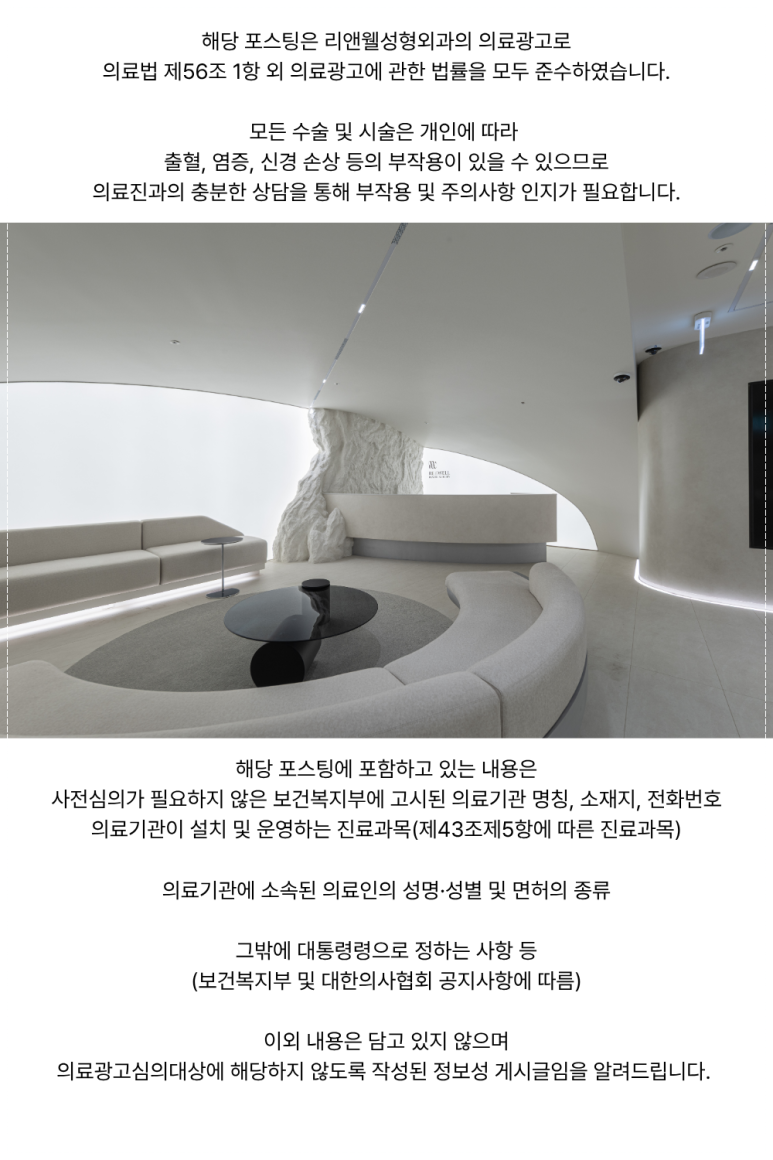

Hello. This is Rienwell Plastic Surgery, a Daechi-dong plastic surgery clinic.
Today, we will explain the process of improving sleepy eyes into clearer eyes through revision blepharoplasty, based on before-and-after cases.
Before surgery
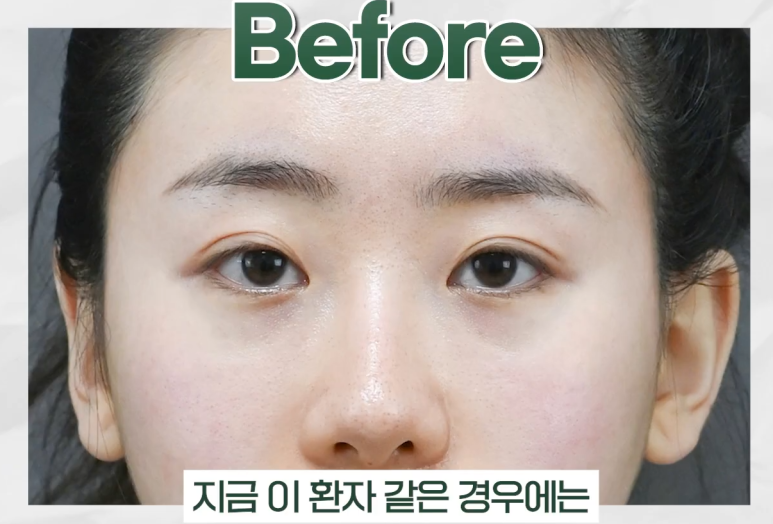
Before surgery, the double eyelid line was not clearly defined;
instead, it appeared thick and unnatural, and the eyes looked very loose.
There was a swollen, sausage-like appearance, and the eye-opening strength was also lacking,
creating a strong overall impression of looking sleepy.
The line formed as if it were being pressed down on the eyelid,
so it did not fall neatly and gave a stuffy impression.
After surgery
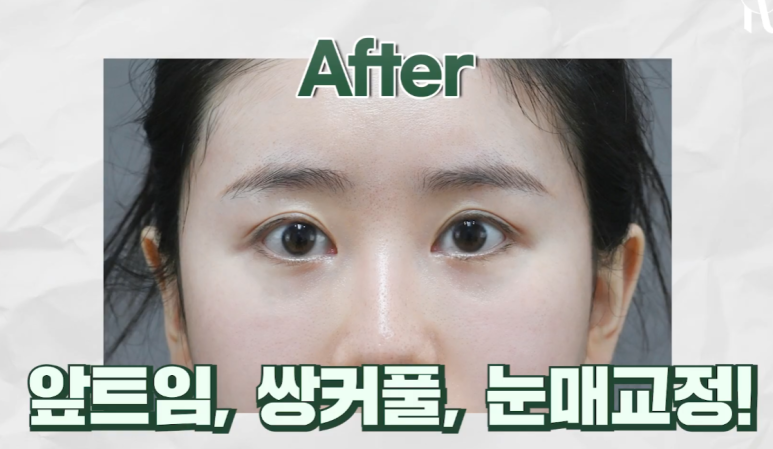

An epicanthoplasty, revision blepharoplasty, and ptosis correction were performed together.
As can be seen in the after photos, the eyes appear much more open,
and the clearer impression is noticeably enhanced.
Overall, the inner corners that previously looked cramped were opened up naturally, making the field of vision appear wider,
and the thick, unnatural double eyelid line was refined and settled into a cleaner shape.
In addition, ptosis correction improved the eye-opening strength, reducing the sleepy appearance
and making the iris more clearly visible.
Overall, the eyes were improved in a balanced way without looking excessive, and it can be seen as a result that preserves both naturalness and clarity at the same time.
If you have ptosis correction, does it last forever?


It is easy to think that ptosis correction at Daechi-dong Plastic Surgery will remain permanent once performed,
but because changes can occur depending on an individual's eye condition, muscle use habits, and the passage of time, it cannot be said to remain exactly the same for life.
In particular, if the correction is excessive or forced, unnaturalness or asymmetry may reappear over time.

That is why it is very important to naturally achieve symmetry from the initial surgery stage while considering eye-opening strength and left-right balance.
Also, the bigger the line, the weaker the eye-opening strength becomes,
so rather than forcing correction, a stable design within a range suited to the individual's eye structure
can have a greater impact on long-term satisfaction.

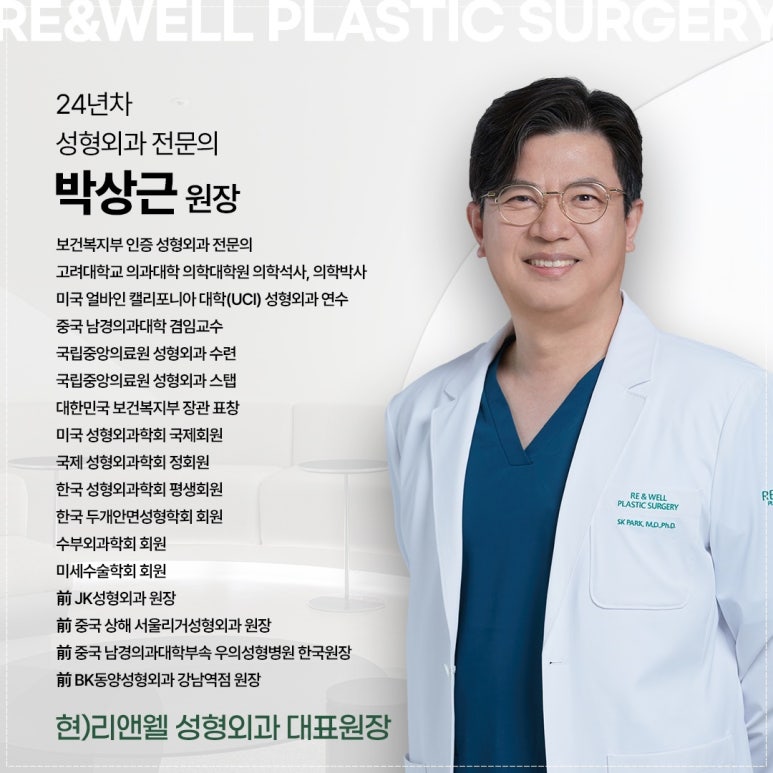
Revision blepharoplasty is often more difficult than the first surgery,
so it is important to choose a plastic surgery specialist with extensive experience.
This is because the surgeon must accurately understand and approach the adhesion state and tissue changes formed by the previous surgery. It is not simply about recreating the line;
delicate correction that considers both the structure and function of the eyes is necessary.
Medical staff who have experience with a variety of revision cases are better able to design predictable results. Therefore, when considering revision blepharoplasty, carefully checking whether the surgeon is a plastic surgery specialist with sufficient experience and clinical expertise can be an important criterion.