
The area around the eyes is one of the parts of the face where changes caused by condition or age tend to become relatively noticeable. The under-eye area, which was not bothersome in the past, may at some point begin to look noticeably puffy, or appear particularly shadowed under certain lighting. This can occur when the tissues that surround and support the fat beneath the eyes become lax, allowing the fat to protrude forward. Of course, age-related changes are not the only cause; the appearance may also become noticeable relatively early depending on factors such as the individual's bone structure, amount of fat, and skin condition. Because the causes vary, when looking into a Gangnam lower-eyelid fat surgery clinic, it is necessary to assess the overall condition around the eyes rather than simply considering how prominent the bulge is.
Lower-eyelid fat repositioning is different from surgery that removes fat
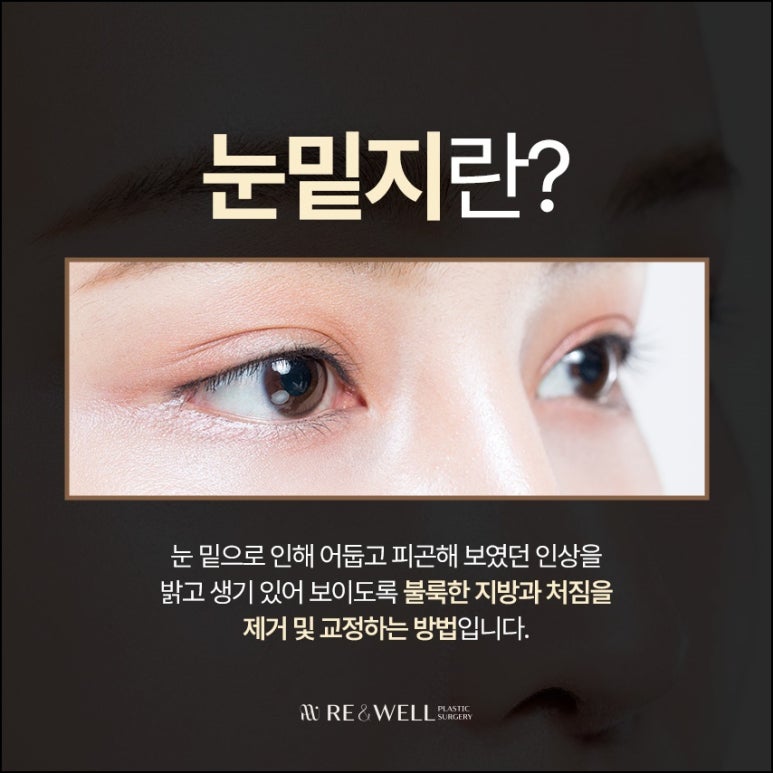
Lower-eyelid fat repositioning, commonly known as lower-eyelid fat surgery, refers to a procedure that adjusts the fat beneath the eyes in the direction needed. Rather than focusing solely on removing protruding fat, the procedure also assesses where the fat is bulging and whether there are hollow areas beneath it. If a boundary has formed under the eyes or the tear trough appears deep, these structural characteristics can also be considered when developing the surgical plan. Conversely, if loose skin is the primary cause, it may be difficult to address the issue with lower-eyelid fat repositioning alone, so the causes need to be distinguished. This is why, when searching for information about a Gangnam lower-eyelid fat surgery clinic, it is important to first examine the cause of one's under-eye concern rather than simply checking the name of the procedure.

If these areas have been bothering you
Some people are concerned that the area beneath their eyes continues to look puffy not only in the morning but also in the afternoon, or that a pronounced boundary appears under their eyes whenever they take a photo. Even when they try to cover it with makeup, it can be difficult to completely conceal a three-dimensional protrusion, which may lead them to consider lower-eyelid fat repositioning. Consultation about the procedure may also be considered when differences in under-eye volume create an appearance that seems relatively tired. However, not everyone who has dark-looking under-eyes needs the same surgery; other factors, such as pigmentation, blood vessels, and skin thickness, may also play a role. Therefore, before choosing a Gangnam lower-eyelid fat surgery clinic, the priority should be to have a medical professional determine in detail whether one's concerns correspond to the actual cause.
How is the position of the under-eye fat adjusted?
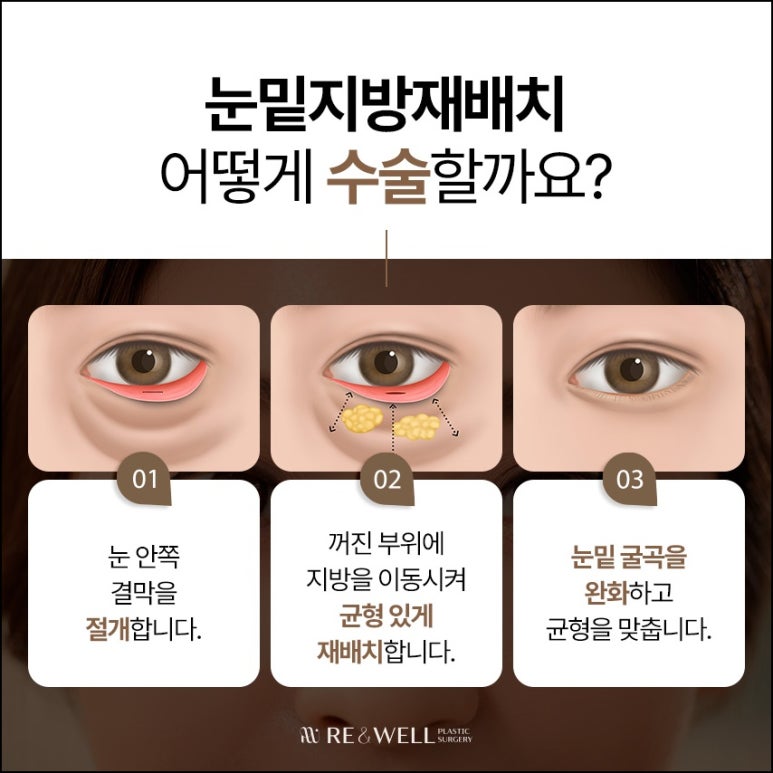
The procedure is carried out according to an individualized plan after assessing the extent to which the under-eye fat protrudes and the form of the surrounding tissues. An approach through the conjunctiva on the inner side of the eyelid may be considered. After identifying the protruding fat, it may be moved to the necessary position and secured. The important point is not simply to reduce the amount of fat, but to consider the overall contour beneath the eyes and how it connects with the surrounding areas. Since the range occupied by the fat, the depth of the tear trough, and skin elasticity all differ, the actual surgical method may also vary from person to person. During a consultation at a Gangnam lower-eyelid fat surgery clinic, it is helpful to receive a sufficient explanation of which approach may be considered for you and why.
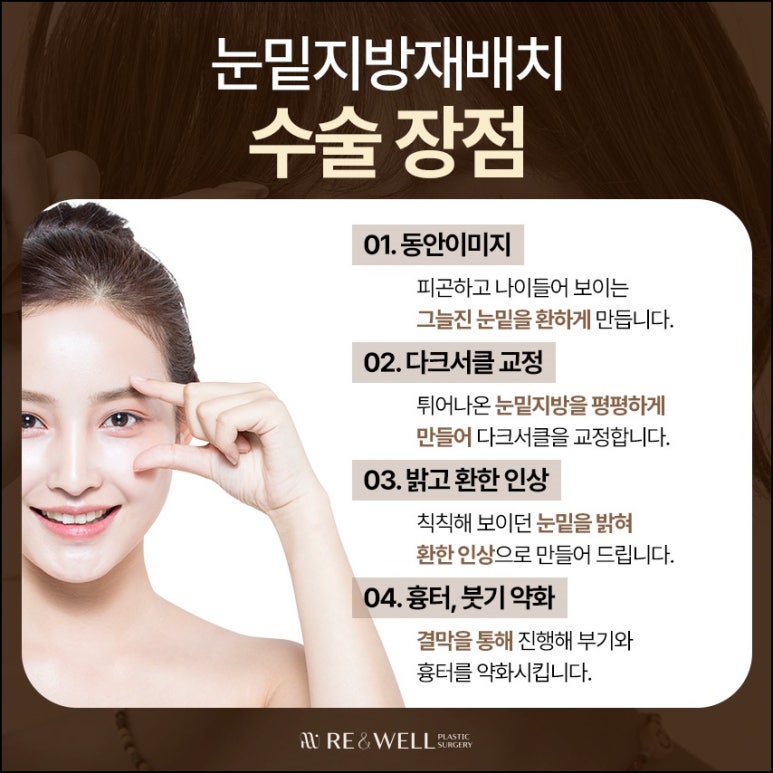
A feature is that the under-eye contour is considered together
Lower-eyelid fat repositioning is characterized by assessing both the protruding area and the adjacent hollow area to adjust the contours beneath the eyes. When an approach through the conjunctiva is appropriate, the procedure may be performed by accessing the inner side of the eyelid, so that no incision line is visible on the outer skin. However, this feature does not mean that everyone will have the same result, and the appropriate method varies depending on the degree of aging around the eyes and the condition of the skin. For a certain period after surgery, swelling, bruising, or discomfort may occur, and there is also a possibility of side effects such as bleeding, infection, asymmetry, and irregular contours. Therefore, it is necessary to check not only the features of the procedure but also the expected recovery process and precautions before making a decision.


Why it is important to consult a board-certified plastic surgeon
The area beneath the eyes contains multiple tissues, including skin, fat, and muscle, within a small space, making it difficult to determine the surgical approach based solely on the visible appearance. Even when the fat appears to be significantly protruding, the actual cause may be prominent hollowing below it, which can make the area feel relatively bulging. In addition, the amount of fat and bone structure may not be completely identical on both sides, so these differences should also be considered in the surgical plan. When reviewing medical institutions related to Gangnam lower-eyelid fat surgery, it is important to check whether a board-certified plastic surgeon examines the structures around the eyes and sufficiently explains the surgical methods and limitations based on the individual's condition. Rather than deciding solely on the basis of the changes one hopes to achieve, it is advisable to receive guidance about possible side effects and the recovery process, then carefully determine whether the method is appropriate for you.