This post has been written in compliance with Article 56, Paragraph 1 of the Medical Service Act.
It has been written solely for the purpose of providing information,
and is in no way intended to promote this hospital.
Since the effects and side effects may vary from person to person,
please be sure to have a thorough consultation with the medical staff.

Hello.
This is Kim Ha-won from Gongdeok Station Dermatology.
Those of you reading this post are probably looking into Onda lifting treatment
at Gongdeok Station Dermatology 😊
The fact that it causes almost no pain and has a short recovery period
will likely seem appealing.
However, while looking into the procedure,
you may have wondered about this:
Why do the results differ so much from review to review even though it is the same device?
Which dermatology clinic should you choose to get satisfying results?
So today, for those considering Onda lifting,
I would like to organize the two key points
that you should check before the procedure.
🔍 Quick Summary of Onda Lifting
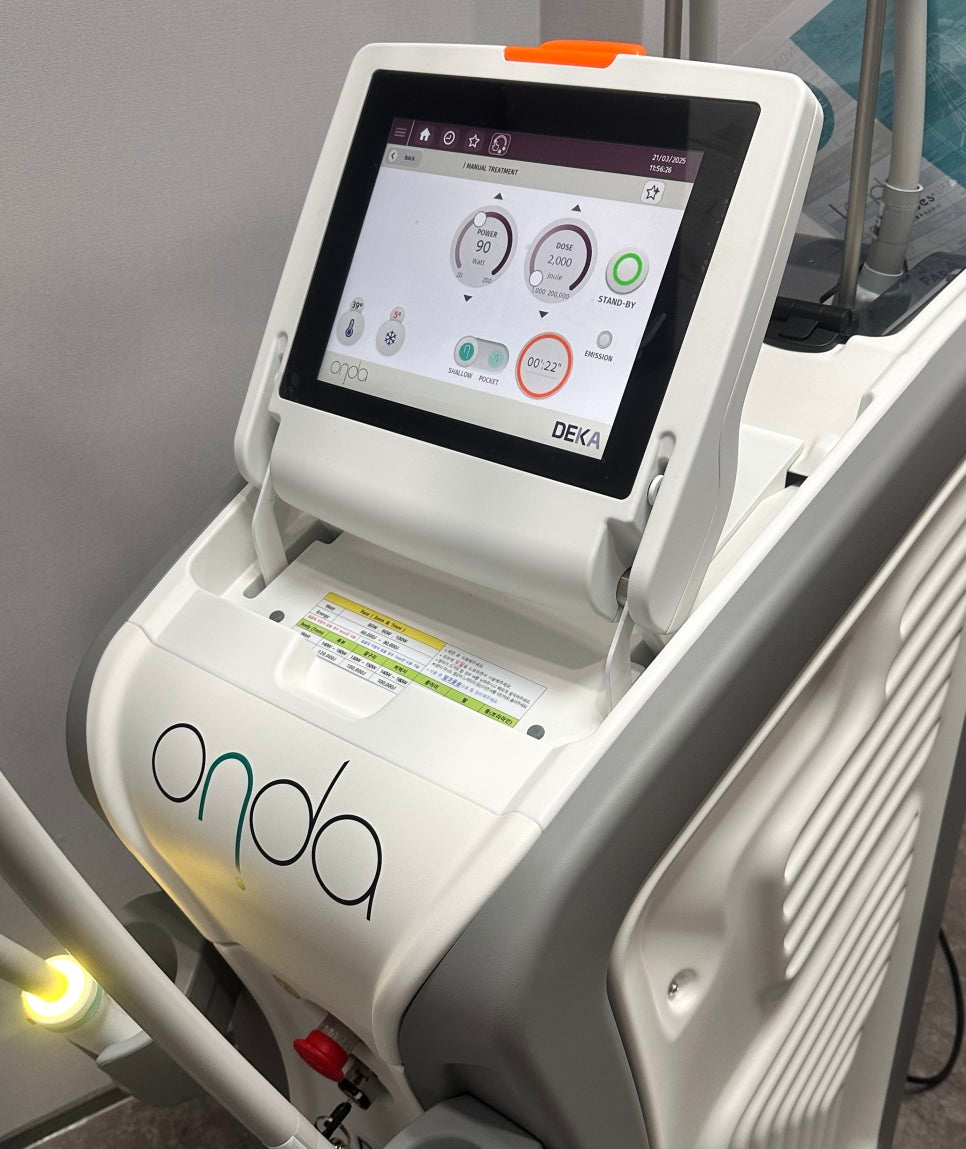
Onda lifting
is a procedure that uses microwave energy
to deliver heat deep into the skin.
Because it is not a method that emits heat from the surface,
but instead generates heat inside the skin,
it can stimulate both
the dermis and the subcutaneous fat layer at the same time.
There are two types of handpieces.
3 mm handpiece: Stimulates the dermis
Promotes collagen production, reduces fine lines, improves skin texture
7 mm handpiece: Stimulates the subcutaneous fat layer
Breaks down fat cells, defines the jawline and cheek line
In other words, with a single device,
Onda lifting can aim to improve elasticity and refine facial contours at the same time.
It is also equipped with a cooling system,
which helps maintain a consistent skin surface temperature,
so compared with other lifting treatments,
it tends to cause less pain and carries a lower risk of burns.
Here is the important point❗
All of these effects are not determined by the machine’s performance alone.
Depending on where the handpiece is applied
and with what intensity,
the results can change significantly,
so the operator’s experience, detailed assessment,
and ability to control energy become key.
If you would like to know more about Onda lifting,
please refer to the link below :)
✅ Onda Lifting Checkpoints
① Detailed Assessment
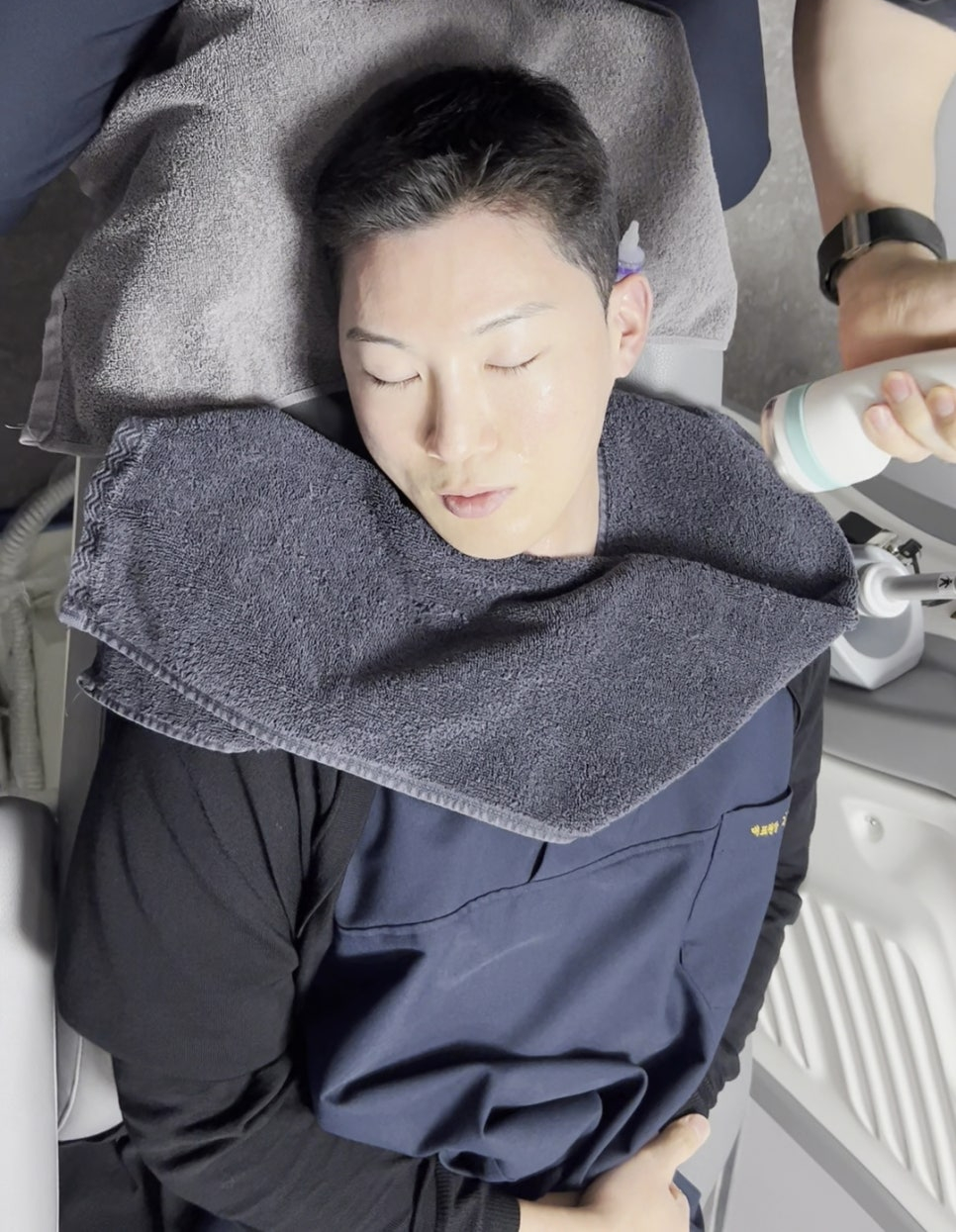
In my opinion,
the results of Onda lifting
are decided by the level of detail in the consultation process.
Even when using the same device,
how thorough the pre-procedure consultation was,
and how accurately the individual’s skin condition was reflected,
can completely change the outcome.
For example,
for someone with a lot of facial fat,
the contouring effect should be enhanced
mainly with the 7 mm handpiece,
and for someone with thin skin or many fine lines,
the stimulation of the dermis should be focused on
mainly with the 3 mm handpiece.
If this distinction is not clear,
or if the procedure is performed with the same settings for everyone,
fat in the subcutaneous layer may be reduced too much, causing hollow cheeks,
or conversely, the heat may not be delivered sufficiently,
resulting in a weaker effect.
That is why, before the procedure, it is essential to undergo personalized one-on-one consultation
and carefully check the facial contour, skin thickness, fat distribution,
and areas with reduced elasticity.
In addition, rather than looking only at the treatment area,
considering the overall proportions and harmony of the face is necessary
in order to achieve a natural and balanced result.
Therefore, when choosing a dermatology clinic at Gongdeok Station,
be sure to check whether it provides detailed assessments.
✅ Onda Lifting Checkpoints
② Energy Control
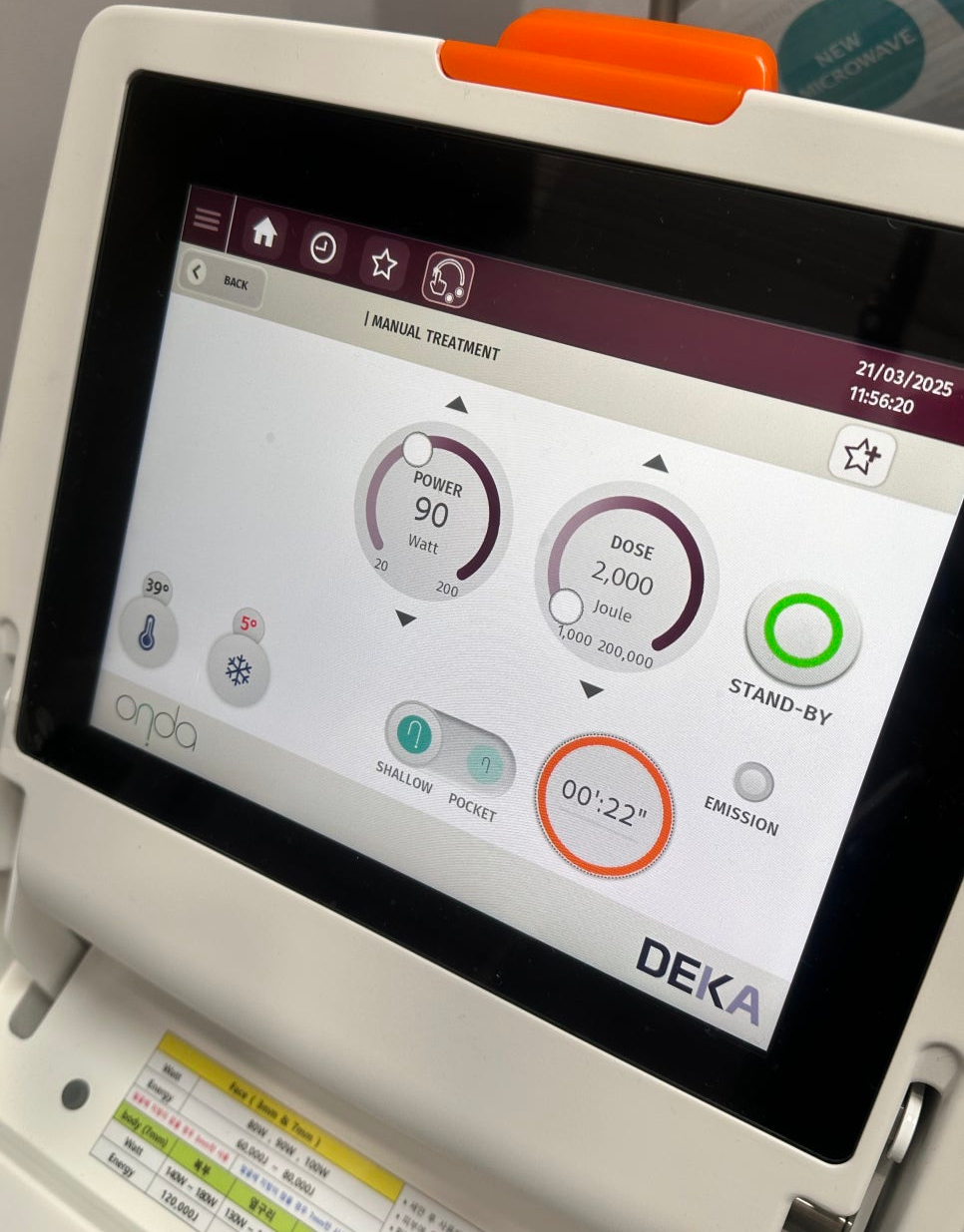
Did you know?
The results of lifting devices vary depending on the energy intensity, delivery depth,
and irradiation time.
The same goes for Onda lifting.
If the energy is too weak, improvement in elasticity may be insufficient,
and if it is too strong, heat damage
or side effects such as hollow cheeks may occur.
Therefore, it is important to finely adjust the energy while considering each person's skin thickness,
fat layer density, and degree of elasticity.
For example,
for someone with little facial fat,
the intensity should be lowered
in order to prevent unnecessary fat loss,
and for someone with a double chin or fuller cheeks,
the setting should be stronger
to induce fat cell destruction.
Also, even with the same energy setting,
reactions differ by area,
so the energy should be adjusted in finer detail by area,
such as the jawline, cheeks, and nasolabial folds.
Ultimately, the results of Onda lifting
depend on the clinician’s experience and the details at their fingertips,
not on the device itself.
So personally, if you are looking into a dermatology clinic at Gongdeok Station,
rather than only looking at the price,
I recommend also considering the medical staff’s experience, the consultation process,
and their know-how in energy control.
So today, we talked about Onda lifting
performed at Gongdeok Station Dermatology.
I hope this was helpful,
and if you have any questions, please leave them in the comments anytime.
I will answer them myself.
Thank you for reading.
This was Kim Ha-won from Gongdeok Station Dermatology.
This post has been written in compliance with Article 56, Paragraph 1 of the Medical Service Act.
It has been written solely for the purpose of providing information,
and is in no way intended to promote this hospital.
Since the effects and side effects may vary from person to person,
please be sure to have a thorough consultation with the medical staff.