Hello.
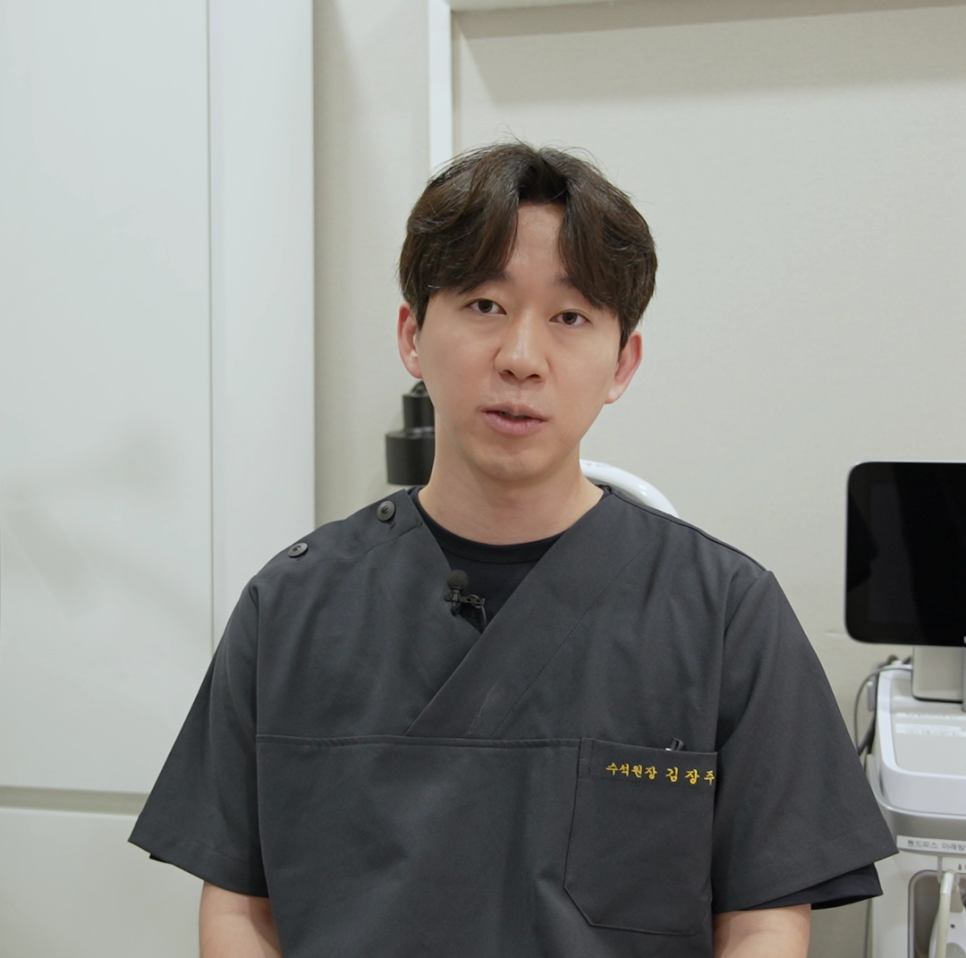
This is Kim Jang-ju from Beauty S Doctors.
When the temples become hollow,
many people come in for a consultation
because their face looks more gaunt,
or because the cheekbones appear even more prominent.
In fact, the temples
are the starting point of the facial side line,
and changes in volume in this area
have a bigger impact on the overall impression of the face than expected.
That is why temple filler should not be approached
as a treatment that simply fills a sunken area;
in some cases, satisfaction can be lower than expected.
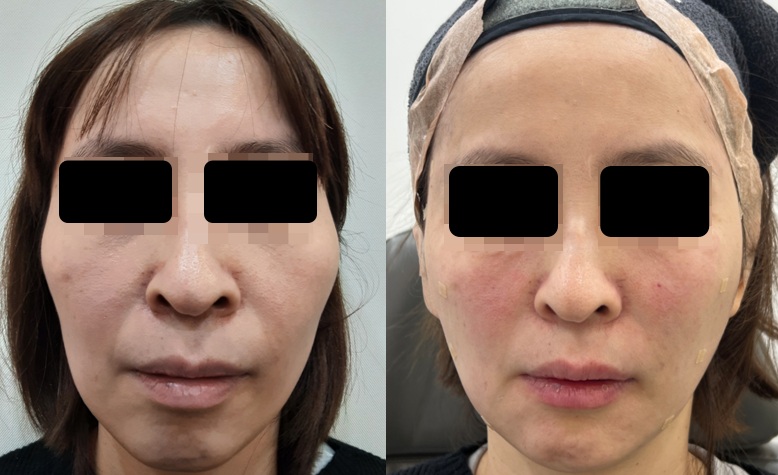
Before treatment: 2025. 10. 15
Immediately after treatment: 2025. 10. 15
(Results may vary from person to person)
This case involved a decrease in volume
in both the temples and the side cheeks,
which made the cheekbones
appear relatively more pronounced.
Rather than the cheekbones themselves being the problem,
there was not enough volume supporting the area around them,
which made the contrast in the facial contours stronger.
For a face like this,
it is much more natural to consider
not just temple filler alone,
but an approach that includes the side cheeks as well.
Why temple and side cheek filler
make the cheekbones look better
When filler is properly placed
in hollow areas such as the temples and side cheeks,
the cheekbones that used to look protruded
can appear much softer
and more balanced.
This is not about reducing
or hiding the cheekbones,
but about supplementing the surrounding volume
to ease the contrast in the contours.
When the hollow temples and side cheeks are filled,
the cheekbone prominence is less emphasized relatively,
and the facial side line connects more naturally,
making the overall impression look much more relaxed.
In this treatment,
a total of 6 cc of Juvederm filler was used
for the temple and side cheek areas,
with the design focused on restoring volume
and connecting the side facial line.
In addition, to balance the overall impression,
🔥 front cheek
🔥 marionette line
were treated together with Radiesse.
Why filler and Radiesse
were used together
The temples and side cheeks are areas where
immediate volume creation
and line refinement are important,
so a hyaluronic acid filler with stable elasticity
and longevity was used.
On the other hand, the front cheek and marionette line
are areas where,
rather than simply filling them,
skin support and reducing sagging
are more important.
So for these areas,
Radiesse, which induces collagen regeneration, was used
to focus more on improving density and firmness
rather than adding volume.
(We also mainly use Sculptra, haha)
Key changes after the procedure
After the procedure,
the line from the temple to the side cheek became more defined,
creating a softer-looking facial side line.
The angle of the cheekbones was softened,
and while the face did not look excessively wide,
the overall contour appeared more refined.
Rather than a noticeable increase in volume,
the change is closer to the feeling that
“the face looks more relaxed”
or
“the impression has become softer.”
This combination is especially suitable for cases like these
🔥 When hollow temples make the face look gaunt
🔥 When prominent cheekbones make the impression look strong
🔥 When temple filler alone felt burdensome
🔥 When you want to soften the contour impression without surgery
In these cases,
considering temple filler together with side cheek filler
can be a practical choice.
Temple and side cheek filler Q&A
Q1. If I get temple or side cheek filler,
will my face look bigger?
If a small amount is used at the proper location and depth,
the face often looks more refined rather than bigger.
The temples and side cheeks
are not areas that protrude forward;
they play a larger role in organizing the side line,
so they are less likely to look overly voluminous.
Q2. Is it also helpful for a face with prominent cheekbones?
In many cases, the cheekbones look more emphasized
because of a lack of surrounding volume
rather than because of the cheekbones themselves.
In such cases,
supplementing the temples and side cheeks
can reduce the contrast around the cheekbones
and make the overall impression much softer.
Q3. How long does temple and side cheek filler last?
Although this varies by person,
hyaluronic acid filler usually lasts around one year on average.
These areas tend to be relatively stable in terms of longevity
because they are not very active.
Q4. Can I go back to daily life right after the procedure?
In most cases,
yes, you can return to daily life immediately after treatment.
However, depending on the person,
a slight swelling or bruising may occur,
so if you have an important schedule,
it is better to plan with some extra time.
Q5. Is it better to inject a large amount at once?
Not necessarily.
Depending on the condition of the face,
it can be more natural and safer
to proceed with small amounts over several sessions.
In particular, for the temple area,
connecting the line is more important than adding too much volume.
Q6. Won’t combining it with Radiesse make it feel hard?
If used in the appropriate layer,
it is uncommon for it to look hard on the surface
or feel unnatural.
Over time,
it naturally blends into the tissue
and helps create firmness.
Q7. What is the most important thing in post-procedure care?
For a few days after treatment,
strong pressure, massage,
and excessive drinking or sauna use
should be avoided.
Also, the habit of frequently touching
or pressing on the treated area
can cause changes in shape,
so caution is needed.
Temple filler is not a treatment
that simply fills one area.
When the flow of the facial side line
and the balance extending through the cheekbones, cheeks,
and lower face are considered together,
it can lead to a truly satisfying result.
Even with the same temple filler,
satisfaction can clearly change depending on
how it is combined with side cheek filler.
Rather than first asking what looks protruded on my face,
it is important to calmly look at
which areas are hollow first.
Instead of deciding on treatment by yourself,
it is helpful to start with a consultation
based on sufficient experience
at a clinic where the face structure is examined directly.
If possible,
please also check whether the medical staff
who will perform the procedure are the ones
explaining things from the consultation stage,
and whether they are specifically pointing out the direction
that suits your face.
Thank you for reading.
This was Kim Jang-ju from Beauty S Doctors.