Hello.
I’m Kim Ha-won from Beauty's Doctors.
If you’re looking into lifting procedures,
there’s one device that’s been mentioned a lot lately,
along with Ulthera and Thermage.
It’s Onda Lifting.
You may have heard that the results are good,
but once you actually start considering the procedure,
these thoughts naturally come up.
So today,
from the perspective of someone who has experienced it firsthand,
I’d like to calmly organize the level of pain and safety of Onda Lifting,
along with the points you should be sure to check before the procedure.
Principles of Onda Lifting and Expected Effects
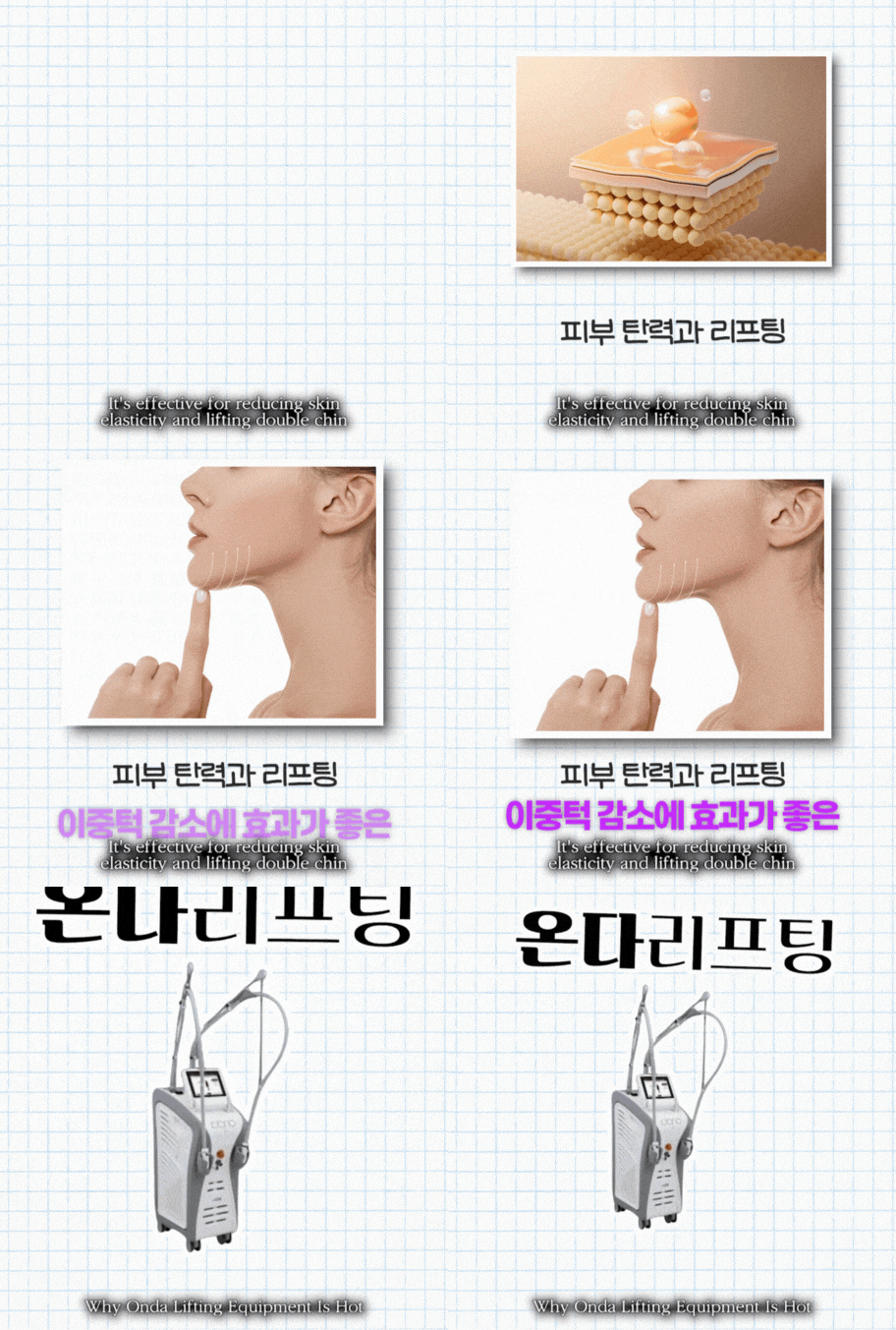
Onda Lifting is a device that uses microwave energy.
Compared with lifting devices based on radiofrequency or ultrasound,
it is characterized by its ability to deliver energy not only to the dermis
but also to the subcutaneous fat layer,
while minimizing damage to the epidermis.
First, the 3mm handpiece
transmits heat mainly to the lower dermis,
stimulating collagen synthesis
and inducing improved skin elasticity and reduced fine lines.
Meanwhile, the 7mm handpiece
works more deeply into the subcutaneous fat layer,
playing a role in inducing collagen remodeling
along with fat cell breakdown.
For this reason, one device can be expected to provide both
skin tightening and contour improvement,
which is one of Onda Lifting’s strengths.
The skin texture may become more refined,
elasticity may improve through collagen production,
and as the fat layer is reduced,
you may expect the facial line to appear more defined.
How Painful Is Onda Lifting in Practice?
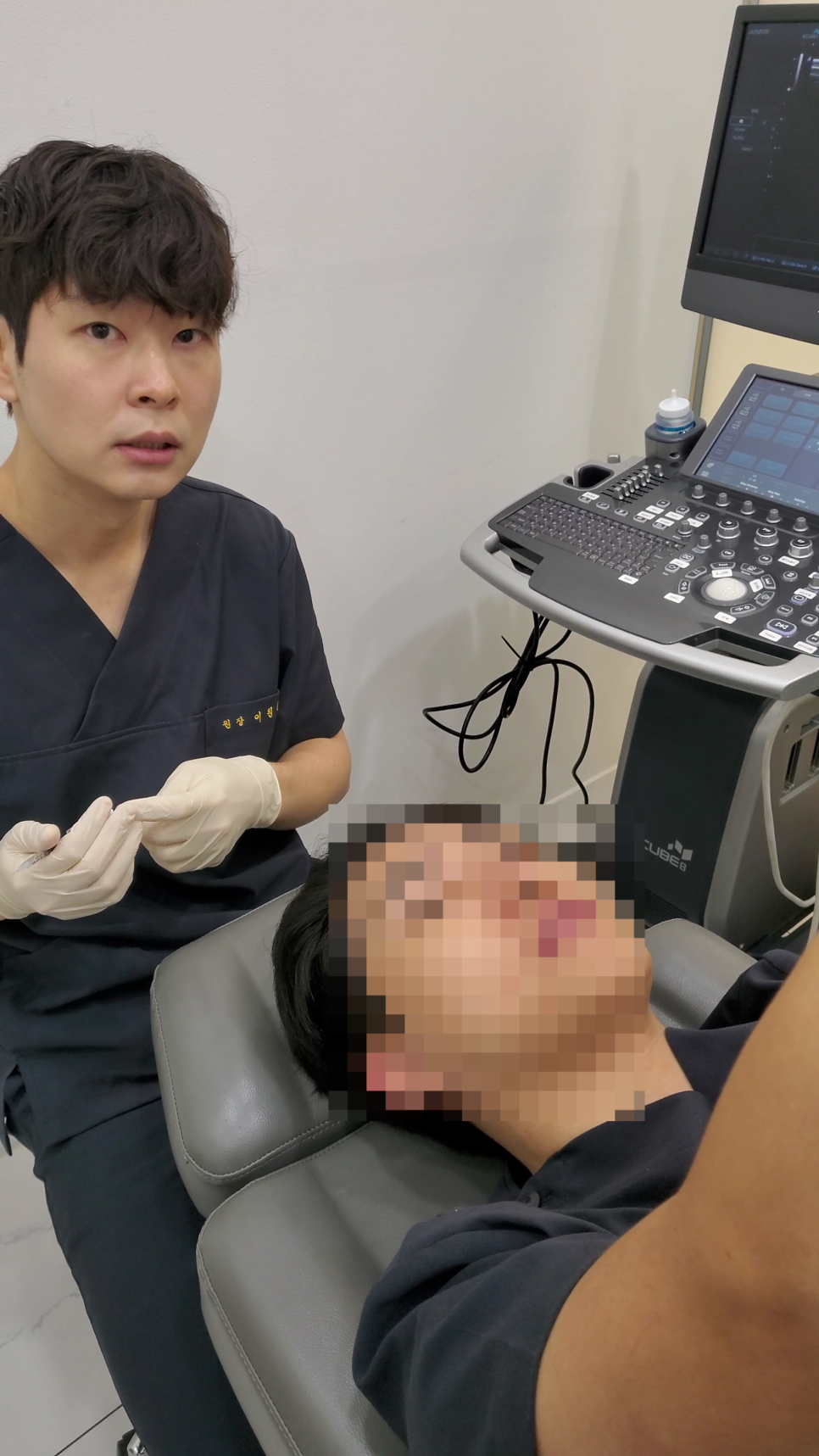
The part that worries people considering Onda Lifting the most
is, of course, pain.
Some hesitate while thinking of procedures with strong pain,
like Ulthera.
Overall, Onda Lifting is considered to be relatively less painful.
When performed with the 3mm handpiece,
it feels like warmth on the skin surface,
so it is not very burdensome.
With the 7mm handpiece,
there can be a warm, dull sensation
because the stimulation reaches the subcutaneous fat layer,
but for most people,
it is said to be at a level that can be tolerated.
In particular, Onda Lifting devices come with a built-in cooling system,
so cooling happens immediately as the energy is delivered.
Thanks to this, the sensation of heat subsides quickly
and the skin surface remains stable,
so in many cases, people can go about daily life without much inconvenience
right after the procedure.
Of course, pain varies from person to person,
but overall,
many people say, “It hurt less than I expected.”
I also personally found that it could be done smoothly
without significant pain 🙂
Side Effects and Downtime Summary
As with all energy-based procedures,
Onda Lifting can also rarely cause side effects.
The first is burns.
If heat concentrates excessively in the same area
or the energy intensity is not adjusted properly,
first- or second-degree burns can occur.
A first-degree burn involves skin redness and slight pain,
and usually recovers within a week.
In the case of a second-degree burn,
blisters and damage to the dermis may appear,
so recovery may take about 2 to 3 weeks,
and depending on how it is managed,
there is a possibility it could lead to scarring.
The second is hollowing in the cheeks.
During the process in which fat cells are broken down
with the 7mm handpiece,
if too much treatment is performed,
it can create the impression of sunken cheeks.
Unlike burns, in this case,
natural recovery is often difficult even as time passes,
so additional corrective procedures,
such as fillers or collagen boosters,
may be needed.
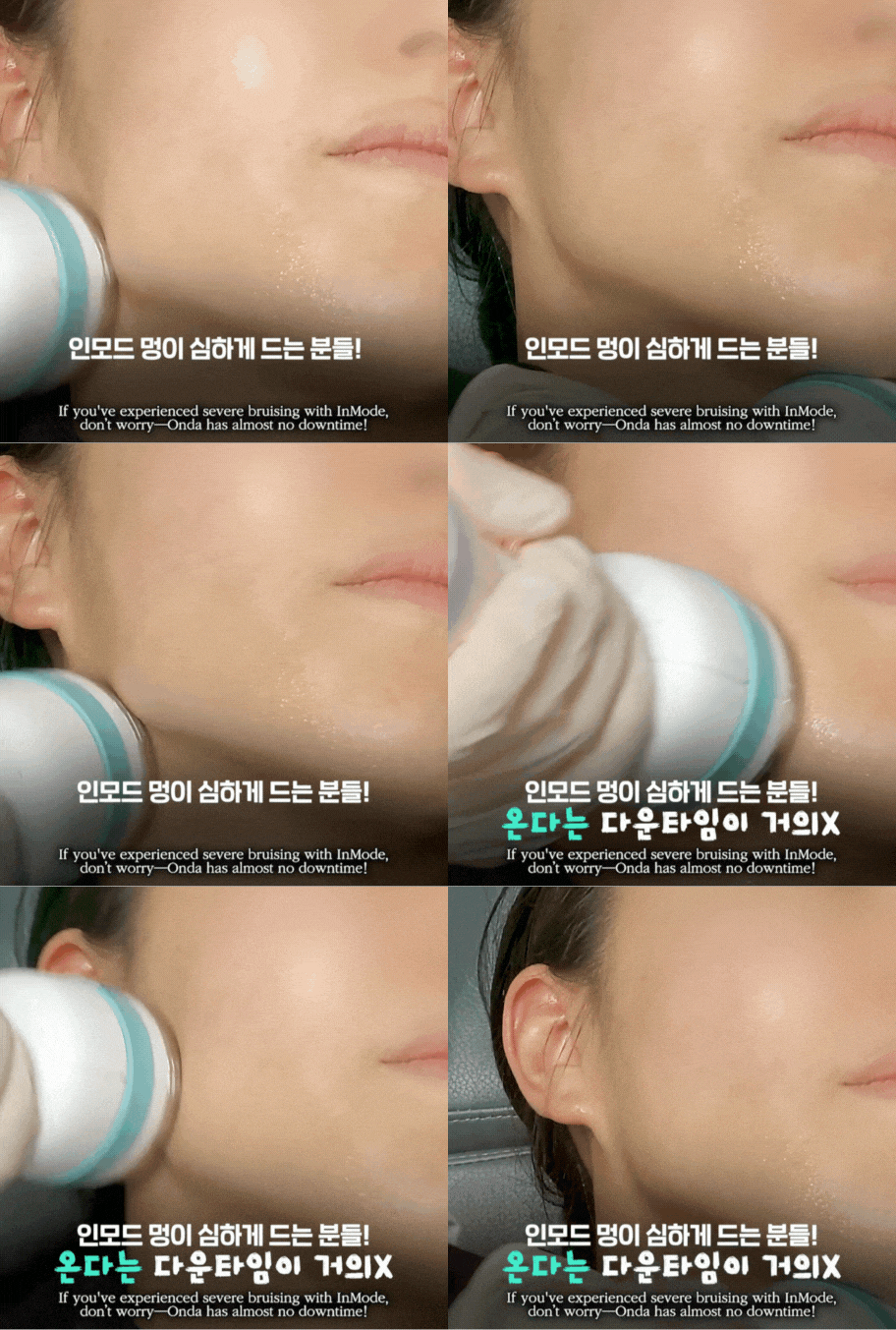 The third is downtime.
Right after the procedure,
redness, warmth, and slight swelling may appear,
but in most cases, these improve within a few hours.
In rare cases, bruising or temporary changes in sensation may occur,
but there is almost no downtime that would interfere with daily life.
For this reason, Onda Lifting is not simply a procedure that is performed by filling a number of shots,
but one that requires accurately identifying
skin thickness, fat layer distribution,
and the areas where loss of elasticity is concentrated
before proceeding.
When a detailed diagnosis and energy adjustment tailored to each person’s skin condition are carried out,
more safe and satisfying results can be expected.
Rather than focusing only on the pain of Onda Lifting,
if you consider these factors as well,
it will be much more helpful when choosing a procedure.
Summary of Today’s Key Points
1️⃣ A procedure that can be expected to provide both tightening and contouring
2️⃣ Although rare, side effects such as cheek hollowing and burns can occur
3️⃣ Adjusting the energy according to each person’s skin condition is most important
If you have any additional questions about the pain associated with Onda Lifting,
feel free to leave them in the comments anytime.
Based on my firsthand experience,
I’ll answer sincerely.
Thank you for reading.
This was Kim Ha-won.