Hello.
I’m Kim Ha-won from Beauty's Doctors.
A short chin tip, commonly called a “weak chin,”
is not simply a matter of the chin alone,
but a factor that directly affects
the balance of the entire face.
If the chin tip is short or set back,
the mouth may appear relatively more protruded,
and the boundary of the lower face can become less defined,
making the overall facial impression
feel dull and heavy.
For this reason, chin tip filler
may seem like a relatively simple procedure,
but in reality,
facial anatomy, filler properties, injection depth, and aesthetic standards
must all align precisely
to achieve natural and safe results.
Today, when deciding on chin tip filler,
I will explain in more depth the
6 key points that must be checked.
1️⃣ The starting point of the procedure is always ‘anatomical safety’
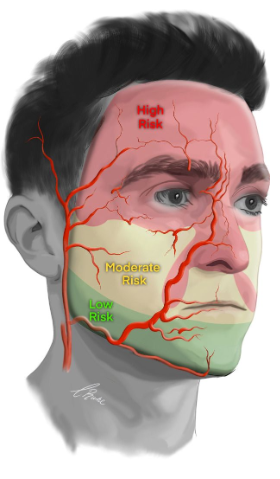
Needle vs. cannula, the difference in tool selection
The most concerning side effect in filler procedures is
not simple bruising or swelling,
but intravascular injection of the filler.
In the chin area,
branches of the facial artery and nerve structures
are distributed in a relatively complex manner,
so if the procedure is performed without an accurate understanding of anatomy,
unexpected risks may arise.
Precautions when using a needle
A sharp-tipped needle can
directly penetrate the vessel wall.
Especially in the case of less experienced practitioners,
if injection proceeds without noticing resistance,
the risk of filler entering a blood vessel increases.
This can lead to serious side effects
such as skin necrosis and impaired blood flow,
so it is the first factor that must be considered before the procedure.
Beauty's Doctors’ approach
For chin tip filler procedures,
we make it a rule to use a blunt-tipped cannula.
Because a cannula advances by pushing surrounding tissue aside
rather than piercing blood vessels,
the possibility of vascular injury can be greatly reduced.
It also causes less tissue damage,
so bruising and swelling after the procedure are relatively less,
and the recovery period is shorter.
2️⃣ Even if fillers look ‘the same,’ they are different
Strategic selection based on properties
In chin tip filler,
product selection is not simply a matter of brand,
but the design strategy itself.
Because the chin area is clearly divided into
regions that need structural support
and regions that must connect smoothly,
the choice of filler properties determines the result.
The role of a firm filler
In areas such as the central chin tip,
where the shape needs strong support
and forward projection needs to be created,
a filler with high cohesiveness and elasticity is used.
Such fillers are less likely to spread in shape over time
and are advantageous for keeping the chin tip edge clear and defined.
The role of a soft filler
For the side of the chin,
the boundary where bone structure meets soft tissue,
or in cases of volume loss due to aging,
a softer filler is selected.
The goal is to blend naturally with the surrounding tissue
and complete a smooth lower-face line without an artificial look.
3️⃣ The difference created by choosing the injection depth
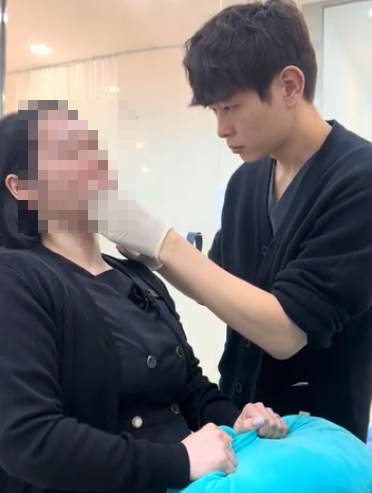
Subcutaneous layer vs. muscle layer
In chin tip filler,
which layer the filler is injected into
is directly linked to the naturalness of the expression.
Sometimes, to correct a weak chin,
injection is performed into a deeper layer below the muscle,
but in most cases,
the basic principle is injection into the subcutaneous fat layer above the muscle.
When injected into the subcutaneous fat layer,
even when moving the chin or speaking,
the filler does not move excessively,
allowing the most natural-looking volume to be created.
Criteria for determining the amount
The amount of filler is not a matter of
“how much should be put in.”
✔ The degree of volume loss in the existing bone structure
✔ Whether to lengthen the chin (downward extension)
✔ Whether to emphasize three-dimensionality (forward projection)
Based on these three factors,
it is important to set a personalized amount for each individual.
4️⃣ Ricketts line, but never an absolute rule
In chin design,
the most commonly mentioned standard is the
Ricketts line (E-line), which connects the tip of the nose and the chin tip.
In general,
the ideal standard is to design it so that
the lips do not protrude excessively beyond this line.
However, Beauty's Doctors does not become fixated on this standard alone.
Because the face is a three-dimensional structure rather than a flat one,
there are many cases where the overall harmony of the features
is much more stable even if the face falls outside the Ricketts line.
✔ Ethnic characteristics
✔ Facial angles
✔ Lip thickness and volume
✔ Overall facial proportions
Taking all of these factors into account
to find “the balance point that is most like you”
is true aesthetic design.
5️⃣ Design direction changes depending on gender
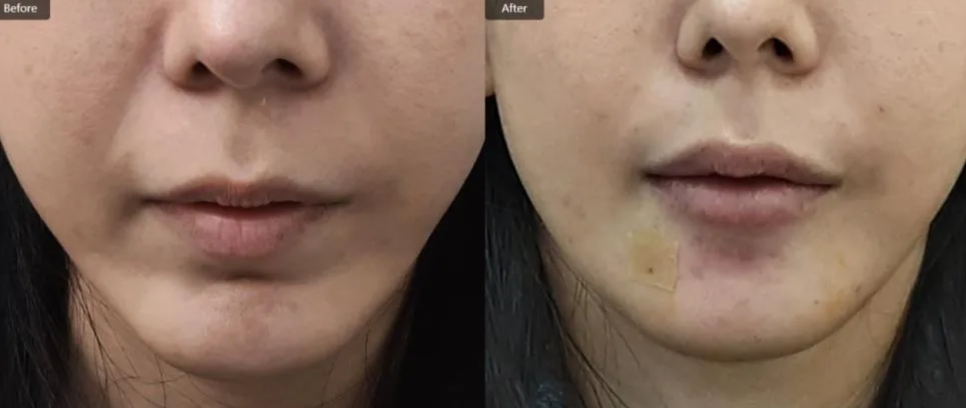
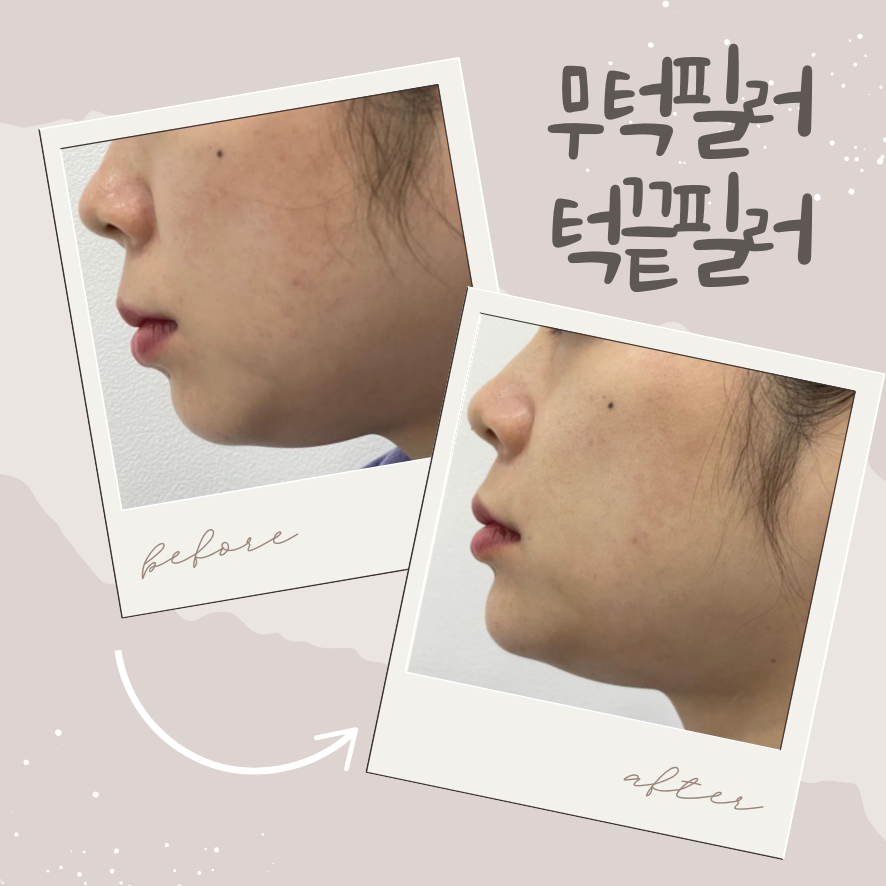
This photo is an actual patient photo taken after the procedure (25.10.27), and no brightness or color correction has been applied.
Results may vary depending on the individual’s skin condition, and it has been posted with the patient’s consent.
Chin tip filler
can be applied to both men and women,
but the impression being pursued is clearly different.
👨 Male chin tip design
If the chin tip is too pointed,
it can create a light or sharp impression.
Therefore, the design emphasizes strength and reliability
by creating a slightly flatter and more stable shape
that preserves definition.
👩 Female chin tip design
Although it varies depending on facial shape,
a rounder shape that naturally tapers downward
into a V-line is generally preferred.
The design is created so that soft curves continue
from both the front and side angles.
6️⃣ Why chin filler can help with a protruding mouth concern in people in their 60s
In middle-aged and older women,
loss of chin tip volume due to aging
can make the mouth appear relatively more protruded.
In such cases, chin tip filler can
go beyond simple contour correction
and help visually reduce the appearance of a protruding mouth.
By restoring volume to the chin tip,
the balance of the lower face is improved,
which creates the effect of the mouth appearing naturally set back,
and by supporting sagging soft tissue,
it is also highly satisfying from an anti-aging perspective.
At the beginning of filler injection,
a temporary feeling of pressure may be felt,
but over time,
the surrounding tissue naturally adapts.
Since this is not a procedure that leaves long-term problems
in the bone structure or soft tissue,
you do not need to worry excessively.
Chin tip filler is a short procedure
that takes about 15 minutes,
but within that time it contains
anatomy, filler selection, injection depth, and aesthetic proportions.
Through sufficient consultation
and the design of experienced medical staff,
I hope you find the natural chin line
that best suits your face.
Thank you for reading.
This was Kim Ha-won.