Hello.
I’m Beauty’s Doctor Kim Jang-ju.
As we age, the first change we often notice is
“hollowness.”
The cheeks become flatter than before,
nasolabial folds look deeper,
and the jawline becomes less defined.
In the past, this kind of change was
often thought of simply as “lost volume,”
so filling it with fillers was the common approach.
But recently,
the trend has changed a little.
More and more people prefer treatments that
help the skin recover on its own
rather than simply filling empty space.
That is why the keyword that often comes up in consultations is
collagen injection, Radiesse.
The concept of “structural regeneration,” not just simple volume
When consulting at Hongdae Entrance Station Dermatology,
before asking about the effect,
“Are there any side effects?”
“I heard nodules can form.”
We get many questions like these.
That shows this is a treatment with lots of information
but still not enough accurate understanding.
So today,
we’ll go over Radiesse’s ingredients, mechanism of action,
the process by which results appear,
and the key points for reducing side effects.
Ingredients and mechanism of action of Radiesse
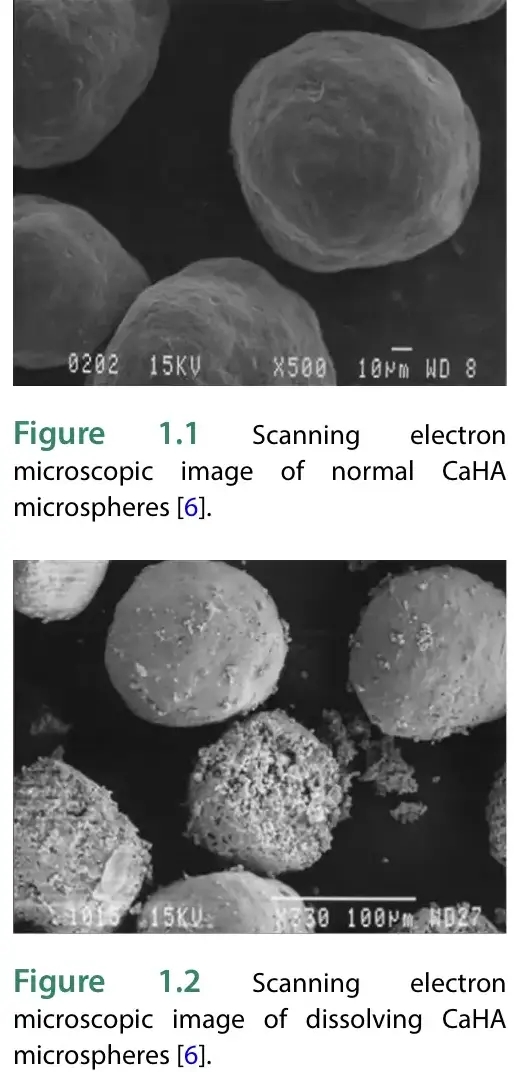
The key ingredient in Radiesse is
CaHA (calcium hydroxylapatite).
This ingredient is a biocompatible substance
also found in our bones and teeth,
and it is considered relatively safe.
The CaHA microparticles
are uniformly dispersed in a CMC (carboxymethyl cellulose) gel.
The reason this combination matters is
because it works in two stages.
Stage 1: Immediate support effect
The CMC gel forms physical volume
immediately after injection.
So even right after the procedure,
you can see some degree of volume change.
Stage 2: Collagen regeneration stage
As time passes, the CMC is slowly absorbed,
and the CaHA particles stimulate the surrounding fibroblasts.
In this process,
✔ Increased production of type 1 and type 3 collagen
✔ Stimulation of elastin synthesis
✔ Increased proteoglycan production
✔ Stimulation of microvascular formation
occur, and the skin’s internal structure gradually becomes denser.
This is closer to the concept of strengthening the skin’s framework
rather than simply filling in a sunken area.
This is why, during collagen injection consultations at Hongdae Entrance Station Dermatology,
we explain both “improved elasticity” and “changes in skin texture.”
When do results become visible?
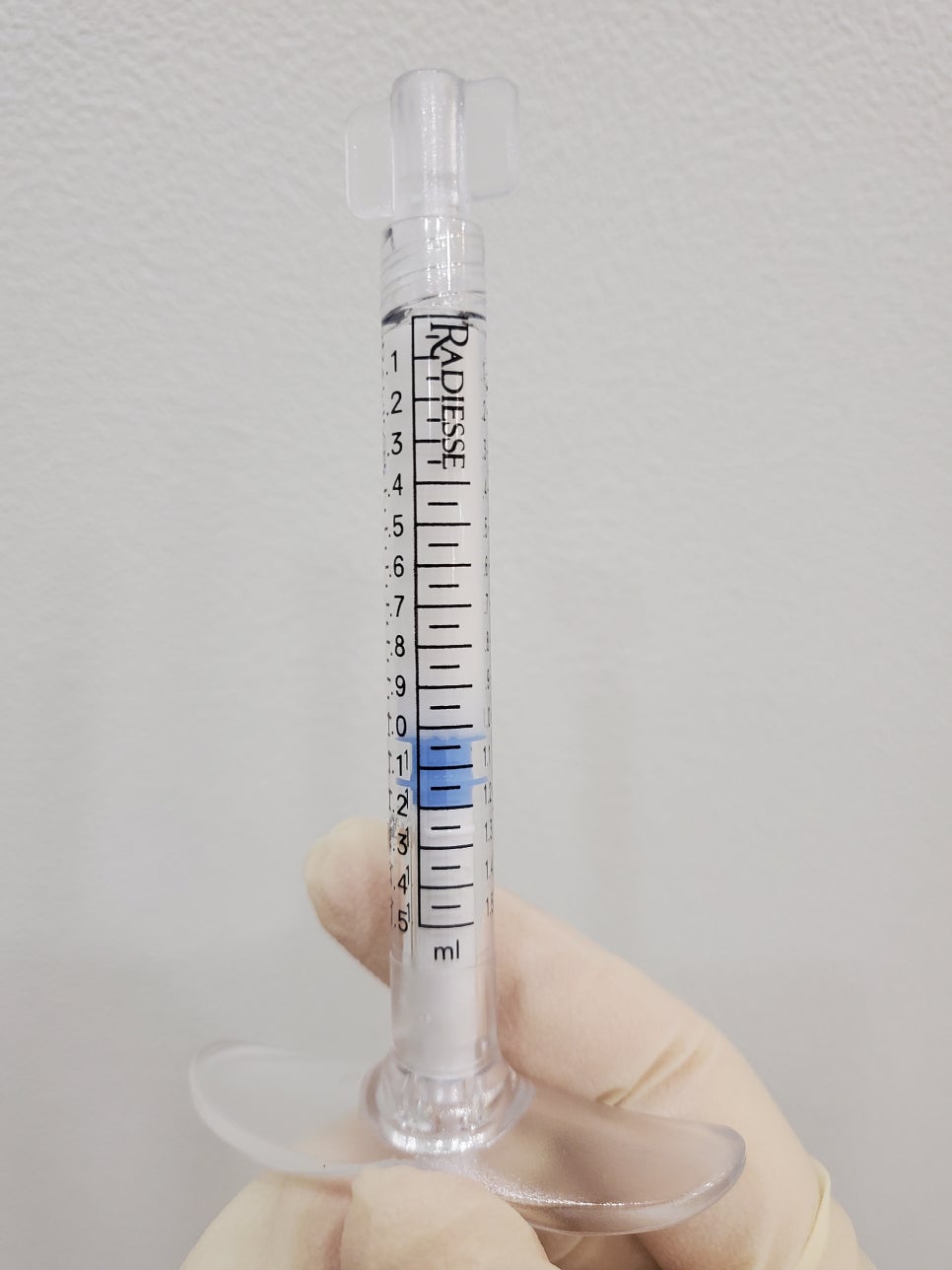
This is the question we hear most often.
“Can you see it right after the procedure?”
Immediate volume may be visible,
but the real changes
appear over time.
In general,
2–4 weeks
The skin texture gradually becomes softer
6–9 weeks
You begin to feel an increase in elasticity
Around 3 months
The structural regeneration effect stabilizes
This is the typical timeline.
Patients who visit Hongdae Entrance Station Dermatology also often say around the 6- to 8-week mark,
“My skin feels firmer.”
That is the period when collagen regeneration
starts to become fully active.
Are Radiesse side effects really dangerous?

With any procedure,
there is always a possibility.
Among Radiesse side effects,
the one mentioned most often is
“nodules.”
Nodules are more likely to occur when
the material collects too much in one area,
the dilution is not appropriate,
or the injection layer is inaccurate.
In particular, if collagen production is excessively stimulated,
it may feel firm to the touch.
This is important because it depends on
the practitioner’s skill level
and differences in the procedure method.
Three key ways to reduce nodules
At Hongdae Entrance Station Dermatology,
we especially emphasize the following three points.
Accurate dilution ratio
In the past, it was used like a filler,
but now, because the purpose is collagen regeneration,
saline dilution is essential.
Differences in concentration lead to differences in results.
Uniform hydration process
If the particles are not sufficiently hydrated,
minor clumping can occur.
Layer control
Uniform dispersion within the dermis is key.
Concentrated injection into a single point should be avoided.
When these three are followed,
the likelihood of Radiesse side effects
is significantly reduced.
In fact, the probability of nodules forming
is considered very low.
However, since the possibility is not 0%,
it is important to understand the principle before proceeding.
Who is Radiesse suitable for?
• People who feel filler treatment is burdensome
• People who want a natural volume recovery
• Those in the early aging stage, when nasolabial folds and cheek hollowness begin
• People who want both improved elasticity and better skin texture
On the other hand,
if you want an immediate and dramatic volume change,
another method may be more suitable.
During consultations at Hongdae Entrance Station Dermatology,
we create a customized plan by considering skin thickness,
the degree of hollowness,
and any history of previous procedures.
Key summary of collagen injections
🧪 Not just volume, but structural regeneration
🧪 Stimulates collagen and elastin at the same time
🧪 Results begin to develop in earnest from 6–9 weeks
🧪 The possibility of nodules is low, but it exists
🧪 Dilution, hydration, and uniform injection are key
The safest approach is to understand the procedure
and then decide.
If you are considering collagen injections,
please carefully check the ingredients, the mechanism,
and the injection method.
If you have any questions,
leave them in the comments.
I’ll answer them personally.
Thank you for reading.
This was Kim Jang-ju.