Hello.
This is Wi Young-jin from Beautys Doctor.
When I consult with people who are looking into lifting procedures,
there is something I hear fairly often.
“Thermage is said to be effective,
but the price is burdensome,
and I still want to take care of my skin elasticity.”
For people with these concerns,
the device that naturally draws attention is
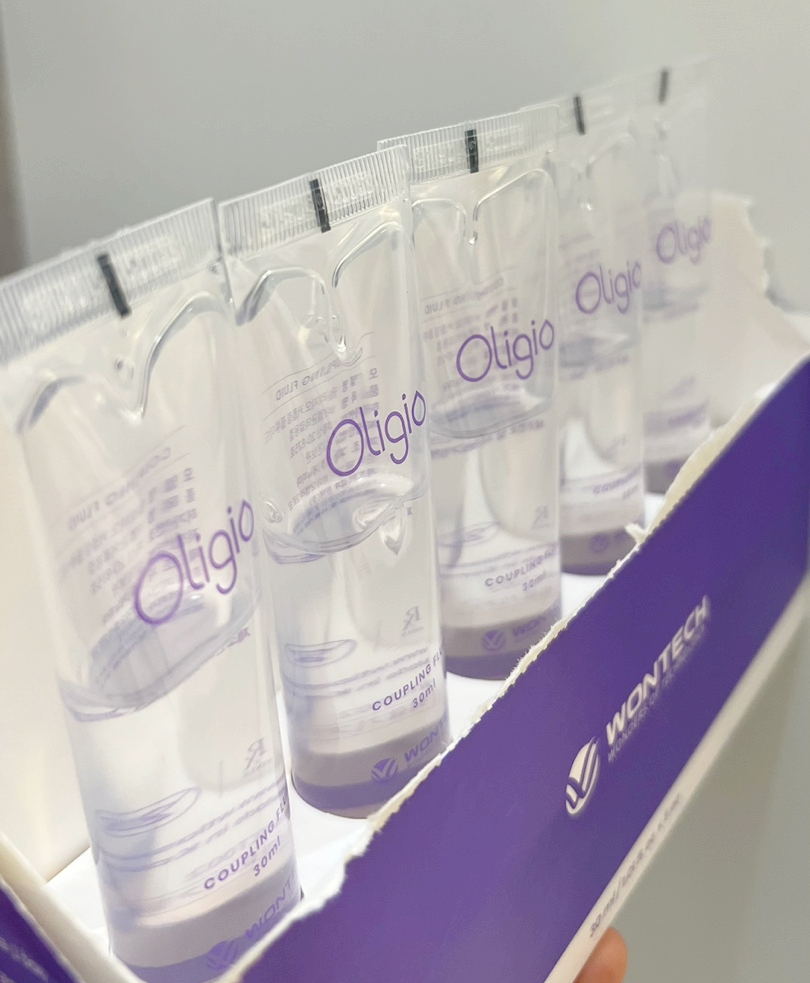
Oligio.
Oligio uses radiofrequency (RF) energy to
stimulate the dermal layer of the skin
and induce collagen production.
By organizing the environment within the skin,
it can help improve skin texture
and manage firmness as well.
For that reason,
it is also a device that has been mentioned consistently in recent years.
Oligio 300 shots: does it have a lifting effect?
“If I get Oligio 300 shots,
will my face be lifted?”
To say it first,
it is difficult to expect a strong lifting effect
that pulls sagging skin upward.
The reason becomes easier to explain
when you understand the cause of skin sagging.
As time passes,
the structures beneath the skin—
- SMAS fascia layer
- subcutaneous fat layer
—move downward overall,
which leads to sagging in the face.
However, Oligio is a procedure that
primarily delivers radiofrequency heat to the dermis.
In other words,
it works on a different principle
from lifting devices that directly pull up the fascia layer.
So simply understanding it as
“if you get Oligio,
your face will be pulled up dramatically”
can be a somewhat exaggerated interpretation.
Then is Oligio a meaningless procedure?
Here, there is an important point.
Just because the lifting effect is not strong
does not mean the procedure is ineffective at all.
Rather, Oligio plays a fairly important role
in managing skin aging.
When radiofrequency energy
reaches the deeper dermal layer of the skin,
changes begin to occur within the skin,
including the following.
Fibroblasts become activated,
collagen regeneration is induced,
and the dermal structure gradually
starts to reorganize.
As this process continues,
skin density becomes progressively more compact,
skin texture becomes smoother,
and you can expect improvements in fine wrinkles.
In other words,
Oligio is less of a lifting device that strongly pulls up sagging skin
and more of a tightening-focused procedure
that helps build a firmer foundation of elasticity within the skin.
How effective are Oligio 300 shots?
So then,
what kind of changes can you expect
from Oligio 300 shots?
The number 300 shots
is better understood as a shot count suited more for improving skin density and elasticity in specific areas
rather than for strongly lifting the entire face.
For example,
if the procedure is performed with a focus on localized areas such as
cheek firmness management,
tightening around the jawline,
and refining skin texture,
it can be a fairly efficient number of shots.
In practice, after the procedure,
many people describe changes such as the following.
✨ A more refined overall skin feel
✨ Smoother-looking skin texture
✨ Finer-looking wrinkles
These changes are often felt gradually,
usually starting about 2 to 4 weeks after the procedure.
A characteristic of radiofrequency procedures is that
rather than producing immediate changes,
they appear gradually as skin regeneration progresses over time.
What matters more than the number of shots


Many people ask,
“Is 300 shots good?”
“Are 600 shots more effective?”
But in reality,
the number of shots itself is not the most important factor.
Depending on factors such as
skin thickness,
degree of loss of elasticity,
and facial structure,
it is much more important to design
- the number of shots
- the energy intensity
- the overlapping treatment areas
individually for each person.
Some people feel sufficient changes with 300 shots,
while for others,
600 shots or more may be necessary.
In some cases,
rather than increasing the number of shots,
it may be more effective to perform overlapping treatment
with increased density in specific areas.
That is why, in an Oligio procedure,
the most important thing is not the device name or the number of shots,
but the medical staff’s treatment design and handling.
Oligio is
less of a lifting procedure that physically
pulls the skin up strongly
and more of a tightening-focused procedure
that gradually improves skin density and elasticity
by building up collagen in the skin little by little.
So rather than the number 300 shots itself,
it is much more important to accurately design
the shot count and energy distribution
based on the facial structure and skin condition.
In addition, Oligio’s effect depends more on
when and at what intervals it is received
than simply on how many times it is done.
For people starting lifting procedures for the first time
or those who want to manage skin elasticity naturally,
it can be an anti-aging management method
that is easy to begin without much burden.
When considering a lifting procedure,
rather than looking only at the machine name
or the number of shots,
it is important first to check whether it is a procedure suited to your skin condition
and
how the procedure is designed.
If you are still thinking about the effect of Oligio,
I recommend checking your current skin condition through a consultation
and setting up a lifting plan
suited to your skin.
Thank you for reading this long post.
This was Wi Young-jin.