Hello,
This is Kim Jang-ju from a Mapo dermatology clinic.
For those considering lifting procedures,
you end up comparing a lot more information than you might expect.
In the end, it all comes down to one thing.
A method that fits your skin condition,
and a procedure that can properly address
what you are concerned about.
In particular, many people these days search for a Mapo dermatology clinic
and come across various lifting-related information.
But once you actually start looking into it,
there are many cases where it only becomes more confusing.
That is because the types of lifting procedures themselves
are so diverse.
Representative examples include
Ultherapy, which is based on ultrasound,
and Thermage, which is based on radiofrequency.
Because devices based on different principles exist,
it is natural to ask,
“Which one is better?”
In actual consultations at a Mapo dermatology clinic,
this is a question we hear very often.
But what matters is not whether one is better or worse,
but which direction is more suitable for your skin.
Although they may seem similar,
there are clearly points that are decisively different.
If you read this article to the end today,
that 기준 will become much clearer.
Do lifting treatments all seem similar?
The point where that thought changes
is right here.
Ultherapy and Thermage are often mentioned together
as representative lifting devices,
but in reality, they are completely different
from the depth at which they work
to the direction of their effects.
Let’s look at the key points first.
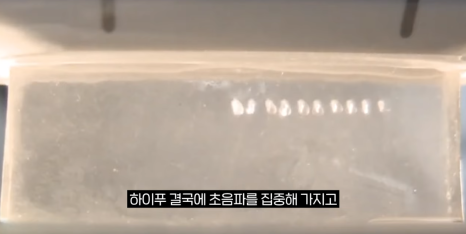
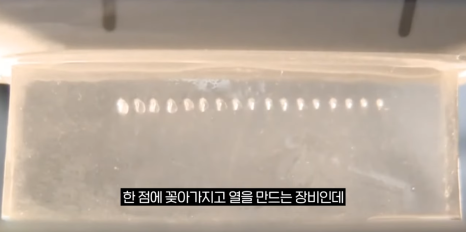
Ultherapy uses high-intensity focused ultrasound (HIFU)
to deliver energy to the deep layers of the skin,
that is, down to the SMAS layer (the fascial layer).
Because this layer is actually directly related
to facial sagging,
it can be seen as a procedure focused on lifting,
that is, the effect of “pulling things upward.”
It is especially suitable for concerns caused by sagging downward,
such as a double chin, jowls, and nasolabial folds.
The number of people visiting a Mapo dermatology clinic with these concerns
is also steadily increasing.
However, because it stimulates deep layers,
there can be a sense of pain,
and the effect is not immediate;
it appears gradually over 1 to 3 months.
By contrast, Thermage uses radiofrequency (RF)
to deliver heat broadly and evenly
throughout the dermal layer of the skin.
In this process,
collagen regeneration is promoted,
which increases skin density
and works in a way that improves firmness and texture.
In other words, Thermage is less about
“lifting”
and more about
tightening and refining the skin.
If your face looks puffy after washing,
or if fine wrinkles and pores are a concern,
it can be a procedure that feels more noticeable.
In consultations at a Mapo dermatology clinic,
there are also quite a lot of inquiries
with the goal of improving skin texture like this.
In addition, many people feel as if their skin firmness has improved
immediately after the procedure,
and the pain is relatively less
compared with Ultherapy.
When you compare them like this,
both procedures may seem to have similar goals,
but you should clearly understand
that their approaches themselves are different.
That is why what matters is not
“which procedure is better,”
but rather
“which method do I need more right now?”
This is also the part we emphasize most
in the clinical setting at a Mapo dermatology clinic.
Ultherapy vs Thermage
In cases like these,
Ultherapy may be a better fit.
🧡 If you are concerned about facial contours that have dropped downward,
such as a double chin or jowls
🧡 If you have wrinkles that look deeper
because of sagging, such as nasolabial folds
🧡 If you are starting lifting care in earnest
Ultherapy works by sending ultrasound energy
down to the SMAS layer,
forming thermal coagulation points,
causing the tissue to contract,
and as a result,
pulling sagging skin upward.
In other words, if you are in a situation where lifting itself is the focus,
it is a choice that can be considered first.
People who visit a Mapo dermatology clinic
with these lifting concerns are especially common.
On the other hand, in these cases,
Thermage may be more suitable.
🧡 If your skin as a whole feels
loose and less firm
🧡 If fine wrinkles stand out when you look in the mirror
🧡 If you want to expect improvements in skin texture, tone, and pores as well
Thermage applies heat stimulation
to the entire dermal layer,
inducing collagen regeneration
and finely organizing the skin structure.
As a result,
you feel changes that make the skin texture smoother
and the firmness more refined.
This is also one of the procedures
that remains consistently popular
at a Mapo dermatology clinic.
Important points


Depending on skin thickness,
amount and location of fat,
firmness condition,
and degree of aging,
the application method can be completely different
even for the same device.
Recently,
many people consider Ultherapy and Thermage together
or choose to combine them,
but even then,
it should not be viewed as a simple combination;
it must be based on accurate diagnosis and planning.
This is also one of the most important points
we emphasize during consultations at a Mapo dermatology clinic.
🧾 Today’s key summary
🧡 Ultherapy
Ultrasound-based / stimulates the SMAS layer
Focuses on lifting
🧡 Thermage
Radiofrequency-based / stimulates the dermal layer
Focuses on firmness, texture, and pore improvement
🧡 Important point
Both procedures are highly effective,
but depending on each person’s skin condition,
the perceived results and duration of maintenance may vary.
If you are considering a lifting procedure,
first accurately understand your skin condition,
and then approach it in a direction that suits it;
that is the safest way
and leads to the most satisfying results.
If you have more questions
about Ultherapy and Thermage,
please feel free to contact us.
Even by Mapo dermatology clinic standards,
the process of determining the right direction through consultation is very important.
Thank you for reading.
This was Kim Jang-ju.