Hello.
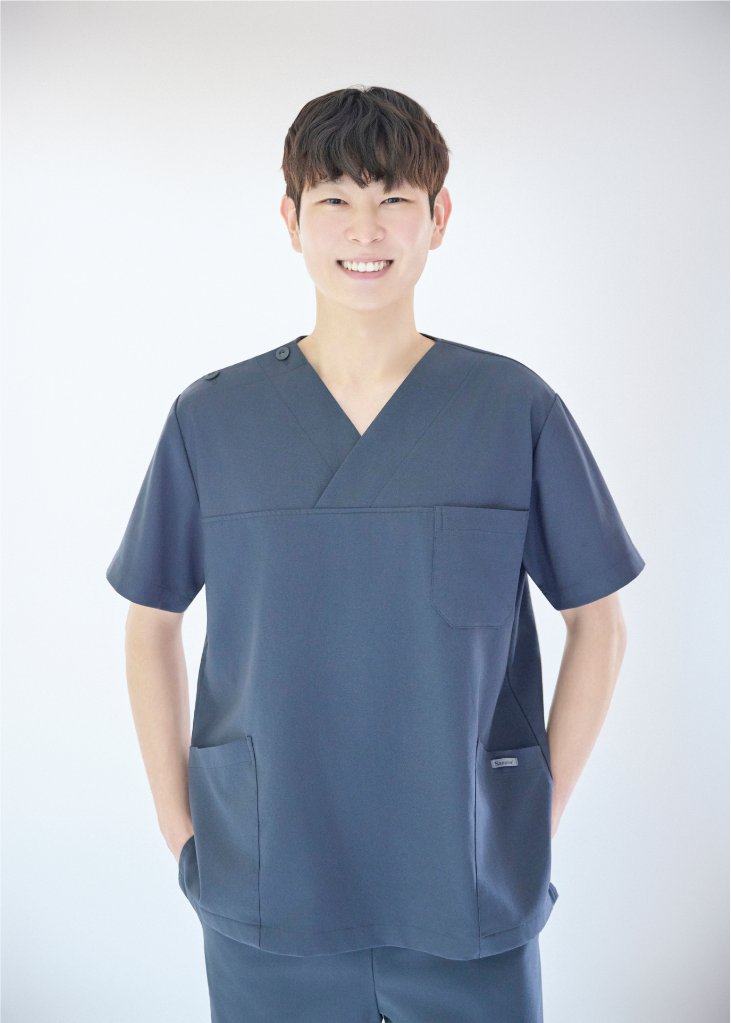
This is Beauty's Doctor Kim Hawon.
If you exercise consistently,
or if you spend long hours standing,
you may have experienced the feeling that
your calves in particular become hard and bulky.
Especially in this area,
it does not easily slim down like fat,
and because the overall line can look thicker,
the stress can feel even greater.
The problem is
that these calf muscles are not simply fat,
but are ‘muscle.’
So in many cases,
diet control or stretching alone makes it hard
to create a noticeable change.
For this reason, recently,
more and more people have been considering
a method that controls the muscle itself,
namely calf Botox.
Can calf Botox really reduce bulky calves?

To get straight to the point,
if it is a muscle-type calf,
meaningful change is certainly possible.
Calf Botox is a procedure that injects botulinum toxin
into the gastrocnemius, the muscle located on the outer side of the calf,
to relax the contraction of
an overdeveloped muscle.
Simply put,
it helps release the force of muscles that have been staying tense,
thereby reducing their overall volume.
Through this process,
✔ the protruding bulky shape is softened,
✔ the calf line is smoothed out more naturally,
✔ and the angular appearance can be
softened naturally.
When do the effects appear?
In general, many people begin to notice changes
about 2 to 4 weeks after the procedure,
and especially for those who normally use their calf muscles a lot,
noticeable differences can often be felt
after just 1 or 2 sessions.
Here, there is one important point.
Calf Botox is not simply a procedure that makes you “thinner.”
It is closer to the concept of “line correction”:
softening a hard, protruding line
and making it look more natural.
So even when the same procedure is performed,
there are cases where the results differ greatly.
In the end,
the reason comes down to whether the plan was tailored to my muscles.
First, muscle volume and body type.
Even when the same dosage is used,
a person with highly developed muscles
and one without them
will respond differently.
In particular,
people who work in jobs that require long hours of standing
or those who have consistently done lower-body exercise
have larger muscle volume,
so the change after the procedure may feel more pronounced.
The next factor is the treatment area and depth.
If injections are given simply based on the visible bulky area,
without a careful plan,
the desired result may not appear.
By considering the muscle thickness,
the distribution of the fat layer,
and the individual's body shape together,
the injection depth and range must be designed
for a natural and balanced result.
Another important point is
the direction and structure of the muscles.
The calf is not just a single muscle;
it has a complex structure with multiple layers.
Among them,
if the gastrocnemius that appears on the surface is not precisely targeted,
the effect may be reduced
or discomfort may occur.
That is why,
rather than simply “injecting where it looks bulgy,”
a pattern-based plan that also considers
how the muscles move when walking and when exerting force
is much more important.
That is why the same dosage does not necessarily mean the same result.
With calf Botox,
‘where and how it is designed’
matters more than ‘how much is injected.’
Post-procedure care can also affect
how long the results last.
For example,
if you frequently wear high heels,
climb stairs, or repeatedly do lower-body strength training,
the relaxed muscles may develop again,
which can shorten the duration of the effect.
On the other hand,
habits such as light walking, stretching, and massage
can help suppress excessive muscle development
and help maintain the line for longer.
What many people overlook
is that even the same procedure can produce very different results
depending on the practitioner’s anatomical understanding and planning.
It is not simply about injecting;
you need to consider these three things together:
✔ the direction in which the muscles have developed
✔ the pattern of force and tension
✔ left-right balance
Without this process,
if only the dosage is increased
or the injections are placed inaccurately,
the effect may be insufficient
or the line may look awkward.
Typical examples include
left-right asymmetry,
or cases where the bulk is reduced but the shape looks unnatural.
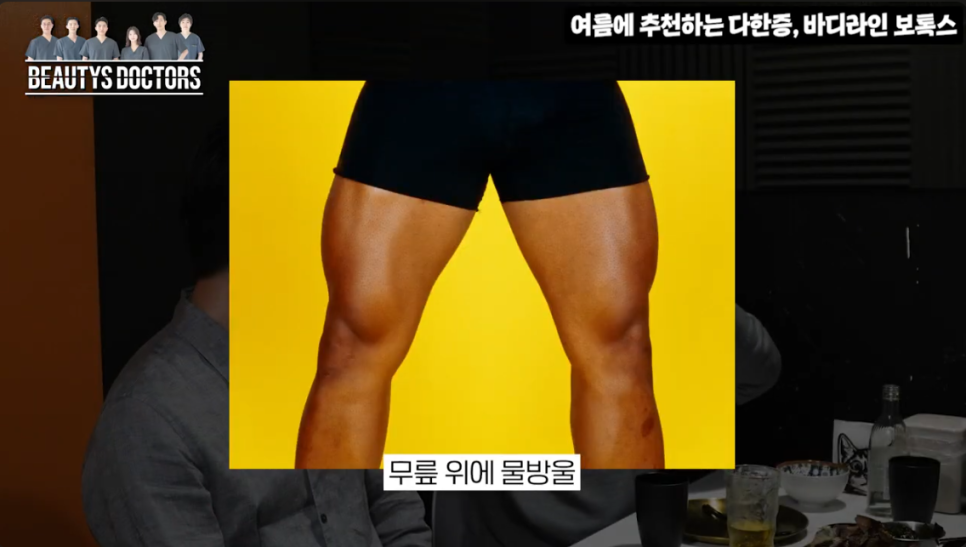
In addition,
not only the calves but also
muscles above the knees can be adjusted together.
If the muscle that bulges like a water droplet
just below the thigh is developed,
contouring that area together can help
make the overall leg line appear longer.
Let me summarize at the end.
✔ Calf Botox is an effective method for reducing muscle-type bulk.
✔ If diet alone does not solve the problem,
it can be a practical alternative.
✔ Results can vary greatly depending on the treatment plan.
✔ The more lifestyle management is combined,
the better the maintenance.
A calf line that has not changed even with continued care,
may now be at the point where the approach itself
needs to change.
If you are considering calf Botox,
I hope this post has been even a little helpful in your decision.
If you have any questions,
feel free to leave them.
I will check them personally and reply. 😊
This was Kim Hawon.