Hello.
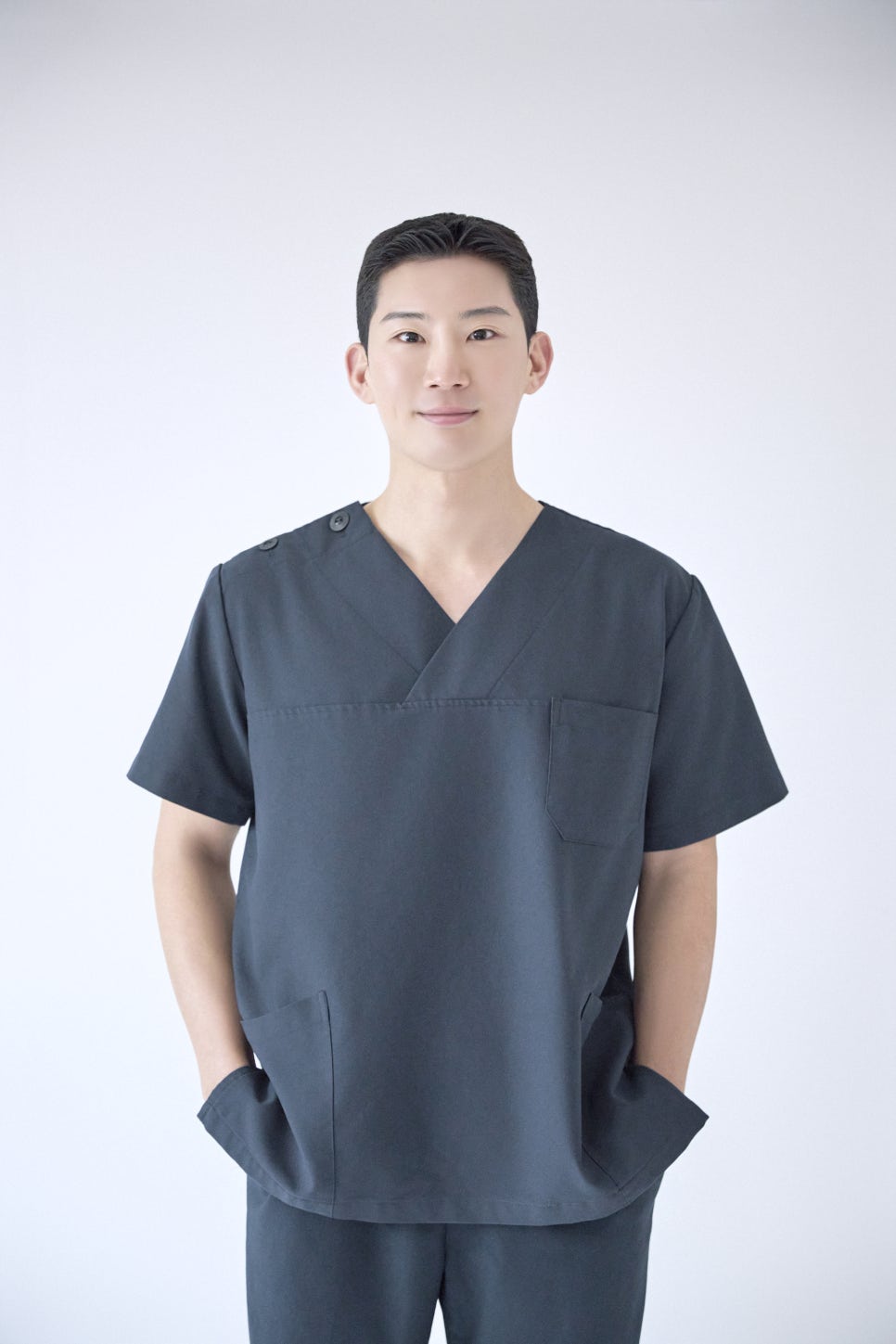
I’m Dr. Kim Gaeul.
No matter how much you pay attention to skincare,
if breakouts keep appearing,
have you ever felt frustrated?
You may have wondered whether the products don’t suit you,
or why the problem keeps recurring
even after trying treatment at a clinic.
At times like that,
it may help to think
from a slightly different angle.
That is, your diet.
In fact, many people
already know this.
You already know which foods
are bad for your skin.
But even so, it is not easy to put that into practice,
and that is the hardest part.
Patients who visit the Mapo-gu dermatology clinic
also share these kinds of concerns often.
During consultations,
common eating patterns
begin to stand out.
Now may be the time
to take another look at
your eating habits.
- Refined carbohydrates
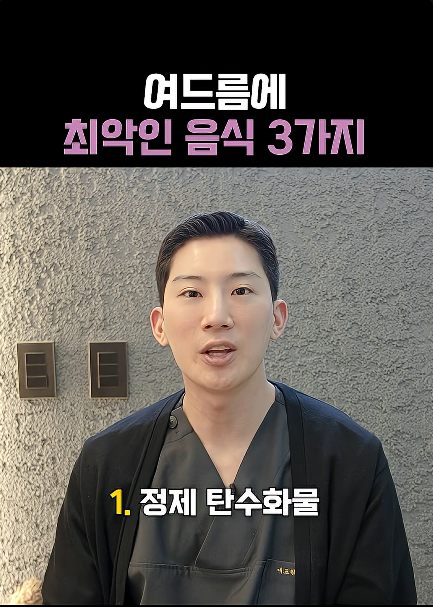
The more white foods you eat,
the more sensitive your skin can become.
Refined carbohydrates are
forms in which most of the fiber
has been removed through milling and processing.
As a result, they are absorbed quickly in the body
and cause blood sugar to rise sharply.
When blood sugar rises,
insulin secretion increases,
and in this process,
the sebaceous glands are overstimulated.
As a result,
acne can develop more easily,
and inflammation may become worse
or last longer.
At the Mapo-gu dermatology clinic,
we often see skin changes after patients
reduce their intake of refined carbohydrates.
✔ Foods to be careful with
White rice, white bread, ramen
Jam, syrup, various baked goods
✔ Alternative meals
Brown rice, black rice
Whole wheat bread, mixed-grain foods
2. Oily foods
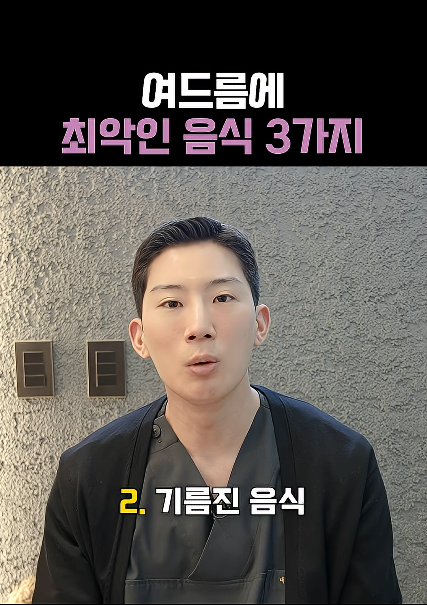
A single oily meal
can be the beginning of clogged pores.
Foods high in fat can raise
blood triglyceride levels,
which may eventually lead to
increased sebum secretion and inflammatory responses.
Especially if your breakouts keep recurring,
or if your skin is red and sensitive,
then adjusting your diet acts as
a more important variable than you might think.
In consultations at the Mapo-gu dermatology clinic,
when oily eating habits continue,
we often see a pattern where breakouts worsen.
✔ Foods to avoid
Fried foods such as chicken and pork cutlet
Pork belly, butter, mayonnaise
Fast food
✔ Recommended methods
Low-fat proteins such as chicken breast and tenderloin
Focus on grilling, steaming, and boiling
Use plant-based fats such as olive oil and perilla oil
At the Mapo-gu dermatology clinic,
there are also quite a few patients in the early stages
whose skin stabilizes with diet changes alone.
3. Dairy products
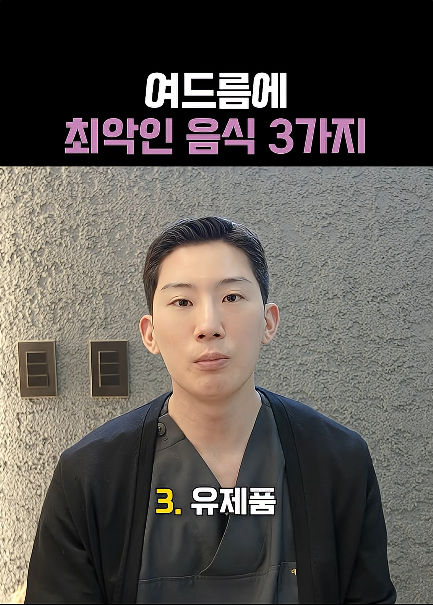
The gut stays quiet,
but the skin responds instead.
Depending on the individual,
dairy products can act as a trigger
for breakouts.
Especially for people who are
lactose intolerant
or have sensitive skin,
it is not uncommon to see skin changes
after consuming dairy products.
In addition, dairy products with a high fat content
may stimulate sebum secretion even more.
At the Mapo-gu dermatology clinic,
we consistently see cases where skin condition improves
after reducing dairy intake.
✔ Dairy products to be careful with
Milk, ice cream
Cheese, sweetened yogurt
✔ Alternative foods
Soy milk, almond milk
Lactose-free milk
Unsweetened plain yogurt
Why do foods affect the skin?
The skin does not change
through external care alone.
It also responds very sensitively
to changes happening inside the body.
Looking at the representative connection patterns,
blood sugar increase → insulin increase → excess sebum
changes in the gut environment → increased inflammatory response
excess fat → clogged pores → breakouts
In this way,
the skin is often the “result,”
and diet is often the “cause.”
At the Mapo-gu dermatology clinic,
we analyze skin condition while also considering
these internal factors.
In the end,
you should remember that one of the most basic ways
to stabilize the skin
is diet.
Checklist when breakouts flare up
❌ Meals to avoid
White rice, wheat flour, snacks
Fried foods, sweetened drinks
Milk, cheese
✅ Recommended meals
Brown rice, mixed grains, whole wheat
Sweet potatoes, bananas, nuts
Grilled or steamed protein
Soy milk, plain yogurt
Unsweetened tea, plain water
At the Mapo-gu dermatology clinic,
we check diet and lifestyle together like this
and guide patients toward ways to improve their skin.
Questions we often hear in the consultation room
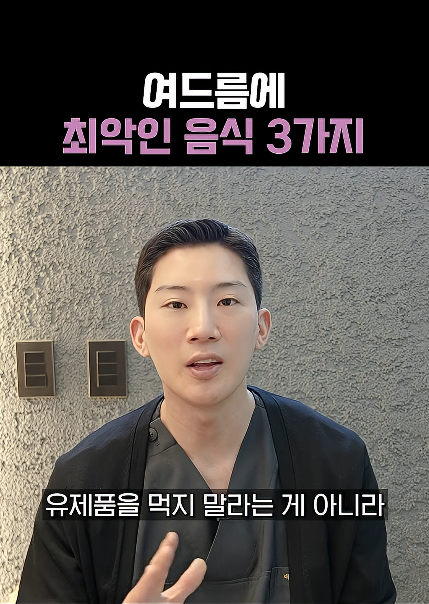
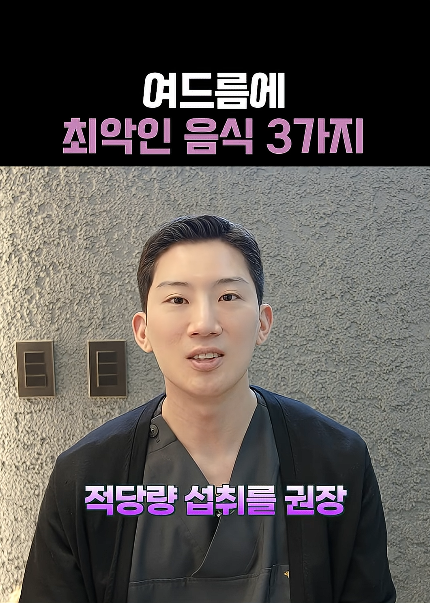
Q. Do I have to stop dairy completely?
No.
If you do not have any problems,
moderate intake is fine.
However,
for people whose breakouts keep recurring
or whose gut function is sensitive,
temporarily reducing it may be helpful.
Q. What food should I cut back on first?
Refined carbohydrates.
Simply reducing wheat flour and sugar intake
can often change the skin’s reaction.
Q. How much should oily foods be controlled?
We recommend reducing them to 2–3 times a week or less
and changing the cooking method
from frying to mainly grilling or steaming.
The skin
responds according to what you eat.
Sugar, oil, and dairy products
can increase sebum and inflammation.
When breakouts appear,
before skincare, first
think back to what you ate yesterday.
Foods that help improve skin are important,
but even more than that,
reducing the factors that burden the skin
may be the faster start to improvement.
At the Mapo-gu dermatology clinic,
we provide guidance on improving skin
while considering not only procedures
but also daily habits.
Small changes in eating habits
can make a surprisingly big difference.
Why not start by choosing one meal differently today?
This was Dr. Kim Gaeul.
Thank you.